
For many men diagnosed with low-risk prostate cancer, active surveillance is a deliberate, evidence-based strategy to protect quality of life without sacrificing safety. Not every prostate cancer detected today will grow, spread, or cause harm within a patient’s lifetime. Active surveillance for prostate cancer acknowledges that reality head-on.
Active surveillance and “watchful waiting” are different approaches. Watchful waiting relies on monitoring symptoms with minimal intervention, often reserved for older patients with limited life expectancy. Active surveillance involves regular PSA tests, biopsies, and imaging on a structured schedule, with a clear plan to escalate treatment if the cancer shows signs of progression.
The primary goal is meaningful. Delay or avoid treatment side effects, including urinary incontinence, erectile dysfunction, and fatigue, that can significantly affect daily life. Treatment carries real costs. When the cancer is low-risk, those costs may not be worth paying immediately.
Understanding who qualifies starts with the clinical numbers your care team will examine closely.
Core clinical eligibility. The numbers that define your risk
Active surveillance candidacy comes down to a specific set of measurable markers, and understanding those numbers is the first step to knowing whether monitoring is a realistic option for you.
Most men who qualify have a Gleason Score of 3+3=6, classified as Grade Group 1. This is the lowest grade possible, signaling that cancer cells look only mildly abnormal and tend to grow slowly.
PSA level is equally central. A reading typically under 10 ng/mL suggests lower disease burden. But PSA alone doesn’t tell the whole story. PSA density (usually below 0.15–0.2 ng/mL/cc) adds important context by comparing PSA to prostate size, helping distinguish aggressive tumors from a naturally enlarged gland.
Clinical stage matters too. T1 or T2 staging indicates the tumor remains confined to the prostate, without spreading to nearby tissue. Many men reach this point after symptoms of prostate cancer, like urinary changes, prompt an initial PSA test.
It’s worth noting that these thresholds aren’t absolute. Some programs extend eligibility to men with favorable intermediate-risk prostate cancer, depending on additional factors, a topic the next section explores in depth.
Beyond the basics. Factors for intermediate-risk candidates
Prostate cancer is not a single, uniform disease, and this is especially clear in the “favorable intermediate-risk” category.
Men with Grade Group 2 (Gleason 3+4=7) don’t fit neatly into the very low-risk prostate cancer tier, yet many still qualify for active surveillance. When fewer biopsy cores test positive, typically fewer than three, and the proportion of cancer in each core remains low, the biological behavior often mirrors lower-risk disease closely enough to justify monitoring rather than immediate intervention.
Age and life expectancy add another layer to this calculus. An older patient with significant competing health conditions may carry a greater risk from treatment side effects than from the cancer itself. In that context, active surveillance prioritizes quality of life.
Genomic scoring is emerging as a powerful tiebreaker for borderline cases. Genomic scoring tools like Decipher are designed to examine tumor biology at the molecular level and may help inform treatment decisions for some patients with prostate cancer. These scores don’t replace your care team’s judgment, but they sharpen it.
Once eligibility is confirmed, the next question is. What does ongoing monitoring actually look like in practice?
Evidence-based guidance powered by NCCN Guidelines®
Personalized treatment plans shaped by the latest oncology standards—tailored to your diagnosis.
Get started
View your personalized treatment plan in the Outcomes4Me app
Use your diagnosis to unlock personalized NCCN Guidelines®-aligned recommendations.
Continue in app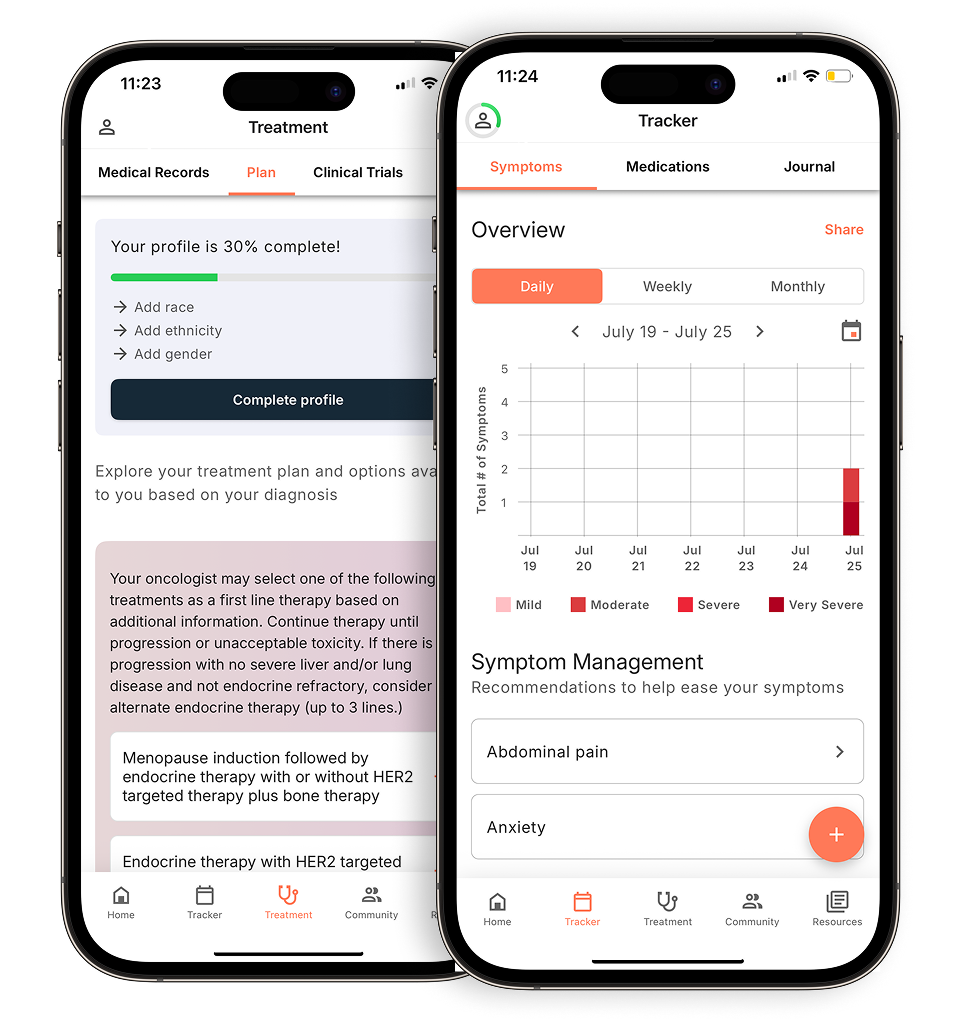
The surveillance protocol. What to expect during active monitoring
Active surveillance is a structured medical program, not a passive wait, and understanding the monitoring schedule helps you stay in control of your prostate cancer treatment decisions.
It typically includes PSA tests every six months, a physical exam every six months, and MRI imaging every 18 months, with biopsies performed every 3 years. Each touchpoint builds a longitudinal picture of how your cancer is, or isn’t, behaving over time.
The confirmatory biopsy is a critical early step. Performed within the first 12 months of diagnosis, its purpose is to verify the initial findings. Biopsy undersampling is a real risk, and this follow-up check ensures the original pathology wasn’t incomplete.
And here’s where technology has genuinely shifted the landscape. Multiparametric MRI (mpMRI) now provides detailed tissue imaging that catches suspicious changes without requiring frequent repeat biopsies. This MRI-guided approach helps reduce unnecessary procedures while maintaining diagnostic accuracy.
When it comes to prostate cancer watchful waiting vs active surveillance, the key distinction is this structured escalation process. If PSA levels rise significantly, imaging flags new activity, or a repeat biopsy reveals grade reclassification, your care team will discuss shifting to active treatment. That trigger isn’t failure, it’s the protocol working as designed, and it’s worth understanding before the next section addresses the concerns patients most commonly raise.
Common patient concerns and clinical realities
Active surveillance is medically structured, not a passive gamble, and it directly addresses one of the most common questions patients ask: “What if my cancer changes?”
That fear is real, and it’s worth addressing directly. Yes, low-grade prostate cancer can, in some cases, progress to a more aggressive form. That’s precisely why prostate cancer active surveillance criteria include repeat biopsies and PSA testing on a defined schedule to catch any shift early, when curative options remain fully available.
Biopsy undersampling is another legitimate concern. A single biopsy samples only a fraction of prostate tissue, which means a small area of higher-grade cancer could be missed initially. Repeat biopsies, and increasingly MRI-guided techniques, exist specifically to address this limitation over time.
Then there’s the anxiety factor. Living with a known tumor, even a slow-growing one, carries a real psychological weight. Research consistently shows that some men find the uncertainty harder to manage than the side effects of treatment. Your care team should be part of that conversation, not just your oncology appointments.
What prostate cancer screening and follow-up data continue to show is this. Active surveillance is a rigorous medical program, not a decision to do nothing. The monitoring cadence, the defined triggers for intervention, the regular imaging, all of it is deliberate. Understanding that structure, side by side with what immediate treatment actually involves, makes the comparison much clearer.
Comparison table: active surveillance vs. immediate treatment
For men with low risk prostate cancer, active surveillance produces nearly identical long-term survival rates to surgery or radiation while avoiding many of the side effects that come with immediate intervention.
That’s a central finding that makes monitoring a clinically defensible choice rather than a compromise. When PSA prostate cancer screening flags a low-grade tumor, the data consistently show that Gleason 6 patients who monitor versus those who treat immediately see comparable outcomes at 10 and 15 years. The difference shows up not in survival, but in quality of life.
Cancer care guidance for every step of your journey
Get treatment options, clinical trials, and support tailored to your diagnosis--all in one place.
Get started
See treatment options, manage symptoms, and stay informed—all in the app
View treatment options and trials personalized to your diagnosis—plus track progress in real time.
Continue in appHere’s how the two paths compare across the factors that matter most:
- Side effect profile. Surgery and radiation therapy can have bothersome side effects that active surveillance helps some men avoid or delay. Active surveillance carries risks primarily from repeat biopsies, such as infection or discomfort. These are generally less disruptive to daily function.
- Time commitment. Immediate treatment means intensive short-term recovery, typically weeks to months. Active surveillance means ongoing office visits, PSA tests, and periodic biopsies spread across years.
- Flexibility. This one often surprises people. Choosing to monitor now doesn’t close the door on curative treatment later. The window of opportunity remains open, and most men who eventually do need treatment can still access surgery or radiation with the same outcomes as those who treated earlier.
That last point matters enormously for how you and your care team weigh the decision. Active surveillance isn’t forgoing treatment, it’s deferring it until, or unless, it’s actually needed.
Even so, this path isn’t right for everyone. Some clinical markers and personal factors shift the calculation significantly, and that’s exactly what the next section addresses.
Limitations and considerations. When surveillance isn’t the right path
Active surveillance works well within a specific clinical window, but certain risk markers move prostate cancer and treatment decisions firmly into intervention territory.
High-risk pathology is the clearest disqualifier. A Gleason score of 8–10 or a PSA above 20 ng/mL signals aggressive disease that’s unlikely to stay contained long enough for monitoring to be safe. At that threshold, the biology of the tumor outpaces the safety margin that surveillance depends on.
Genetics add another layer of complexity. Men carrying BRCA2 mutations face a higher likelihood of aggressive disease progression, and many care teams recommend earlier intervention rather than watchful waiting for this group.
Tumor location matters too. Cancers situated near the prostate capsule carry a greater risk of extracapsular extension, making close monitoring a riskier strategy than it would be for a centrally located, low-volume tumor.
And then there’s patient psychology, which is clinically legitimate. Some men simply cannot tolerate the uncertainty that comes with surveillance protocols. Choosing immediate treatment for peace of mind isn’t avoidance, it’s a valid, informed preference that a personalized care plan should honor.
As clinical criteria grow more refined, risk stratification itself is evolving, and the tools used to assess it are changing fast.
Future implications. The evolution of risk stratification
The landscape of prostate cancer treatment is shifting fast. Liquid biopsies, AI-driven imaging analysis, and personalized care plans are redefining how clinicians monitor and manage low-risk disease.
Repeat tissue biopsies carry real discomfort and a small but meaningful infection risk. That’s why researchers are actively developing liquid biopsies, blood tests that detect circulating tumor DNA, as a less invasive alternative. The goal isn’t just convenience. It’s more frequent, lower-risk monitoring that could catch progression earlier than a scheduled biopsy would.
Artificial intelligence is also changing what’s possible with MRI. Researchers are exploring whether AI algorithms might help standardize how prostate imaging is analyzed across different radiologists and institutions, though this technology is still being evaluated in clinical practice. In practice, this means fewer missed lesions and more confidence in the “watch and wait” decision, particularly for men who might otherwise have been pushed toward treatment prematurely.
And then there’s the broader shift away from population-level guidelines toward personalized care plans. Genomic classifiers, imaging biomarkers, and patient-specific risk profiles mean that two men with the same Gleason score may no longer follow the same surveillance schedule. That’s a meaningful change. It reflects a growing clinical consensus that rigid, uniform protocols leave too much individual variation unaccounted for.
These advances don’t make the fundamentals any less important. Eligibility criteria, monitoring schedules, and shared decision-making with your care team still anchor everything. The next section pulls those core principles together into a clear summary of what you need to know.
Key takeaways: what you need to know about active surveillance
Active surveillance is a well-established therapy for prostate cancer that prioritizes quality of life without surrendering the chance for curative treatment.
Choosing the right path starts with understanding the basics. Here’s what matters most:
- Standard of care for low-risk disease. Active surveillance is the preferred standard of care for men with very low- or low-risk prostate cancer.
- Eligibility isn’t a single number. PSA levels, biopsy findings, and imaging results work together to determine whether you’re a good candidate.
- Quality of life stays front and center. The goal is to avoid, or at least delay, side effects from surgery or radiation while keeping curative options fully available.
- Monitoring is non-negotiable. Regular PSA tests, MRI scans, and periodic biopsies confirm the cancer remains slow-growing and hasn’t crossed into higher-risk territory.
Understanding these pillars puts you in a stronger position to have an informed conversation with your care team. And as risk stratification tools continue to evolve, from genomic testing to AI-powered imaging, what’s possible within active surveillance will only expand. The next step is knowing where to look for reliable guidance as you explore your options.
Where to look next
Connect reliable resources, your prostate cancer and PSA test results, and a care team that can translate all of it into a personalized care plan.
Start with clinical practice guidelines from major urological associations, they reflect the current evidence and define which patients are strong candidates for active surveillance. From there, patient education materials from NCI-designated cancer centers offer accessible explanations without sacrificing accuracy. Ask your care team about genomic testing options, which can sharpen risk stratification beyond what PSA alone reveals. And if you want to go deeper, peer-reviewed studies on long-term active surveillance cohorts provide outcome data that puts the approach in real clinical context. Knowledge, in this case, is power.
Disclaimer: The information provided in this article is for informational purposes only and is not intended to be a substitute for professional medical advice, diagnosis, or treatment. Outcomes4Me is not acting as your caregiver, and any suggestions or guidance offered should not replace the advice of your healthcare provider or qualified medical professional. Always seek the guidance of your physician or other qualified health provider with any questions you may have regarding a medical condition.
Personalized support for real care decisions
Understand your diagnosis, explore clinical trials, and track symptoms--all in one place.
Get started
Compare treatments, prepare for appointments, and track side effects—all in the app
Built for your diagnosis, Outcomes4Me gives you the tools to make confident, informed decisions—right when you need them.
Continue in app