
Why early symptoms often mimic benign growth
If you’re trying to tell early prostate cancer from an enlarged prostate by how you feel, you have almost nothing to work with. Benign prostatic hyperplasia (BPH) is noncancerous growth that presses on the urethra, so it announces itself early and loudly through urinary changes. Early-stage prostate cancer usually stays silent, growing for years without touching the urinary channel at all.
How an enlarged prostate typically feels in daily life
The signs of enlarged prostate growth are mechanical. The gland squeezes the urethra like a hand around a garden hose, and your bladder has to work harder to push past it. Benign prostatic hyperplasia produces hesitancy, or trouble starting urination; a weak urine stream; dribbling at the end; and the nagging sense that you never fully emptied. Nocturia, or frequent urination at night, fragments sleep and drains daytime energy. These BPH symptoms build slowly, sometimes over a decade.
Prostate cancer red flags. When symptoms deviate from BPH
Certain findings break the pattern. Blood in urine or blood in semen deserves prompt evaluation, as obstruction alone rarely explains it. Pain after ejaculation or painful urination warrant closer evaluation, though infection can mimic these symptoms. The clearest prostate cancer warning signs are systemic: persistent hip, back, or rib pain, unexplained weight loss, or fatigue. Those suggest disease that has moved beyond the gland.
Why symptom tracking isn’t enough
Burning or urgency during urination can occur with prostate cancer, but these symptoms may also be caused by an enlarged prostate (benign prostatic hyperplasia) or inflammation or infection of the prostate (prostatitis). And prostate size doesn’t track with risk, a substantially enlarged gland can be entirely benign, while a small one can harbor an aggressive tumor. BPH does not convert into cancer, the two conditions arise in different tissue.
Evidence-based guidance powered by NCCN Guidelines®
Personalized treatment plans shaped by the latest oncology standards—tailored to your diagnosis.
Get started
View your personalized treatment plan in the Outcomes4Me app
Use your diagnosis to unlock personalized NCCN Guidelines®-aligned recommendations.
Continue in app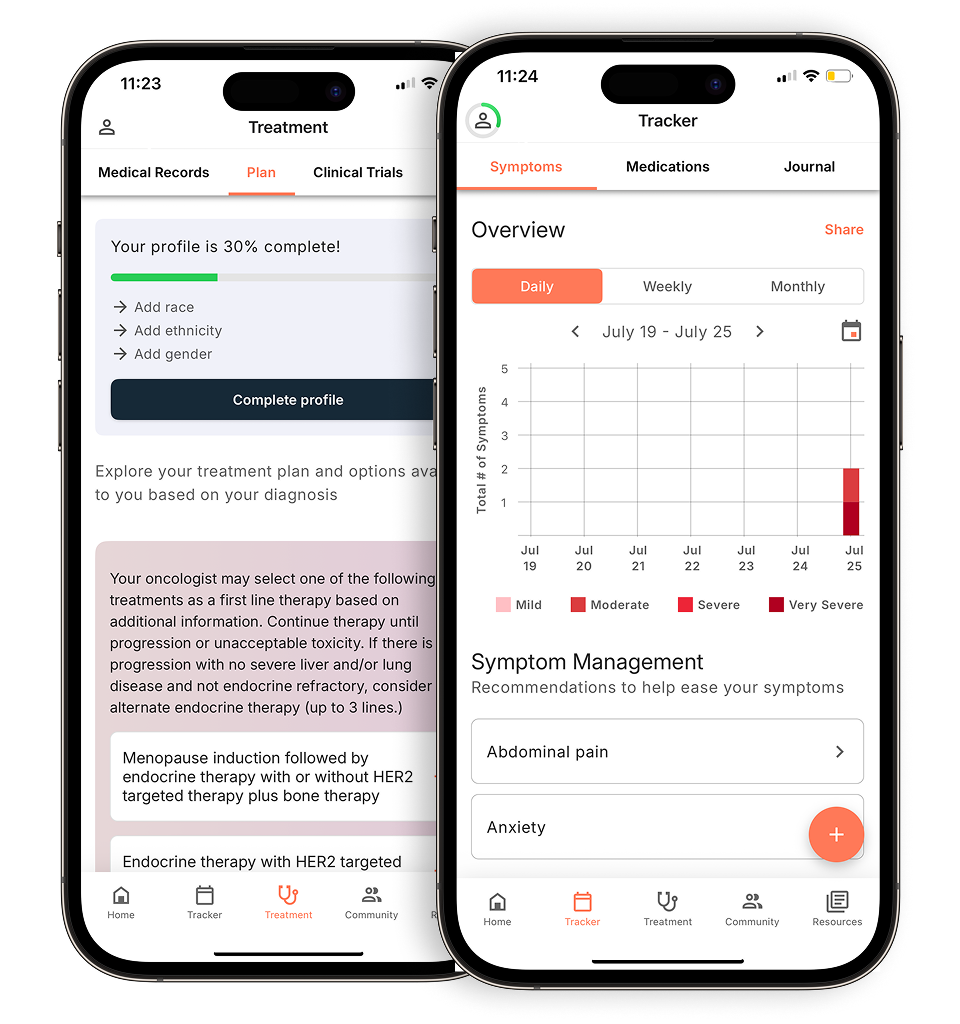
The role of location: peripheral zone vs. transition zone
BPH often involves tissue growth in the transition zone, the area of the prostate that wraps around the urethra, though the exact pattern of growth can vary from person to person. Some prostate cancers may begin in the peripheral zone, the outer rim of the gland facing the rectum, which is located far from the urinary channel. A tumor can grow there for a long time without altering your stream at all. That’s also why the digital rectal exam (DRE) still matters, letting a clinician feel the exact region where prostate cancer would otherwise hide.
Age-related risk factors for younger men in their 30s and 40s
Prostate cancer is rare before age 40, and the risk increases significantly after age 50. If you’re in your thirties or forties and experiencing urinary changes, your doctor can help determine the underlying cause. Prostatitis, inflammation or infection of the gland, is the more common explanation in younger men, and it can convincingly imitate both BPH and cancer, producing pelvic pain, urgency, and even a temporarily elevated PSA. Family history changes the calculation. If a father or brother had prostate cancer, or you carry known inherited risk, screening conversations should begin earlier than standard age thresholds, regardless of whether you feel anything unusual.
Side-by-side comparison. Evaluating BPH and prostate cancer indicators
Most of what patients experience falls into an overlap zone where the two conditions are indistinguishable. Frequency, urgency, weak flow, hesitancy, and incomplete emptying belong to both lists.
Comparison table. Symptom frequency and type:
| Symptom | Enlarged prostate (BPH) | Prostate cancer |
|---|---|---|
| Frequent urination | Very common, early | Usually absent early |
| Painful urination | Occasional | Occasional, often infection-related |
| Blood in urine or semen | Uncommon | Warrants prompt evaluation |
| Bone or back pain | Not expected | Possible in advanced disease |
| Onset | Gradual, over years | Silent, then sometimes abrupt |
How to evaluate your prostate health
PSA prostate cancer screening measures prostate-specific antigen in a blood sample, useful but nonspecific, since benign conditions raise it too. A DRE takes seconds and assesses the gland’s size, symmetry, and texture, checking for nodules or firmness. When results are ambiguous, multiparametric MRI (mpMRI) images the prostate and flags suspicious regions before anyone takes tissue. A biopsy, which samples the gland directly, remains the only test that confirms cancer and describes how aggressive it is.
The PSA test: understanding false positives
A single elevated PSA isn’t a diagnosis. An enlarged prostate (benign prostatic hyperplasia), prostatitis, and urinary tract infections can all raise PSA levels temporarily. That’s why clinicians care about PSA velocity, how the value trends across repeated tests, more than any one reading. The reverse also holds: a PSA within the normal range doesn’t rule out a tumor, particularly an aggressive one that produces little antigen. Interpreting the number in context, alongside exam findings and risk factors, is the point.
Imaging and Biopsy. Moving Beyond the Physical Exam
Current practice favors MRI-targeted biopsy over random systematic sampling, directing needles at lesions the imaging already identified rather than sampling blindly and hoping. If cancer is found, pathologists assign a Gleason score describing how abnormal the cells look under a microscope. That grade, combined with PSA and stage, shapes decisions about prostate cancer. Low-grade, slow-growing disease may be managed with active surveillance, monitoring rather than immediate therapy. Treatment options for prostate cancer depend on the cancer’s stage and risk group, which are determined partly by the grade of the cancer.
When this isn’t the right approach
Symptom checklists on the internet can’t diagnose you, and treating them as though they can leads people in both directions, toward panic and toward false reassurance. Screening carries real tradeoffs. Overdiagnosis means detecting indolent cancers that would never have caused harm, sometimes leading to treatment with lasting side effects. Living with a known finding and no immediate action brings its own emotional challenges. This article is educational and doesn’t replace a conversation with your care team, who can weigh your history, age, and preferences.
Key takeaways
- BPH and prostate cancer share nearly identical urinary symptoms, but only one of them threatens your life if it goes undetected.
- Early-stage disease typically produces zero physical signs, which means screening, not symptom watching, is the detection method that works.
- Blood in the urine or semen, new bone or back pain, and unexplained weight loss call for prompt evaluation rather than waiting.
- Prostate enlargement is common with age, but it neither causes cancer nor protects against it.
- How to tell prostate cancer from enlarged prostate comes down to PSA trends, exam, imaging, and biopsy.
Disclaimer: The information provided in this article is for informational purposes only and is not intended to be a substitute for professional medical advice, diagnosis, or treatment. Outcomes4Me is not acting as your caregiver, and any suggestions or guidance offered should not replace the advice of your healthcare provider or qualified medical professional. Always seek the guidance of your physician or other qualified health provider with any questions you may have regarding a medical condition.
Personalized support for real care decisions
Understand your diagnosis, explore clinical trials, and track symptoms--all in one place.
Get started
Compare treatments, prepare for appointments, and track side effects—all in the app
Built for your diagnosis, Outcomes4Me gives you the tools to make confident, informed decisions—right when you need them.
Continue in app