
It can be incredibly frustrating when you feel certain something is wrong, but an initial exam or mammogram comes back normal. You might even start to question yourself. But that gut feeling—that deep sense that something has shifted in your body—is a powerful tool. This experience can happen at any age, whether you’re concerned about breast cancer at 29 or older. So many people share the same story: “I knew I had breast cancer before I was diagnosed,” even after being told everything was fine. This guide is about honoring that feeling. We’ll give you actionable steps to communicate your concerns and get the follow-up care you deserve.
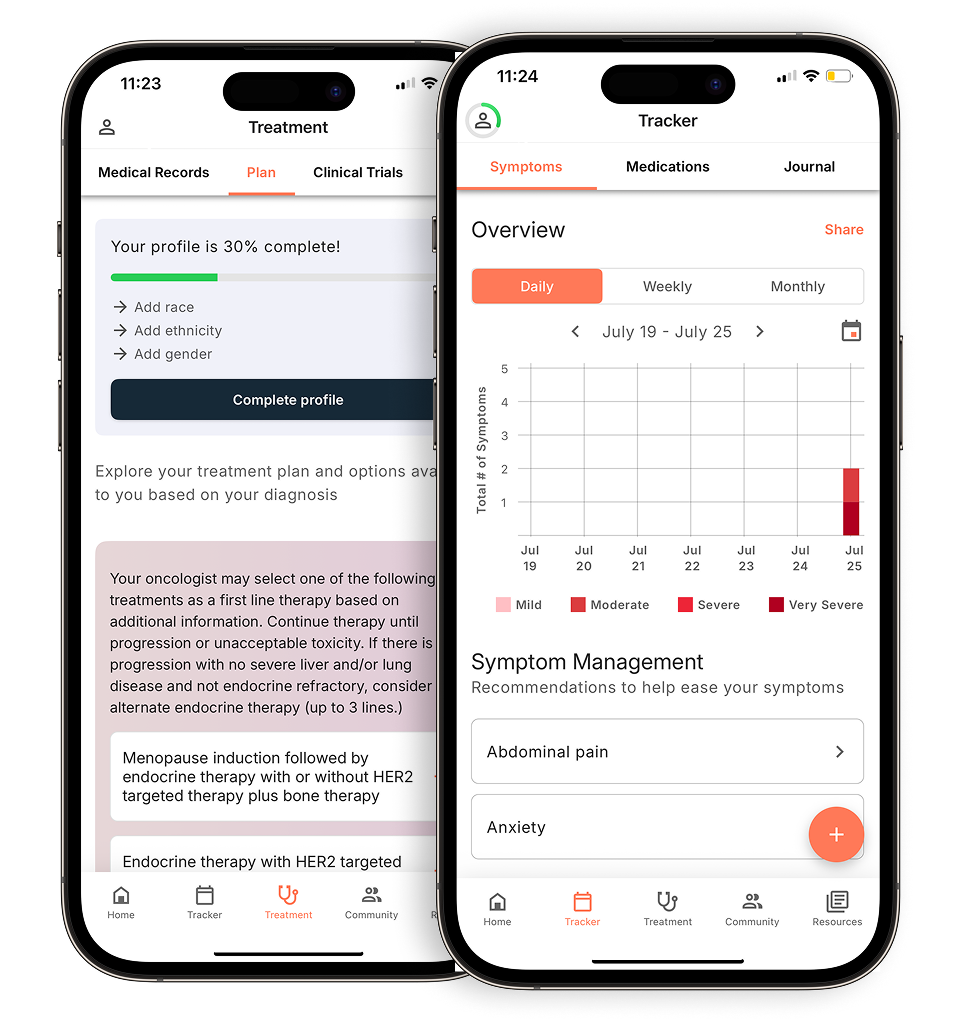
View your personalized treatment plan in the Outcomes4Me app
Use your diagnosis to unlock personalized NCCN Guidelines®-aligned recommendations.
Key takeaways
- Your intuition matters: That persistent feeling that something isn’t right is an important signal from your body. Trusting this instinct and speaking to a doctor is a critical first step in taking care of your health.
- Symptoms go beyond a lump: Knowing what is normal for your breasts helps you spot subtle changes early. Be aware of signs like skin dimpling, nipple inversion, swelling, or shifts in breast size or shape.
- Advocate for your health: If you still feel something is wrong after an initial exam or test, you have the right to ask for more information. Seeking a second opinion or requesting further testing is a normal and important part of the process.
What to do when you just *know* something is wrong
You know your body better than anyone else. Sometimes, long before a clear symptom appears, you might get a nagging feeling that something is off. If that quiet, persistent thought sounds familiar, you’re not alone. Many people diagnosed with breast cancer later say they had an intuitive sense that something was wrong, even when there was no lump or obvious sign to point to.
This “gut feeling” often comes from noticing subtle shifts in your health. Maybe you feel a little more tired than usual, or you notice a change in your breast tissue that’s hard to describe. These aren’t always the classic symptoms you read about, but they are changes that are unique to you. This deep self-awareness is powerful. Some people who get breast cancer report having a strong feeling or intuition that something was wrong well before they received a diagnosis.
Trusting that inner voice is important. For many, that intuition is what pushes them to schedule a doctor’s appointment or ask for more testing, even if an initial screening comes back clear. It’s about being your own best health advocate. While it’s easy to dismiss these feelings as anxiety or stress, they can also be your body’s way of getting your attention. Listening to that signal and taking action is a critical first step in taking care of your health.
What are the early signs of breast cancer?
When we think about breast cancer, our minds often jump straight to finding a lump. While that’s certainly an important sign, it’s not the only one. Sometimes, the first clues are much more subtle and easy to dismiss if you aren’t paying close attention. Knowing what to look for can help you recognize when something is different for your body.
Being familiar with your breasts’ normal look and feel is the first step. This way, you’re more likely to notice small shifts that might otherwise go overlooked. These changes aren’t always dramatic, but they are persistent. Trusting that you know your body best is key. Below are some of the early, subtle signs that women have reported before a diagnosis.
Is your breast shape or size different?
One of the most common early signs is a physical change to the breast tissue itself. This could be a new lump or a general thickening in one area that feels different from the surrounding tissue. It’s important to remember that a lump doesn’t always feel like a hard, round pea. It might feel like a thickened, dense area that wasn’t there before. You might also notice a distinct change in the overall size or shape of one breast. Perhaps one seems slightly larger, lower, or has a different contour than it used to.
Have you noticed changes to your skin or nipple?
Your skin can also offer important clues. Look for any skin on the breast that appears irritated, red, or dimpled. Some people describe this texture as looking similar to an orange peel. Another sign to watch for is a sudden change in your nipple. It might turn inward (a condition called nipple inversion) when it previously pointed out. Any unexplained redness, scaliness, or thickening of the nipple or breast skin are also among the symptoms of breast cancer that you should discuss with your doctor. These visual changes can be easy to miss, so it helps to check in a mirror from time to time.
More subtle signs that shouldn’t be ignored
Beyond lumps and skin changes, there are other signals your body might send. Any fluid coming from the nipple that isn’t breast milk should be checked out by a healthcare professional, especially if it’s clear or contains blood. Some women also report feeling a deep, persistent fatigue that doesn’t go away with rest. This isn’t just feeling tired after a long week; it’s an overwhelming exhaustion. A general feeling of being unwell or anxious that you can’t quite explain can also accompany other physical symptoms. These signs remind us to pay attention to our whole body, not just one part.
Additional symptoms to watch for
While many of us are taught to check for lumps, breast cancer can show up in other ways that are just as important to recognize. Paying attention to the look and feel of your breasts, nipples, and the surrounding skin can help you spot changes early. These symptoms might seem minor at first, but they can be your body’s way of signaling that it’s time to talk to a doctor. Knowing the full range of signs helps you build a more complete picture of your breast health.
Changes in breast sensation or skin
Your skin can offer important clues. Take a look at your breasts in the mirror and see if you notice any skin that looks irritated, red, or dimpled. Some people say this texture looks like an orange peel. Another sign to watch for is a sudden change in your nipple, like if it begins to turn inward when it used to point out—a condition known as nipple inversion. Any unexplained redness, scaliness, or thickening of the nipple or breast skin are also among the symptoms you should discuss with your doctor. These visual cues are sometimes the very first indication that something is different.
Nipple or milk production changes
It can be startling to see fluid coming from your nipple when you aren’t breastfeeding, but it’s a symptom worth paying attention to. Any discharge that isn’t breast milk should be checked out by a healthcare professional, especially if the fluid is clear or has blood in it. While nipple discharge can be caused by a number of things, it’s always best to get it evaluated to rule out any serious concerns. Don’t dismiss it—mention it to your doctor so they can help you figure out the cause.
Where to check for new lumps or swelling
When you check your breasts, it’s important to cover the entire area, not just the soft, fatty tissue. Breast tissue extends all the way up to your collarbone and into your armpit, and changes can occur anywhere in this region. Swelling or a new lump in your armpit or around your collarbone can sometimes be the first noticeable sign of breast cancer, even before you feel anything in the breast itself. This is because the cancer can spread to the lymph nodes in those areas.
A lump might not feel like a small, hard stone. It could also present as a general thickening or a firm area that feels different from the surrounding tissue. The key is to notice what’s new or different for you. Being thorough in your self-checks means gently feeling the entire breast and surrounding areas. By familiarizing yourself with your normal, you’ll be better equipped to spot a change that needs a doctor’s attention.
Is it cancer or a benign condition?
Finding a change in your breast can be scary, but it’s important to remember that most breast changes are not cancer. Many women experience benign (non-cancerous) breast conditions, such as cysts or fibroadenomas, which can cause lumps or pain. Things like hormonal shifts during your menstrual cycle can also cause temporary changes, like tenderness or swelling. It’s not always easy to tell what’s causing a symptom, and sometimes, there are no obvious signs at all in the early stages.
The goal isn’t to diagnose yourself but to be an active partner in your health. If you notice a lump, skin change, or any other new symptom that persists, the next step is to see a healthcare provider. They can perform a physical exam and determine if you need further testing, like a mammogram or ultrasound. Getting checked is the only way to know for sure what’s going on. No matter the outcome, taking that step gives you the information you need to advocate for your health and decide what to do next.
Can you really sense breast cancer before a diagnosis?
It’s a story you hear often: someone just knew something was wrong, even before a doctor confirmed it. This feeling isn’t magic; it’s a powerful form of self-awareness. Your body is constantly sending signals, and sometimes your brain picks up on subtle patterns that something has changed long before the signs are obvious to anyone else. Learning to trust that inner voice is a critical part of advocating for your health.
Listening to your body’s signals
Many people who are eventually diagnosed with breast cancer report having an intuitive sense that something was off. This “gut feeling” often comes from noticing small but persistent changes in their body, whether it’s in their breast tissue or their overall health. This isn’t about predicting the future; it’s about being so in tune with your body that you can recognize when a new feeling or symptom isn’t just a temporary fluke. It’s your mind paying attention to subtle physical cues that you might not even be able to name yet.
When you feel it, but the tests don’t show it yet
It can be incredibly confusing and frustrating when you feel certain something is wrong, but a mammogram or initial exam comes back normal. This is a surprisingly common experience. Many people have had to push for further testing, like an ultrasound or biopsy, because their intuition told them not to stop at the first “all clear.” In hindsight, some also realize they initially dismissed their own feelings because of fear or because a loved one or even a doctor reassured them it was nothing. Your feeling matters, and it’s always okay to keep asking questions.
How to know if it’s a warning sign or a normal change
Knowing your body’s normal rhythm is key to spotting what’s not. While breasts change throughout your life, certain signs warrant a conversation with your doctor. Pay attention to a new lump or a distinct area of thickened tissue that feels different from the surrounding area. Notice any changes in the size or shape of your breast. Skin alterations are also important, such as redness, dimpling, swelling, or a texture that looks like an orange peel. According to experts, some symptoms of inflammatory breast cancer can be red flags that should be checked out right away.
Understanding different types of breast cancer
Breast cancer isn’t a single disease; it’s a term for several types of cancer that can develop in the breast tissue. Each type can have different symptoms, grow at different rates, and respond to different treatments. Understanding these distinctions can help you make sense of what you’re feeling and have more informed conversations with your doctor. While most breast cancers begin in the milk ducts or lobules, some rare forms present in very different ways. Knowing what to look for beyond a simple lump is an important part of being proactive about your health.
Inflammatory breast cancer (IBC)
Inflammatory breast cancer (IBC) is a rare but aggressive form of the disease that often doesn’t start with a distinct lump. Instead, its symptoms can appear suddenly and be mistaken for a breast infection. People who have experienced IBC report that changes can happen very quickly, sometimes over just a few days or weeks. Key signs include sudden swelling or puffiness, redness covering a large area of the breast, and skin that feels warm or looks pitted, similar to the texture of an orange peel. Because these symptoms can be confusing, it’s important to see a doctor right away if you notice these kinds of rapid changes.
Why some symptoms are commonly misdiagnosed
It’s a common story: you feel that something is wrong, but your first exam or mammogram comes back clear. This experience can be incredibly disheartening and make you question your own judgment. However, many people diagnosed with breast cancer share that they had a strong intuitive sense that something was wrong, even when initial tests were normal. This feeling often comes from noticing subtle but persistent changes that don’t fit the textbook definition of a symptom. Trusting that feeling is what leads many to advocate for themselves and push for further testing, which is a vital part of getting the care you need.
Where most breast cancers begin
Most breast cancers start in the parts of the breast involved with milk production. They typically begin in the cells lining the ducts that carry milk to the nipple or in the lobules, which are the glands that produce milk. Because these are the most common starting points, being aware of any changes in your breast tissue, like a new lump or a thickened area, is crucial. The best way to spot these subtle shifts is by knowing what your breasts normally look and feel like. This self-awareness allows you to identify changes that could be an early indicator that something is wrong, empowering you to seek medical advice sooner rather than later.
What to do if you think something is wrong
Feeling like something is off in your body, even when you can’t quite name it, can be unsettling. That intuition is powerful, and it’s important to listen to it. If you have a persistent feeling that something isn’t right, you have the right to seek answers until you feel confident in your care. Taking action can feel overwhelming, but you can move forward one step at a time. The key is to be persistent, communicate clearly with your healthcare team, and remember that you are your own best advocate.
Simple ways to advocate for yourself
Advocating for yourself means speaking up for your health needs and ensuring your concerns are heard. You know your body better than anyone else. If a test result comes back clear but you still feel that something is wrong, it’s okay to keep asking questions. Many people have shared that they had to push for further testing, like a biopsy or different imaging, after their initial screenings were dismissed. To help, try keeping a detailed journal of your symptoms, noting when they started and how they feel. Bring this log to your appointments to provide a clear, factual timeline for your doctor.
Is it time to get a second opinion
Getting a second opinion is a normal and often valuable part of the diagnostic process. It doesn’t mean you don’t trust your doctor; it simply means you’re being thorough about your health. If you’ve been told your symptoms are due to something else, like an infection, but they aren’t improving with treatment, it may be time to see another specialist. A fresh perspective can be incredibly helpful. For certain conditions, like inflammatory breast cancer, a quick and accurate diagnosis is critical, so it’s especially important to get a second opinion if your symptoms continue.
How to talk to your doctor
Clear and direct communication can make a significant difference in your appointments. Before you go, take a few minutes to write down your main concerns and any questions you have. This helps you stay focused and ensures you don’t forget anything important. When describing your symptoms, be as specific as possible. Explain what you’re feeling, where you’re feeling it, and how long it’s been happening. The most important thing is not to wait. If you feel that something is wrong with your body, it’s always best to seek medical help, even if initial tests don’t show anything unusual.
How to ask for more tests when you’re still concerned
Sometimes, the first diagnosis isn’t the right one. For example, breast symptoms can sometimes be mistaken for an infection and treated with antibiotics. If you’ve completed a course of treatment and your symptoms haven’t improved or have gotten worse, it’s time to go back to your doctor. It is completely reasonable to explain that the treatment didn’t work and that you are still concerned. At that point, you can and should ask for more tests to get a clearer picture of what’s going on. These next steps could include a mammogram, an ultrasound, or a breast biopsy to rule out other possibilities.
What to do if your symptoms persist after initial treatment
It’s a common scenario: you visit your doctor with a concern, like breast redness or swelling, and are diagnosed with an infection. You take the prescribed antibiotics, but the symptoms don’t go away—or they get worse. This is a critical moment to listen to your body and take action. If a course of treatment doesn’t resolve your symptoms, it’s a clear sign that you need to return to your doctor. This isn’t the time to wait and see. You should feel empowered to advocate for further testing, such as a mammogram, ultrasound, or biopsy, to get to the bottom of the issue. Persisting symptoms after treatment are a valid reason to push for a deeper look.
The importance of regular screening
Regular screenings like mammograms are an essential tool for early detection, but they are most powerful when paired with your own self-awareness. Think of it as a partnership: screenings provide a medical snapshot, while you provide the day-to-day knowledge of what’s normal for your body. It can be disheartening when you feel a lump or notice a change, only for a test to come back normal. But this doesn’t mean you should ignore your instincts. Your body sends signals constantly, and it’s important to trust your gut if you feel something is wrong. Continue to monitor any changes and keep the conversation going with your doctor, because you are the leading expert on you.
How to manage anxiety while waiting for answers
The time between finding a potential symptom, getting tests, and waiting for results can be incredibly stressful. Your mind might race with “what ifs,” making it hard to focus on daily life. This period of uncertainty is often called “scanxiety,” and it’s a completely normal experience. While you can’t fast-forward to the answers, you can find ways to manage the anxiety and feel more in control.
Focusing on what you can do right now, instead of what’s out of your hands, is a powerful first step. This might mean learning how to cope with the stress of the unknown, finding a healthy balance between being aware of your body and getting lost in worry, and building a strong support system to lean on during the testing process. These strategies can help you stay grounded while you wait for the information you need.
How to handle the stress of waiting
Waiting for test results can feel like you’re stuck in limbo. It’s easy to get caught up in imagining every possible outcome. One way to cope is to focus on what you can control. You can prepare a list of questions for your doctor, organize your medical information, or plan a relaxing activity for yourself each day. Many people find that they have to advocate for themselves when they feel something is wrong, even if initial tests are inconclusive. Trusting your intuition and continuing to seek answers is a way of taking action, which can feel empowering during a time of uncertainty.
How to stay aware without constant worry
It’s natural to worry when you’re waiting for medical news, especially if you have a family history of cancer or other risk factors. This feeling is sometimes called “anticipatory anxiety.” The key is to acknowledge these feelings without letting them take over. Try to set boundaries for yourself, like limiting the time you spend searching for information online. Instead, focus on credible sources and the facts you have from your doctor. Remind yourself that being aware of your body is a good thing, but constant worry isn’t productive. Finding this balance helps you stay informed without becoming overwhelmed.
How to support yourself during testing
Going through medical tests can be draining, both physically and emotionally. It’s so important to be kind to yourself during this time. If you can, bring a trusted friend or family member to your appointments. They can offer support, take notes, and help you remember what the doctor says. Don’t hesitate to seek out psychosocial support, which can include talking to a therapist or joining a support group. Remember, if you feel that something is wrong with your body, it’s always best to seek medical help and continue asking questions until you feel satisfied with the answers.
Don’t let these common myths delay a diagnosis
When it comes to our health, what we think we know can be just as important as what we actually know. Certain ideas about breast cancer are so common that we often accept them as fact. While usually well-intentioned, these misconceptions can sometimes stand in the way of getting the care we need when we need it. Believing you’re not at risk because you’re young or don’t have a family history, or thinking you’re fine because you don’t feel a lump, can cause delays in seeking medical advice. These myths can create a false sense of security, leading us to dismiss subtle signs or put off important screenings that could catch a problem early. They are often passed down through families or shared among friends, becoming part of our collective understanding without us ever questioning their accuracy.
Understanding the truth behind these common myths is a key part of advocating for your health. It empowers you to pay attention to your body, take symptoms seriously, and have more confident conversations with your doctor. When you’re equipped with accurate information, you’re better prepared to ask the right questions and push for answers if something doesn’t feel right. It’s about moving from a place of uncertainty or passive acceptance to one of active participation in your own healthcare. Getting past these outdated ideas helps ensure that you and the people you care about have the knowledge needed to make the best decisions. Let’s clear up a few of the most persistent myths that can prevent or delay a breast cancer diagnosis, so you can feel more in control of your health journey.
Myth vs. fact: Breast cancer symptoms
The most common myth is that breast cancer always starts with a lump you can feel. While lumps are a well-known sign, many women are diagnosed without ever finding one. In fact, most cancers are discovered during routine screenings like mammograms, not through self-examinations. This is why regular check-ups are so vital. Relying only on what you can feel might mean missing something important, so staying on top of your recommended screenings is one of the best things you can do for your health. Other signs, like skin changes, nipple discharge, or persistent pain in one area, are just as important to watch for.
Myth: Breast cancer always starts with a noticeable lump
It’s one of the most common ideas about breast cancer: that it always begins with a lump you can feel. But the truth is, many people are diagnosed without ever finding a lump themselves. In reality, most breast cancers are found during routine screenings like mammograms, not just from self-exams. This is why relying only on feeling for a lump can create a false sense of security and delay a diagnosis. It’s crucial to know that other signs, such as unexplained skin changes, nipple discharge, or persistent pain in one breast, are just as significant. Staying on top of your recommended screenings and being aware of all potential symptoms gives you the best chance for early detection.
What if you’re young and have no family history?
It’s easy to think of breast cancer as something that only affects older women or those who have it in their family. But that’s not the whole picture. Stories like that of Lauren Yerkes, who was diagnosed with an aggressive form of breast cancer at 38 with no family history, show us that this disease can affect anyone. It’s a powerful reminder that breast cancer doesn’t discriminate based on age or genetics. Being aware of the signs and listening to your body is important for everyone, no matter your background or what your family tree looks like.
Understanding hereditary vs. sporadic cancer
One of the biggest misconceptions is that you’re only at risk for breast cancer if it runs in your family. While a family history does increase your risk, it’s only one part of the story. Most breast cancers—about 85%—are considered “sporadic.” This means they happen in people who don’t have a known family history or an inherited gene mutation that would put them at higher risk. This is why it’s so important for everyone to be aware of their breast health, because a lack of family history doesn’t mean you have no risk. It simply means that other factors, like environment and lifestyle, may play a larger role.
The role of genetic testing for mutations like BRCA1 and BRCA2
For some people, a strong family history of breast or other cancers might point to an inherited genetic mutation. Genes like BRCA1 and BRCA2 are meant to help protect you from cancer, but if you inherit a mutated copy, that protection is lowered. This is where genetic testing can be a powerful tool. It can help you understand your personal risk level, which can inform a more personalized screening plan with your doctor. As one woman shared, she only learned she had the BRCA2 gene mutation after her diagnosis and wished she had known about testing sooner. Knowing your genetic status can empower you to take proactive steps for your health.
Key facts about breast cancer prevalence
Understanding some of the numbers around breast cancer can help put its impact into perspective. These statistics aren’t meant to be scary, but to highlight why awareness and early detection are so important for everyone. Knowing the facts can help you feel more prepared and informed when it comes to your own health and when talking with your doctor. It reinforces that breast cancer is a common disease, and being proactive is a key part of taking care of yourself. When you see the numbers, it becomes clear why regular check-ups and listening to your body are so essential for your long-term well-being.
Lifetime risk for women and men
It’s a statistic you may have heard before, but it’s worth repeating: about one in eight women in the United States will develop invasive breast cancer over the course of her lifetime. That’s roughly a 12% to 13% chance. While the risk is significantly lower for men, it’s important to know that men can get breast cancer, too. These numbers from The University of Kansas Cancer Center show that this isn’t a rare disease, which is why regular screenings and self-awareness are so critical for early detection, when the cancer is most treatable.
Other risk factors to be aware of
While anyone can develop breast cancer, certain factors can increase your risk. Having a first-degree relative—like a mother, sister, or daughter—who was diagnosed with breast cancer is a significant risk factor, especially if they were diagnosed at a young age. Age is another major factor, as the risk for breast cancer increases as you get older. Other elements like lifestyle choices and personal health history also play a role. Understanding your unique combination of risk factors can help you and your doctor create the best health plan for you.
What to do when a test is clear but you still feel something is wrong
You know your body better than anyone. If you have a persistent feeling that something is wrong, it’s important to listen to that instinct, even if a test comes back clear. Many people have shared stories of how they knew something was wrong before their official diagnosis, pushing for more tests after their initial concerns were dismissed. If your symptoms continue or you just can’t shake that feeling, don’t be afraid to speak up, ask for a second opinion, or request more specific imaging or a biopsy. Being your own best advocate is a crucial part of managing your health.
Finding reliable information and support you can trust
Going through this process can feel incredibly lonely, but you don’t have to do it by yourself. Finding the right information and building a strong support system are essential steps in taking control of your health. When you’re feeling unsure or overwhelmed, turning to trusted organizations and professionals can provide clarity and comfort. These resources are designed to help you understand your situation and explore your options. Leaning on this kind of support can make all the difference.
Where to find professional support
Professional support extends beyond your medical appointments. It includes emotional, practical, and even financial help from people trained to assist you through this experience. Organizations like CancerCare provide free, professional support services specifically for people affected by breast cancer. These services often include one-on-one counseling with an oncology social worker, educational workshops, and guidance on managing treatment costs. Connecting with this type of support can help you process your feelings and handle the logistical challenges that come with a diagnosis, so you can focus more on your well-being.
How to build your personal healthcare team
Your healthcare team is bigger than just your doctors and nurses. Many hospitals and cancer centers have dedicated professionals to help you with the non-medical side of your care. Ask if your treatment center has an oncology social worker or a patient navigator available. These team members are your advocates, helping you understand the healthcare system, coordinate appointments, and connect with support groups. They can find resources to make your treatment journey smoother, ensuring you’re supported from every angle, not just a clinical one.
Where to get information tailored to you
Every person’s experience with breast cancer is unique, so the information you receive should be, too. It’s important to find resources that offer guidance tailored to your specific diagnosis and stage. For example, organizations like Susan G. Komen offer trusted and timely breast cancer information and services, including specialized support groups for those with metastatic breast cancer. Getting personalized information helps you understand your treatment options and feel more prepared for conversations with your doctor. It empowers you to be an active participant in your own care.
Related Articles
- No lump breast cancer: stories & warning signs
- How I discovered my breast cancer: signs & next steps
- A young breast cancer survivor’s guide to thriving
- Breast cancer no lump, but pain: what to know
- Breast cancer no lump: 4 signs you can’t ignore
View your personalized treatment plan in the Outcomes4Me app
Use your diagnosis to unlock personalized NCCN Guidelines®-aligned recommendations.
Frequently Asked Questions
My mammogram was clear, but I still feel like something is wrong. What should I do? It’s a common experience to feel that something is off even when a test comes back normal. Trust that feeling. A clear mammogram is reassuring, but it’s not the only tool available. Your next step could be to schedule a follow-up appointment to discuss your persistent concerns. You can ask your doctor about other types of imaging, like an ultrasound or a breast MRI, which can sometimes spot things a mammogram might miss, especially in dense breast tissue.
What if my doctor thinks my concerns are just anxiety? This can be a frustrating and invalidating experience, but it’s important not to be discouraged. The key is to communicate clearly and persistently. Before your appointment, write down your symptoms, when they started, and why they feel different from your body’s normal state. Presenting this information calmly and factually can help shift the conversation. If you still feel unheard, remember that getting a second opinion is a standard and wise part of healthcare.
Besides a lump, what are some of the less obvious signs I should pay attention to? Many of the earliest signs of breast cancer have nothing to do with a distinct lump. Pay attention to any changes in the skin on your breast, such as redness, dimpling, or a texture that looks like an orange peel. Other subtle signs include a nipple that suddenly turns inward, any unusual discharge, or a persistent pain in one specific spot. Some people also report an overwhelming sense of fatigue that doesn’t improve with rest.
I’m young and have no family history of breast cancer. Can I ignore these feelings? While age and family history are known risk factors, they are not the only ones. Breast cancer can and does occur in younger people with no genetic predisposition. Dismissing a symptom because you don’t fit a certain profile can lead to a delayed diagnosis. Your body’s signals are always worth listening to, regardless of your age or family background. If something feels off, it’s always best to get it checked out.
How can I keep my worry in check while I’m waiting for appointments or test results? The waiting period is often the hardest part. To manage the stress, try to focus on what you can control. This might mean preparing questions for your doctor, organizing your health records, or planning a daily activity that helps you relax. It can also be helpful to set boundaries for yourself, like limiting how much time you spend searching for information online. Leaning on a trusted friend or family member for support can also make a huge difference.