
Can you have breast cancer without a lump? The short answer is yes, absolutely. For decades, we’ve been taught to check for lumps, but that’s only part of the story. Experiencing breast pain no lump can be confusing because it doesn’t fit the narrative we all know. Some rare but aggressive forms, like inflammatory breast cancer, often show up as skin changes, swelling, or tenderness instead. This guide is here to expand that narrative. We’ll cover the key breast cancer without lump symptoms, explain what they might mean, and give you clear, actionable steps for what to do next.
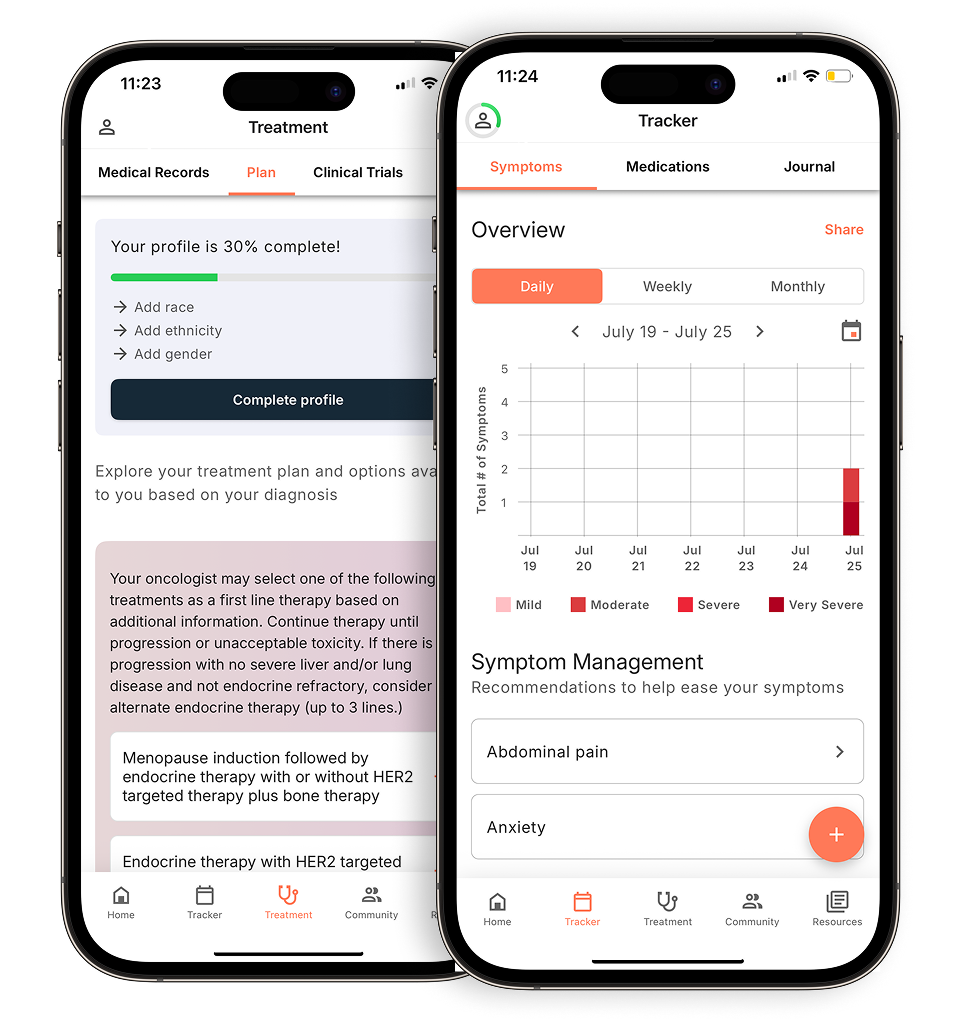
View your personalized treatment plan in the Outcomes4Me app
Use your diagnosis to unlock personalized NCCN Guidelines®-aligned recommendations.
Key Takeaways
- Look beyond the lump for warning signs: Breast cancer can appear as skin changes like dimpling or redness, nipple inversion or discharge, and sudden swelling or warmth in the breast.
- Trust your instincts and advocate for your health: If symptoms like redness and swelling are dismissed as an infection but don’t improve with treatment, it’s critical to follow up with your doctor and ask for further testing.
- Know when breast pain is a red flag: While most breast pain is benign, you should always see a doctor for pain that is persistent, located in one specific spot, or accompanied by other changes like swelling or skin dimpling.
Can you have breast cancer without a lump?
The short answer is yes, absolutely. When we think about breast cancer, our minds often go straight to feeling for a lump. While self-exams are incredibly important, the idea that breast cancer always starts with a distinct, hard knot is a persistent myth. In reality, many types of breast cancer present with different symptoms first, and some don’t cause a noticeable lump at all.
Understanding the full range of symptoms is key to advocating for your health. Changes in skin texture, nipple appearance, or sudden swelling can be just as significant as finding a lump. Knowing what to look for beyond the obvious can help you spot potential issues early and have more informed conversations with your doctor.
Why breast cancer isn’t always a lump
For decades, the lump has been the primary symbol of breast cancer, and for good reason—it’s a very common sign. However, it’s not the only one. According to experts at The Ohio State University Comprehensive Cancer Center, many breast cancers don’t begin with a lump you can easily feel. There are other important, more subtle symptoms that deserve your attention. Relying solely on a lump check means you could overlook other critical warning signs. It’s time we expand our definition of what a breast cancer symptom can look and feel like, so we can be proactive about our health from every angle.
Breast cancers that may not form a lump
A key example of breast cancer without a lump is Inflammatory Breast Cancer (IBC). This rare and aggressive form of the disease often doesn’t create a distinct tumor. Instead, it blocks the lymph vessels in the skin of the breast, causing symptoms that can easily be mistaken for a breast infection, or mastitis.
Symptoms of IBC can appear suddenly and include redness over more than a third of the breast, swelling, warmth, and skin that looks pitted or dimpled, like an orange peel. The breast might also be tender, painful, or itchy. Because these signs are so different from the “typical” lump, and because IBC might not show up on a mammogram, getting a correct diagnosis can sometimes be delayed.
Signs of breast cancer that aren’t a lump
We’re all taught to check for lumps, and that’s incredibly important. But it’s not the whole story. Some types of breast cancer, like inflammatory breast cancer, rarely cause a distinct lump. That’s why knowing the full range of potential symptoms is a key part of advocating for your health. Being familiar with what’s normal for your body allows you to spot subtle shifts that might otherwise go unnoticed.
Think of it as getting to know your own personal landscape. When you know the terrain, you’re the first to notice if something looks or feels different. These changes aren’t always dramatic, but they are often persistent. From the texture of your skin to the way your breast feels, paying attention to these other signs ensures you have a more complete picture of your breast health. Below are some of the key changes to watch for that don’t involve a lump.
Changes to your breast skin
One of the most visible signs of certain breast cancers can be changes to the skin on your breast. You might notice redness that covers a significant portion of the breast or skin that feels swollen. A key symptom to be aware of is skin that looks pitted or thickened, often described as resembling an orange peel (this is sometimes called peau d’orange). These inflammatory breast cancer signs can appear and progress quickly, sometimes within a few months. If you see dimpling, puckering, or any texture changes that are new for you, it’s time to schedule a conversation with your doctor.
Unexpected nipple changes or discharge
Your nipples can also offer important clues about your breast health. A nipple that suddenly starts to turn inward, becoming inverted or retracted, is a change worth noting. Another significant sign is any unusual nipple discharge that isn’t breast milk. This is especially true if the discharge is clear or bloody and comes from only one breast without any squeezing. While many nipple changes are benign, these specific symptoms warrant a medical evaluation to understand the underlying cause. It’s always best to have a doctor investigate any nipple discharge to rule out any serious concerns.
Persistent breast pain or tenderness
While most breast pain is not related to cancer, persistent pain is something you shouldn’t ignore. Unlike the general tenderness that might come and go with your menstrual cycle, this type of pain is often located in one specific spot and doesn’t go away. Some people also experience a persistent ache, tenderness, or even itchiness in the breast. Many inflammatory breast cancer survivors report these sensations as one of their first symptoms. If you have pain or tenderness that is new, sticks around, and isn’t explained by your cycle or an injury, it’s a good reason to get it checked out.
Swelling or changes in breast size or shape
Sometimes, a sign of breast cancer isn’t a distinct lump but a general change in the size or shape of your breast. You might notice that one breast suddenly looks or feels larger, heavier, or warmer than the other. This swelling can happen without a clear lump being present. You might notice it in the way your bra fits or just by looking in the mirror. This kind of unexplained swelling of all or part of a breast is a definite reason to see your healthcare provider. It’s a visible signal that something has changed and needs to be professionally evaluated.
What is inflammatory breast cancer (IBC)?
Inflammatory breast cancer (IBC) is a rare but aggressive type of breast cancer. Its name comes from its appearance—it often makes the breast look red, swollen, and inflamed. This happens because cancer cells block the tiny lymph vessels in the skin of the breast, causing a buildup of fluid.
Unlike other breast cancers that typically form a distinct lump, IBC grows in sheets or nests. This unique growth pattern is why the symptoms are so different and why it requires a keen eye to catch early. Understanding the specific signs of IBC is one of the most important steps you can take in advocating for your breast health.
What makes IBC different?
The most significant difference with IBC is that it rarely causes a lump, which is the symptom most people are taught to look for. Because there’s often no palpable mass, IBC can be missed on a mammogram, making it much harder to detect through routine screenings. This is why visual checks and paying attention to how your breast feels are so important.
Inflammatory breast cancer also tends to affect women at a younger age, often under 40. Statistics show it is also more common in Black women and in women who are overweight. Knowing these factors can help you and your doctor connect the dots if you start noticing unusual symptoms.
How common is IBC?
Inflammatory breast cancer is rare, accounting for only about 1% to 5% of all breast cancer cases. However, its aggressive nature means it has a significant impact. Despite its low numbers, IBC is responsible for roughly 7% of all breast cancer-related deaths, which is why recognizing its unique symptoms is so important. The incidence of IBC is also more than 70% higher among Black women than white women. This, combined with the fact that it often appears in women younger than 40, underscores the need for greater awareness across all age groups and demographics.
Why is IBC sometimes hard to diagnose?
Diagnosing IBC can be tricky because its symptoms closely resemble those of a breast infection, like mastitis. It’s common for a doctor to first prescribe a round of antibiotics, assuming the redness, swelling, and pain are from an infection. While this is a standard first step, it can delay a cancer diagnosis.
Here’s what you need to know: if you are treated for a breast infection and your symptoms don’t get significantly better within a week or two, it’s time to speak up. You should talk to your doctor about getting a diagnostic mammogram, an ultrasound, or a breast biopsy to rule out IBC. Persistent symptoms that don’t respond to antibiotics are a major red flag.
How IBC symptoms appear and change
One of the defining features of IBC is how quickly its symptoms appear. Many people report that the changes happened very suddenly—sometimes seemingly overnight or within a matter of days or weeks. This rapid progression is very different from other types of breast cancer that can develop slowly over a longer period.
Key IBC symptoms to watch for include sudden swelling or an increase in breast size, skin that appears red or bruised, and a feeling of warmth or tenderness. You might also notice pitting or thickening of the skin, often described as looking like an orange peel (peau d’orange). Other signs can include nipple changes, like becoming inverted or flattened, and swollen lymph nodes under your arm or near your collarbone.
Have breast pain but no lump? Here’s what to do
Feeling breast pain without a lump can be confusing and unsettling. Your first instinct might be to worry, but it’s important to know that most cases of breast pain are not related to cancer. However, your body is sending you a signal, and it’s one you shouldn’t ignore. Being proactive is the best thing you can do for your health and your peace of mind.
The key is to get a professional evaluation to figure out what’s causing the discomfort, whether it’s related to hormonal shifts, an infection, or something that needs more attention. Trust your instincts—if something feels off, it’s always worth getting it checked out. Taking the next step involves knowing which symptoms are urgent, how to get ready for your doctor’s visit, and what the evaluation process looks like. This way, you can walk into your appointment feeling prepared and confident in advocating for your health.
When to talk to your doctor about breast pain
While pain is rarely the first sign of breast cancer, certain symptoms warrant an immediate call to your doctor. Pay close attention to pain that doesn’t seem to follow your menstrual cycle, or pain that persists and gets worse over time. This type of non-cyclical pain is worth investigating.
The most urgent red flags are visible changes to the breast. Seek medical help right away if you notice any skin changes on your breast, such as redness, swelling, dimpling, or skin that looks thick like an orange peel. If these symptoms appear suddenly, don’t wait. Getting a prompt and accurate diagnosis is critical, especially with rare but aggressive conditions like inflammatory breast cancer.
Why your age is a factor
Your age can play a big role in how breast symptoms, especially tenderness, are interpreted. For younger, pre-menopausal women, breast pain is often tied to hormonal fluctuations throughout the menstrual cycle. According to the American Cancer Society, these hormonal shifts are the most common reason for breast pain. While it’s reassuring to know that most tenderness is benign, it’s also important to remember that some aggressive forms of breast cancer, like inflammatory breast cancer, can affect women under 40. The key is to know your body and report any persistent or unusual changes, regardless of your age.
The story changes for post-menopausal women. As experts from University of Utah Health point out, new breast tenderness is more concerning for older women because their hormones aren’t changing in the same way. Without the monthly cycle as a likely explanation, any new, persistent pain in one spot needs to be evaluated more closely. This is why it’s so important to report any new symptoms to your doctor, especially if they don’t resolve on their own. Your age provides important context that helps your healthcare team decide on the right next steps.
How to prepare for your appointment
Walking into your doctor’s office with clear information can make a huge difference. Before your visit, start a simple symptom journal. Note when the pain started, where you feel it, and what it feels like (sharp, dull, aching). Also, track if anything makes it better or worse. This information provides your doctor with important clues.
Be ready to discuss your personal and family health history. Finally, write down any questions you have ahead of time so you don’t forget them in the moment. If you’re feeling concerned, especially if you’ve already gone through menopause, it’s perfectly reasonable to ask to see a breast specialist. You are your own best advocate.
Keeping a pain chart
A pain chart is one of the most powerful tools you can bring to your appointment. It helps you and your doctor identify patterns and understand the specifics of what you’re feeling. Think of it as your personal health log. Each day, jot down a few key details: where the pain is located, what it feels like (e.g., sharp, dull, aching), and its intensity on a scale of 1 to 10. Also, note the time of day it occurs and if anything seems to trigger it or make it feel better. This simple symptom journal transforms a vague concern into concrete data, making it easier for your doctor to assess the situation. You can use a simple notebook, a note on your phone, or an app like Outcomes4Me to keep everything in one place.
What to expect at your evaluation
Your appointment will likely start with a conversation about your symptoms and a clinical breast exam. From there, your doctor may recommend imaging tests to get a closer look. These are standard procedures and often include a mammogram, a breast ultrasound, or sometimes a breast MRI. These tools help your doctor see what’s happening inside the breast tissue.
If the imaging tests show an area of concern, the next step is often a biopsy. A biopsy, which involves taking a small sample of tissue for testing, is the only way to know for sure if cancer is present. While the thought of a biopsy can be stressful, it’s the most definitive step toward getting the answers you need to move forward.
The physical exam process
The clinical breast exam is a key part of your evaluation. During this exam, your doctor will first look at your breasts for any visual signs, like redness, swelling, or skin dimpling. Then, they will use the pads of their fingers to carefully feel your entire breast, underarm, and collarbone area for any unusual tissue or tenderness. This is your opportunity to point out exactly where you’re feeling pain or have noticed changes. Your doctor will perform a thorough clinical breast exam, which is more detailed than a self-exam because they are trained to detect subtle differences. Based on these findings and the symptoms you’ve described, they will decide if imaging tests like a mammogram or ultrasound are the right next step for you.
Common questions about breast pain and cancer
When it comes to breast health, there’s a lot of information out there—and not all of it is accurate. Misconceptions can cause unnecessary anxiety or, worse, lead someone to ignore a symptom that needs attention. Let’s clear up a few common myths about the link between breast pain and cancer so you can feel more confident about what your body is telling you. Understanding the facts is the first step in advocating for your health and knowing when to reach out to your doctor.
Can breast cancer be painful?
This is one of the most persistent myths, and it’s partially true—many breast cancers don’t cause pain, especially in the early stages. However, it’s a dangerous oversimplification to assume that pain is never a sign of cancer. While most breast pain is benign, a rare and aggressive form called Inflammatory Breast Cancer (IBC) often presents with pain, tenderness, redness, and swelling instead of a distinct lump. Because pain isn’t the most common symptom, it can sometimes be dismissed. The key takeaway is that while pain alone isn’t a definitive sign of cancer, it shouldn’t be automatically ruled out, especially if it’s persistent and accompanied by other changes.
Why most breast cancers are painless
It’s a great question, and the answer comes down to what usually causes pain in our bodies. Think of pain as an alarm system that goes off when there’s inflammation from an infection or a sudden injury. Most breast cancers don’t trigger this kind of response. They tend to grow slowly and quietly, without causing the rapid swelling or irritation that sets off those pain signals. This is why a tumor can sometimes grow for a while before it’s large enough to be felt as a lump, and why routine screenings like mammograms are so important—they can spot changes long before any symptoms, including pain, appear.
So, if cancer usually isn’t the cause, what is? The most common reason for breast pain is simply changes in hormones, especially those tied to your menstrual cycle. This is why tracking when your pain occurs can be so helpful for your doctor. The exception, as we’ve discussed, is inflammatory breast cancer, which gets its name because it *does* cause inflammation by blocking lymph vessels, leading to pain, redness, and swelling. This distinction is key: while most breast pain is benign, the absence of pain doesn’t mean an absence of risk, which is why knowing all the potential signs is so crucial.
Do you need a lump to have breast cancer?
We’ve been taught to “check for lumps,” and while that’s important, it’s not the whole story. Many people are surprised to learn that most breast cancers don’t start with a noticeable lump. Other subtle symptoms can be the first indication that something is wrong. These can include changes in skin texture (like dimpling or puckering), nipple retraction or discharge, swelling in all or part of the breast, or skin that looks red and pitted like an orange peel. Relying solely on feeling for a lump means you could miss other critical signs. It’s essential to be familiar with the overall look and feel of your breasts and report any new or unusual changes to your doctor.
Does breast pain always mean cancer?
On the flip side of the first myth is the fear that any twinge or ache in your breast is a sign of cancer. This can cause a lot of stress, but it’s important to know that the vast majority of breast pain is not related to cancer. In fact, pain is rarely the first or only symptom. Breast tenderness is often linked to hormonal fluctuations during your menstrual cycle, benign cysts, or even muscle strain from a workout. That said, you should never ignore pain that feels out of the ordinary. If you experience breast tenderness that persists, worsens over time, or is localized to one specific spot, it’s always best to get it checked out.
Understanding the statistics on breast pain
It’s completely understandable to feel a wave of anxiety when you experience breast pain. The good news is that the statistics are very reassuring. Breast pain is incredibly common, and most of the time, it has nothing to do with cancer. In fact, if breast pain is your only symptom, the chance of it being breast cancer is extremely low—about 0.5%. To put it another way, for every 1,000 women who see a doctor for breast pain alone, about 996 of them do not have cancer. Most breast pain falls into two main categories: cyclic pain, which is tied to your menstrual cycle, and noncyclic pain, which isn’t. Understanding these different types of breast pain can help demystify the experience and provide some peace of mind while you figure out the next steps with your doctor.
How to check your breasts for more than just lumps
Being familiar with your body is one of the most powerful tools you have for your health. While many of us have been taught to check for lumps, it’s important to know that not all breast cancers start with one. In fact, some of the earliest signs can be visual changes to the skin or feel of your breast.
Getting into the habit of doing regular breast self-exams helps you establish a baseline for what’s normal for you. This way, you’re more likely to notice when something is off. The goal isn’t to diagnose yourself, but to be an informed advocate who can bring any concerns to your doctor with confidence and clarity. Knowing what to look for beyond a lump is a key part of this process and can help with finding breast cancer early.
Your visual breast check: what to look for
A visual check is a great place to start. Stand in front of a mirror with good lighting and take a look at your breasts. Do this with your arms down by your sides and then again with your arms raised over your head. You’re looking for any changes in size, shape, or symmetry.
Pay close attention to your skin. Some subtle symptoms can include redness or a rash that covers more than a third of the breast, or skin that looks pitted like an orange peel. You might also notice one breast feels warmer, heavier, or looks larger than the other. These can be key signs of Inflammatory Breast Cancer, a rare but aggressive form of the disease that often doesn’t present with a lump.
How to track any changes you notice
If you notice anything unusual during a self-exam, the first step is not to panic. The second is to take action. Start a simple log of your symptoms. Note what you see or feel, where it’s located, and the date you first noticed it. This information will be incredibly helpful when you speak with your doctor.
Schedule an appointment to discuss any new or persistent changes. If your doctor initially suspects an infection and prescribes antibiotics, be sure to follow up if your symptoms don’t improve. Persisting with your concerns is important, as you might need more tests, like a mammogram, to get a clear picture of what’s going on. Remember, you know your body best, and it’s always wise to seek medical help when you feel something isn’t right.
When is breast pain usually not cancer?
Feeling pain in your breast can be unsettling, and it’s natural for your mind to jump to the worst-case scenario. But it’s important to know that breast pain, also called mastalgia, is incredibly common and most often is not a sign of cancer. Many different factors can cause breast tenderness, aches, or sharp pains, and the vast majority of them are completely benign.
Understanding the context of your pain can provide a lot of clarity and peace of mind. Is it a dull ache that shows up around the same time every month? Or is it a sharp, localized pain that appeared out of nowhere? The answers to these questions can help you and your doctor figure out what’s going on. More often than not, the cause is related to your body’s natural hormonal rhythms or other non-cancerous breast conditions.
How your menstrual cycle can cause breast pain
If you’ve ever noticed your breasts feeling heavy, tender, and sore in the week or so leading up to your period, you’ve experienced cyclical breast pain. This is the most common type of breast discomfort, and it’s directly tied to the hormonal changes that happen during your menstrual cycle. As estrogen and progesterone levels fluctuate, they can cause your breast tissue to retain water and feel swollen or sensitive. This pain is usually a dull ache felt in both breasts, especially in the upper and outer areas, and it typically goes away once your period starts. Tracking your symptoms alongside your cycle can help confirm if your pain is following this predictable pattern.
Benign (non-cancerous) reasons for breast pain
Beyond your monthly cycle, several other non-cancerous issues can cause discomfort. Most breast pain is due to benign causes, such as fibrocystic breast changes, which can make breast tissue feel lumpy or rope-like. Cysts (small, fluid-filled sacs) and infections like mastitis can also lead to focused areas of pain.
However, while most pain isn’t a red flag, it’s crucial to pay attention to pain that is persistent, stays in one specific spot, or is accompanied by other changes like skin dimpling, nipple inversion, or swelling. While rare, Inflammatory Breast Cancer (IBC) is an aggressive form of the disease that often presents with pain, redness, and swelling instead of a distinct lump. This is why any new or persistent breast symptom should always be evaluated by a doctor.
Pain from the chest wall (extramammary pain)
Sometimes, the pain you feel in your breast isn’t actually coming from your breast tissue at all. This is known as extramammary pain, and it’s a great example of how our bodies can send confusing signals. The source of the discomfort might be a pulled muscle in your chest from a workout, inflammation in your rib cage, or even arthritis in your chest wall. Because these structures are right underneath your breast, the pain can radiate and make it feel like the problem is in the breast itself. It’s a reminder that pain can be referred from one area to another, and a doctor can help pinpoint the true source.
Medication side effects
Your breast tissue is highly responsive to hormones, so it’s no surprise that certain medications can cause tenderness or pain. If you’ve recently started or changed your dose of hormonal birth control, fertility treatments, or hormone replacement therapy, you might notice this as a side effect. Some antidepressants and blood pressure medications have also been linked to breast pain. If you suspect your discomfort is connected to a new prescription, don’t stop taking it on your own. Instead, have a conversation with your doctor. They can help you understand if the pain is a known side effect and discuss your options.
Bra fit and minor injuries
Two of the most common culprits for breast pain are surprisingly simple: your bra and everyday bumps. A bra that doesn’t fit well—whether the band is too tight, the cups are too small, or an underwire is digging in—can cause significant discomfort over time. On a similar note, it’s easy to bump your breast on a car door or have a child accidentally elbow you without thinking much of it. This can create a deep, unseen bruise that feels tender to the touch. As one expert puts it, you might have bumped your breast without even remembering the incident.
Stress and anxiety
The connection between our minds and bodies is powerful, and stress can absolutely manifest as physical pain. When you’re feeling anxious or overwhelmed, your body often tenses up, and that includes the muscles in your chest. This constant muscle tension can lead to an aching feeling that you perceive as breast pain. Furthermore, stress can lower your pain threshold, making you more sensitive to discomfort that you might not otherwise notice. If you’ve been going through a particularly stressful period and are experiencing unexplained aches, it’s worth considering if your emotional state could be a contributing factor.
How to manage non-cancerous breast pain
Lifestyle and home remedies
For many people, finding relief from benign breast pain starts with a few simple, practical adjustments at home. One of the most effective first steps is to check your bra fit. An unsupportive or poorly fitting bra can contribute to discomfort, so making sure you have a supportive one can make a world of difference. You can also try applying warm or cool compresses to the tender areas for soothing relief. Some people also find that making small dietary changes, like reducing their intake of caffeine and salt, can help lessen tenderness. These are small, manageable steps you can take right away to see if they alleviate discomfort and help you feel more in control.
Over-the-counter and supplement options
When home remedies aren’t quite enough, over-the-counter pain relievers can be a good option for managing benign breast pain. Medications like ibuprofen or acetaminophen can be effective at taking the edge off the discomfort, especially for cyclical pain that flares up at certain times of the month. Beyond medication, some women find that complementary approaches like relaxation therapies can help manage their symptoms. While research is ongoing, certain supplements are sometimes mentioned for breast pain, but it’s always best to talk with your doctor before adding anything new to your routine. They can help you find a treatment plan that is safe and effective for you.
Medical treatments for benign pain
While most breast pain is benign, you should always see a doctor if your pain is persistent or concerning. Specifically, it’s time to make an appointment if the pain lasts for more than a few weeks, seems to be getting worse, is confined to one specific spot, or continues after you’ve gone through menopause. These are important signals that warrant a professional evaluation. In some cases, the solution might be straightforward. For example, if your pain started after you began taking a new contraceptive pill, your doctor might suggest changing your prescription. Don’t hesitate to seek medical advice—it’s the best way to get clear answers and find the right path forward.
Other health conditions that can cause breast symptoms
If you’re experiencing breast pain without a lump, it’s completely understandable to feel worried. While it’s always best to get checked out by a doctor, it’s also helpful to know that several conditions besides inflammatory breast cancer can cause this symptom. Some are related to cancer, while others are not. Understanding these possibilities can help you have a more informed conversation with your healthcare team about what you’re experiencing and what the next steps should be.
What is Paget’s disease of the nipple?
Paget’s disease of the nipple is a rare type of breast cancer that starts in the nipple and can spread to the areola (the dark circle of skin around it). Unlike other breast cancers, it often doesn’t cause a distinct lump, especially in its early stages. Instead, the symptoms are skin-related and can be mistaken for eczema or another minor skin issue. You might notice redness, flaking, crusting, or thickened skin on or around your nipple. It can also cause itching, tingling, or a burning sensation. Because these symptoms can seem subtle, it’s so important to see your doctor if you notice any persistent changes to your nipple or areola.
Symptoms of metastatic breast cancer
When breast cancer spreads to other parts of the body, it’s called metastatic breast cancer. The symptoms can vary a lot depending on where the cancer has moved. For example, if it has spread to the bones, you might feel persistent pain in your back, hips, or other bones. If it has spread to the brain, you could experience headaches or other neurological issues. While less common, it is possible to experience breast pain without a new lump as a symptom of metastatic disease, particularly if cancer cells have spread to the chest wall or the skin of the breast. This is why reporting any new, persistent pain to your doctor is a crucial part of managing your health.
Could it be mastitis or another infection?
Not all breast pain points to cancer. Mastitis is a common infection of the breast tissue that causes pain, swelling, warmth, and redness. While it’s most often seen in women who are breastfeeding, it can happen to anyone. Mastitis can sometimes cause a painful lump, but the primary symptoms are often inflammation and flu-like feelings, such as a fever and chills. Other non-cancerous inflammatory issues can also cause discomfort. For instance, fibrocystic breast changes can make breast tissue feel tender or lumpy, leading to cyclical pain that lines up with your menstrual cycle. These benign conditions are very common causes of breast pain.
How to be proactive about your breast health
Being proactive about your breast health is one of the most powerful things you can do. Instead of worrying about what-ifs, you can create a simple, effective plan to monitor your body and work with your medical team. This approach puts you in control, helping you understand your body’s normal patterns and confidently identify when something is off. An action plan isn’t complicated; it’s about being observant and prepared. It involves two key steps: keeping a detailed record of any symptoms and building a strong, communicative relationship with your healthcare provider. By taking these steps, you can ensure that any concerns are addressed quickly and effectively.
Keeping a journal of your symptoms
Keeping a symptom journal is a simple but incredibly useful way to track your breast health. This log helps you and your doctor see patterns that might otherwise go unnoticed. Use a notebook or a notes app on your phone to record any changes you feel or see. Be specific about any pain, noting its location, what it feels like (dull, sharp, aching), and when it occurs. Does it seem connected to your menstrual cycle? Also, track other changes like swelling, redness, or nipple discharge. This detailed record provides concrete information that can help your healthcare provider make an accurate diagnosis. The National Breast Cancer Foundation offers guides on what to look and feel for during a self-exam, which can help you document changes more effectively.
Partner with your healthcare team
You are the most important member of your healthcare team. Building a strong, open relationship with your doctor is essential for managing your breast health. Don’t hesitate to bring up any concerns, even if they seem minor. Before your appointment, review your symptom journal and write down your most important questions. This simple preparation can help you feel more confident and ensure you don’t forget anything important during your visit. Being an active participant in your care means sharing information, asking questions, and working together to make decisions. A strong patient-provider partnership is built on clear communication and helps ensure you get the best possible care.
Related Articles
- Can a Mammogram Be Abnormal Without Cancer? | Outcomes4Me Community
- Lump in Armpit After Mastectomy: Is This Normal? | Outcomes4Me Community
- Has anyone experienced a lump after mastectomy and during chemo? | Outcomes4Me Community
- Have you experienced a lump near your collarbone after breast cancer? | Outcomes4Me Community
- Found a New Lump After Breast Cancer Treatment: Seeking Experiences | Outcomes4Me Community
View your personalized treatment plan in the Outcomes4Me app
Use your diagnosis to unlock personalized NCCN Guidelines®-aligned recommendations.
Frequently Asked Questions
My doctor thinks my breast redness and pain are just an infection. What should I do if the antibiotics don’t work? This is a critical moment to advocate for yourself. While breast infections like mastitis are common, their symptoms can look very similar to those of inflammatory breast cancer (IBC). If you’ve been prescribed antibiotics and your symptoms don’t improve significantly within a week or two, you need to schedule a follow-up appointment. Be direct and explain that the treatment isn’t working and you’re concerned about IBC. It’s completely reasonable to ask for further testing, such as a diagnostic mammogram, an ultrasound, or a biopsy, to get a definitive answer.
How can I tell if my breast pain is related to my period or something I should worry about? The key difference often comes down to timing and pattern. Pain related to your menstrual cycle, known as cyclical pain, typically feels like a dull ache or tenderness in both breasts and appears in the week or two before your period starts. It should resolve once your period begins. Pain that warrants a doctor’s visit is often non-cyclical, meaning it doesn’t follow that pattern. Pay attention to pain that is persistent, located in one specific spot, or is accompanied by other changes like swelling, redness, or skin dimpling.
If a mammogram is the standard screening, why might it miss some types of breast cancer? Mammograms are excellent at detecting distinct lumps or masses, which is how many breast cancers present. However, some rare and aggressive forms, like inflammatory breast cancer, don’t form a lump. Instead, the cancer cells grow in sheets and block lymph vessels in the skin. Because there isn’t a solid tumor to detect, a mammogram can sometimes come back clear even when cancer is present. This is why it’s so important to pay attention to visual and sensory changes in your breasts and report them to your doctor, regardless of your last mammogram result.
What are the most critical visual changes I should be looking for? Beyond feeling for lumps, a visual check is one of the most important parts of a self-exam. Look for any changes to the skin, such as redness that covers a large area of the breast, or skin that looks dimpled or thick like an orange peel. Also, take note of any sudden swelling or an unexplained change in the size or shape of one breast. Nipple changes are another key sign, so look for a nipple that has recently turned inward or any unusual discharge that isn’t breast milk.
Is it true that breast cancer is always painless? This is a common and dangerous myth. While it’s true that many types of breast cancer do not cause pain in their early stages, some absolutely can. Inflammatory breast cancer, for example, often causes the breast to feel tender, painful, or achy. Assuming that cancer is never painful can cause people to dismiss a significant symptom. The best approach is to treat any new, persistent pain that isn’t explained by your menstrual cycle as a signal to talk to your doctor.