
Your relationship with your oncologist is one of the most important partnerships in your life. You’re a team, working together to make the best decisions for your health. When it comes to exploring every treatment path, clinical trials are often part of the conversation. But how can you actively participate in that search? An app to find lung cancer clinical trials can transform you into a more informed partner in your own care. It allows you to research options on your own time, bringing concrete ideas to your next appointment, as a search for site:outcomes4me.com will show is entirely possible.
View your personalized treatment plan in the Outcomes4Me app
Use your diagnosis to unlock personalized NCCN Guidelines®-aligned recommendations.
Key Takeaways
- Start your search with a specialized app: Simplify the complex process of finding clinical trials by using an app to filter options based on your specific diagnosis. This saves you time and presents relevant studies in an easy-to-understand format.
- Organize your medical information beforehand: Gather your health records, understand the details of your diagnosis and treatment history, and write down your questions. This preparation makes you an effective partner in conversations with your care team.
- Treat your search as a partnership with your oncologist: While apps provide the data, your doctor provides crucial medical expertise. Use the trials you find as a starting point for a collaborative discussion to determine if a study is the right next step for your care plan.
What are lung cancer clinical trials?
If you or a loved one is facing a lung cancer diagnosis, you’ve likely heard the term “clinical trial.” At their core, lung cancer clinical trials are research studies involving people that explore new ways to prevent, detect, or treat the disease. Think of them as the final and most important step in a long, careful research process. Every standard treatment available today was once tested in a clinical trial.
These studies are designed to answer specific scientific questions and find better ways to help patients. They might test a new drug, a different combination of existing treatments, or a new approach to surgery or radiation therapy. Participating in a trial gives you access to these innovative treatments before they are widely available. It’s a path that can offer new hope and play a direct role in moving cancer research forward for everyone.
How do clinical trials work?
Getting started with clinical trials begins with a conversation. The best first step is to talk to your doctor or health care team, as they can help you understand if a trial is a good fit for your situation. To find the right match, you’ll need to know specific details about your diagnosis, including the type and stage of your lung cancer, any genetic changes in the tumor, and your past treatment history. Your overall health and medical history are also important factors. Organizing this information is key to finding trials you may be eligible for.
How trials help advance cancer care
Clinical trials are the engine of medical progress. Every major breakthrough in cancer care has come from this rigorous research process. For example, advances in immunotherapy have completely changed the outlook for many people with lung cancer, significantly improving survival rates. Researchers are constantly exploring new frontiers, like combining radiation with immunotherapy to make treatments more effective. When you participate in a trial, you’re not just exploring a new option for yourself—you’re helping to write the next chapter in cancer treatment for future patients.
What could a clinical trial mean for your treatment?
For many people, a clinical trial can be a powerful part of their treatment plan. It offers access to cutting-edge therapies that aren’t available otherwise. For some patients, especially those with advanced or metastatic lung cancer, participating in a trial may even improve survival and offer a better quality of life. It’s a chance to be among the first to benefit from the latest scientific discoveries. While not every trial leads to a new standard of care, they all provide valuable information that pushes the science forward and can provide a sense of hope and empowerment in your cancer journey.
What makes finding a lung cancer trial challenging?
Clinical trials can open doors to new and promising treatments, but the process of finding and joining one can feel like a job in itself. If you’ve felt overwhelmed trying to sort through your options, you are not alone. The path isn’t always clear, and several common hurdles can make the search complicated.
From simply not knowing where to start, to trying to make sense of complex medical language, the challenges are real. You might also run into practical issues, like figuring out travel and time away from home. On top of all that, the landscape of clinical trials is constantly changing, with new studies opening and others closing. Understanding these obstacles is the first step toward overcoming them, and thankfully, new tools are making it easier to get the information you need.
The challenge of awareness and access
One of the biggest hurdles is simply knowing that clinical trials are an option and where to look for them. Many patients and even some healthcare providers aren’t always aware of all the available studies. According to the American Lung Association, clinical trials are carefully monitored scientific studies that test new ways to prevent, find, or treat diseases. Yet, without a direct conversation or a clear starting point, many people miss the opportunity to explore these options. This lack of information can create a major barrier, preventing you from considering a treatment path that could be a great fit.
Making sense of medical terms and eligibility
Once you find a potential trial, you’re often faced with dense medical documents filled with technical jargon. To even see if you can join a trial, you need to match its specific eligibility criteria. The National Cancer Institute explains that this means knowing details about your cancer, like its type and stage, your treatment history, and any specific genetic markers. Trying to compare your medical records to a long list of requirements can be confusing and intimidating. It’s a process that requires a deep understanding of your own diagnosis and the ability to translate complex scientific language.
Working through location and travel concerns
Even the perfect trial on paper might seem out of reach due to practical, real-world challenges. Location is a major factor. As the National Cancer Institute points out, you have to ask yourself important questions: How easily can you travel to the trial site? How often will you need to be there? Will the study help cover any travel costs? These logistical details are critical. Juggling appointments, transportation, and time away from work and family can add a significant layer of stress, sometimes making an otherwise ideal trial impractical to join.
How to stay updated on available trials
The world of medical research moves quickly. New trials are constantly launching while others stop accepting new patients. Staying on top of this ever-changing list can feel like trying to hit a moving target. It’s a lot of information to track, and it’s easy to miss an opportunity if you’re not checking for updates constantly. To help with this, tools like the Trialing app are being developed to simplify the process for both patients and oncologists, making it easier to find currently available studies without getting bogged down by outdated information.
What to look for in a clinical trial app
With so many apps available, it can be tough to know which one will truly help you in your search for a clinical trial. The right app can be a powerful tool, simplifying a complex process and connecting you with new treatment possibilities. But not all apps are created equal. When you’re evaluating your options, think of it as a checklist. A great clinical trial app should do more than just list trials; it should be a comprehensive, user-friendly partner in your care. It needs to provide personalized results, up-to-date information, and supportive resources that empower you and your care team to make informed decisions together.
Look for a complete and current database
When you’re looking for a trial, you want to see all your options, not just a select few. The best apps provide access to a comprehensive and current database of cancer trials from around the world. This ensures you’re not missing out on a trial that could be a great fit simply because the app’s database is limited or out of date. Think of it as having a global list of opportunities right at your fingertips, helping you and your doctor make the most informed decision possible about your care. A complete database is the foundation of a truly useful clinical trial finder.
Check for personalized matching and filters
Sifting through hundreds of trials can feel overwhelming. That’s why an effective app needs personalized matching features and advanced search filters. You should be able to narrow your search based on what matters most to you, whether it’s a specific treatment type, a trial focused on prevention, or one aimed at improving quality of life. This kind of patient-friendly feature saves you time and energy by pointing you directly to the trials that are most relevant to your unique situation and health goals. It turns a massive list into a manageable, personalized set of options.
Does it provide real-time updates?
A clinical trial’s status can change quickly—a trial might stop recruiting new patients or adjust its eligibility criteria. That’s why real-time updates are so important. A good app will keep you informed about a trial’s current status, so you don’t waste time pursuing an option that’s no longer available. This feature also helps streamline communication between you and your healthcare team, ensuring everyone has the latest information when discussing your potential next steps. Timely updates mean you can act confidently on the information you find.
Is there access to helpful resources?
Finding a trial is just one piece of the puzzle. The best apps go further by offering helpful resources and support to help you manage your entire cancer journey. Look for tools that help you organize your care, track symptoms, and manage medications all in one place. An app that acts as a central hub for your health information can make a huge difference, helping you feel more in control and connected to your support network. It turns a simple search tool into a true partner in your care, offering support beyond the clinical trial search itself.
Make sure the app is easy to use
Finally, none of these features matter if the app is confusing or difficult to use. A user-friendly and intuitive design is essential. The interface should be clean and simple, allowing you to find what you need without a steep learning curve. An easy-to-navigate app saves valuable time for both you and your care team, making it easier to explore all your treatment options. When an app is designed with the patient in mind, it removes barriers and helps more people access trials that could be right for them.
Prioritize data privacy and security
When you use an app to find clinical trials, you’re sharing some of your most personal information, so it’s crucial to know that data is safe. This is where regulations like the Health Insurance Portability and Accountability Act (HIPAA) come into play. Any app that handles your health records must follow strict privacy and security rules to protect your information from unauthorized access. Before you commit to an app, take a moment to review its privacy policy. This document should clearly explain how your data is collected, used, and kept secure. At Outcomes4Me, we believe trust is essential, which is why our platform is built with robust, HIPAA-compliant security. Trustworthy apps are transparent about their security and often follow established guidelines, like those from the American Medical Association, giving you the confidence that your digital health journey is in safe hands.
Helpful apps for finding lung cancer clinical trials
When you’re managing a lung cancer diagnosis, the idea of searching for a clinical trial can feel like another full-time job. Sifting through dense medical websites and trying to figure out which studies are a potential fit is overwhelming. Thankfully, technology is making this process much more manageable. A number of high-quality mobile apps are now available to help you find and understand clinical trials, putting powerful information right at your fingertips. These tools are designed to do the heavy lifting for you, sorting through vast databases to present options that are relevant to your specific situation.
Instead of getting lost in a sea of information, these apps act as your personal guide. They can help you filter trials by your cancer type, stage, treatment history, and even your location. Some provide plain-language summaries of complex trial descriptions, while others send you alerts when a new, relevant study opens up. Using an app can transform your search from a frustrating hunt into a focused, empowering process. It allows you to bring concrete options and informed questions to your conversations with your oncologist, making you a more active partner in your own care journey. Below are some of the best apps available to help you explore the world of lung cancer clinical trials.
Outcomes4Me
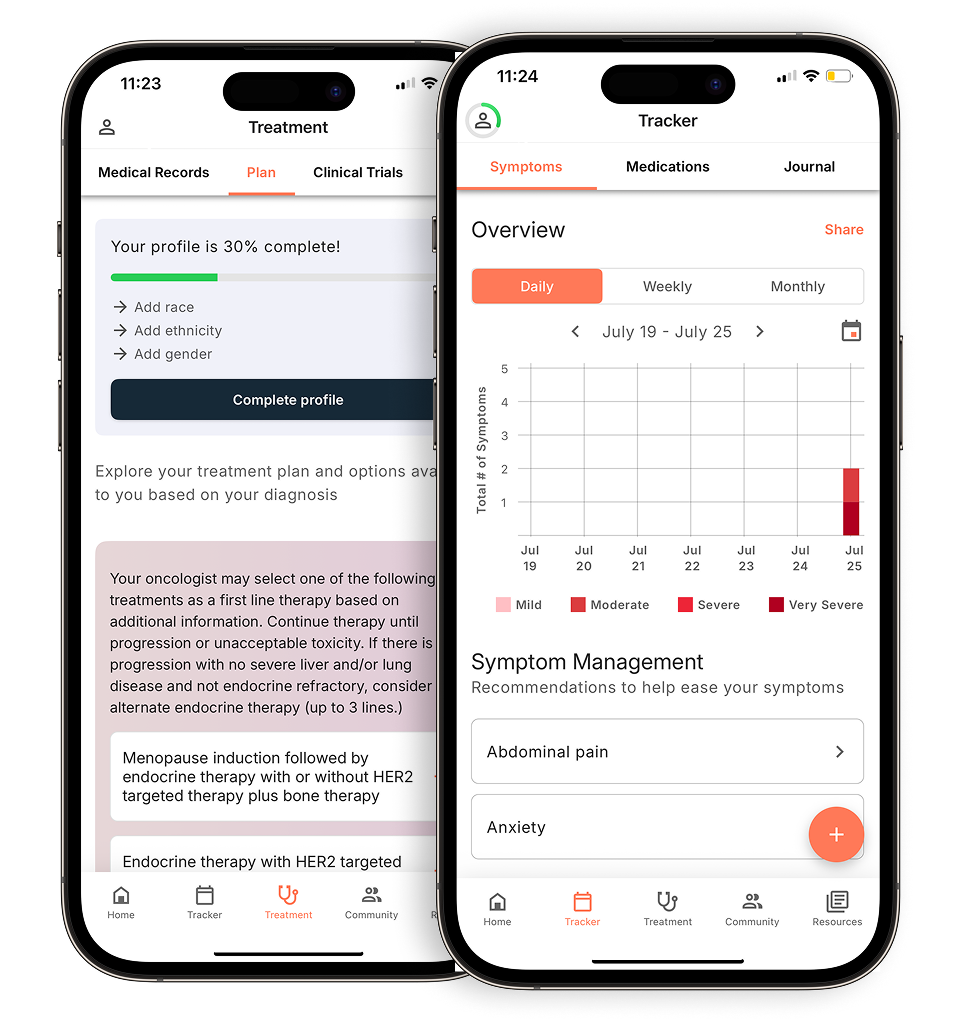
As a platform built by and for patients, Outcomes4Me is designed to make managing cancer treatment less complicated. The app provides you with personalized information based on your specific diagnosis, stage, and medical history. It uniquely integrates with the NCCN Guidelines®, which are the recognized standard for cancer care, and presents them in a way that’s easy to understand. When it comes to clinical trials, the app helps you find relevant options tailored to your profile. This means you spend less time searching and more time exploring trials that are a genuine potential match for you. It’s a powerful tool for getting clear, evidence-based guidance and feeling more in control of your treatment path.
Understand your NCCN Guidelines®-based options
One of the most empowering things you can do is understand the standard of care for your specific diagnosis. The Outcomes4Me app helps you do just that by taking the official NCCN Guidelines® and making them easy to understand. Instead of trying to decipher complex medical documents, the app gives you a personalized report with treatment recommendations that align with these expert guidelines. This means you can walk into your doctor’s office with a clear understanding of your options, ready to have a more productive conversation about what’s next for your care, including whether a clinical trial fits into that plan.
Access your medical records in one place
Juggling paperwork and test results from different doctors and hospitals can be exhausting. The Outcomes4Me app simplifies this by giving you one secure place to store and view all your medical records. Having your entire health history at your fingertips makes it much easier to track your progress and share information with your care team. When you’re exploring clinical trials, having quick access to details like your diagnosis date, past treatments, and specific biomarkers is essential for checking eligibility. This feature helps you stay organized and prepared for any conversation about your health.
Connect with clinical care specialists
Sometimes you have questions that come up between appointments, and you need a trusted resource to turn to. The Outcomes4Me app offers a direct line to clinical care specialists who can provide guidance and support throughout your cancer journey. This team can help you make sense of your treatment options, understand your medical records, and answer questions you might have about clinical trials. It’s a valuable layer of support that ensures you never feel like you’re going through this process alone, giving you the confidence to ask the right questions and make informed decisions.
Get personalized news and resources
The world of cancer research is always evolving, and staying informed can feel like a full-time job. The app cuts through the noise by delivering the latest news and resources that are directly relevant to your diagnosis. This includes updates on new treatments, research breakthroughs, and information about managing symptoms and side effects. By personalizing the content you receive, the app ensures you’re getting valuable information that can help you on your journey. This keeps you aware of the changing landscape of care and helps you feel more prepared for discussions with your oncologist about all available avenues for treatment.
LUNGevity Lung Cancer Navigator
Developed by the LUNGevity Foundation, a leading lung cancer advocacy organization, the Lung Cancer Navigator is a free app created specifically for people impacted by this disease. It serves as a comprehensive resource, offering access to the latest medical information and treatment news that is customized to your specific type of lung cancer. The app is a trusted source for understanding your diagnosis and managing your care. Within the platform, you can find resources and guidance on clinical trials, helping you stay informed about emerging research and potential studies that could be a fit for you. It’s like having a dedicated lung cancer resource library right in your pocket.
Trialing App
While many apps are designed for patients, the Trialing app is a unique tool built for healthcare professionals. So, why is it on this list? Because it empowers your doctor to be an even better advocate for you. Oncologists can use this free app to quickly search a global database of cancer trials by cancer type, treatment, or trial phase. This makes it much easier for them to find and refer patients like you to appropriate studies. By making your doctor aware of this tool, you can help them efficiently explore all possible avenues for your care. It’s a great example of how technology can improve the partnership between you and your care team.
ClinicalTrials.gov Mobile App
ClinicalTrials.gov is the U.S. government’s official registry of clinical trials, making it one of the most comprehensive and authoritative databases in the world. While the website is incredibly thorough, it can be a bit dense to get through. The ClinicalTrials.gov mobile app brings all of that powerful information to your phone in a more user-friendly format. You can easily search for lung cancer studies based on your condition, location, age, and other important criteria. The app allows you to save trials you’re interested in and share them with your family or your oncologist. It’s an essential tool for anyone who wants direct access to a complete and unbiased list of available clinical trials.
Antidote
The mission behind Antidote is simple: to connect patients with medical research. This app works like a smart matchmaker for clinical trials. You start by answering a few questions about your condition, and Antidote’s technology searches through its partner trials to find studies that could be a fit for you. The platform is designed to be intuitive, simplifying the search process and presenting your options in a clear, understandable way. It helps you cut through the noise and focus on trials that are truly relevant to your health situation. For anyone feeling overwhelmed by the prospect of finding a trial, Antidote offers a straightforward and supportive starting point for exploring new treatment possibilities.
How to use a clinical trial app effectively
Once you’ve chosen an app, the next step is to make it work for you. Think of it as a powerful tool—the more you know how to use it, the more effective it will be. Setting up your profile correctly and understanding the search features can make a world of difference in finding the right trial. Taking a few minutes to get familiar with the app’s functions will save you time and help you find the most relevant opportunities for your specific situation. These simple steps will help you get the most out of your chosen clinical trial finder.
Start by creating your medical profile
The first thing you should do is create a complete and detailed medical profile. This is your foundation. By providing specific information about your diagnosis, treatment history, and overall health, you allow the app to do its best work personalizing your results. According to the LUNGevity Foundation, a detailed profile helps you and your caregivers communicate important details in real time, making it easier to manage your care. This isn’t just for the app’s algorithm; it also creates a handy, centralized record of your health information that you can reference when talking with your oncology team about potential trials.
Use search filters to narrow your options
A comprehensive database of clinical trials is great, but it can also be overwhelming. This is where search filters become your best friend. Filters allow you to narrow down a massive list of studies to the ones that are actually relevant to you. Most apps let you filter by cancer type, the specific treatment being studied, or the trial’s phase. As the Trialing App notes, this gives you access to a current list of trials from around the world that you can sort through efficiently. Take the time to play with the filters to see how they work and ensure you’re only seeing the options that truly fit your needs.
How to understand the eligibility criteria
Before you can join a trial, you have to meet its specific requirements, known as “eligibility criteria.” According to the National Cancer Institute, you need to know specific facts about your cancer to see if you qualify, including its type and stage, past treatments, and any known genetic changes. Your age, overall medical history, and current health also play a big role. Think of these criteria as a checklist. The more information you have about your own diagnosis, the easier it will be to find a clinical trial where you meet the requirements for participation.
Set up alerts for new trials
The world of cancer research moves quickly, and new trials are always starting. A good app will help you stay on top of these developments without having to constantly check for updates yourself. Many apps have features that notify you when a new trial that matches your profile becomes available. As The University of Kansas Cancer Center points out, these tools help patients stay updated on the latest research from cancer centers across the country. Be sure to turn on notifications or subscribe to alerts within the app so you’re among the first to know when a promising new opportunity arises.
Weighing the pros and cons of a clinical trial
Deciding whether to join a clinical trial is a deeply personal choice, and it’s one you should make with your doctor and loved ones. Like any treatment path, it comes with potential benefits and drawbacks. Thinking through these points can help you figure out if a trial is the right next step for you. It’s all about weighing the potential for a new, effective treatment against the unknowns that come with it.
Pro: You may get access to new treatments
One of the biggest draws of a clinical trial is getting access to innovative treatments before they are widely available to the public. These studies are at the forefront of medicine, testing new drugs, therapies, and approaches that could become the next standard of care. For lung cancer, recent advances in immunotherapy have dramatically changed the treatment landscape, and many of these breakthroughs happened in clinical trials. By participating, you could be among the first to benefit from a therapy designed to be more effective than existing options, offering a new sense of hope and possibility for your treatment journey.
Con: There can be unknown risks and side effects
Because trial treatments are new, there can be unknown risks and side effects. While every trial has a detailed plan to monitor for these, it’s a valid concern. It’s important to know that your safety is the top priority. The research team closely monitors patients throughout the study. If your health deteriorates or the side effects become too difficult, the study doctor can take you out of the trial. You always have the right to leave a study at any time, for any reason. Open communication with the research team is key to managing any side effects that come up.
Con: It may require a commitment of time and travel
Participating in a clinical trial often requires a significant commitment of your time and energy. Trials are usually conducted at specific hospitals or cancer centers, which may not be close to your home. This can mean you need to plan for travel to trial sites for treatments, check-ups, and follow-up appointments. These visits can be more frequent or last longer than standard care appointments. It’s a good idea to consider the logistics: Can you take time off work? Do you have support for travel and lodging if needed? Understanding these practical details upfront will help you make a more informed decision.
How a trial might fit with your current care plan
Many people worry that joining a trial means they’ll stop receiving any treatment at all. That’s rarely the case. Most lung cancer trials compare a new, promising treatment against the current standard of care. This means you would receive either the new drug or the best treatment that is already available—not a placebo or sugar pill. Placebos are generally only used in cancer clinical trials when there is no existing standard treatment for a specific cancer type. Your doctor can explain the trial’s design, so you know exactly what to expect and how it compares to your other treatment options.
What to consider before joining a clinical trial
Deciding to join a clinical trial is a significant step in your cancer journey, and it’s a choice that is entirely yours to make. It’s about weighing the potential benefits against the possible risks and figuring out what feels right for you and your life. This isn’t a decision you have to make alone. Your family, friends, and especially your healthcare team are all there to support you. Thinking through a few key areas can help you feel confident and clear as you explore your options. It’s all about gathering the right information so you can make an informed choice that aligns with your personal health goals.
Important factors to think about
The best place to start is by having an open conversation with your doctor. Your oncology team understands your specific diagnosis and medical history better than anyone. According to the National Cancer Institute, the best first step is to talk to your doctor or health care team, as they might know about trials that are a good fit for you. They can help you find relevant studies, understand the science behind them, and weigh the pros and cons. Think of this as a partnership. You bring your personal goals and questions, and they bring their medical expertise. Together, you can explore whether a trial is a good addition to your treatment plan.
What should you ask your doctor?
When you meet with your doctor or the research team, it helps to have a list of questions ready. This ensures you cover all your bases and get the clarity you need. You’ll want to understand the purpose of the study and how it might affect you. The National Cancer Institute suggests asking key questions like: What is the trial’s main goal? Does it aim to cure your cancer, slow its growth, or manage symptoms? Does this match what you want? Other important questions include what tests and treatments are involved, how long the trial will last, and what the potential side effects are. Don’t hesitate to ask anything that comes to mind—no question is too small.
How to understand costs and insurance coverage
It’s natural to worry about the financial side of joining a clinical trial. The good news is that patient care costs, like doctor visits and lab tests that you would have as part of your standard treatment, are typically covered by health insurance. The trial sponsor usually pays for the research-related costs, such as the investigational new drug. However, it’s essential to confirm the details upfront. Before you agree to anything, the trial’s financial coordinator can walk you through all the potential expenses and work with your insurance company. This helps ensure there are no surprises down the road, so you can focus on your health.
What “informed consent” really means
You’ll hear the term “informed consent” a lot when looking into clinical trials, and it’s a cornerstone of patient safety. It’s much more than just signing a piece of paper. As the Dana-Farber Cancer Institute explains, informed consent is a process that ensures you fully understand the trial’s purpose, procedures, potential risks, and benefits before you agree to join. The research team will review a detailed document with you and answer all your questions. This is an ongoing conversation, and you have the right to leave a trial at any time, for any reason. It’s all about empowering you to make the best decision for your own health.
What about getting a second opinion?
Exploring clinical trials is a fantastic way to take an active role in your care, and so is getting a second opinion. This isn’t about questioning your current oncologist’s expertise; it’s about gathering as much information as possible to feel certain about your treatment path. A fresh perspective from another expert can confirm you’re on the right track or introduce new ideas you hadn’t considered. Think of it as building your personal board of advisors. Your cancer care is a team effort, and adding another qualified voice can bring clarity and peace of mind. It’s a standard and respected part of the medical process that empowers you to make the most informed decisions for your health.
How a second opinion can help you feel confident
Making decisions about your treatment plan can feel heavy, and it’s normal to want reassurance that you’re making the best possible choice. Getting a second opinion is one of the most effective ways to build confidence in your care plan. If a second doctor reviews your case and agrees with the proposed treatment, it can provide powerful validation and help you move forward with less doubt. On the other hand, if the second opinion offers a different perspective or suggests a clinical trial you weren’t aware of, it opens up a valuable conversation with your primary care team. Either way, you gain a more complete picture of your options, which is essential for feeling in control of your journey.
Connecting with top cancer centers
Sometimes, the most specialized expertise for your specific type of lung cancer is at a major cancer center that might be hundreds of miles away. In the past, that distance was a major barrier. Today, technology has made it much easier to access these experts through virtual second opinions. This allows a specialist from a leading institution to review your medical records, imaging, and pathology reports without you having to travel. At Outcomes4Me, we help people with cancer get virtual second opinions from top-tier hospitals, connecting you with leading minds in oncology who can provide insights on the latest research and treatment strategies, all from the comfort of your home.
Finding financial support for a second opinion
One of the biggest concerns about seeking a second opinion is often the cost, as many health insurance plans don’t cover it. We believe that financial constraints should never stand in the way of getting the best possible care. That’s why Outcomes4Me offers a program to help with this expense. We will pay for some of the cost of a virtual second opinion, contributing up to $700 toward the consultation. We offer this support because we are committed to ensuring every patient has access to the information and expertise they need to make confident decisions. It’s a core part of our mission to put you at the center of your care.
Let’s talk about common myths about clinical trials
Let’s talk about some of the stories you might have heard about clinical trials. When you’re already managing so much, the last thing you need is misinformation adding to your stress. The idea of joining a trial can feel like a big leap into the unknown, and it’s completely normal to have questions and concerns. Unfortunately, there are a lot of myths floating around that can make the decision even harder. These misconceptions can paint a scary or inaccurate picture of what it’s really like to participate in research. My goal here is to clear up some of the most common ones so you can approach this conversation with your care team feeling more confident and informed. We’ll look at what’s true, what’s not, and what you really need to know about your safety and options.
Myth: You might only get a placebo
One of the biggest fears is, “What if I only get a sugar pill?” It’s a valid concern, but the reality in cancer research is often different. In many cancer trials, a placebo is only used when there is no existing standard treatment for a condition. More commonly, a trial will compare a new treatment against the current best-known treatment, also called the standard of care. This means you would receive either the new, promising therapy or the best treatment already available. You can find more details about these cancer clinical trial myths from cancer experts. No matter what, you won’t be left without any care.
Myth: Trials are only for when other treatments fail
Another common belief is that clinical trials are a last-ditch effort when all other options have failed. While trials can be a lifeline in those situations, they are absolutely not limited to them. There are clinical trials available for people at all different stages of a lung cancer diagnosis, including right at the beginning. Some studies explore adding a new drug to a standard first-line therapy to see if it improves outcomes. Thinking of a trial as another potential path on your treatment journey—rather than the end of the road—opens up more possibilities to discuss with your oncologist.
How your rights and safety are protected
Your safety is the number one priority in any clinical trial. It’s easy to worry that you’ll be treated like a number, but strict rules are in place to protect you. The research team will monitor your health incredibly closely, often more than in your standard care. You have the right to ask questions at any point and to leave the trial for any reason, at any time, without it affecting your regular care. The entire process is built on a foundation of your well-being and informed consent. These myths and facts from research groups can help you better understand the protections in place for every participant.
How to prepare for a clinical trial
Thinking about a clinical trial can feel like a huge step, but preparing for it doesn’t have to be overwhelming. Taking a few proactive steps can make the entire process feel much more manageable and put you in the driver’s seat of your healthcare journey. When you’re organized and informed, you can have more productive conversations with your care team and feel more confident in your decisions. It’s all about breaking the process down into clear, actionable tasks that give you a sense of control.
Think of it like preparing for a big trip. You wouldn’t just show up at the airport without a passport or a destination in mind. Similarly, before you explore clinical trials, you’ll want to gather your essential documents, understand your starting point, and consult your trusted guide—your oncologist. By getting your medical information in order, truly understanding your diagnosis, and looping in your doctors, you build a solid foundation. This preparation ensures that when you find a promising trial, you’re ready to move forward with clarity and confidence, knowing you’ve done your homework and are making the best choice for you.
Gathering your medical records
Before you can find the right trial, you need a clear picture of your medical history. The first step is to gather all your health records in one place. This includes specific facts about your lung cancer, like its exact type and stage, a list of all your past treatments, and the results of any genetic testing. These details are part of what researchers call “eligibility criteria,” which are the requirements for who can join a study. Having this information organized and ready will save you time and make discussions with trial coordinators much smoother. It’s your personal health resume, and it’s essential for finding the perfect match.
Understanding the details of your diagnosis
Having your records is one thing; understanding them is another. Take some time to really get familiar with the specifics of your diagnosis. What type of lung cancer do you have? What stage is it? What treatments have you already tried, and how did your body respond? Knowing these details empowers you to be an active participant in your search. When you understand your own health situation, you can more effectively filter through trial options and ask insightful questions. This knowledge helps you move from being a passenger to being a co-pilot in your treatment journey, ensuring the choices you make are truly informed.
Have a conversation with your care team
You don’t have to do this alone. Your oncologist and healthcare team are your most valuable resources. They know you and your medical history best, and they may already be aware of clinical trials that could be a good fit for you. The National Cancer Institute highlights this conversation as one of the most important first steps. Schedule a dedicated appointment to discuss your interest in clinical trials. Your doctor can help you weigh the potential benefits and risks of a study, answer your questions, and guide you through the complexities of the enrollment process. They are your partner in this, so lean on their expertise.
Where else can you find lung cancer trials?
While clinical trial apps are powerful tools, they are even more effective when used alongside guidance from trusted experts. Think of your search as a team effort. Combining technology with human connection gives you the most comprehensive view of your options. Here are a few key resources that can work with you to find the right lung cancer trial.
Talk to your cancer center’s research team
One of the best places to start your search is with the medical team you already know and trust. Your doctor and the staff at your cancer center are familiar with your specific diagnosis and treatment history. The National Cancer Institute suggests that the best first step is to talk to your doctor, as they may already know about trials that are a good fit or can help you search for one. Many major hospitals and cancer centers have dedicated research teams and even post a list of their available trials directly on their websites, making it simple to see what’s happening right where you receive care.
Connect with patient advocacy groups
You don’t have to go through this process alone. Patient advocacy groups are incredible sources of information, support, and resources tailored to your specific type of cancer. For lung cancer, organizations like the American Lung Association are dedicated to helping people find and understand clinical trials. These groups often have trial matching services, educational materials, and communities of other patients who can share their experiences. They can help demystify the process and empower you to feel confident when discussing trial options with your care team.
Ask your oncologist for a referral
Your oncologist is your most important partner in making treatment decisions. They have a deep understanding of your health and can help determine if a clinical trial aligns with your treatment goals. Oncologists also have access to professional networks and databases that allow them to search for trials based on specific criteria, like cancer type, treatment, or trial phase. By sharing your interest in clinical trials, you open a dialogue that allows them to actively look for opportunities that could be a good match for you, ensuring any potential trial fits seamlessly into your overall care plan.
Related Articles
- Non-Small Cell Lung Cancer Clinical Trials Community | Outcomes4Me
- Why and how to join a clinical trial for my NSCLC – Outcomes4Me
View your personalized treatment plan in the Outcomes4Me app
Use your diagnosis to unlock personalized NCCN Guidelines®-aligned recommendations.
Frequently Asked Questions
What if my doctor hasn’t mentioned clinical trials to me? You should absolutely bring it up yourself. Doctors are managing a lot of information, and sometimes a trial that could be a great fit isn’t immediately top of mind. By asking about trials, you’re showing your care team that you’re interested in exploring all possible avenues for your treatment. It opens a conversation and makes you an active partner in your own care, which is always a good thing.
Will I have to pay for everything if I join a clinical trial? This is a common worry, but typically, you won’t be responsible for all the costs. The trial sponsor usually covers expenses related to the research itself, like the new drug being studied. Your health insurance is often billed for the routine patient care costs you would have anyway, such as doctor visits and standard lab tests. Before you agree to anything, a financial coordinator from the trial team will review all the potential costs with you so there are no surprises.
How can I be sure I’ll be safe during the trial? Your safety is the absolute top priority. Every clinical trial follows a strict plan, or protocol, that is reviewed by an independent board to ensure patient safety. The research team will monitor your health very closely, often with more frequent check-ups and tests than you would receive in standard care. They are constantly watching for any side effects and will act immediately to keep you safe.
Am I guaranteed to get the new treatment being studied? Not always, and it’s important to understand how the study is designed. Many lung cancer trials compare the new treatment against the current best-available treatment, which is called the “standard of care.” This means you will either receive the new therapy or the best treatment that is already approved. You won’t be left without any care. The research team will explain the trial’s structure to you in detail before you decide to join.
What happens if I join a trial and decide it’s not right for me? You can leave a clinical trial at any time, for any reason. Participating is completely voluntary, and your decision to stop will not affect your relationship with your doctors or the quality of your regular medical care. The process of “informed consent” is ongoing, which means you have the right to change your mind if the trial is no longer a good fit for your life or your health goals.