
Colorectal cancer (CRC) is one of the most common cancers, but it’s also one of the most preventable and treatable when found early. With ongoing research, there are now more ways than ever to catch CRC sooner and treat it more effectively. Here’s what’s new in prevention, screening, and treatment.
New blood-based screening options
Screening remains one of the most powerful tools in preventing CRC. It helps doctors find and remove precancerous growths, called polyps, before they turn into cancer. Screening can also detect cancer early when treatment is most effective.
There are several ways to screen for CRC, but some of the screening procedures, like a colonoscopy, require a lot of preparation. One exciting recent development is the approval of a new blood test for CRC screening.
In 2024, the FDA approved a blood test designed for people at average risk. In a large study, the test detected over 83% of CRCs found during colonoscopy.
While not yet part of official screening guidelines, blood-based tests may soon offer a simpler and faster alternative to traditional methods, especially for people hesitant to undergo a colonoscopy.
Evidence-based guidance powered by NCCN Guidelines®
Personalized treatment plans shaped by the latest oncology standards—tailored to your diagnosis.
Get started
View your personalized treatment plan in the Outcomes4Me app
Use your diagnosis to unlock personalized NCCN Guidelines®-aligned recommendations.
Continue in app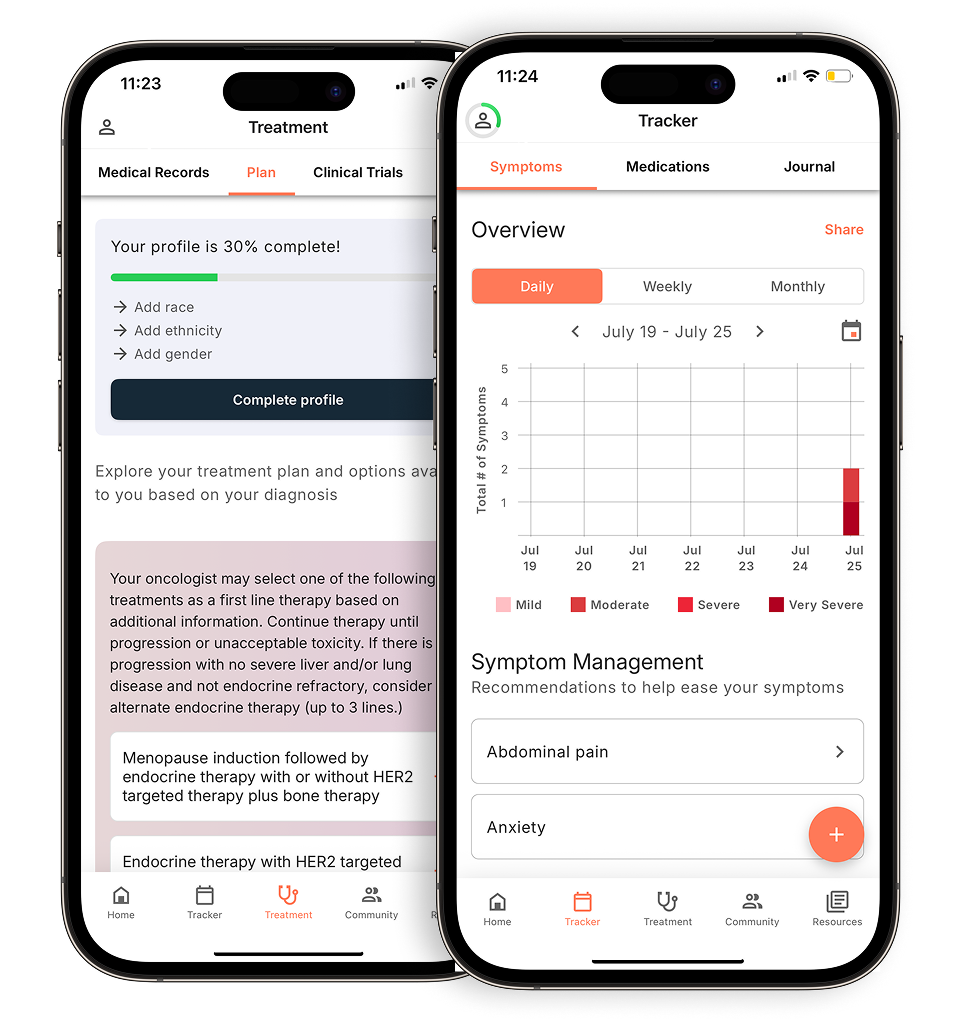
Finding CRC earlier in younger adults
CRC rates have been rising among adults under 50. Researchers recently identified four “red flag” symptoms that may help detect the disease earlier in younger adults, improving outcomes through timely diagnosis. Symptoms include:
- Diarrhea
- Rectal bleeding
- Abdominal pain
- Iron-deficiency anemia
Treatment advances: Immunotherapy, targeted therapy, and more
Immunotherapy for Lynch syndrome and MSI-H Cancers
Up to 5% of CRCs are linked to Lynch syndrome, an inherited condition that affects the body’s ability to repair DNA. These cancers often have many mutations, making them more likely to respond to immunotherapy.
Patients with microsatellite instability-high (MSI-H) tumors—found in about 15% of early-stage and 5% of advanced CRCs—may also benefit from immune checkpoint inhibitors. Ongoing clinical trials are studying whether combining immunotherapy drugs with chemotherapy or targeted therapy can further improve outcomes.
For patients without Lynch syndrome or MSI-H, immunotherapy hasn’t been as effective, though researchers are testing combinations with chemotherapy, targeted drugs, and even viruses to enhance results.
Targeted therapies: Personalizing treatment
Continual progress is being made in targeting specific genetic changes that drive tumor growth. These advances are helping doctors tailor treatments based on each patient’s unique cancer profile. Researchers are developing new drugs that can help target the genetic alterations. Targeted therapies can be combined with other treatment options or used as a standalone treatment. Through biomarker testing, your care team can determine whether you’re a right fit for targeted therapies.
Liquid biopsies: A less invasive way to monitor cancer
Another exciting area of research is liquid biopsy, which detects fragments of tumor DNA in blood or urine. This method could help detect CRC earlier, monitor how well treatments are working, and identify if the cancer returns after surgery.
Trials are currently underway to determine how circulating tumor DNA (ctDNA) testing can guide decisions about who should receive chemotherapy after surgery.
Robotic and minimally invasive surgery
Surgery remains a key treatment for many patients and robotic technology is helping to make it less invasive and more precise. In robotic-assisted surgery, the surgeon uses a console to control robotic arms equipped with a high-definition camera. This allows for smaller incisions, less pain and infection risk, and faster recovery.
Looking ahead
From easier screening options and blood-based tests to advanced immunotherapies and minimally invasive surgery, progress in CRC research continues to improve prevention, early detection, and treatment.
Join the Outcomes4Me Community for a safe space to share your story and connect with others who share your diagnosis.
Personalized support for real care decisions
Understand your diagnosis, explore clinical trials, and track symptoms--all in one place.
Get started
Compare treatments, prepare for appointments, and track side effects—all in the app
Built for your diagnosis, Outcomes4Me gives you the tools to make confident, informed decisions—right when you need them.
Continue in app