
Think of your oncology team as detectives solving a complex case. They use many different clues to get a full picture of your health, and one of the most common is a blood test. This test measures the ca-125 ovarian cancer marker, a protein that can indicate changes related to the disease. But just like a single clue rarely solves a case, this number isn’t a diagnosis on its own. Instead, it’s a powerful tool your doctor uses to monitor your response to treatment and watch for recurrence. Understanding how this tool works can help you feel more in control of your care and your conversations with your medical team.
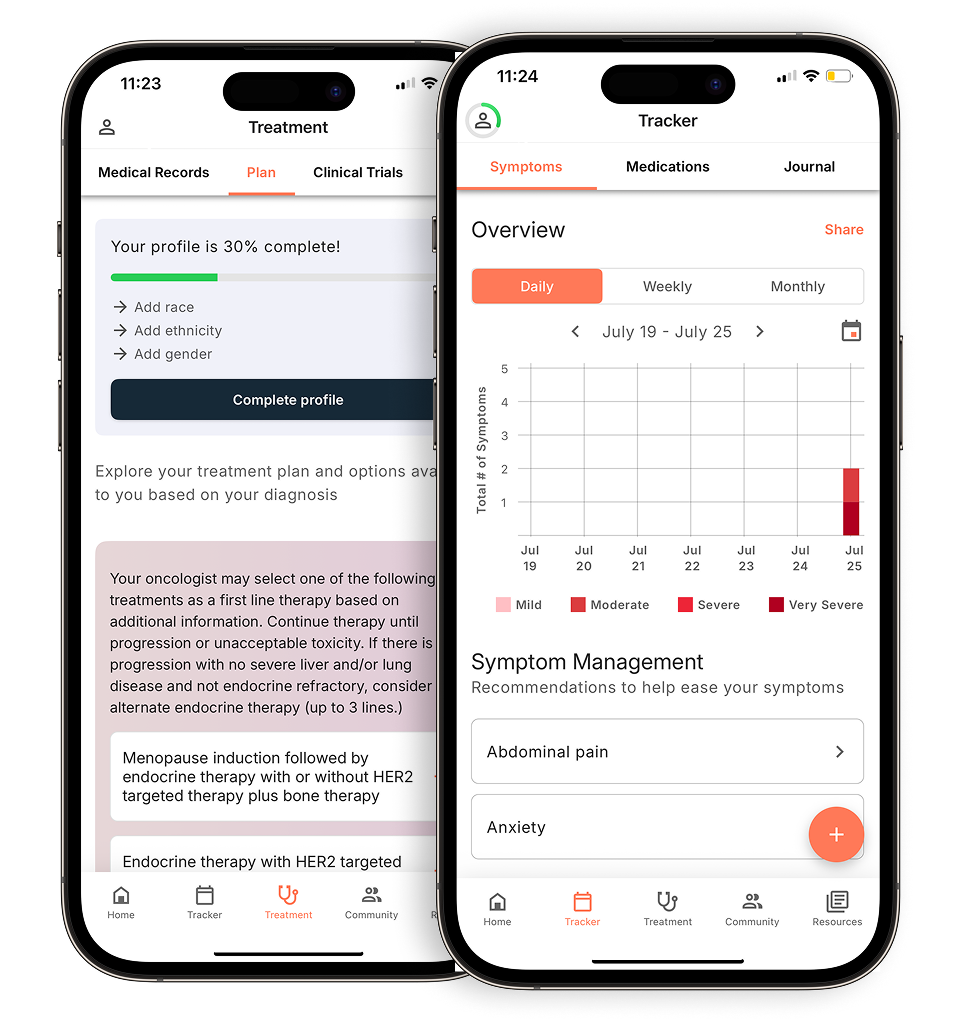
View your personalized treatment plan in the Outcomes4Me app
Use your diagnosis to unlock personalized NCCN Guidelines®-aligned recommendations.
Key Takeaways
- Think of CA-125 as a progress report, not a diagnosis. This blood test is most effective for monitoring your response to treatment or watching for recurrence after you’ve already been diagnosed. It’s one clue, not the final answer.
- Focus on the trend, not a single test result. A single CA-125 number is just a snapshot in time. Your doctor is looking for a pattern over several tests to understand the bigger story of your health, which is far more meaningful.
- A high CA-125 level has many possible causes. Ovarian cancer is not the only reason for an elevated result. Common conditions like endometriosis, fibroids, or even your menstrual cycle can cause a spike, which is why your doctor will always use this test alongside other information to get the full picture.
What is the CA-125 Ovarian Cancer Marker?
If you or a loved one is going through ovarian cancer care, you’ll likely hear your doctor mention the CA-125 test. It can sound technical, but it’s a straightforward concept. CA-125 is a type of protein that doctors can measure with a simple blood test. Think of it as a piece of information—one of several your care team uses to understand what’s happening in your body. It’s not a definitive answer on its own, but it’s a valuable tool for tracking the cancer’s response to treatment and watching for its return. Let’s break down what this marker is and what it means for you.
What is Cancer Antigen 125?
Cancer Antigen 125, or CA-125, is a protein that has been the main tumor marker for ovarian cancer for about 40 years. A tumor marker is a substance that can be found in the body, often in the blood, when cancer is present. In this case, CA-125 is frequently found on the surface of ovarian cancer cells, and small amounts can enter the bloodstream. A simple blood test can then measure the level of this protein. Your oncology team primarily uses this test to see how well a treatment is working or to check for signs that the cancer may have come back after treatment has finished. It provides helpful clues about the disease’s activity.
How Does CA-125 Relate to Ovarian Tissue?
The CA-125 protein is found on the surface of many ovarian cancer cells, which is why its level in the blood can rise when the disease is present. However, it’s important to know that this protein also appears on other normal, healthy tissues in the body. Because of this, a high CA-125 level doesn’t automatically mean cancer. Many other factors and non-cancerous health conditions can cause your levels to go up. That’s why the CA-125 test isn’t used by itself to diagnose ovarian cancer. Instead, your doctor will look at the results alongside other information, like imaging scans and physical exams, to get a complete picture of your health.
What to Expect from a CA-125 Blood Test
If your doctor has recommended a CA-125 blood test, it’s natural to have questions about what the process involves and what the results might mean. The good news is that the test itself is very straightforward. Understanding what to expect can help you feel more prepared and in control as you move through this part of your care plan. Let’s walk through the simple steps of the test, what the numbers mean, and why your doctor might be using this tool.
The Simple Steps of the Test
Getting a CA-125 test is just like any other routine blood draw. A healthcare professional will take a small blood sample from a vein in your arm, a process that usually takes less than five minutes. One of the best parts is that you don’t need to do anything special to get ready for it—no fasting or changing your routine is required. It’s a quick and simple procedure that provides your care team with a valuable piece of information. The sample is then sent to a lab where the level of CA-125 protein is measured.
What Do “Normal” and “Elevated” Levels Mean?
After the lab analyzes your blood, you’ll get a result measured in units per milliliter (U/mL). Generally, a level below 35 U/mL is considered normal. However, it’s important to know that this number can vary slightly from lab to lab. If your level is higher than 35, it’s considered elevated or unusual. While high CA-125 levels can be a sign of ovarian cancer, many other things can cause them to rise. Benign conditions like endometriosis, fibroids, or even menstruation can lead to an elevated result. This is why your doctor will never look at this number in isolation.
Why Your Doctor Might Order This Test
The most common reason your doctor will order a CA-125 test is to monitor how well your ovarian cancer treatment is working or to check if the cancer has returned after you’ve finished treatment. It’s a powerful tool for tracking progress over time. If your CA-125 levels decrease during treatment, it’s usually a good sign that the therapy is effective. On the other hand, if the levels stay the same or begin to rise, it might indicate that your care team needs to explore different treatment options. Think of it less as a one-time snapshot and more as a way to follow the trend of your health over time.
How to Make Sense of Your CA-125 Results
Getting lab results back can feel like trying to read a different language. When you see a number like your CA-125 level, it’s natural to want to know exactly what it means for you and your health. The key thing to remember is that this number is just one piece of your health puzzle. It’s not a definitive answer on its own, but rather a clue that helps your care team see a bigger picture. Your doctor will look at this result alongside your symptoms, imaging scans, and overall health to understand what’s going on. Let’s walk through how to interpret these results so you can feel more prepared for conversations with your doctor.
A Guide to Interpreting Your Numbers
The CA-125 blood test measures a protein called cancer antigen 125 in your bloodstream. This protein is a “tumor marker.” While high levels can be linked to ovarian cancer, many non-cancerous conditions can also cause your CA-125 levels to rise. Things like menstruation, uterine fibroids, and even pregnancy can lead to an elevated number. That’s why a single high reading isn’t a diagnosis. It’s a signal for your doctor to investigate further—a starting point for a conversation, not a conclusion.
Why Trends Matter More Than a Single Result
One of the most important things to understand about CA-125 results is that the trend over time is often more meaningful than a single number. Your doctor will likely order a series of these tests to see if your levels are rising, falling, or staying the same. If you’re undergoing treatment, a consistent drop in your CA-125 levels is a good sign that the treatment is working. If the levels start to rise after treatment, it could indicate a recurrence. A single test is a snapshot; a series of tests tells a much more complete story.
How Your Doctor Puts Your Results in Context
Your doctor is your best resource for understanding what your CA-125 results mean for you. They won’t look at the number in isolation. Instead, they’ll consider it with your complete medical history, physical exams, and other diagnostic tests like ultrasounds or CT scans. Because so many factors can influence your CA-125 level, context is everything. A high CA-125 level doesn’t automatically point to cancer. Your care team’s job is to put all the pieces together to make an accurate diagnosis and create the right treatment plan.
Can CA-125 Levels Diagnose Ovarian Cancer?
So, can a high CA-125 level tell you if you have ovarian cancer? The short answer is no. While this blood test is an important tool, it cannot diagnose ovarian cancer on its own. Think of it as one clue rather than the final answer. Its primary strength is in monitoring the disease in women who have already been diagnosed, not in screening the general population. The reason a CA-125 test isn’t used for diagnosis is that many different factors can cause the levels to rise. Your doctor will always use these results alongside other information, like imaging scans and a physical exam, to build a complete picture of your health.
The Difference Between Monitoring and Screening
It’s helpful to understand the distinction between screening and monitoring. A screening test is used broadly on people without any symptoms to catch a disease early. Unfortunately, the CA-125 test isn’t reliable enough for this purpose because too many other factors can influence its levels. Using it to screen everyone would lead to a lot of unnecessary worry and invasive follow-up tests for people who don’t actually have cancer. Monitoring, on the other hand, is where the
Understanding False Positives and Negatives
A major reason the CA-125 test isn’t used for diagnosis is the high rate of “false positives.” This means your CA-125 level is elevated, but you don’t have ovarian cancer. Many common, non-cancerous conditions can cause a temporary spike in CA-125, including menstruation, uterine fibroids, endometriosis, and even pregnancy. This can lead to significant anxiety and unnecessary procedures to rule out cancer. On the flip side, a “false negative” can also occur. This is when your CA-125 level is in the normal range, but ovarian cancer is actually present. Not all ovarian cancers produce high levels of CA-125, especially in the early stages, so relying on this test alone could cause a diagnosis to be missed.
The Challenge of Detecting Early-Stage Cancer
One of the biggest hurdles in treating ovarian cancer is catching it early, and this is where the limitations of the CA-125 test are most apparent. In the beginning stages of the disease, CA-125 levels are often normal in about half of all women who are later diagnosed. The test is particularly unreliable for detecting some of the most aggressive types of tumors before they have spread. This is why researchers are actively working to find better biomarkers and screening methods for early-stage ovarian cancer. For now, the CA-125 test remains a critical tool for monitoring the disease, but it is not the definitive diagnostic test that patients and doctors hope for. It’s one piece of a much larger diagnostic puzzle.
What Other Conditions Cause Elevated CA-125 Levels?
Receiving an elevated CA-125 result can be unsettling, but it’s important to know that ovarian cancer is not the only reason for a high reading. This protein can be produced by various tissues in the body, and many non-cancerous conditions can cause levels to rise. Because CA-125 is not specific to ovarian cancer, doctors use it as one piece of a larger diagnostic puzzle rather than a standalone answer.
Understanding the other potential causes can help you have a more informed conversation with your healthcare team about what your results mean and what the next steps should be. If your levels are high, your doctor will work with you to investigate the underlying cause, which often involves additional imaging tests and a review of your overall health and symptoms.
Common Gynecological Causes
Several common, benign gynecological conditions are known to increase CA-125 levels. Because the CA-125 protein is produced by cells in the reproductive tract, any condition that causes inflammation or cell changes in this area can affect your test results. Even normal physiological processes can cause a temporary spike.
Some of the most frequent gynecological causes include endometriosis, a condition where uterine-like tissue grows outside the uterus, and uterine fibroids, which are non-cancerous growths in the uterus. Pelvic inflammatory disease (PID), an infection of the reproductive organs, can also lead to higher levels. Even a normal menstrual period or pregnancy can cause a temporary increase in CA-125, which is why your doctor will consider your entire health picture when interpreting the results of a CA-125 blood test.
Other Non-Cancer Causes
Beyond gynecological issues, other health conditions can also cause CA-125 levels to go up. This is a key reason why the CA-125 test is not used as a general screening tool for the public. Conditions affecting other organs in the abdomen and chest can sometimes trigger an increase in this protein marker.
For example, certain types of liver disease, like cirrhosis or hepatitis, can lead to elevated CA-125. Inflammation of the abdominal lining, known as peritonitis, is another potential cause. While less common, other types of cancer, such as those of the endometrium, fallopian tube, lung, or pancreas, can also produce CA-125. This wide range of possible causes underscores why a high reading is simply a signal for more investigation, not a definitive diagnosis.
How Doctors Determine the Cause
If your CA-125 level is high, your doctor’s first step is not to assume cancer but to figure out the reason behind the number. An elevated result is a prompt for a more thorough evaluation. Your doctor will consider your symptoms, personal medical history, and family history before ordering follow-up tests to get a clearer picture of what’s happening inside your body.
Typically, the next step involves imaging tests. Your doctor will likely order a transvaginal ultrasound to get a detailed look at your ovaries, uterus, and surrounding structures. In some cases, they may also recommend an MRI or CT scan for more information. These diagnostic tests help your doctor see if there are any cysts, tumors, or other abnormalities that could be causing the elevated CA-125.
How Do Doctors Use CA-125 to Monitor Ovarian Cancer Treatment?
If you’ve been diagnosed with ovarian cancer, the role of the CA-125 test often shifts. It becomes a valuable tool for your care team to track how you’re responding to treatment. Your doctor will likely order this test at regular intervals to get a clearer picture of what’s happening inside your body and help guide your treatment plan. By monitoring the trends in your CA-125 levels, your doctor can make more informed decisions, adjust therapies as needed, and keep a close watch for any changes. It’s a way to stay proactive and ensure your treatment is as effective as possible.
Measuring Your Response to Treatment
During treatment, the CA-125 test is one of the primary ways your oncology team measures progress. The test measures a protein in your blood that acts as a “tumor marker.” If your CA-125 levels begin to drop after starting chemotherapy or another therapy, it’s generally a positive sign that the treatment is working to shrink the cancer. Your doctor will look at a series of tests over weeks or months to see the overall trend. A consistent downward slope is the goal. This data, combined with how you’re feeling and the results from imaging scans, gives your care team a comprehensive view of your response to treatment and helps them plan the next steps in your care.
Watching for Signs of Recurrence
After you’ve completed your initial treatment, your doctor may continue to monitor your CA-125 levels. This is done to watch for any signs that the cancer might be returning, which is known as recurrence. If your levels were high before treatment and then dropped, a steady rise in your CA-125 numbers could be an early indicator that the cancer is active again. It’s important to know that while this monitoring can detect a potential recurrence, studies have not definitively shown that it helps patients live longer. Catching a rise in CA-125 levels early allows your doctor to order other tests, like a CT or PET scan, to confirm if the cancer has returned and discuss next steps with you.
Why This Test is Part of a Bigger Picture
It’s crucial to remember that the CA-125 test is just one piece of a much larger puzzle. A single high number doesn’t automatically mean the cancer has returned, just as a normal number doesn’t always guarantee it’s gone. Many non-cancerous conditions can cause fluctuations, leading to unnecessary worry if the result is viewed in isolation. That’s why your doctor will always interpret your CA-125 results in the context of your overall health. They will consider your physical exams, imaging scans like ultrasounds or CTs, and how you are feeling. The trend of your CA-125 levels over time is far more informative than any single test result. This comprehensive approach ensures your care team has the most accurate information to guide your health decisions.
What Are the Key Limitations of CA-125 Testing?
While the CA-125 test is a valuable tool, it’s important to understand its limitations. It’s not a standalone diagnostic test, and the results can be influenced by many factors. Knowing what the test can and can’t tell you is key to working with your care team to make informed decisions. Your doctor uses this test as one piece of a much larger puzzle, combining it with imaging, physical exams, and your overall health to get the full picture.
The main challenge with CA-125 is that it isn’t specific to ovarian cancer. This means the numbers can go up for many different reasons, which can sometimes cause unnecessary worry. That’s why it’s rarely used as a general screening tool for all women. Instead, it’s most effective when used to monitor treatment progress or check for recurrence in those already diagnosed with ovarian cancer. Understanding these nuances helps you and your doctor interpret the results in the most meaningful way for your specific situation.
The Limits of the Test’s Accuracy
One of the biggest limitations of the CA-125 test is its potential for false alarms, or “false positives.” A high CA-125 level doesn’t automatically mean you have cancer. Many common, non-cancerous conditions can cause the protein level to rise, including endometriosis, uterine fibroids, pregnancy, and even menstruation. Other health issues like heart failure or liver disease can also affect your results.
On the flip side, a normal CA-125 result doesn’t guarantee the absence of cancer. Some people with ovarian cancer, particularly in the early stages, never have elevated CA-125 levels. This is why the test isn’t accurate enough on its own to screen for ovarian cancer in the general population. It’s a helpful indicator, but it’s not definitive.
How Combining Tests Creates a Clearer Picture
Because the CA-125 test has its limits, doctors often use it alongside other tests to get a more accurate assessment. For epithelial ovarian cancer, the most common type, your doctor might also test for another tumor marker called HE4. When used together, the CA-125 and HE4 tests can provide a more reliable picture of how treatment is working or if the cancer has returned.
In some cases, a panel of several biomarkers might be used to improve detection accuracy. By looking at multiple markers at once, your care team can build a more complete profile of what’s happening in your body. This multi-faceted approach helps reduce the chances of a misleading result from a single test and allows for a more confident interpretation of your health status.
Coping with the Ups and Downs of Your Results
Waiting for test results can be stressful, and it’s easy to fixate on a single number. However, with CA-125, the trend over time is often more important than any one result. If your levels are consistently going down during treatment, it’s usually a good sign that the treatment is helping. If the numbers start to rise after treatment has finished, it could indicate that the cancer is recurring.
It’s completely normal to feel anxious about these fluctuations. Try to remember that your CA-125 level is just one data point. Your doctor will always consider it in the context of your other test results, imaging scans, and how you are feeling physically. Open communication with your care team is essential—don’t hesitate to ask questions and share your concerns about what your results mean for your care plan.
Is a CA-125 Test Right for You?
Deciding on any medical test can feel overwhelming, but understanding its purpose is the first step. The CA-125 test isn’t for everyone, and its usefulness depends entirely on your personal health situation. Think of this as a starting point for a conversation with your doctor to figure out if this test fits into your care plan.
Who Benefits Most from This Test?
The most common and effective use of the CA-125 test is for women who have already been diagnosed with ovarian cancer. It’s a tool your oncology team can use to track how well your treatment is working. The test measures a protein in your blood called a tumor marker, and changes in its level can give your doctor valuable clues about what’s happening in your body. After you’ve completed treatment, regular CA-125 tests can also help monitor for any signs that the cancer has returned. It’s a key part of ongoing surveillance, helping you and your doctor stay proactive about your health long-term.
Considering Your Risk Factors and Family History
You might wonder if the CA-125 test can be used to screen for ovarian cancer before a diagnosis. For most people, the answer is no. However, it is sometimes used as a screening tool if you are at a very high risk. This includes having a strong family history, such as a mother or sister with ovarian cancer, or having known genetic mutations like BRCA1 or BRCA2. A family history of related cancers, like breast or colon cancer, can also be a factor. If this sounds like you, it’s essential to discuss your family history with your doctor. They can help you understand your personal risk and decide if this test is a worthwhile part of your preventative care strategy.
Key Questions to Ask Your Doctor
Your doctor is your best partner in making decisions about your health. To get the most out of your appointment, go in with a few questions ready. Your doctor will likely look at a series of CA-125 tests over time, as a single result doesn’t tell the whole story. It’s the trend—whether the number is rising, falling, or staying stable—that provides the most meaningful information.
Consider asking your doctor:
- Based on my diagnosis and history, what role will this test play in my care?
- How often will I need to be tested?
- What kind of change in my CA-125 levels would be significant?
- How will we use these results to make decisions about my treatment?
Where CA-125 Fits in Your Ovarian Cancer Care
Think of your ovarian cancer care as a big puzzle. The CA-125 test is an important piece, but it doesn’t give you the full picture on its own. Instead, your care team uses it alongside other tools to understand what’s happening and create a plan that’s tailored just for you. It’s a key player in both monitoring your health and guiding treatment, helping your doctor make informed decisions every step of the way. By combining blood work with other tests and tracking your levels over time, your team gets a more complete view of your health. This comprehensive approach ensures that your treatment plan is not based on a single number but on a holistic understanding of your unique situation. Let’s look at how these pieces fit together to guide your care.
Combining Blood Work with Imaging and Exams
The CA-125 test is a blood test that measures a protein called cancer antigen 125, but it’s rarely a solo act when it comes to diagnosis. Because other non-cancerous conditions can cause CA-125 levels to rise, your doctor will use other diagnostic tools to get a clearer view. These often include imaging tests like a transvaginal ultrasound or a CT scan to look at your ovaries and surrounding tissues. In some cases, they may recommend a biopsy to collect a small sample of cells for examination. Each test provides a different clue, and when combined, they help your doctor confirm a diagnosis and understand the specifics of your situation.
How CA-125 Informs Your Personalized Treatment
One of the most powerful ways your doctor uses the CA-125 test is to track how well your treatment is working. Think of it as a progress report for your body. If your CA-125 levels go down during chemotherapy or other therapies, it’s usually a good sign that the treatment is effective. On the other hand, if the levels rise or stay the same, it might indicate that it’s time to explore other options. This ongoing monitoring also helps your team watch for any signs of recurrence after treatment has finished, allowing them to act quickly if the cancer returns. This makes the CA-125 test a vital part of your long-term, personalized care plan.
Related Articles
- Has anyone faced a cancer scare despite negative markers? | Outcomes4Me Community
- How reliable are CA blood tests for breast cancer monitoring? | Outcomes4Me Community
- Are tumor marker blood tests recommended for monitoring recurrence? | Outcomes4Me Community
- Does the CA 15-3 tumor marker test fluctuate for others? | Outcomes4Me Community
- Has anyone experienced false CA 27-29 marker elevation after chemotherapy? | Outcomes4Me Community
View your personalized treatment plan in the Outcomes4Me app
Use your diagnosis to unlock personalized NCCN Guidelines®-aligned recommendations.
Frequently Asked Questions
Why can’t the CA-125 test be used to screen everyone for ovarian cancer? The main reason is that the test isn’t specific enough. Many common, non-cancerous conditions like endometriosis, fibroids, or even your monthly cycle can cause CA-125 levels to rise. Using it as a general screening tool would lead to a lot of false alarms, causing unnecessary anxiety and follow-up procedures for people who are perfectly healthy. Its real strength is in monitoring the disease for those who have already been diagnosed.
My CA-125 level is high. Does this automatically mean I have ovarian cancer? No, an elevated CA-125 level is not a diagnosis in itself. Think of it as a signal for your doctor to look more closely. Many benign health issues can cause a temporary spike in this protein. Your doctor will use this result as a starting point and will likely order other tests, like an ultrasound, to get a complete picture of your health before drawing any conclusions.
If I’m already being treated for ovarian cancer, what should I look for in my results? When you’re in treatment, the most important thing to watch is the trend over time, not just a single number. A consistent drop in your CA-125 levels is generally a good sign that your treatment is working effectively. Your care team will use this series of results, along with imaging scans and how you’re feeling, to track your progress and guide decisions about your care plan.
Can my CA-125 level be normal even if I have ovarian cancer? Yes, that is possible. Not all ovarian cancers produce high levels of the CA-125 protein, especially in the early stages of the disease. This is known as a “false negative” and is a key reason why the test isn’t used by itself for diagnosis. A normal result doesn’t guarantee the absence of cancer, which is why your doctor always considers your symptoms, physical exams, and other diagnostic tests.
What happens after I get an elevated CA-125 result? An elevated result is a prompt for a more thorough evaluation. Your doctor will not make a decision based on this number alone. The next step usually involves imaging tests, such as a transvaginal ultrasound, to get a detailed look at your ovaries and pelvic region. Your doctor will combine this information with your symptoms and medical history to figure out the cause and determine what, if any, further action is needed.