
When you’re diagnosed with breast cancer, one of the biggest questions is often: “What is the risk that my cancer could come back?” The answer is not always straightforward and two breast cancers that appear very similar based on size, stage, or even subtype can behave very differently over time. This is where genomic recurrence testing comes in to provide more personalized information for your specific diagnosis.
Tests like Oncotype DX, MammaPrint, and Breast Cancer Index are designed to help estimate the risk of recurrence by analyzing the biology of the tumor itself. In some cases, the results may also help guide treatment decisions, including whether chemotherapy or extended endocrine therapy may provide additional benefit. These tests have increasingly become an important part of personalized breast cancer care.
Evidence-based guidance powered by NCCN Guidelines®
Personalized treatment plans shaped by the latest oncology standards—tailored to your diagnosis.
Get started
View your personalized treatment plan in the Outcomes4Me app
Use your diagnosis to unlock personalized NCCN Guidelines®-aligned recommendations.
Continue in app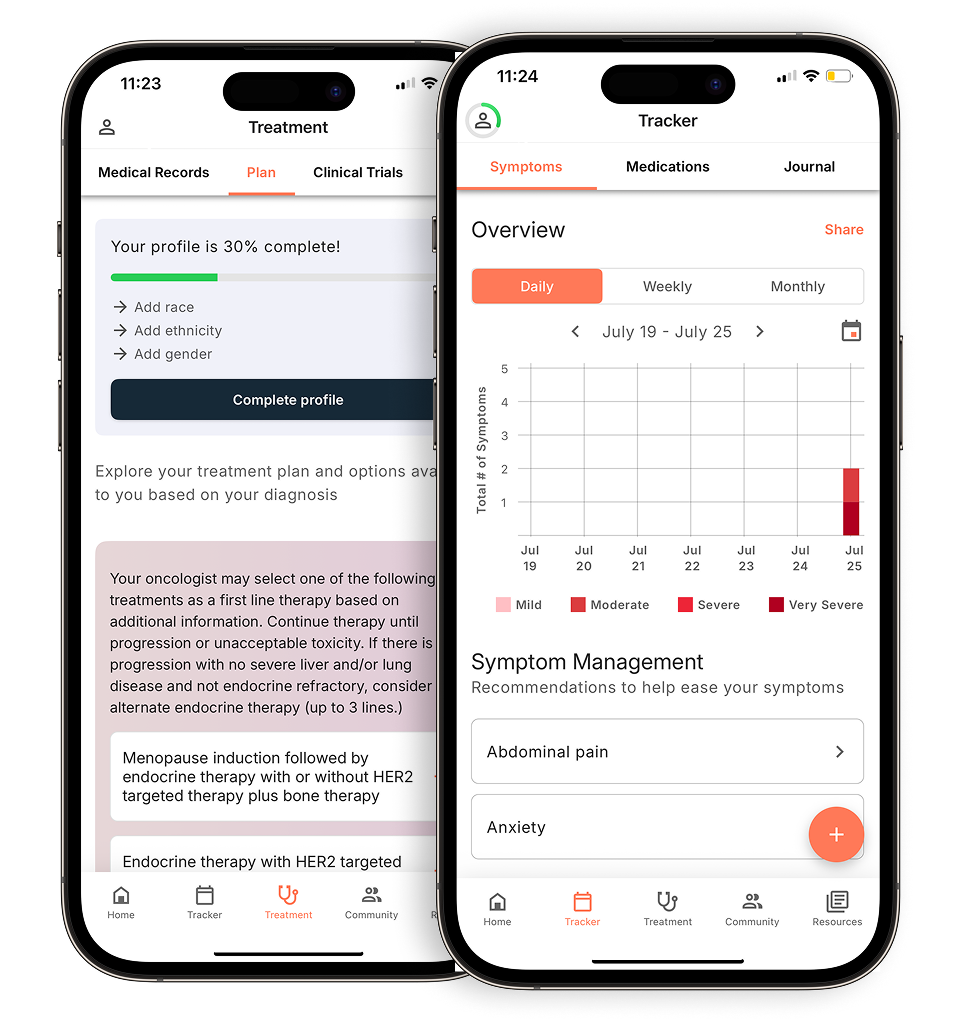
Genomic recurrence tests analyze the activity of specific genes inside a tumor sample. Unlike genetic testing, which looks for inherited mutations like BRCA1 or BRCA2, genomic tests study the cancer itself. The goal is to better understand how aggressive the tumor may be and how likely it is to come back after treatment.
Oncotype DX is one of the most commonly used genomic tests in breast cancer today. The test analyzes the expression of 21 genes from a tumor sample and generates a Recurrence Score ranging from 0 to 100. That score helps estimate:
- The risk of distant recurrence
- Whether chemotherapy may reduce that risk
The test became especially influential after the landmark TAILORx trial showed that many women with HR-positive, HER2-negative, node-negative breast cancer could safely avoid chemotherapy without compromising outcomes. For many patients, this represented a major shift in care. Historically, chemotherapy was often recommended more broadly because doctors lacked precise tools to predict who would truly benefit.
MammaPrint is another genomic assay used to evaluate recurrence risk. Unlike Oncotype DX, which produces a numerical score, MammaPrint categorizes tumors as either “low genomic risk” or “high genomic risk.” The test analyzes 70 genes associated with cancer recurrence and has been studied extensively in the MINDACT trial. Researchers found that some patients who appeared clinically high risk could still have low genomic risk and may be able to avoid chemotherapy.
Breast Cancer Index is a little different from Oncotype DX and MammaPrint. Rather than focusing primarily on chemotherapy decisions at diagnosis, Breast Cancer Index is often used later in treatment to help determine whether a patient may benefit from extended endocrine therapy beyond five years. This matters because hormone receptor-positive breast cancer can recur many years after initial treatment. Some patients remain at risk for recurrence even 10 to 20 years later.
The test helps estimate:
- Risk of late recurrence
- Likelihood of benefit from continuing endocrine therapy longer term
For patients struggling with side effects from medications like tamoxifen or aromatase inhibitors, this information can sometimes help guide difficult treatment decisions.
One of the biggest advances in oncology over the last two decades has been the shift away from a “one-size-fits-all” treatment approach. Not every breast cancer behaves the same way. And not every patient benefits equally from aggressive treatment. Genomic recurrence testing has helped many patients:
- Avoid unnecessary chemotherapy
- Better understand recurrence risk
- Make more personalized endocrine treatment decisions
- Feel more informed and confident about their care plan
These tests are not perfect, and they do not predict the future with certainty. But they provide another important layer of information that can help guide treatment planning. For many patients, these tests have helped reduce overtreatment while supporting more informed decisions about chemotherapy and long-term therapy. Understanding the role of genomic testing can help patients feel more empowered when navigating treatment conversations and evaluating their options.
The Outcomes4Me app helps patients better understand breast cancer biomarkers, treatment options, genomic testing, and emerging research so they can have more informed conversations with their healthcare team.
Personalized support for real care decisions
Understand your diagnosis, explore clinical trials, and track symptoms--all in one place.
Get started
Compare treatments, prepare for appointments, and track side effects—all in the app
Built for your diagnosis, Outcomes4Me gives you the tools to make confident, informed decisions—right when you need them.
Continue in app