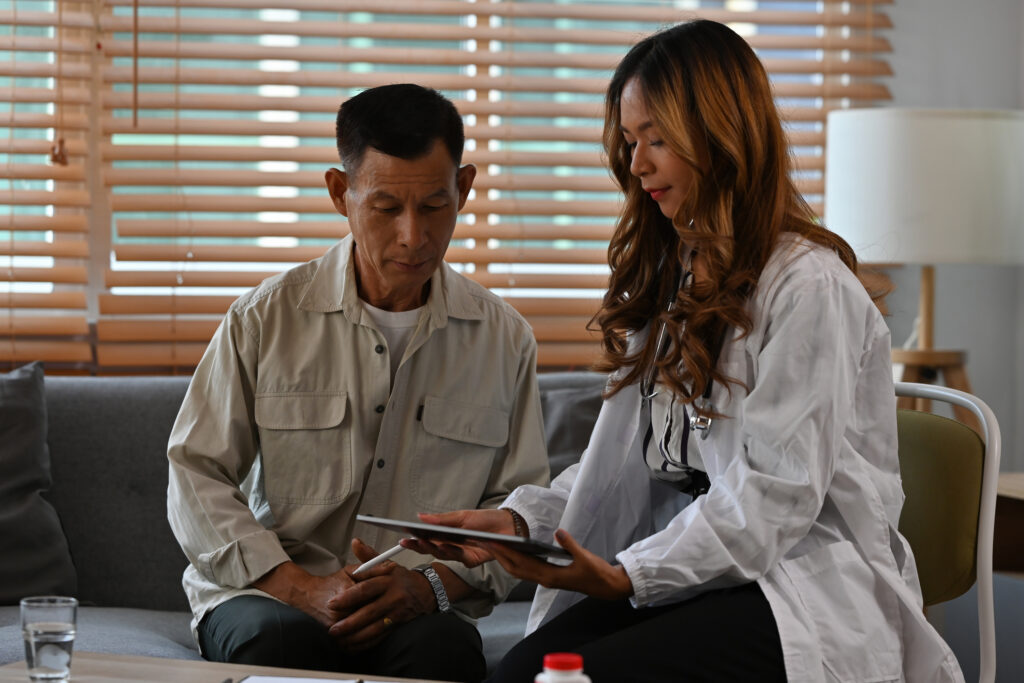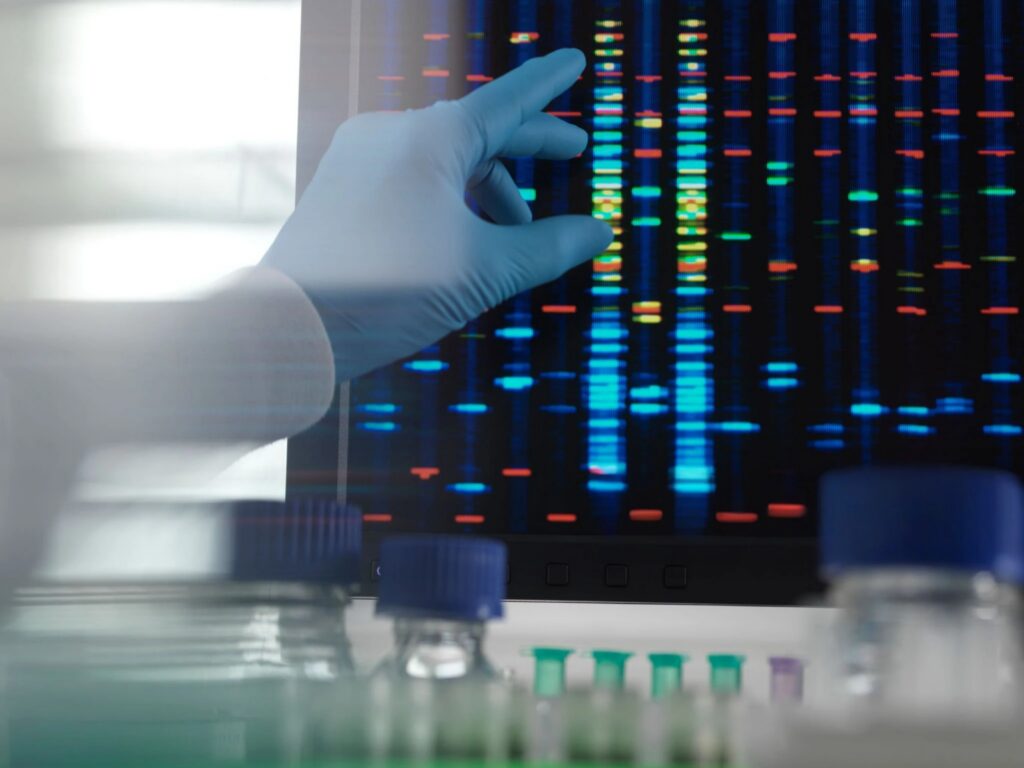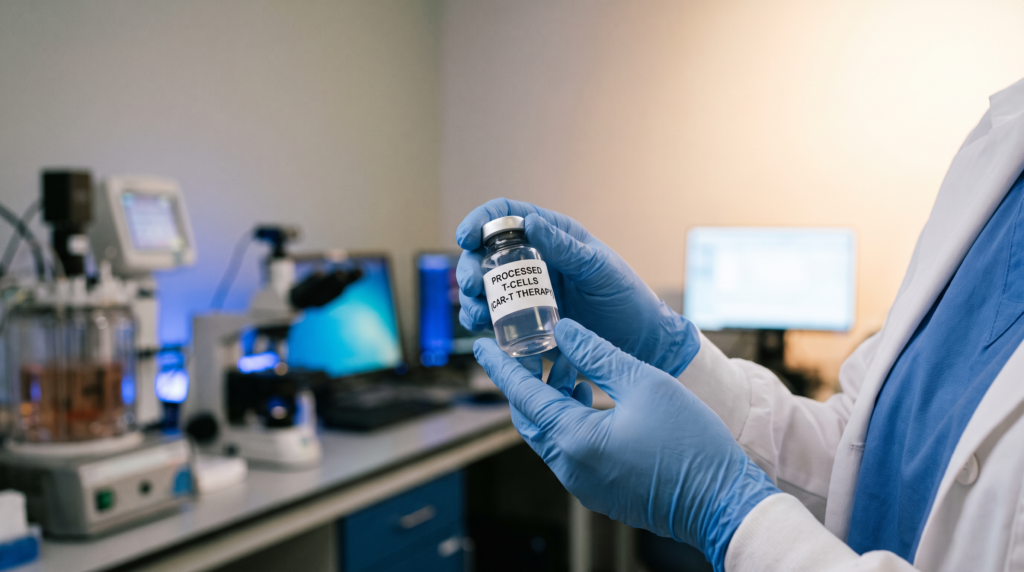
CAR-T therapy for multiple myeloma is a carefully sequenced, multi-stage process that unfolds over several weeks. The patient’s own T-cells are extracted, sent to a lab, and essentially trained to become specialized cells that recognize and attack myeloma cells. That biological “training” takes time, precision, and coordination between you, your care team, and a manufacturing facility.
The process moves through three distinct phases. First, leukapheresis, the filtered collection of white blood cells from the patient’s blood. Your blood is drawn out, the T-cells are separated and collected, and the rest is returned to your body. Those cells are then shipped to a lab where the manufacturing process begins. Finally, once the engineered cells are ready, you enter the infusion window.
How you support your body through each phase, including your diet for myeloma, matters more than most patients expect. The weeks ahead involve more preparation than many realize, starting with what happens during that manufacturing countdown.
Phase 1: The manufacturing and conditioning countdown
Once your T cells are collected, a 2–6 week manufacturing window begins. During this time, your care team will likely recommend bridging therapy to keep multiple myeloma stable while the lab engineers your personalized care plan in cell form.
Then, just before infusion, a 5-day lymphodepletion chemotherapy regimen suppresses your natural immune system so the newly manufactured CAR-T cells can expand and function properly after infusion. Understanding this sequence sets the stage for the very practical logistics that follow.
Logistics for the pre-infusion window
Before infusion day arrives, setting up practical groundwork, a dedicated caregiver, a nearby residence, and a packed bag, shapes how manageable the entire experience feels.
For anyone asking what is multiple myeloma and encountering CAR-T for the first time, the logistical requirements can come as a surprise. Your care team will typically require:
- A 24/7 caregiver committed for the first 30 days post-infusion
- Proximity to the treatment center, most programs require you to stay within 30–60 minutes
- A packed bag covering both the hospital stay and any recovery residence
That proximity requirement is essential. If side effects escalate quickly, getting back to your care team fast matters. Once those logistics are locked in, attention shifts to what actually happens on infusion day itself.
Phase 2: The infusion and immediate monitoring week
Day 0, infusion day, is often shorter than patients expect, but the monitoring that follows is where the real work begins.
For most people, the infusion itself takes only 30–90 minutes. Your reengineered T cells arrive in a bag and are delivered through an IV line, much like a standard blood transfusion. You’ll stay at the treatment center for several hours afterward so your care team can observe the initial response. That first window matters.
Cytokine Release Syndrome (CRS)is the most closely watched complication in the first 72 hours. As the CAR T cells activate and multiply, they release signaling proteins called cytokines, and sometimes that release is intense. Your care team monitors for fever, low blood pressure, and drops in oxygen levels as early CRS indicators. Cytokine release syndrome can occur when your immune system goes into overdrive during CAR-T therapy, causing fever, chills, or confusion, but these symptoms are usually short-lived and reversible, and your medical team has established protocols to manage them if they occur.
Alongside CRS monitoring, your care team will monitor you closely during the first 4 weeks after CAR T infusion for signs of ICANS and other side effects, including checking your blood pressure and temperature at least three times daily. These checks are simple but telling. You may be asked to write a sentence, state the date, or answer basic orientation questions. Changes in handwriting or subtle confusion can signal early neurological involvement, so these checks happen consistently, not just when something seems off.
Fatigue hits differently for everyone during this first week. Some patients feel it acutely within days; others are surprised by how manageable things feel early on, before cumulative effects build. Either way, physical rest is non-negotiable, and your care team will help you balance activity with recovery.
Evidence-based guidance powered by NCCN Guidelines®
Personalized treatment plans shaped by the latest oncology standards—tailored to your diagnosis.
Get started
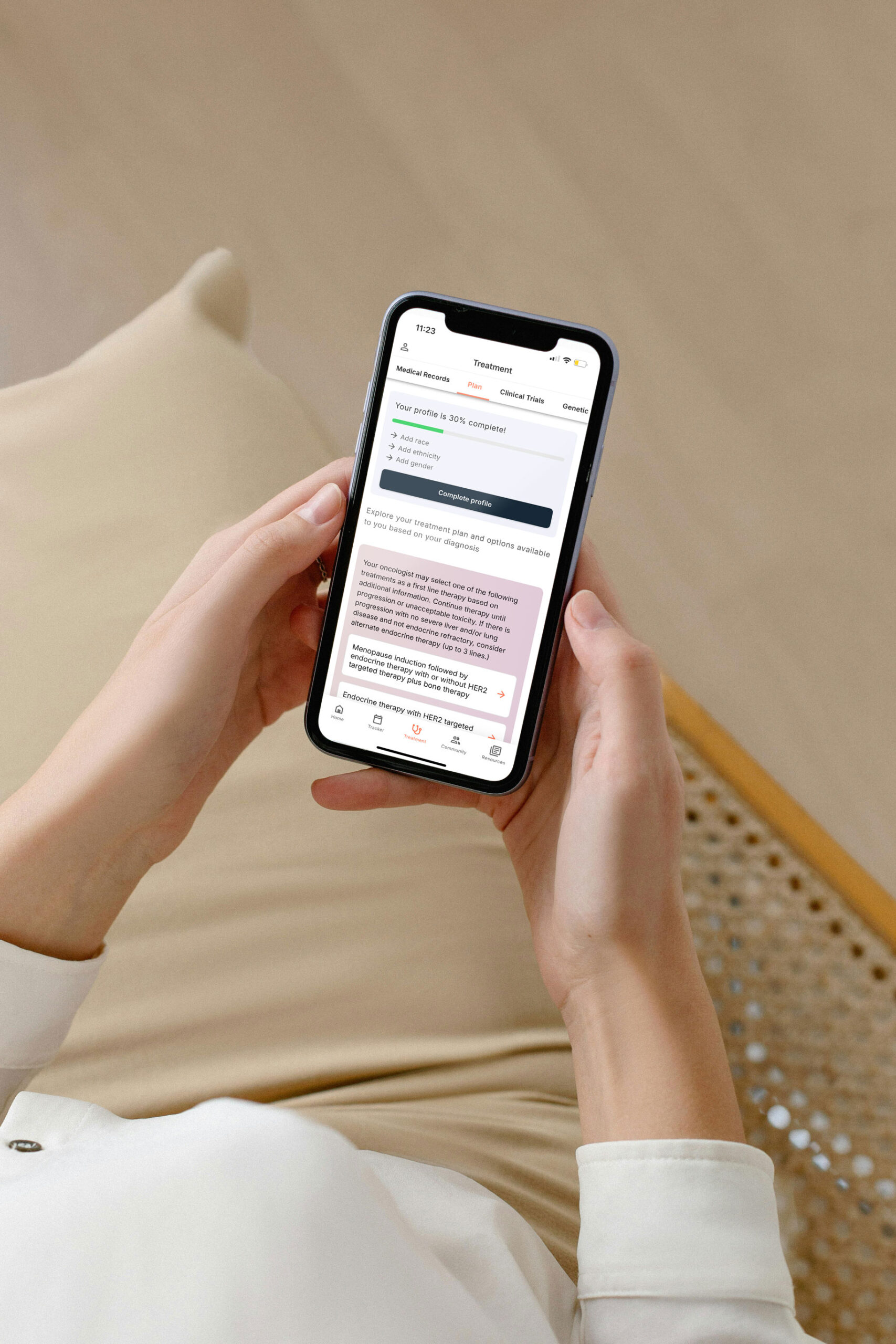
View your personalized treatment plan in the Outcomes4Me app
Use your diagnosis to unlock personalized NCCN Guidelines®-aligned recommendations.
Continue in app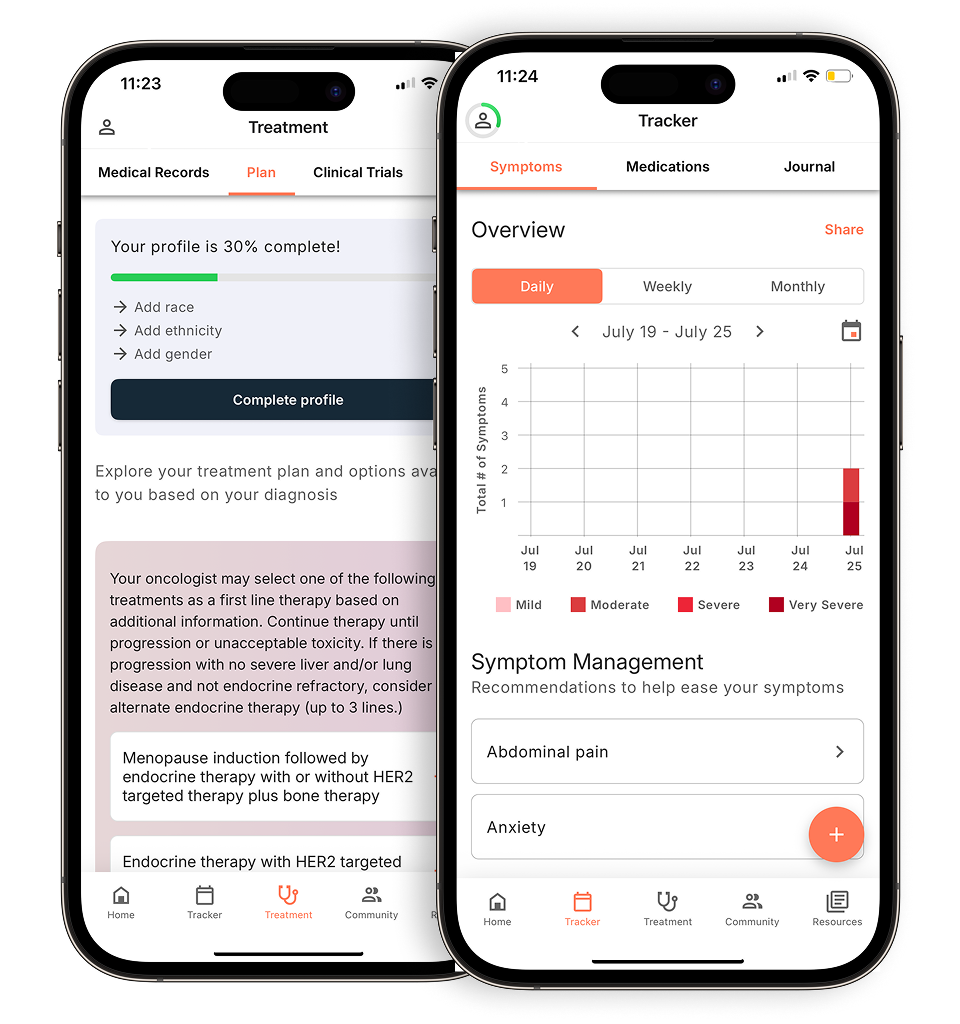
Understanding what is myeloma and how it behaves at the cellular level helps put this monitoring intensity in context. These engineered cells are triggering a deliberate immune response, and that’s exactly what they’re supposed to do. Up next, we’ll look at what that response actually feels like from the inside.
Common symptoms. What patients actually feel
For anyone asking what is CAR T cell therapy really like from the inside, the honest answer is a manageable but unpredictable flu, with a few important warning signs layered in.
Most patients describe the days following infusion as heavy fatigue paired with fever, chills, and occasional drops in blood pressure. These are hallmarks of cytokine release syndrome (CRS), the immune system’s response to CAR-T cells activating. Cytokine release syndrome (CRS) is a possible side effect that your care team will monitor for and treat during the first 1–9 days after your CAR T-cell infusion.
Pain, surprisingly, isn’t the dominant complaint. Discomfort, achiness, headache, and general malaise tend to be the more accurate descriptions your care team will recognize. That said, every patient’s response differs, and some experience more pronounced symptoms than others.
What matters most is knowing the difference between expected reactions and serious complications. Mild symptoms include low-grade fever, fatigue, and brief chills that respond to standard supportive care. Serious red flags, high fever above 104°F, significant confusion, or sustained blood pressure drops, require immediate clinical evaluation. Your care team monitors for these thresholds daily during the immediate post-infusion window.
That monitoring doesn’t happen in isolation. The person beside you plays a critical role in catching early shifts before they escalate.
The caregiver’s role during week one
Caregivers are active clinical partners tracking data that the care team depends on during week one.
Temperature logging is the most critical task, with a reading at or above 100.4°F triggering an immediate call. Caregivers should also log fatigue levels, fluid intake, and any sudden confusion or speech changes, since CRS and neurological side effects can escalate quickly. On the nutrition side, small, frequent meals and consistent sips of water or electrolyte drinks help manage peak fatigue without overwhelming a sensitive system. And while caregivers are focused on the immediate clinical picture, the broader context of the patient’s diagnosis, including foundational questions like what does MGUS stand for in medical terms (monoclonal gammopathy of undetermined significance, the precursor condition often discussed before a multiple myeloma diagnosis), can help them communicate more confidently with the care team. That foundation matters as recovery extends well beyond week one.
Phase 3: The 30-day recovery and observation milestone
Surviving the infusion is one milestone. Navigating the 30 days that follow is where recovery actually takes shape.
Unlike the acute intensity of week one, this phase is quieter but no less structured. Your care team shifts focus from managing cytokine release syndrome to rebuilding what the conditioning chemotherapy for multiple myeloma depleted: your white cells, red cells, and platelets. CAR-T cell therapy can lead to drops in your blood counts, particularly white blood cells that fight off infection, which puts you at increased risk for infections during your recovery. During the first 4 weeks after infusion, you’ll need to stay near the treatment center for recovery and observation, with your care team monitoring and treating any side effects that develop.
Some patients report experiencing brain fog during this phase, and it’s a symptom worth mentioning to your care team even if you don’t hear about it often. Cognitive slowness, word-finding difficulties, and fatigue-driven confusion can persist through weeks two to four. Pacing matters here. Short tasks, rest breaks, and leaning on your caregiver for scheduling and communication are part of recovery.
And then there’s the no-driving rule. For at least eight weeks post-infusion, patients cannot drive. This reflects real neurological risk from ICANS (immune effector cell-associated neurotoxicity syndrome), which can affect cognition and reaction time even when symptoms seem mild.
By day 30, you’re approaching the first formal checkpoint. That evaluation, and what the results actually mean, is what the next section covers.
Cancer care guidance for every step of your journey
Get treatment options, clinical trials, and support tailored to your diagnosis--all in one place.
Get started
See treatment options, manage symptoms, and stay informed—all in the app
View treatment options and trials personalized to your diagnosis—plus track progress in real time.
Continue in appHow to know if CAR-T therapy is working
For patients receiving CAR-T cell therapy for myeloma, your care team will typically use bone marrow biopsies and PET scans around day 30 or day 90 to help assess how you’re responding to treatment.
These imaging and biopsy results are where response categories become meaningful. Your care team will reference two key benchmarks: Complete Response (CR) is a term your care team may use to describe a very good response to treatment, often involving little to no detectable myeloma protein in blood or urine tests. Ask your doctor what Complete Response means for your specific situation. And Very Good Partial Response (VGPR) means myeloma markers drop by at least 90% but aren’t fully undetectable. Both are encouraging, but CR sets the stage for the next, more precise measurement.
That measurement is MRD (Minimal Residual Disease) negativity. Even after a CR, microscopic myeloma cells can linger. Achieving MRD-negative status is increasingly recognized as one of the strongest predictors of long-term outcomes in multiple myeloma. Deeper responses tend to translate into longer remissions, though individual results vary considerably.
How long those responses last is the question that matters most, and that’s exactly where the next section picks up.
Success rates and long-term durability
Overall response rates in clinical trials for relapsed/refractory disease have reached 70–98%, depending on the specific product and patient population.
Remission looks different here than in earlier treatment lines. Many patients achieve a very good partial response or better, meaning disease markers drop significantly. How long that response holds varies, with median progression-free survival ranges from roughly 8 to 15 months across approved therapies. Some patients maintain remission considerably longer.
One caveat worth knowing: CAR-T therapy can compromise your immune system in the weeks and months after infusion, increasing infection risk particularly if high-dose steroids are needed to manage delayed side effects. That means your immune system may need ongoing support through regular IVIG infusions to prevent serious infections. It’s a manageable trade-off for many, but it does require sustained engagement with your care team.
As promising as these numbers are, the therapy carries real limitations worth examining closely.
Limitations and safety considerations
Myeloma CAR T-cell therapy delivers impressive response rates, but it comes with real trade-offs that every patient should weigh carefully with their care team before committing to treatment.
The most immediate concern is prolonged cytopenia, low blood counts that can persist for weeks or even months after infusion. With a suppressed immune system during that window, the risk of serious secondary infections rises significantly. This is a primary reason the 30-day post-infusion monitoring period is so intensive. Your care team is watching for CRS or neurotoxicity while also guarding against opportunistic infections your body can’t fight off on its own.
CAR-T also isn’t the right fit for everyone. Some patients with rapidly progressing disease may find the several-week wait between cell collection and infusion challenging, and it’s worth discussing with your care team whether CAR-T timing might work for your situation. Organ function, performance status, and overall health all factor into candidacy decisions. A personalized care plan accounts for disease pace, and sometimes that means pursuing a bridging therapy or an alternative approach entirely.
And then there’s the longer view. Delayed neurological events, though less common than early neurotoxicity, can emerge weeks to months after treatment. Long-term follow-up is essential for catching late effects early.
Understanding these limitations honestly sets a foundation for what comes next. Clearing up the misconceptions that can distort expectations about what recovery actually feels like day to day.
Common misconceptions about CAR-T recovery
CAR-T recovery rarely follows a clean, predictable arc, and clearing up a few persistent myths can help you set realistic expectations before infusion day.
One of the most common assumptions is that you’ll feel “back to normal” shortly after the infusion itself. In practice, the days and weeks that follow are often the most physically demanding part of the entire process. Another frequent misconception is that CAR-T mirrors stem cell transplants for myeloma. The mechanism, recovery curve, and side effect profile differ meaningfully, and conflating the two can leave patients underprepared for what’s actually ahead.
Perhaps the most important fact to internalize is that recovery is non-linear. A good day doesn’t signal the finish line. Significant fatigue, cognitive fog, or sudden symptom flares can follow periods of feeling well, which is normal, not a setback. Your care team can help you distinguish expected fluctuations from signs that need prompt attention, and that distinction matters as you move toward managing potential late effects.
Managing expectations for late effects
Late effects from CAR-T therapy can surface weeks or even months after infusion, making ongoing monitoring just as important as the acute recovery phase.
Routine laboratory tests for multiple myeloma, including blood counts and immune panels, help your care team catch delayed ICANS symptoms or late-onset cytopenias. And because CAR-T essentially resets your immune system, re-vaccination protocols are a necessary step your care team will schedule in the months ahead. The mental weight of waiting for results is real, too. Talking with a counselor familiar with cancer-related emotional challenges can help you stay grounded while the clinical picture develops. These moving pieces connect directly into the broader milestones worth tracking, which the next section pulls together.
Key takeaways: navigating the CAR-T timeline
CAR-T therapy for multiple myeloma spans roughly three months from T-cell collection to your first response evaluation, and understanding that full arc makes every phase feel more manageable.
The timeline carries real clinical weight at each stage. Leukapheresis kicks things off, manufacturing follows (typically four to six weeks), and then comes lymphodepletion, infusion, and the close-monitoring window that follows. Throughout all of it, the 24/7 caregiver requirement and proximity rules are safety infrastructure. CAR-T cytokine release syndrome can escalate quickly, and having someone present who knows the warning signs is what allows your care team to intervene before symptoms become serious.
Safety depends on consistent communication between you, your caregiver, and your care team. [Cytokine release syndrome and ICANS are both manageable conditions when caught early.
And success? It’s measured on two tracks. Clinical milestones like MRD-negative status tell one part of the story. Quality of life improvements, reduced pain, returning energy, and fewer treatment days tell the other part, the one that matters most in daily life.
If questions are still forming in your mind about complete remission rates, manufacturing delays, or how to weigh the risks, the next section addresses those directly.
Frequently Asked Questions About CAR-T for Myeloma
Studies show a meaningful subset of patients achieve complete remission with CAR-T for multiple myeloma. Your team monitors you closely so early intervention is always an option if CRS risk emerges. And if T-cell manufacturing is delayed? Your oncology team typically bridges you with low-intensity therapy to keep the disease stable while you wait. Resources that go deeper on each of these questions are worth exploring next.
Where to look next
Your next step is gathering source materials specific to your treatment. Manufacturer patient guides, NCCN immunotherapy education, and clinical trial data all serve different but equally useful purposes. Ask your care team for the Ide-cel or Cilta-cel patient guide that matches your prescribed therapy. Then review NCCN guidelines for patient immunotherapy education. And when you’re ready, bring specific clinical trial questions directly to your oncology care team. They can contextualize the data against your personalized care plan.
Disclaimer: The information provided in this article is for informational purposes only and is not intended to be a substitute for professional medical advice, diagnosis, or treatment. Outcomes4Me is not acting as your caregiver, and any suggestions or guidance offered should not replace the advice of your healthcare provider or qualified medical professional. Always seek the guidance of your physician or other qualified health provider with any questions you may have regarding a medical condition.
Personalized support for real care decisions
Understand your diagnosis, explore clinical trials, and track symptoms--all in one place.
Get started
Compare treatments, prepare for appointments, and track side effects—all in the app
Built for your diagnosis, Outcomes4Me gives you the tools to make confident, informed decisions—right when you need them.
Continue in app