
Bruton’s Tyrosine Kinase (BTK) inhibitors are targeted therapies, not traditional chemotherapy. Rather than broadly attacking rapidly dividing cells, they block a specific protein that B-cell cancers depend on to survive and multiply. BTK inhibitors differ in their selectivity. Ibrutinib is the first-generation agent that pioneered this drug class but binds to proteins beyond its intended target, which contributes to cardiac, bleeding, and skin-related adverse events. Second-generation agents like acalabrutinib and zanubrutinib were designed specifically to reduce off-target binding. Research on zanubrutinib side effects consistently shows a more favorable cardiovascular profile compared to ibrutinib.
Greater selectivity represents meaningful progress, but it doesn’t eliminate risk. Proactive monitoring remains essential. Catching side effects early, before they escalate, is the single most effective strategy for keeping patients on their personalized care plan long-term. Working closely with your care team from the start puts you in the best position to do exactly that.
Is a BTK inhibitor considered chemotherapy?
BTK inhibitors are targeted therapy, not chemotherapy, which shapes what side effects you can expect.
Unlike cytotoxic chemotherapy, which kills rapidly dividing cells throughout the body, BTK inhibitors disrupt a specific signaling pathway in B-cells called Bruton’s tyrosine kinase. That precision matters. Classic chemotherapy side effects like significant hair loss and severe nausea are far less common with BTK inhibitors. When patients researching acalabrutinib side effects expect a traditional chemotherapy experience, they may be relieved, but also caught off guard by a different set of challenges, including cardiac and bleeding risks that are specific to this drug class. Understanding this distinction up front helps you have more productive conversations with your care team.
The evolution of BTK inhibitor selectivity
Newer BTK inhibitors like zanubrutinib and pirtobrutinib were designed specifically to reduce off-target binding, which shapes the side effects you’re likely to experience.
First-generation ibrutinib inhibits several kinases beyond BTK, including EGFR and ITK, which contributes to side effects. Zanubrutinib and acalabrutinib were engineered with tighter selectivity profiles, and pirtobrutinib, a non-covalent inhibitor, takes selectivity further still. Pirtobrutinib binds differently to BTK compared to earlier BTK inhibitor generations and may help even if cancer becomes resistant to first- or second-generation agents. But no BTK inhibitor is free of adverse effects, and the first 90 days of BTK inhibitor therapy tend to be when most side effects emerge. Knowing what to watch for early gives you and your care team the best opportunity to respond before issues escalate, including cardiovascular effects, which we’ll look at closely next.
Managing cardiac side effects: AFib and hypertension
Atrial fibrillation (AFib) and hypertension are the two primary cardiovascular concerns your care team will monitor when you’re on a BTK inhibitor, and both are manageable without automatically stopping treatment.
Baseline monitoring is the foundation of cardiac safety. Before you start a BTK inhibitor, your care team will typically order an EKG and establish a blood pressure baseline. Ongoing blood pressure checks throughout BTK inhibitor treatment are standard practice, since hypertension can develop or worsen even in patients without a prior history.
New-onset hypertension doesn’t necessarily mean discontinuing your BTK inhibitor. In many cases, your care team will introduce or adjust antihypertensive medications to keep blood pressure within a safe range. The goal is to protect cardiovascular health while preserving the benefit of your personalized care plan.
Drug-to-drug differences matter here. The lower AFib risk with zanubrutinib and acalabrutinib is tied directly to off-target selectivity. AFib risk remains present with any BTK inhibitor, which is why ongoing cardiac surveillance remains essential regardless of which agent you’re taking. The next section digs deeper into how AFib is specifically monitored and what it means for your broader treatment picture.
Atrial fibrillation (AFib) monitoring and interventions
Atrial fibrillation is a potential cardiac side effect of first-generation BTK inhibitors like ibrutinib, and patients should report any new symptoms to their doctor promptly.
Evidence-based guidance powered by NCCN Guidelines®
Personalized treatment plans shaped by the latest oncology standards—tailored to your diagnosis.
Get started
View your personalized treatment plan in the Outcomes4Me app
Use your diagnosis to unlock personalized NCCN Guidelines®-aligned recommendations.
Continue in app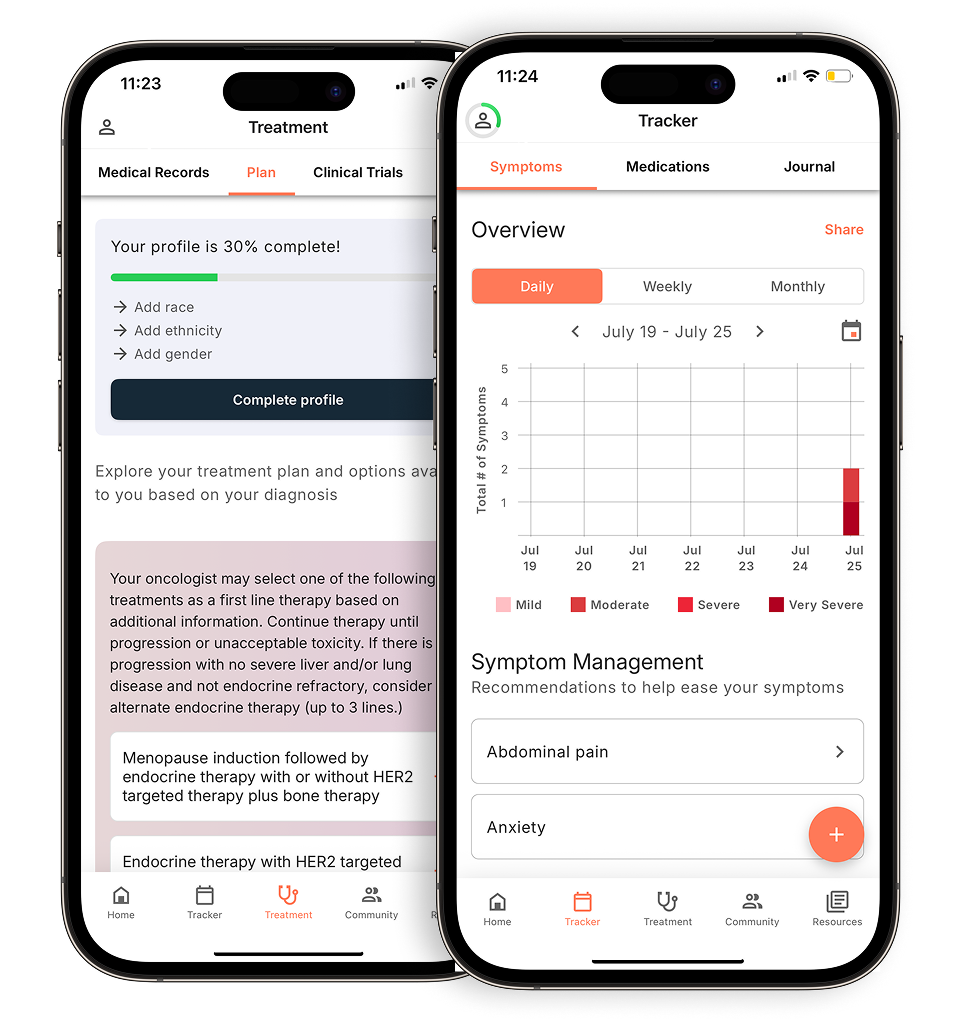
Symptom awareness is your first line of defense. These sensations can be subtle at first, so flagging them early matters. When AFib is confirmed or suspected, many centers now involve a cardio-oncology specialist where oncologists and cardiologists coordinate your personalized care plan rather than managing these concerns in separate silos.
Anticoagulation is where things get genuinely complex. Blood thinners are often considered as part of AFib treatment. Ask your care team whether this approach is appropriate for your situation. BTK inhibitors can interact with blood thinners and antiplatelet medications, and because they increase bleeding risk, your healthcare provider will discuss whether these drugs are right for you.
Controlling new or worsening hypertension
Consistent home blood pressure monitoring is one of the most effective tools for catching hypertension early while on a BTK inhibitor. Blood pressure should be monitored closely and on an ongoing basis for several months after starting BTK inhibitor treatment, as blood pressure typically peaks around six months after treatment begins.
When medication is needed, commonly used antihypertensive classes in this patient population include calcium channel blockers, ACE inhibitors, and ARBs. Your care team will tailor the choice to your overall health profile and any other medications you’re taking.
BTK inhibitors may increase the risk of high blood pressure and irregular heart rhythm. Contact your healthcare provider if you develop new or worsening high blood pressure or notice symptoms such as severe headache, chest pain, or visual changes.
Bleeding risk, which the next section covers in depth, can compound cardiovascular concerns, making proactive blood pressure control even more critical to your personalized care plan.
Mitigating bleeding risks and platelet dysfunction
BTK inhibitors can affect platelet function, though newer versions like rilzabrutinib have been developed to minimize this effect compared to earlier BTK inhibitors. Even so, BTK inhibitor therapy raises baseline bleeding risk even without any other contributing factors.
Bleeding takes different forms. Minor bleeding such as easy bruising, petechiae, or prolonged oozing from small cuts is common and often manageable. Major bleeding is associated with an increased risk of major bleeding events in patients with chronic lymphocytic leukemia. While you may bleed more easily with this drug, severe bleeding problems are rare, though they can be life-threatening.
Surgical planning is one area where timing matters enormously. Your care team may recommend pausing BTK inhibitor therapy for a few days before certain invasive procedures, though the exact timing depends on your specific situation and type of procedure. Your doctor will tell you when to restart BTK inhibitor therapy after you have a procedure or surgery.
Beyond prescription medications, certain over-the-counter supplements, ones many people consider harmless, can compound platelet dysfunction in ways that aren’t immediately obvious. That’s worth a closer look before your next refill run.
The danger of over-the-counter supplements
Omega-3 fatty acids from fish oil supplements can increase bleeding risk, so you should talk with your healthcare provider before taking them if you are on a BTK inhibitor. Some patients and providers are concerned that fish oil, vitamin E, and flaxseed oil may affect platelet function in ways that could interact with BTK inhibitors. It’s worth discussing with your care team whether these supplements are safe for you to use.
BTK inhibitors can interact with antiplatelet and anticoagulant medications, and you should tell your healthcare provider about all medicines and supplements you take, including any over-the-counter pain relievers.
A practical step is bringing every bottle you take, prescription, supplement, or over-the-counter, to your next appointment for a “brown bag” review with your care team. That conversation often surfaces interactions that a standard medication list would miss, and it’s the clearest path to a personalized care plan that accounts for everything you’re taking. Those same conversations become especially important when you’re preparing for a procedure, which the next section addresses directly.
Surgical protocols and procedure planning
Your doctor may recommend stopping your BTK inhibitor before certain types of surgery or invasive procedures and will tell you when to restart it after your procedure. Before undergoing dental procedures, inform your healthcare provider that you’re taking a BTK inhibitor, as they may recommend temporarily stopping the medication. Your dentist may recommend that you temporarily stop taking your BTK inhibitor before a dental procedure and sometimes for a brief time afterward.
Cancer care guidance for every step of your journey
Get treatment options, clinical trials, and support tailored to your diagnosis--all in one place.
Get started
See treatment options, manage symptoms, and stay informed—all in the app
View treatment options and trials personalized to your diagnosis—plus track progress in real time.
Continue in appBefore any dental work or surgery, inform your dentist or surgeon that you are taking a BTK inhibitor. Your healthcare provider may want you to temporarily stop the medication before the procedure and in some cases for a brief time afterward.
Restarting therapy too early, before wound healing is confirmed, carries meaningful re-bleeding risk. And while the bleeding concerns covered in the previous sections focus on day-to-day management, procedural planning adds another layer that demands proactive coordination across your full care team.
Beyond the bleeding picture, BTK inhibitors can also trigger changes to your skin, nails, and joints, effects that the next section addresses in detail.
Addressing dermatologic and musculoskeletal effects
BTK inhibitors commonly cause skin rashes, dry skin, brittle nails, joint pain, and muscle cramps. Skin rash is a common side effect of BTK inhibitors.
Skin changes are among the most frequently reported dermatologic effects. BTK inhibitors can cause cutaneous reactions ranging from mild dryness to papulopustular rashes in a meaningful proportion of patients. Joint pain (arthralgia) and muscle cramps are common adverse effects reported in patients taking acalabrutinib, though the exact biological mechanisms underlying these symptoms are not fully understood.
In practice, BTK inhibitors can cause dermatologic and musculoskeletal side effects such as skin rash and muscle or joint aches, and working closely with your healthcare provider can help you manage your treatment plan. For dry skin, apply fragrance-free emollients right after bathing while your skin is still damp. Thicker formulations such as creams and ointments are generally more helpful than lotions. Using fragrance-free soaps and moisturizers as part of a gentle skin care routine can help prevent dryness and reduce skin irritation in patients taking targeted therapies. For arthralgia and muscle pain with BTK inhibitors, discussing temporary dose reduction or brief treatment interruption with your care team may help manage these symptoms.
Timeline matters here. Some patients experience dermatologic and musculoskeletal side effects that may improve over the first few months of treatment, though experiences vary. Talk with your care team about what to expect and whether continuing treatment without changes may be an option for you.
Skin and nail care strategies
Skin rash is a common side effect of BTK inhibitors. Let your care team know if you experience a rash while taking this medication. Many patients find that thick, fragrance-free emollients such as petroleum-based creams or ointments may help with BTK inhibitor-related dry skin, particularly when applied after bathing. Ask your care team whether this approach might work for you.
Brittle nails and hair texture changes are common with BTK inhibitors. Some patients find that keeping nails trimmed short, moisturizing the nail beds regularly, and wearing gloves during household tasks may help minimize nail breakage and discomfort. Ask your care team whether these measures might be helpful for you.
BTK inhibitor-related rashes may require management strategies discussed with your healthcare provider, who can determine the most appropriate treatment approach for your specific situation.
Managing arthralgia and muscle cramps
Managing joint pain and muscle cramps from BTK inhibitors may include lifestyle modifications such as daily walking. BTK inhibitor patients should avoid dehydration and electrolyte problems, as these can contribute to muscle symptoms. Daily walking may help improve fatigue and weakness associated with BTK inhibitor treatment.
When pain becomes persistent or interferes with daily activity, your care team may consider alternative approaches rather than pushing through. That balance, between managing side effects and preserving treatment efficacy, is worth understanding in full, which the next section addresses directly.
Limitations and considerations in BTK therapy
Side effect profiles vary between different BTK inhibitors, with some generations causing fewer side effects than others.
Individual variation is one of the most important realities to acknowledge here. What one patient tolerates well may prompt a dose reduction or switch in another, and that individualization matters across your full treatment course.
BTK inhibitors are oral medications that you typically take daily as part of long-term treatment for certain blood cancers and immune conditions, and like all medications, they come with potential side effects that you and your healthcare team will need to monitor.
Second-generation agents like acalabrutinib and zanubrutinib show improved tolerability compared to ibrutinib. Second-generation BTK inhibitors still carry side effects. Headache, bruising, and atrial fibrillation still occur with second-generation BTK inhibitors, even if at lower rates. And pirtobrutinib is a newer non-covalent BTK inhibitor used to treat mantle cell lymphoma and chronic lymphocytic leukemia that has not responded to previous BTK inhibitor treatment. Pirtobrutinib’s side effects include cardiac, bleeding, and skin effects that require monitoring during treatment. That uncertainty is worth factoring in when weighing options.
Understanding these limitations sets the stage for a harder question. When might BTK inhibitors not be the right fit at all?
When BTK inhibitors might not be the right choice
BTK inhibitors carry significant risks in certain situations, and your care team will weigh specific contraindications before committing to this class of therapy. Pre-existing severe cardiac arrhythmias, particularly uncontrolled atrial fibrillation, can make the BTK inhibitor cardiac risk profile unacceptable. BTK inhibitors can interact with antiplatelet medications like aspirin and clopidogrel, which requires careful management by your healthcare provider. When grade 3 or 4 toxicity emerges with a BTK inhibitor, your care team may consider switching to BCL-2 inhibitors or other drug classes as one possible approach to managing your side effects.
Hypothetical Scenario. Navigating a minor bleeding event
A patient on acalabrutinib notices significant bruising across their forearm after a minor fall. They should contact their care team.
First, they assess the site. The bruise is spreading but there’s no numbness, swelling in the joint, or signs of internal bleeding. They then contact their care team, who review the full picture, including recent supplement and medication use. The outcome: discontinuing both supplements and reinforcing the surgical hold protocol before an upcoming dental procedure. Minor events like this are exactly when proactive communication prevents a manageable situation from escalating.
Key takeaways for managing BTK inhibitor side effects
What that looks like in practice breaks down into a few clear priorities:
- Cardiac safety with BTK inhibitors starts with routine monitoring. Regular blood pressure checks and heart rhythm assessments give care teams the data they need to intervene early before atrial fibrillation or hypertension become serious complications.
- Bleeding risk with BTK inhibitors is manageable. Some patients and doctors discuss whether limiting supplements like fish oil and vitamin E may help reduce bleeding risk when taking BTK inhibitors. Ask your care team whether avoiding or adjusting these supplements is right for you.
- Second-generation BTK inhibitors offer improved tolerability but still require clinical vigilance. Don’t assume a newer drug means fewer conversations with your care team.
- Small symptoms deserve attention. Dry skin and rashes may seem minor, but flagging them early keeps them from becoming barriers to continuing your personalized care plan.
And perhaps most importantly. Don’t underestimate the value of open communication. Telling your care team about “minor” changes, a new bruise, an irregular heartbeat, or persistent skin dryness is never overreacting. It’s exactly how you stay in control of your treatment. Track these changes between appointments so nothing slips through the cracks.
Disclaimer: The information provided in this article is for informational purposes only and is not intended to be a substitute for professional medical advice, diagnosis, or treatment. Outcomes4Me is not acting as your caregiver, and any suggestions or guidance offered should not replace the advice of your healthcare provider or qualified medical professional. Always seek the guidance of your physician or other qualified health provider with any questions you may have regarding a medical condition.
Personalized support for real care decisions
Understand your diagnosis, explore clinical trials, and track symptoms--all in one place.
Get started
Compare treatments, prepare for appointments, and track side effects—all in the app
Built for your diagnosis, Outcomes4Me gives you the tools to make confident, informed decisions—right when you need them.
Continue in app