Every year, the American Society of Clinical Oncology (ASCO) Annual Meeting brings together cancer researchers, oncologists, and advocates to discuss the latest advances in cancer care. While many of the biggest chronic lymphocytic leukemia (CLL) updates are often presented at hematology-focused meetings like American Society of Hematology (ASH), ASCO 2026 still includes important discussions around targeted therapy combinations and how treatment strategies continue evolving for patients with CLL.
Targeted therapy combinations continue shaping the future of frontline CLL treatment
One of the biggest shifts in CLL treatment over the past decade has been the move away from traditional chemotherapy and toward targeted therapies designed to more precisely control the disease.
At ASCO 2026, researchers presented additional analyses comparing newer targeted treatment strategies in previously untreated CLL, including combinations involving BTK inhibitors and venetoclax-based regimens. These studies continue exploring how different targeted therapy approaches compare in terms of effectiveness, side effects, and long-term disease control. This area of research is drawing attention because many patients and oncologists are increasingly interested in fixed-duration treatment approaches that may allow patients to eventually stop therapy rather than remain on continuous treatment indefinitely.
For patients, these updates reflect a larger trend happening across CLL care: more personalized treatment decisions based on disease biology, patient preferences, side effect considerations, and the possibility of achieving durable remissions with chemotherapy-free treatment approaches.
Primary study of interest: SEQUOIA shows long-term disease control in CLL
At ASCO 2026, researchers unveiled long-term data from the Phase III SEQUOIA study. Specifically, the study found that zanubrutinib showed sustained disease control over years of therapy. This further solidifies zanubrutinib’s role as the foundational BTK inhibitor in CLL. A Bruton tyrosine kinase (or BTK) inhibitor is a targeted oral therapy that blocks the BTK enzyme and prevents it from growing and dividing.
The study showed that zanubrutinib continued to show benefit over bendamustine-rituximab (BR) in patients with treatment-naive CLL/SLL. Specifically, the 6.5 year progression-free survival was 71.8% for patients treated with zanubrutinib vs. 31.0% for patients treated with BR.
Because patients with CLL often remain on treatment for many years, this long-term data helps patients and their providers make decisions about first-line therapies that offer sustained treatment response.
Why this matters for patients
Large cancer meetings like ASCO can feel overwhelming, especially when new drug names and clinical trial results begin circulating before patients fully understand what the research may mean for them personally. But these meetings still provide an important glimpse into where CLL treatment is heading.
This year’s CLL research reflects several major themes shaping the future of care:
- More chemotherapy-free treatment approaches
- Greater use of targeted therapy combinations
- Growing interest in fixed-duration treatment strategies
- More personalized treatment decisions
- Continued focus on balancing effectiveness with long-term quality of life
For patients, staying informed can help support more meaningful conversations with your healthcare team and a better understanding of how treatment options continue to evolve.
Personalized support for real care decisions
Understand your diagnosis, explore clinical trials, and track symptoms--all in one place.
Get started
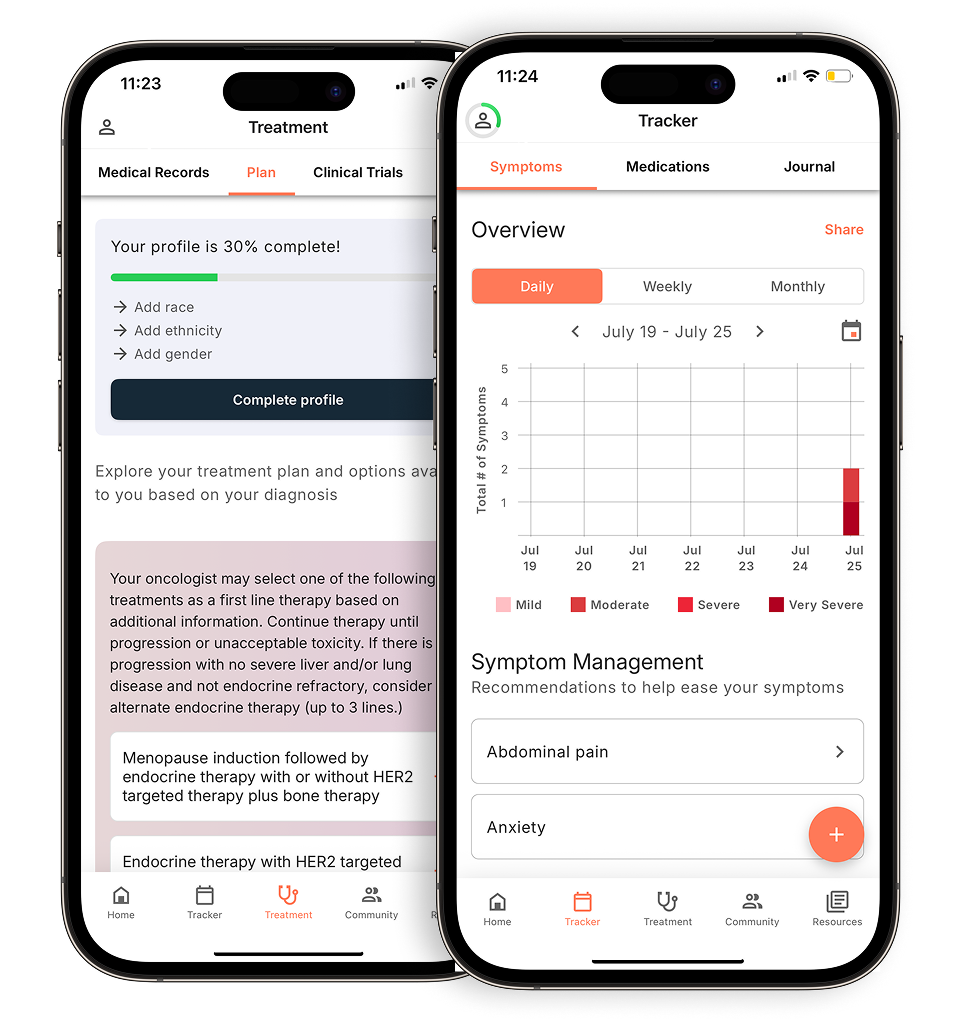
Compare treatments, prepare for appointments, and track side effects—all in the app
Built for your diagnosis, Outcomes4Me gives you the tools to make confident, informed decisions—right when you need them.
Continue in app