Treatment options for endometrial (uterine) cancer continue to evolve, and new research presented at the Society of Gynecologic Oncology Annual Meeting on Women’s Cancer 2026 highlighted encouraging progress in areas like targeted therapy, fertility-sparing treatment, and supportive care. Held April 10–13 in San Juan, the meeting showcased promising advances that may help improve outcomes and expand options for people living with endometrial (uterine) cancer. Here are some of the most important endometrial (uterine) cancer updates shared at this year’s meeting.
- A chemotherapy-free treatment option for patients with advanced/recurrent endometrial (uterine) cancer
A study found that a chemo-free combination of abemaciclib (Verzenio) and letrozole helped control advanced or recurrent endometrial (uterine) cancer for many patients. Nearly 60% of patients were still progression-free after 6 months, and the cancer was controlled for about 10 months on average, especially in patients who hadn’t received prior chemotherapy. Researchers also found that more than half of the patients were still alive after 4 years of follow-up, suggesting the treatment may provide lasting benefit. Side effects were overall manageable. These results suggest that this combination could become a promising chemotherapy-sparing treatment for some people with endometrial (uterine) cancer, though larger studies are still needed.
- A potential new HER2-targeted treatment for patients with advanced endometrial (uterine) cancer
Early results from a phase II study suggest that the experimental drug trastuzumab pamirtecan may be a promising option for people with advanced endometrial (uterine) cancer whose disease has already been treated with other therapies. In this study, nearly half of patients saw their tumors shrink, and those responses lasted for about 10 months on average, which is encouraging for a group with limited treatment options. These findings highlight that new HER2-targeted treatments like trastuzumab pamirtecan could expand options for patients with hard-to-treat endometrial (uterine) cancer, though more research is needed before they become widely available.
- GLP-1s may play a role in endometrial (uterine) cancer care
A new study suggests that adding a GLP-1 receptor agonists to standard hormone treatment may help some women with early-stage endometrial (uterine) cancer or precancer avoid a hysterectomy. Women who received both hormone therapy and a GLP-1 receptor agonists had a much lower chance of needing a hysterectomy (up to 66% lower at 6 months) compared with those who received hormone treatment alone. The benefit was even greater in women under age 40. While these findings are promising, researchers still need to understand if the treatment improves cancer response or long-term outcomes, so more studies are needed.
- Actionable ways for more equitable care
A national study found that one-on-one peer support may help Black women with high-risk endometrial (uterine) cancer complete treatment more often, which could improve outcomes. In the trial, Black women who met with a survivor peer mentor and attended at least one session had an 84% treatment completion rate, compared with 50% for those who did not receive support. Researchers believe this personalized support helped women manage side effects, navigate barriers, and stay on track with treatment. This is especially important because Black women with endometrial (uterine) cancer face higher death rates, often linked to receiving less complete treatment. The findings suggest that one-on-one peer support could become a powerful way to reduce racial disparities in endometrial (uterine) cancer care and help more women complete lifesaving treatment.
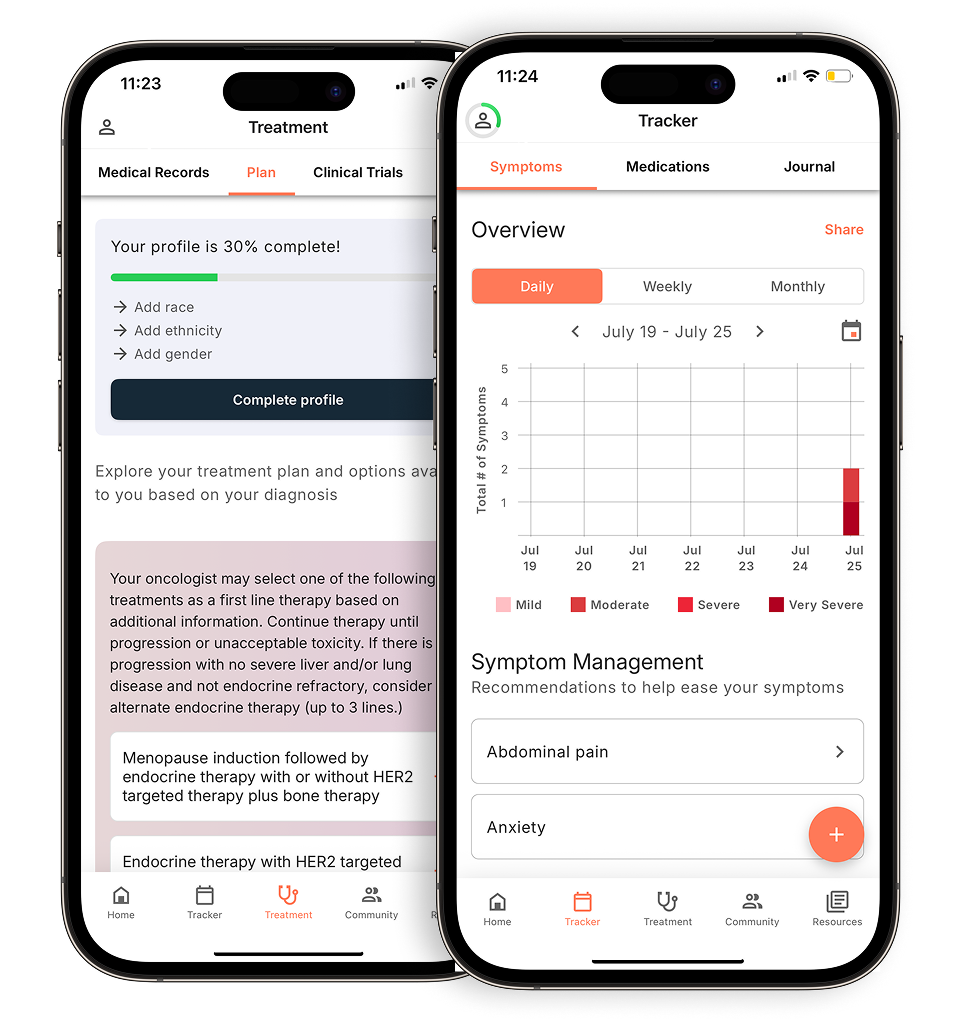
Outcomes4Me is here to help you better understand your diagnosis and treatment options. You deserve clear, trustworthy information at every step.
Personalized support for real care decisions
Understand your diagnosis, explore clinical trials, and track symptoms--all in one place.
Get started
Compare treatments, prepare for appointments, and track side effects—all in the app
Built for your diagnosis, Outcomes4Me gives you the tools to make confident, informed decisions—right when you need them.
Continue in app