
The silent warning: identifying kidney cancer symptoms early
Kidney cancer is often called a “silent” disease — and that silence can be dangerous. According to MD Anderson, kidney cancer symptoms often don’t appear until tumors have grown quite large, which is why many cases are discovered incidentally during treatment for other medical conditions. This kind of incidental detection is increasingly common, but it also means that when kidney cancer symptoms do appear, they deserve immediate attention.
The three signs most closely associated with kidney cancer — hematuria (blood in the urine), flank pain on one side of the back, and a palpable mass in the abdomen — form what clinicians often call the classic triad. In practice, however, presenting with all three at once is rare and typically signals a more advanced case. Blood in the urine (hematuria) is a symptom that may prompt patients to seek medical care for kidney cancer. It can range from visibly pink or rusty-colored urine to what’s called microscopic hematuria — blood detectable only through a urine test. Don’t dismiss microscopic hematuria found in a routine lab result. It warrants follow-up, even without any other symptoms present.
Beyond the classic triad, systemic signs can also point toward kidney cancer. Unexplained weight loss, persistent low-grade fever, and night sweats are less specific but still clinically meaningful. These symptoms reflect how the disease can affect your body at a systemic level, particularly as a tumor grows. If you’ve had a routine test flag unexpected results or are trying to understand what your kidney findings mean, getting clarity early makes a measurable difference.
When to see a doctor: Contact your provider promptly if you notice blood in your urine (even once), persistent pain below your ribs that doesn’t have an obvious cause, unexplained weight loss, or recurring fever without infection. Early evaluation isn’t overreacting — it’s how better outcomes start.
Understanding what kidney cancer looks like in its earlier stages is only part of the picture. The next step is understanding how oncologists formally categorize and stage the disease — and what that staging means for your treatment options.
Decoding the stages: from localized to metastatic RCC
Understanding your stage is one of the most important steps after a kidney cancer diagnosis — it directly shapes every treatment decision that follows. Renal cell carcinoma (RCC) is classified across four stages, and knowing where a tumor falls on that spectrum helps patients and their care teams act with precision rather than guesswork.
Staging isn’t just a number — it’s a roadmap for treatment. The four-stage system organizes RCC by tumor size, local involvement, and whether cancer has spread beyond the kidney.
According to the American Cancer Society, Stage 1 kidney cancer tumors are seven centimeters or smaller and confined entirely to the kidney. Stage 2 tumors are larger but still localized, meaning they haven’t broken through the kidney’s surrounding tissue. Stage 3 introduces regional complexity: cancer may now involve the renal vein or nearby lymph nodes, which changes the surgical calculus considerably. At Stage 4, as noted by Cancer Treatment Centers of America, the cancer has spread beyond Gerota’s fascia and may involve the adrenal gland or distant organs — a profile that defines metastatic RCC.
Evidence-based guidance powered by NCCN Guidelines®
Personalized treatment plans shaped by the latest oncology standards—tailored to your diagnosis.
Get started
View your personalized treatment plan in the Outcomes4Me app
Use your diagnosis to unlock personalized NCCN Guidelines®-aligned recommendations.
Continue in app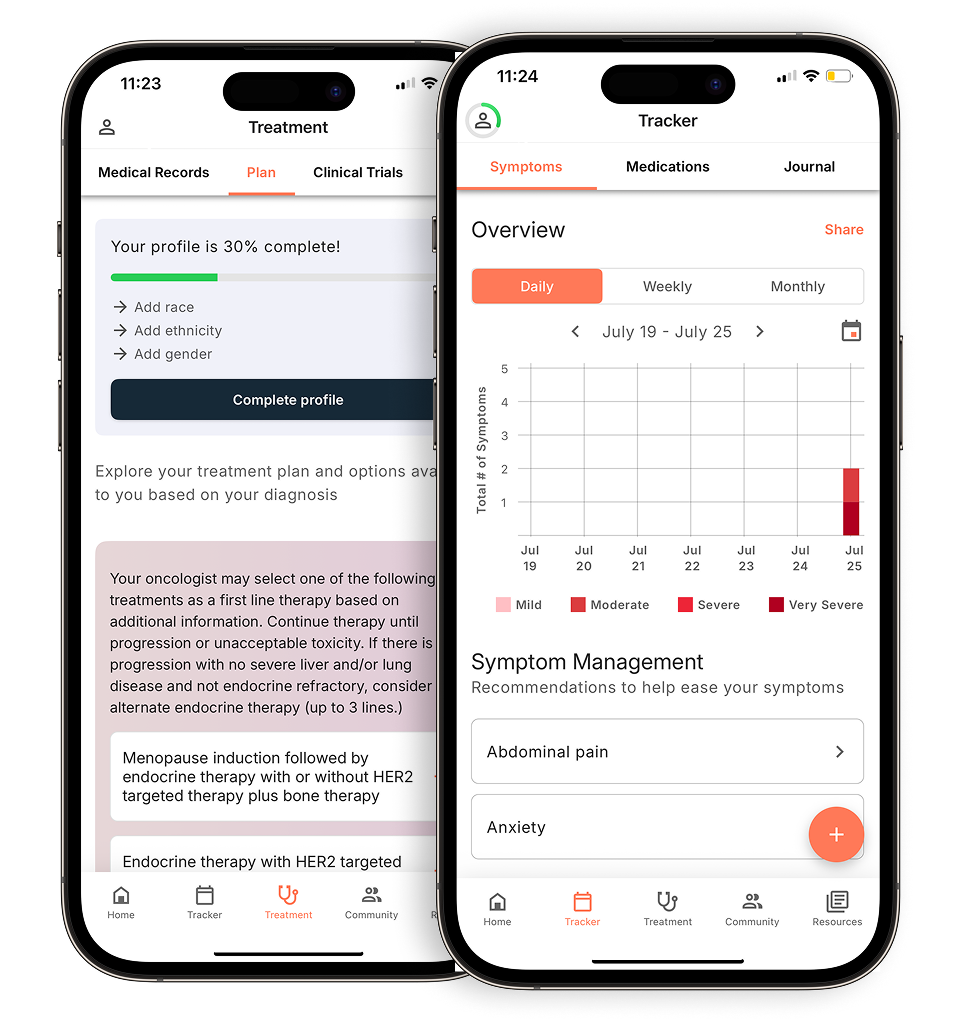
Alongside these four stages, oncologists use the TNM system — Tumor, Node, Metastasis — to build a more granular picture. Where number stages give a headline, TNM breaks down each component independently: how large the primary tumor is (T), whether regional lymph nodes are involved (N), and whether distant metastasis is present (M). This level of detail matters because two patients with the same stage number can have meaningfully different tumor profiles — and that difference increasingly drives personalized treatment planning.
Understanding where you stand on this spectrum is foundational. It’s also what’s fueling the evolution of kidney cancer treatment we’re seeing today, as surgical approaches continue to advance and become more tailored to each patient’s specific disease profile — which we’ll explore next.
The surgical shift: why ‘less is more’ in modern care
How surgeons approach kidney cancer removal has changed dramatically — and that shift directly influences the survival rates for kidney cancer for patients diagnosed today.
For decades, radical nephrectomy — complete removal of the kidney, surrounding fatty tissue, and often the adrenal gland — was the default response to any renal tumor, regardless of size. The logic was straightforward: take it all out and eliminate the risk. But that approach came with a significant trade-off. Losing an entire kidney accelerates the progression of chronic kidney disease, which carries its own serious long-term health consequences.
The modern standard is preservation, not elimination. According to the Kidney Cancer Association, partial nephrectomy is now the preferred approach for small renal masses, specifically because sparing healthy kidney tissue protects patients from downstream complications. For T1 tumors — those 7 cm or smaller confined to the kidney — a partial nephrectomy delivers equivalent cancer control while keeping more of the organ intact. If you’re weighing this decision, hearing how others have navigated the choice between partial and full removal can provide real-world perspective.
Robotic-assisted surgery has made kidney-sparing procedures more precise and accessible. Compared to traditional open surgery, robotic platforms offer surgeons enhanced visualization and dexterity in tight anatomical spaces, translating to less blood loss, fewer complications, and faster recovery for patients. Many patients are discharged within one to two days, rather than the extended hospital stays associated with open procedures. Recovery experiences vary, of course — community members who’ve been through it offer candid insight into what that process actually looks like.
For patients who aren’t candidates for surgery — due to age, tumor location, or other health conditions — thermal ablation offers an important alternative. Thermal ablation techniques like cryoablation (freezing) and radiofrequency ablation (heating) are treatment options for kidney cancer that work by destroying tumor cells. These approaches won’t suit every case, but they expand treatment options meaningfully.
As surgical precision continues to evolve, so too does the broader treatment landscape — and surgery is only part of the story. The next frontier lies in therapies that work at the molecular level, targeting the biology of kidney cancer itself.
The rise of immunotherapy and targeted breakthroughs
Modern kidney cancer treatment has undergone a pharmacological revolution — one that has made traditional chemotherapy largely irrelevant for renal cell carcinoma. Unlike many cancers, RCC is notoriously resistant to chemotherapy because its cells have highly efficient drug-pumping mechanisms that expel toxic agents before they can cause damage. That resistance pushed researchers toward a fundamentally different approach: working with the body’s own biology rather than against it.
Cancer care guidance for every step of your journey
Get treatment options, clinical trials, and support tailored to your diagnosis--all in one place.
Get started
See treatment options, manage symptoms, and stay informed—all in the app
View treatment options and trials personalized to your diagnosis—plus track progress in real time.
Continue in appCheckpoint inhibitors like pembrolizumab work by removing a disguise — cancer cells exploit immune “off switches” to hide from the body’s defenses, and these drugs expose them. PD-L1 is an established biomarker that helps doctors predict how well immune checkpoint inhibitor treatments will work for kidney cancer patients, as these medications target the PD-1/PD-L1 pathway to enhance immune responses against cancer cells. The clinical results have been significant: the KEYNOTE-564 trial showed that adjuvant pembrolizumab meaningfully improved disease-free survival in high-risk patients following surgery — a finding that has reshaped how oncologists approach post-surgical care.
Running parallel to immunotherapy advances, tyrosine kinase inhibitors (TKIs) target a different vulnerability. RCC tumors are heavily dependent on new blood vessel growth — a process called angiogenesis — to fuel their expansion. TKIs such as sunitinib and cabozantinib block the molecular signals that trigger this growth, essentially cutting off the tumor’s supply lines. Without that blood flow, tumor growth slows significantly.
For patients managing Stage 4 kidney cancer, the current standard of care has evolved to combine both approaches. IO + TKI combination therapy — pairing a checkpoint inhibitor with a targeted agent — has consistently outperformed either treatment alone in clinical trials, delivering improvements in both progression-free and overall survival. The most common form of kidney cancer is clear cell renal cell carcinoma. Many of these cancers are linked to changes in the VHL gene. This dual-mechanism strategy has fundamentally changed the outlook for advanced disease. As you’ll see in the next section, those changes are now showing up clearly in the survival data — though interpreting that data requires some important context.
Personalized prognosis: understanding survival rates today
Survival statistics for kidney cancer are genuinely improving — but the numbers you read online may already be out of date. According to SEER data from the American Cancer Society, the 5-year relative survival rate for localized renal cell carcinoma (RCC) is 93%, and for regional disease, it’s 72%. Those figures are encouraging, but they represent patients diagnosed years ago — before many of today’s most effective therapies existed.
The statistic that matters most is your survival rate, not the population average.
That distinction is critical. A number of individual factors shape prognosis far more precisely than stage alone:
- Fuhrman grade — how abnormal cancer cells look under a microscope; higher grades signal more aggressive tumors
- Genetic mutations — genetic mutations in genes like VHL, PBRM1, or BAP1 influence both behavior and treatment response
- Overall health and performance status — patients with fewer comorbidities consistently respond better to systemic therapy
- Tumor histology — clear cell RCC shows different ERV-K env protein expression patterns compared to papillary and chromophobe subtypes, which may influence survival outcomes
For Stage 4 disease specifically, survival outcomes have shifted meaningfully. The arrival of immunotherapy options for kidney cancer — particularly checkpoint inhibitor combinations like nivolumab plus ipilimumab — has extended progression-free survival for patients who previously had very limited options. Some patients achieve durable responses that weren’t possible even five years ago, as noted by City of Hope’s metastatic RCC program.
The takeaway here is that static survival data doesn’t capture the last two years of drug approvals and evolving treatment protocols. If you’ve recently been diagnosed — even at an advanced stage — or you’re post-surgery and exploring what “no evidence of disease” really means for your long-term outlook, sharing your concerns with others who’ve been there can be a grounding first step while you work through the data with your care team.
Understanding these variables sets the foundation for a more meaningful conversation about what your next steps should actually look like.
What you need to know: navigating your path forward
The most important steps you can take right now distill into five clear priorities — each one building on the science and treatment advances covered throughout this article.
Recognize early warning symptoms of kidney cancer signs and act fast. Persistent blood in your urine, unexplained flank pain, or an abdominal mass aren’t symptoms to monitor and wait on — they require immediate imaging. Early-stage kidney cancer is far more treatable, and prompt evaluation can be the difference between a localized tumor and metastatic disease.
Demand a plan built around your biology. Generic treatment protocols are giving way to approaches driven by your specific TNM stage, tumor grade, and genetic markers. If your oncologist hasn’t discussed molecular profiling, ask directly how your tumor’s biology is shaping your options.
Ask the right questions about surgery. Nephron-sparing approaches have become the standard of care where technically feasible. Ask your surgical team whether a robotic-assisted partial nephrectomy is appropriate for your case — recovery after this procedure is often faster than patients expect.
Understand that immunotherapy has changed the landscape. As covered earlier, checkpoint inhibitors and targeted therapies are now first-line options for advanced renal cell carcinoma — not last resorts.
Don’t overlook clinical trials. Accessing an active trial can mean receiving breakthrough treatments months or years before they reach standard practice. Patient engagement in treatment planning is increasingly recognized as an important part of personalized cancer care.
The right data, in your hands, changes everything — and the next section shows you exactly how to access it.
Taking control: how to access personalized treatment data
Staying current with renal cell carcinoma options is one of the hardest challenges patients face — NCCN guidelines are updated multiple times each year, and the gap between new evidence and what you hear in a brief appointment can be significant. That’s where having the right tools in your corner makes a real difference.
Outcomes4Me is the only direct-to-patient digital platform that integrates with National Comprehensive Cancer Network® (NCCN®) guidelines, translating oncologist-level clinical data into clear, personalized insights you can actually use. Rather than sorting through dense medical literature on your own, you get evidence-based information matched to your specific diagnosis, stage, and biomarker profile — all in one place.
Genetic results, in particular, are critical. Mutations in genes like VHL, PBRM1, and BAP1 don’t just inform prognosis — they determine which targeted therapies and clinical trials you may be eligible for. When that data is integrated into a platform built around your profile, clinical trial matching becomes far more precise and far less overwhelming. If you’ve recently had surgery, understanding how recovery shapes your next steps is equally important as you consider what comes next.
Disclaimer: The information provided in this article is for informational purposes only and is not intended to be a substitute for professional medical advice, diagnosis, or treatment. Outcomes4Me is not acting as your caregiver, and any suggestions or guidance offered should not replace the advice of your healthcare provider or qualified medical professional. Always seek the guidance of your physician or other qualified health provider with any questions you may have regarding a medical condition.
Personalized support for real care decisions
Understand your diagnosis, explore clinical trials, and track symptoms--all in one place.
Get started
Compare treatments, prepare for appointments, and track side effects—all in the app
Built for your diagnosis, Outcomes4Me gives you the tools to make confident, informed decisions—right when you need them.
Continue in app