
There is no recommended routine screening test for kidney cancer in people at average risk. Screening with imaging is used for people with known high risk, for surveillance after prior kidney cancer, or in specific situations such as long-term dialysis with acquired cystic kidney disease. Kidney tumors are often found incidentally on imaging done for other reasons.
Screening tests for the general population haven’t been shown to reduce deaths from kidney cancer and can cause harm through false alarms, extra tests, or procedures. For that reason, major cancer groups do not advise population-wide screening and instead recommend targeted surveillance for selected high-risk groups.
Who may need kidney screening imaging on a schedule:
Evidence-based guidance powered by NCCN Guidelines®
Personalized treatment plans shaped by the latest oncology standards—tailored to your diagnosis.
Get started
View your personalized treatment plan in the Outcomes4Me app
Use your diagnosis to unlock personalized NCCN Guidelines®-aligned recommendations.
Continue in app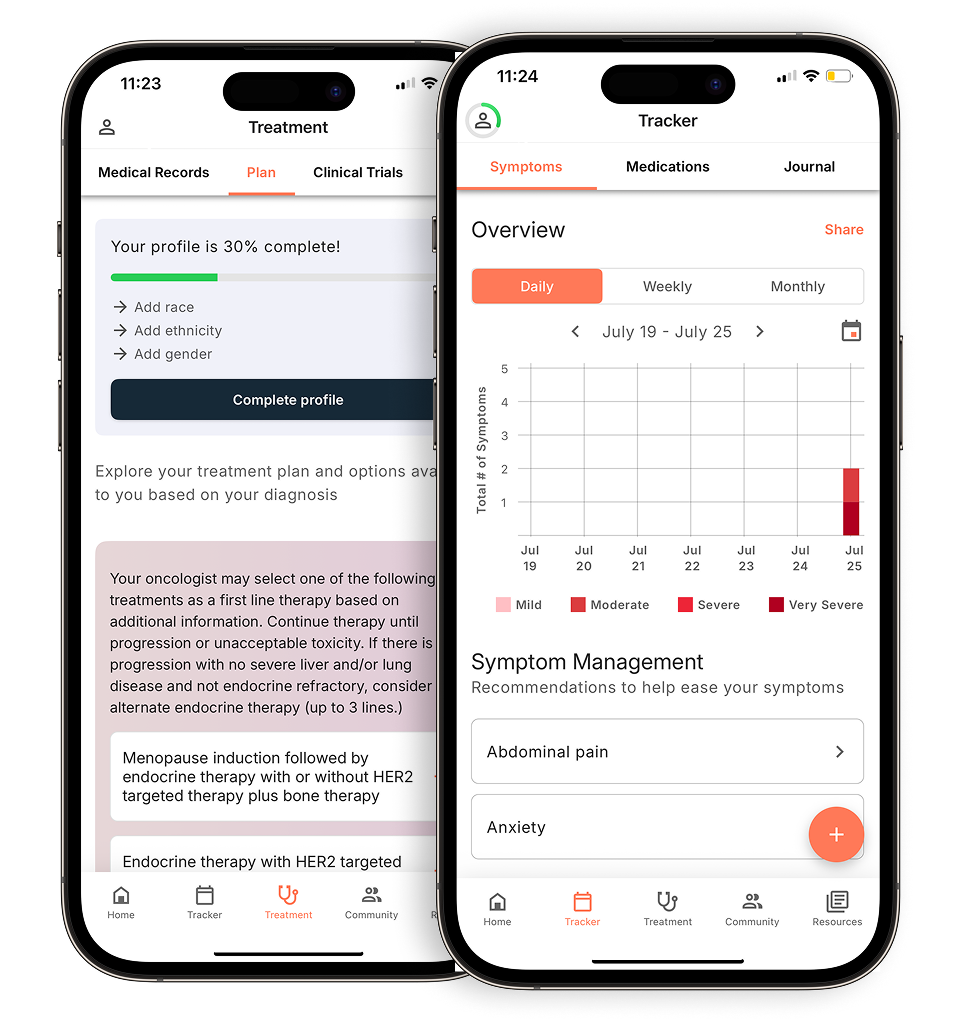
- People with hereditary kidney cancer syndromes. Individuals with syndromes such as von Hippel-Lindau or hereditary papillary RCC are offered lifelong surveillance with periodic MRI or CT because they face significantly higher risk of kidney tumors; management is individualized and small tumors are often watched until they reach a size or growth rate that calls for treatment (commonly around 3 centimeters in many protocols).
- People with acquired cystic kidney disease from long-term dialysis. Longstanding dialysis and acquired cystic kidney disease raise kidney cancer risk; many programs perform periodic ultrasound or cross-sectional imaging for dialysis patients who are younger and expected to live many more years.
- Survivors of prior kidney cancer. Follow up after treated kidney cancer is not the same as screening. Your cancer team will recommend imaging and timing based on the original tumor stage and type. Guidelines for evaluation and follow up of renal masses emphasize individualized staging, imaging, and specialist involvement.
Who should not get routine kidney cancer screening:
- People at average risk with no symptoms. Routine ultrasound, CT, or blood/urine tests to screen healthy people without risk factors is not recommended because the benefits do not outweigh the harms. If you have symptoms such as blood in urine, persistent flank pain, or unexplained weight loss, seek medical evaluation.
Common surveillance principles (what surveillance looks like for high-risk people)
- MRI of the abdomen is often preferred for lifelong surveillance because it avoids repeated radiation exposure. CT or ultrasound may be used depending on patient factors.
- Size and growth guide action. Many hereditary-syndrome protocols watch small tumors carefully and recommend intervention when individual tumors approach roughly 3 centimeters or show concerning growth. Frequency of imaging is tailored to findings and growth rate.
- Dialysis patients. If surveillance is used in dialysis patients with acquired cystic kidney disease, ultrasound or CT at intervals (for example every 1–2 years) is commonly discussed, especially for younger dialysis patients or those with large cyst burden. Discuss risks and life expectancy with your care team.
FAQs
- I never smoked. Should I get screened for kidney cancer?
A. No. Smoking increases kidney cancer risk, but routine screening for kidney cancer is not recommended for people without specific high-risk features. Discuss symptoms and family history with your clinician. - I have a strong family history. Does that mean I should be screened?
A. A family history can raise concern and may prompt referral to genetics and a kidney specialist. If a hereditary syndrome is identified or strongly suspected, a formal surveillance plan is often recommended. - I am on dialysis. Do I need screening?
A. Long-term dialysis patients can develop acquired cystic kidney disease, which increases kidney cancer risk. Whether to do routine surveillance depends on dialysis duration, age, life expectancy, and clinical context. Talk with your nephrologist about individualized surveillance.
Questions to ask your doctor
- Do I have risk factors that make me a candidate for kidney surveillance?
- If imaging is recommended, which test is best for me and how often will it be done?
- If a small kidney lesion is found, what are the management options, and when would you recommend treatment versus watchful waiting?
- If I am on dialysis, should we consider surveillance for acquired cystic kidney disease?
Outcomes4Me is here to help you better understand your diagnosis and treatment options. You deserve clear, trustworthy information at every step.
Personalized support for real care decisions
Understand your diagnosis, explore clinical trials, and track symptoms--all in one place.
Get started
Compare treatments, prepare for appointments, and track side effects—all in the app
Built for your diagnosis, Outcomes4Me gives you the tools to make confident, informed decisions—right when you need them.
Continue in app