
Acute myeloid leukemia (AML) is an aggressive blood cancer that originates in the bone marrow, rapidly crowding out healthy blood cells and demanding prompt, carefully considered treatment decisions, especially for patients over 70.
For older adults, those decisions are rarely straightforward. Standard intensive chemotherapy for AML causes severe side effects like myelosuppression, and only about half of older patients with AML are considered eligible for this type of treatment, which is why lower-intensity therapy options have become important alternatives.
Decades ago, the choice was essentially intensive chemotherapy or supportive care only. Today, advances in targeted therapy have enabled a shift toward personalized care built around low-intensity strategies that can control disease without the severe side effects of aggressive regimens.
The central goal is meaningful survival. For many patients over 70, that means balancing disease control with the preservation of daily quality of life, staying independent, managing fatigue, and remaining engaged in everyday life. Understanding how clinicians weigh those trade-offs is the foundation for everything that follows, including the specific treatment combinations your care team may recommend.
Understanding the standard of care: HMA and venetoclax
The combination of hypomethylating agents and venetoclax is the definitive first-line standard of care for older adults with AML who can’t tolerate intensive chemotherapy.
Hypomethylating agents (HMAs), primarily azacitidine and decitabine, work by inhibiting DNA methyltransferase, which reduces the production of leukemia cells and allows the bone marrow to produce more healthy functioning cells. They function as a reset mechanism, stripping away the chemical “off switches” that leukemia cells exploit, coaxing those cells back toward normal behavior or programmed death. The role of hypomethylating agents in AML management has expanded significantly as research has confirmed their tolerability in older, frailer populations.
Venetoclax adds a powerful second mechanism. It’s a BCL-2 inhibitor, meaning it blocks a protein that leukemia cells rely on to avoid natural cell death. When BCL-2 is inhibited, those cells lose their survival shield. Combined with an HMA, in clinical trials, azacitidine combined with venetoclax produced higher response rates and longer-lasting responses than azacitidine alone in older adults with AML.
Practically, azacitidine and venetoclax (AZA/VEN) are used together as a treatment combination for older adults with AML who are not eligible for intensive chemotherapy. The first cycle usually requires inpatient monitoring to watch for tumor lysis syndrome, a rapid breakdown of cancer cells that can strain the kidneys. Once that initial period is safely cleared, most patients transition to outpatient care, maintaining a treatment rhythm that fits more naturally into daily life.
Not every patient responds identically, and your care team will monitor blood counts and organ function closely throughout. Understanding what drives eligibility, and what might shift it, is exactly what the next section addresses.
Eligibility criteria. Why intensive chemo might be bypassed
Not every older adult with AML is the same, and the decision to bypass intensive chemotherapy depends on a precise, individualized assessment, not age alone.
Clinicians use performance status scales and geriatric assessment tools to evaluate how well older patients can manage daily activities and tolerate different treatment intensities. An ECOG score of 0–1 generally means a patient is active and independent, while a score of 2 or higher may suggest that intensive chemotherapy carries increased risk. Your care team can help you understand what your ECOG score means for your treatment options. Comorbidities compound that risk further, as heart failure, chronic lung disease, or kidney impairment can all amplify chemotherapy toxicity to a dangerous degree.
Evidence-based guidance powered by NCCN Guidelines®
Personalized treatment plans shaped by the latest oncology standards—tailored to your diagnosis.
Get started
View your personalized treatment plan in the Outcomes4Me app
Use your diagnosis to unlock personalized NCCN Guidelines®-aligned recommendations.
Continue in app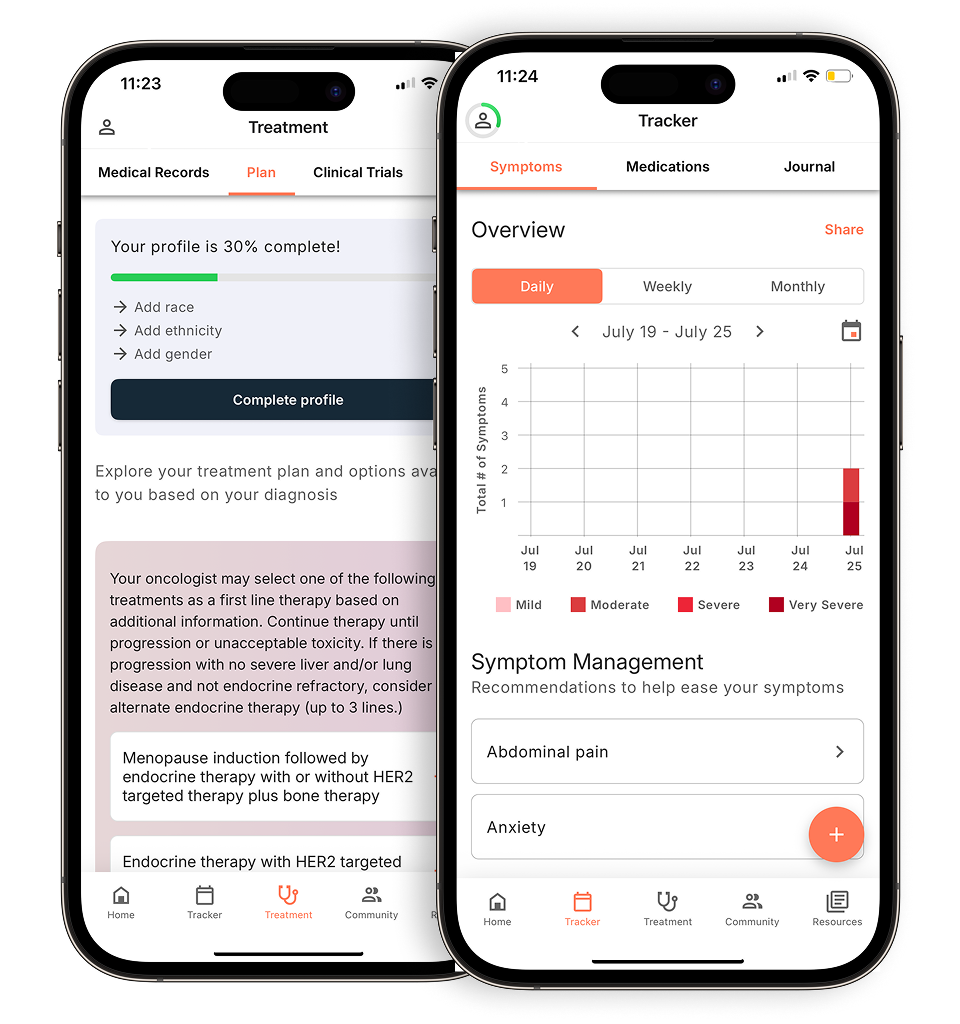
Genetics matter just as much as physical condition. In older AML patients receiving lower-intensity therapy combinations, those with poor-risk cytogenetic features tend to have lower remission rates, making lower-intensity approaches like HMA venetoclax AML combinations a more rational path forward. An active 72-year-old with an ECOG score of 1 and standard-risk genetics may still be a candidate for intensive therapy, while a frail 80-year-old with an ECOG score of 3 and complex karyotype would almost certainly be directed toward a gentler, targeted approach. Understanding these criteria sets the stage for a closer look at what survival and remission actually look like for patients in this age group.
Survival rates and remission expectations for patients over 70
Patients over 70 can survive AML, and newer therapies are meaningfully shifting what’s possible, though outcomes vary widely based on age, molecular profile, and overall health.
Research shows that older adults with aggressive blood cancers are responsive to treatment and demonstrate prolonged survival, a finding that challenges older assumptions about AML being untreatable in this population. However, age is one factor that doctors consider when discussing treatment outcomes, and your care team can help you understand how age may influence your individual prognosis and options. Certain genetic changes and secondary AML may be seen more often in older patients, which is why your care team may want to test for these features when planning treatment.
With low-intensity therapies like HMA plus venetoclax, achieving complete remission is a realistic goal for many patients. Stable disease, where AML doesn’t disappear but stops progressing, may be considered an important goal for some older adults as well, and some patients and doctors view it as a meaningful outcome. In practice, the goal of therapy often shifts from cure to sustained disease control and quality of life.
And targeted therapies are changing the calculus. Mutations like IDH1, IDH2, and FLT3 now have approved targeted agents that extend survival well beyond traditional approaches.
The remission landscape. What the data shows
Complete remission (CR) and its close relative, complete remission with incomplete hematologic recovery (CRi), are the primary benchmarks clinicians use to gauge whether AML treatment is working.
CR means bone marrow blasts fall below 5% with normalized blood counts; CRi reflects the same blast clearance but with counts still recovering. Both signal meaningful disease control. Roughly 60–70% of older patients may achieve a response, yet relapse risk remains high, making the depth of that response just as important as achieving it at all.
Treatment response in older AML patients is assessed through measures such as complete remission rates and duration of response to therapy. By detecting leukemic cells below standard detection thresholds, response testing helps your care team gauge relapse likelihood and guide ongoing management decisions.
Five-year survival rates for AML over 70 remain sobering in population-level data, but individual variability is wide. Specific factors, such as mutation profile, treatment response, and overall health, can shift outcomes considerably, which the next section explores in detail.
Factors influencing long-term outlook
Molecular mutations, specifically FLT3 and IDH1/2, are among the strongest predictors of how AML responds to treatment in older adults, and targeted inhibitors have meaningfully shifted prognosis for patients who carry them.
Mutation profile and targeted inhibitors. FLT3 mutations drive rapid disease progression, but FLT3 inhibitors added to standard regimens have improved response depth. IDH1/2 mutations appear in a notable fraction of AML cases, and your doctor may test for them to help guide treatment decisions. IDH1/2 mutations have dedicated oral inhibitors that can induce remission without intensive chemotherapy, a significant development for patients over 70.
Cancer care guidance for every step of your journey
Get treatment options, clinical trials, and support tailored to your diagnosis--all in one place.
Get started
See treatment options, manage symptoms, and stay informed—all in the app
View treatment options and trials personalized to your diagnosis—plus track progress in real time.
Continue in appSupportive care, including blood transfusions, may help older adults with AML tolerate treatment when intensive chemotherapy is not an option. Infections remain a leading cause of early mortality; proactive antimicrobial strategies protect the windows when treatment is working.
Cytogenetic response assessed around 60 days after initial treatment can provide important information about whether your leukemia is responding well and may help guide decisions about continuing or changing your treatment plan. Your care team uses measurable residual disease (MRD) data from these early cycles to determine whether to continue, adjust, or pivot the personalized care plan entirely.
On the question of median survival, in real-world studies, patients with AML receiving first-line venetoclax-based therapy have shown a median overall survival of approximately 14 months, with some mutation-favorable subgroups exceeding 14 months median overall survival. Those numbers continue to improve as treatment selection grows more precise. Understanding which pathway fits your biology sets the stage for exploring the full range of low-intensity options available today.
Low-intensity treatment pathways and targeted therapies
When intensive chemotherapy isn’t an option, care teams turn to a growing toolkit of lower-intensity agents that can be tailored to each patient’s disease biology.
The starting point is almost always a hypomethylating agent (HMA), such as azacitidine or decitabine, often combined with a targeted therapy based on the patient’s genetic profile. How that pairing gets chosen depends on mutation status, organ function, and how well a patient tolerates treatment cycles that, unlike induction chemo, continue indefinitely.
Venetoclax is the most common add-on to HMAs, but it isn’t right for everyone. For patients who can’t tolerate it, glasdegib is a Hedgehog pathway inhibitor that offers an alternative when combined with low-dose cytarabine. It’s a narrower option, but it gives care teams a meaningful fallback.
One practical challenge is managing a high white blood cell count before HMA therapy begins. The “Quick Start” approach uses hydroxyurea to bring white blood cell counts down first, stabilizing the patient enough to tolerate their assigned regimen. It’s a bridge, not a treatment, but it’s a critical one.
The core trade-off here is real. Lower toxicity comes at the cost of indefinite treatment. These are ongoing therapies without a clear endpoint. Patients commit to continuing therapy, which carries its own emotional and logistical weight. Understanding that upfront helps set realistic expectations.
Targeted oral options for specific mutations
For older adults with IDH1 or IDH2 mutations, targeted oral therapies represent a genuine alternative to IV chemotherapy, one that works with the biology of the disease rather than against the patient’s resilience.
Ivosidenib is an IDH1 small-molecule inhibitor that blocks the mutated enzymes driving leukemic cell growth. Enasidenib is an IDH2 small-molecule inhibitor that blocks the mutated enzymes driving leukemic cell growth. Taken as daily pills, they fit into a treatment routine far less disruptive than inpatient chemotherapy regimens. That distinction matters enormously when your care team is weighing quality of life alongside disease control.
Differentiation syndrome is one side effect your care team will monitor for closely. It occurs when leukemic cells mature rapidly in response to IDH inhibitors, triggering inflammation, and symptoms can include fever, fluid buildup, and breathing difficulties. Caught early, it’s manageable with corticosteroids and, if needed, a temporary pause in therapy.
Genetic testing to identify mutations in your leukemia cells, including mutations like FLT3, IDH1, and IDH2, helps your care team develop a personalized treatment plan and determine which targeted therapies may work best for you. Without knowing your mutation profile, your care team can’t determine whether targeted inhibitors are even on the table.
Supportive care and transfusion independence
Achieving transfusion independence, no longer relying on regular red blood cell or platelet transfusions, is one of the most meaningful quality-of-life goals for older adults managing AML.
Growth factors like G-CSF may be used to help support bone marrow recovery between treatment cycles. Your doctor can discuss whether this approach might be appropriate for you. That recovery window matters enormously. During AML treatment, the bone marrow is damaged along with leukemia cells, which can cause dangerously low blood counts. Most patients need antibiotics and blood transfusions during this time.
The logistical reality is real and worth naming. Frequent clinic visits for blood count monitoring and hydration are part of the commitment. These check-ins keep lower-intensity treatment safe.
Managing quality of life and treatment trade-offs
Navigating aggressive cancer in later life means weighing what treatment can realistically offer against what it costs you in daily comfort, energy, and time.
The emotional challenges are real. Beyond lab values and response rates, you’re making decisions that touch on identity, independence, and what matters most. A treatment cycle that demands weekly clinic visits might conflict with a grandchild’s graduation, and that tension is legitimate medical information your care team needs to hear.
Sometimes the burden of treatment, such as fatigue, cytopenias, or infection risk, outweighs its potential benefit. Research consistently shows that performance status and patient goals must anchor every treatment decision, not age alone.
Palliative care is a parallel support system running alongside any active treatment, focused on managing symptoms. It manages pain, breathlessness, and fatigue so you can live better, whatever “better” means to you.
Communicating personal values to your care team is practical, not sentimental. Consider being direct:
- “I want to stay strong enough to attend my daughter’s wedding in three months.”
- “I’d rather feel well for fewer months than feel unwell for more.”
Key takeaways: AML management after 70
For older adults with AML who aren’t candidates for intensive chemotherapy, HMA + Venetoclax is now the established standard of care, and genetic testing unlocks even more targeted options.
A few core principles tie together everything covered in this article:
- HMA + Venetoclax remains the current backbone of low-intensity treatment for newly diagnosed older adults
- Genetic testing to identify mutations in your leukemia cells, including mutations like FLT3, IDH1, and IDH2, helps your care team develop a personalized treatment plan and determine which targeted therapies may work best for you
- Quality of life and transfusion independence are legitimate, primary goals of low-intensity care, not consolation prizes
- Treatment plans must stay dynamic, adjusting as response data comes in and as your preferences evolve
What works at month three may not be the right call at month nine. And that’s okay. The goal is a personalized care plan that reflects where you are right now, not a fixed protocol that ignores how things change.
Disclaimer: The information provided in this article is for informational purposes only and is not intended to be a substitute for professional medical advice, diagnosis, or treatment. Outcomes4Me is not acting as your caregiver, and any suggestions or guidance offered should not replace the advice of your healthcare provider or qualified medical professional. Always seek the guidance of your physician or other qualified health provider with any questions you may have regarding a medical condition.
Personalized support for real care decisions
Understand your diagnosis, explore clinical trials, and track symptoms--all in one place.
Get started
Compare treatments, prepare for appointments, and track side effects—all in the app
Built for your diagnosis, Outcomes4Me gives you the tools to make confident, informed decisions—right when you need them.
Continue in app