
Blood cancer begins when something goes wrong in the bone marrow: the soft, spongy tissue inside your bones where blood cells are made. In leukemia, abnormal white blood cells crowd out healthy cells, disrupting your body’s ability to fight infections, carry oxygen, and control bleeding. According to the National Cancer Institute, approximately 60,000 people are diagnosed with leukemia in the United States each year.
The types of leukemia vary significantly based on which blood cells are affected and how quickly the disease develops. Acute leukemias progress rapidly within weeks or months, demanding immediate treatment. Chronic forms develop more slowly, sometimes over years, and may not require intervention right away. MD Anderson Cancer Center notes that understanding these distinctions is essential for determining treatment urgency and options.
While a leukemia diagnosis can feel overwhelming, modern medicine has developed targeted approaches for each specific type. Whether you’re navigating acute disease concerns or understanding slower-progressing conditions, knowing your specific classification helps you and your medical team make informed decisions about your care path.
The framework: classifying leukemia
Doctors organize leukemia types using a simple two-part framework that combines speed of progression with the cell type affected. The first factor determines whether the cancer is acute (fast-growing) or chronic (slow-progressing). The second identifies whether the abnormal cells are lymphocytes or myeloid cells—two distinct white blood cell families.
This classification system creates four main categories: acute lymphoblastic leukemia (ALL), acute myeloid leukemia (AML), chronic lymphocytic leukemia (CLL), and chronic myeloid leukemia (CML). Each behaves differently, affects different age groups, and requires distinct treatment approaches. According to Memorial Sloan Kettering Cancer Center, understanding which category applies to your diagnosis fundamentally shapes your treatment path and prognosis.
Within these four major categories, there are numerous subtypes based on genetic mutations, chromosome changes, and cell characteristics. For instance, understanding whether cells remain primarily in the blood or migrate to lymph nodes can affect staging and monitoring strategies. This layered classification helps oncologists select targeted therapies matched to your cancer’s specific biology.
Evidence-based guidance powered by NCCN Guidelines®
Personalized treatment plans shaped by the latest oncology standards—tailored to your diagnosis.
Get started
View your personalized treatment plan in the Outcomes4Me app
Use your diagnosis to unlock personalized NCCN Guidelines®-aligned recommendations.
Continue in app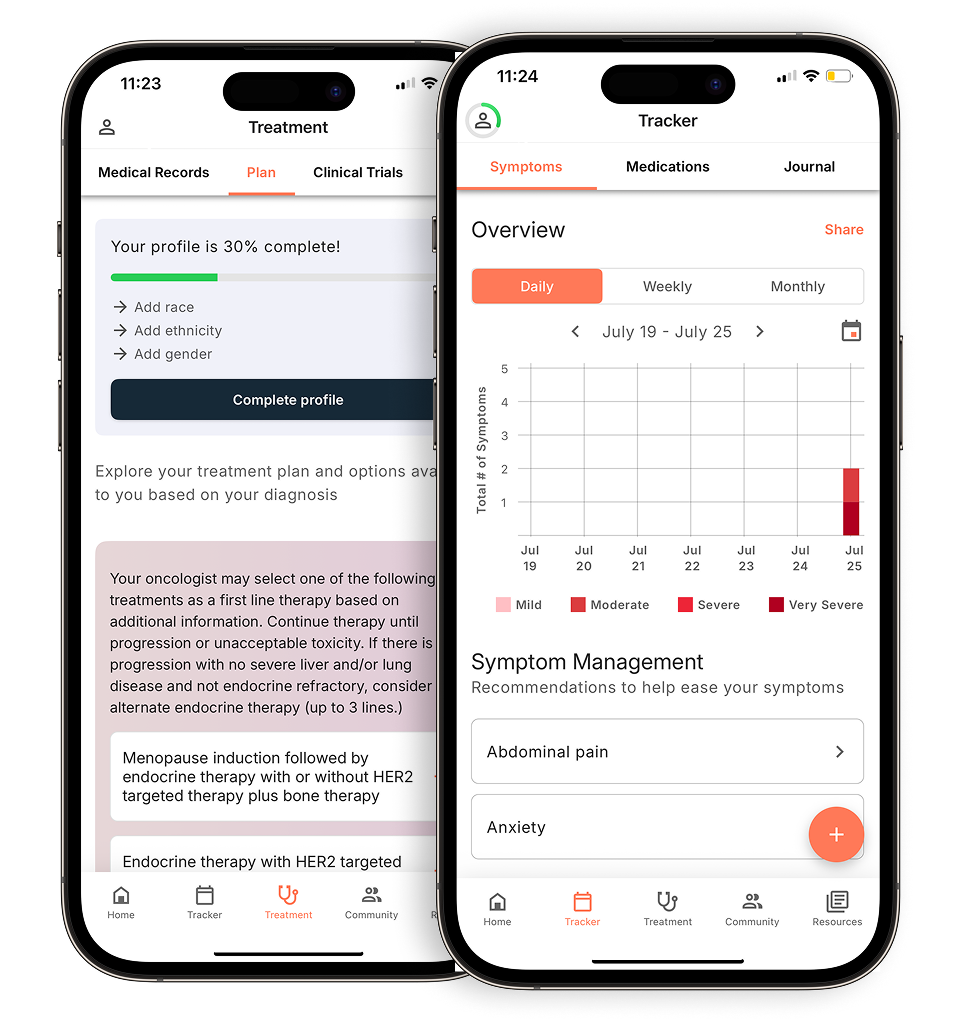
Acute leukemias: rapid multiplication of cells
Acute leukemias demand immediate attention because abnormal cells multiply so rapidly that symptoms appear within weeks or even days. The bone marrow becomes flooded with immature blast cells that crowd out healthy blood cells, creating a medical emergency that requires prompt diagnosis and treatment.
Acute lymphocytic leukemia (ALL) affects lymphoid cells and represents the most common childhood cancer, though adults can develop it too. According to the National Cancer Institute, ALL accounts for approximately 20% of all adult leukemias. Symptoms often include sudden fever, bone pain, easy bruising, and severe fatigue as healthy blood cell production shuts down. Acute myeloid leukemia (AML) targets myeloid cells and occurs more frequently in adults, particularly those over 65. MD Anderson Cancer Center notes that AML can develop from certain blood disorders or previous chemotherapy exposure, making risk factor awareness crucial.
Both acute types share a defining characteristic: without treatment, they progress to life-threatening complications within months. But there is hope: modern chemotherapy protocols have dramatically improved survival rates, with some ALL subtypes achieving cure rates above 90% in children. The urgency may be frightening, but acute leukemias often respond remarkably well to aggressive treatment when caught early.
Chronic leukemias
While acute leukemias demand immediate intervention, chronic forms progress gradually over months or years, often discovered during routine blood work before symptoms appear. These cancers produce more mature—though still abnormal—cells that initially function well enough to delay detection.
Chronic lymphocytic leukemia (CLL) primarily affects adults over 55 and represents the most common leukemia type in Western countries. According to Cleveland Clinic, CLL accounts for roughly 25% of all leukemia cases. Abnormal B-lymphocytes accumulate slowly, and many patients live years without treatment through a “watch and wait” approach while monitoring disease progression.
Cancer care guidance for every step of your journey
Get treatment options, clinical trials, and support tailored to your diagnosis--all in one place.
Get started
See treatment options, manage symptoms, and stay informed—all in the app
View treatment options and trials personalized to your diagnosis—plus track progress in real time.
Continue in appChronic myeloid leukemia (CML) affects myeloid cells and occurs across all age groups, though it’s most common in middle-aged adults. Unlike its acute counterpart, acute myeloid leukemia, which progresses within weeks, CML typically advances through three phases (chronic, accelerated, and blast crisis), potentially spanning several years before requiring aggressive treatment. Both chronic forms benefit from targeted therapies that can control disease progression effectively, transforming what was once a terminal diagnosis into a manageable chronic condition.
Unique cases: rare leukemias
Beyond the four main categories, several uncommon leukemia variants present unique diagnostic and treatment challenges. Hairy cell leukemia, a rare subtype of chronic lymphocytic leukemia, affects approximately 1,200 Americans annually and earns its name from the distinctive hair-like projections visible on affected B-cells under a microscope. This slow-growing cancer primarily strikes middle-aged men and responds exceptionally well to targeted therapies.
T-cell prolymphocytic leukemia represents another unusual variant, accounting for just 2% of mature lymphoid leukemias. Patients typically experience rapid enlargement of the spleen and lymph nodes, along with extremely high white blood cell counts. The aggressive nature of this disease often requires intensive chemotherapy approaches different from standard chronic leukemia treatments.
Acute promyelocytic leukemia (APL), though technically a subtype of AML, deserves special mention because of its distinct genetic signature and remarkable treatment success story. The disease involves a specific chromosomal translocation that makes it particularly responsive to targeted therapies like all-trans retinoic acid, transforming what was once a deadly diagnosis into one of the most curable forms of acute leukemia. Understanding how molecular markers guide care becomes especially crucial in these rare presentations where standard treatment protocols may not apply.
Methods for diagnosing leukemia
Accurate diagnosis requires comprehensive testing beyond initial blood work, as leukemia subtypes demand different analytical approaches. A complete blood count may reveal abnormal white cell levels, but distinguishing acute myeloid leukemia from chronic myeloid leukemia requires bone marrow aspiration and biopsy—procedures that extract tissue samples for microscopic examination.
Cytogenetic and molecular testing provide crucial diagnostic precision. Techniques such as fluorescence in situ hybridization (FISH) identify specific chromosomal abnormalities. For example, the Philadelphia chromosome marks many chronic myeloid leukemia cases. Flow cytometry analyzes cell surface markers to distinguish B-cell from T-cell variants, while genetic sequencing reveals mutations that inform prognosis and treatment selection.
Challenges do persist, though. Symptoms often mimic common illnesses, delaying referrals to specialists. Understanding specialized tests can feel overwhelming for newly diagnosed patients. Access to advanced molecular diagnostics varies across healthcare systems, potentially affecting timely subtype identification. These diagnostic complexities underscore why partnering with experienced oncology centers matters and where comprehensive testing capabilities and specialist expertise converge to establish definitive leukemia classification.
Other considerations in leukemia treatment
While modern therapies have dramatically improved survival rates, treatment decisions require careful consideration of multiple factors that vary by leukemia type. Acute leukemia demands immediate, intensive intervention. This would typically include chemotherapy and a potential stem cell transplant, but not all patients can tolerate aggressive protocols due to age or comorbidities. Chronic forms allow more measured approaches, yet balancing treatment timing with quality of life remains complex.
Individual patient characteristics significantly influence therapeutic success. Genetic mutations detected through molecular testing may predict drug resistance, guiding oncologists toward alternative regimens or clinical trial options. According to MD Anderson Cancer Center, approximately 25% of patients experience relapse after initial remission, requiring salvage therapies with potentially diminished effectiveness. Treatment side effects can also necessitate dose adjustments that may compromise optimal outcomes. Understanding these limitations helps patients engage in realistic treatment planning with their care teams.
Empowerment through knowledge of our leukemia
Understanding leukemia types empowers you to navigate your diagnosis with confidence. Acute leukemias (AML, ALL) require immediate intervention, while chronic forms (CML, CLL) often allow for monitoring or gradual treatment escalation. Each subtype demands specific therapeutic approaches; for instance, CML responds to targeted BCR-ABL inhibitors, whereas ALL typically requires intensive chemotherapy protocols.
Your diagnosis involves multiple classification layers: acute versus chronic progression, myeloid versus lymphoid cell origin, and genetic markers that guide precision medicine. Hairy cell leukemia exemplifies how rare subtypes follow distinct treatment paths. Accurate diagnosis through comprehensive testing, such as blood work, bone marrow analysis, and genetic profiling determines your treatment timeline and prognosis.
Personalized support for real care decisions
Understand your diagnosis, explore clinical trials, and track symptoms--all in one place.
Get started
Compare treatments, prepare for appointments, and track side effects—all in the app
Built for your diagnosis, Outcomes4Me gives you the tools to make confident, informed decisions—right when you need them.
Continue in app