A new study suggests that something as simple as your daily step count may offer important clues about how well you recover after surgery. Researchers found that patients who walked more after surgery tended to leave the hospital sooner, experience fewer complications, and were less likely to be readmitted.
The findings, published in the Journal of the American College of Surgeons, highlight how wearable devices like fitness trackers and smartwatches could help both patients and care teams better monitor recovery in real time.
What did the study find?
Researchers analyzed data from nearly 2,000 adults who underwent inpatient surgery through a large research initiative supported by the National Institutes of Health.
The study looked at several recovery-related measures, including:
- Daily step count
- Heart rate variability (HRV)
- Self-reported wellness scores
Among all of these measures, step count stood out as the strongest predictor of recovery. After accounting for factors like age, sex, and surgical risk, researchers found that for every additional 1,000 steps per day after surgery:
Evidence-based guidance powered by NCCN Guidelines®
Personalized treatment plans shaped by the latest oncology standards—tailored to your diagnosis.
Get started
View your personalized treatment plan in the Outcomes4Me app
Use your diagnosis to unlock personalized NCCN Guidelines®-aligned recommendations.
Continue in app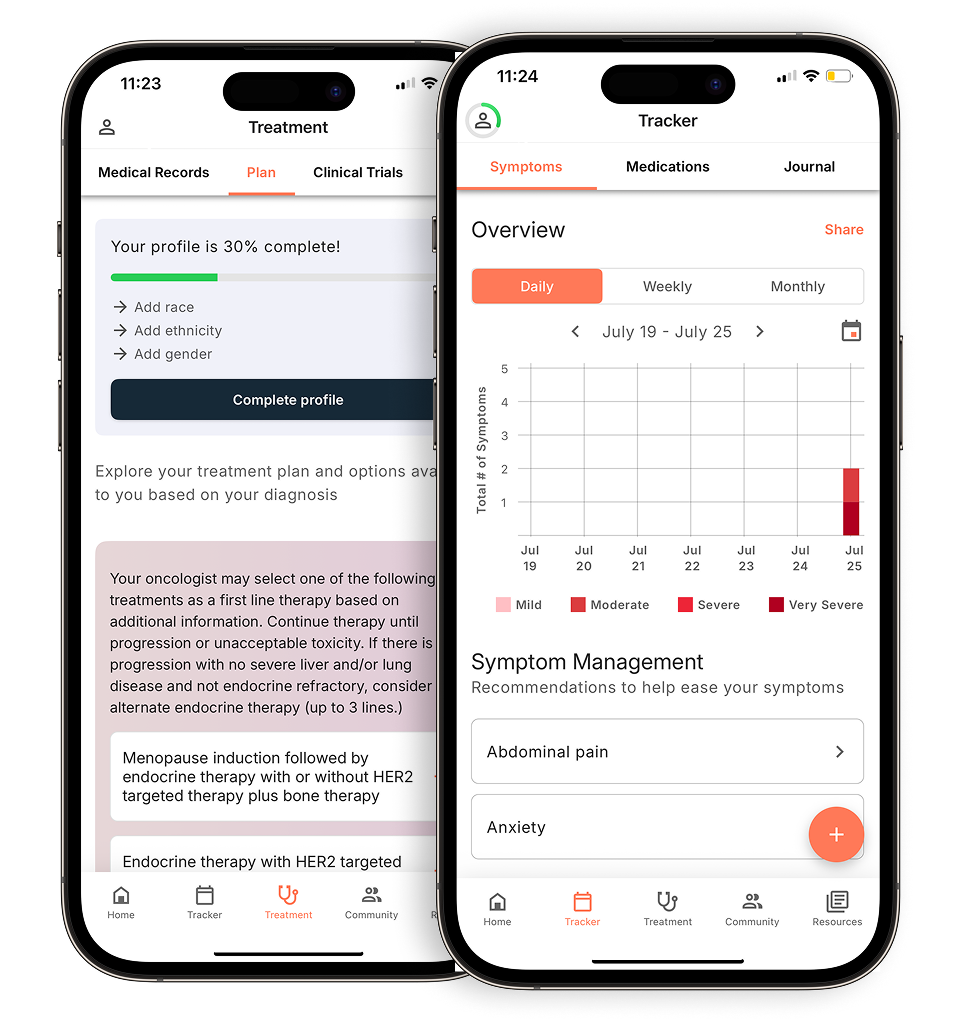
- Hospital stays decreased by about 6%
- The risk of complications within 30 and 90 days decreased
- The likelihood of being readmitted to the hospital also decreased
Interestingly, changes in heart rate variability and self-reported wellness scores were not strongly associated with recovery outcomes.
Why does walking matter after surgery?
Most patients hear some version of “try to get up and walk” after surgery. But this study suggests that movement may be more than just general advice, it could be an important part of the healing process itself.
Wearable devices can also provide a more objective way to understand how a patient is recovering. Instead of relying only on how someone says they feel, doctors may eventually be able to monitor recovery trends through real-world activity data.
Researchers also noted that lower activity levels could serve as an early warning sign that a patient may need additional support, such as:
- Physical therapy
- More frequent check-ins
- Adjustments to pain management
- Extra support at home after discharge
The connection between fitness and surgical recovery
This isn’t the first study to link movement with better surgical outcomes.
The findings build on earlier research, which found that patients who walked more than 7,500 steps per day before surgery had a 51% lower risk of postoperative complications.
Together, these studies suggest that physical activity both before and after surgery may play an important role in recovery.
However, researchers emphasize that recovery goals should always be individualized. Not every patient can or should aim for the same number of steps.
How wearable devices could change postoperative care
Wearable devices are increasingly being studied as tools for cancer care and surgical recovery because they can continuously collect health data outside of the clinic.
In the future, doctors may use wearable data to:
- Monitor recovery remotely
- Identify complications earlier
- Personalize discharge planning
- Set realistic recovery goals
- Encourage safe movement after surgery
For patients, seeing measurable progress may also provide reassurance and motivation during recovery. For example, a care team could help a patient set gradual activity goals, such as:
- Walking a certain number of steps before surgery
- Reaching a target step count several days after surgery
- Tracking improvements week by week
What patients should know
While this research is promising, step counts are only one piece of the recovery picture. Factors like the type of surgery, age, overall health, pain levels, and other medical conditions also affect recovery.
It’s also important not to push yourself too hard too soon. Exercise and activity plans after surgery should always be discussed with your healthcare team.
Still, the study reinforces an important message: safe movement after surgery may do more than help you feel better. It could potentially improve your recovery outcomes.
As wearable technology becomes more integrated into healthcare, simple metrics like step count may become an increasingly valuable tool in helping patients recover safely and confidently after surgery.
Connect with an Outcomes4Me oncology nurse practitioner at no charge through the Outcomes4Me app, using the “Ask Outcomes4Me” button.
Personalized support for real care decisions
Understand your diagnosis, explore clinical trials, and track symptoms--all in one place.
Get started
Compare treatments, prepare for appointments, and track side effects—all in the app
Built for your diagnosis, Outcomes4Me gives you the tools to make confident, informed decisions—right when you need them.
Continue in app