Chronic myeloid leukemia is a blood cancer driven by a single abnormal gene fusion, and tyrosine kinase inhibitors (TKIs) are now the standard first-line treatment for CML. That one shift rewrote the chronic myeloid leukemia prognosis almost entirely. Before targeted therapy, CML life expectancy was measured in a handful of years. Today, a person diagnosed in chronic phase who starts a TKI promptly and stays on it can reasonably expect to live a lifespan approaching that of someone without the disease.
How TKIs transform the chronic phase prognosis
A TKI for CML blocks the BCR-ABL protein, the faulty signal that tells leukemia cells to multiply without stopping. Cut the signal, and production stalls. Phase matters enormously. CML chronic phase prognosis is far stronger than accelerated or blast phase outcomes, because chronic-phase disease responds predictably to therapy. Reaching and holding a stable molecular response brings survival close to population norms.
Adherence: the critical link to long-term survival
Skipping or adjusting your TKI doses can affect how well your treatment works, which is why it’s important to take your medication exactly as directed. Consistent daily dosing sustains a deep molecular response over years.
Treatment failure means BCR-ABL levels stop falling, plateau, or climb. Regular blood tests help your care team monitor how well your CML treatment is working, and if your current TKI isn’t effective, you may switch to another TKI. The sooner your CML responds to treatment, the better your outlook.
CML outcomes by the numbers. Survival statistics in 2026
Published CML survival rate figures deserve careful reading. Relative survival compares people with CML to the general population, and because the data pool includes patients diagnosed years ago, some before modern agents and some never treated, it understates what a newly diagnosed patient on therapy can expect. Your outlook is not the average of a historical cohort.
For older patients, other health conditions frequently influence lifespan more than the leukemia does. CML becomes one item on a longer medical list rather than the primary threat.
Evidence-based guidance powered by NCCN Guidelines®
Personalized treatment plans shaped by the latest oncology standards—tailored to your diagnosis.
Get started
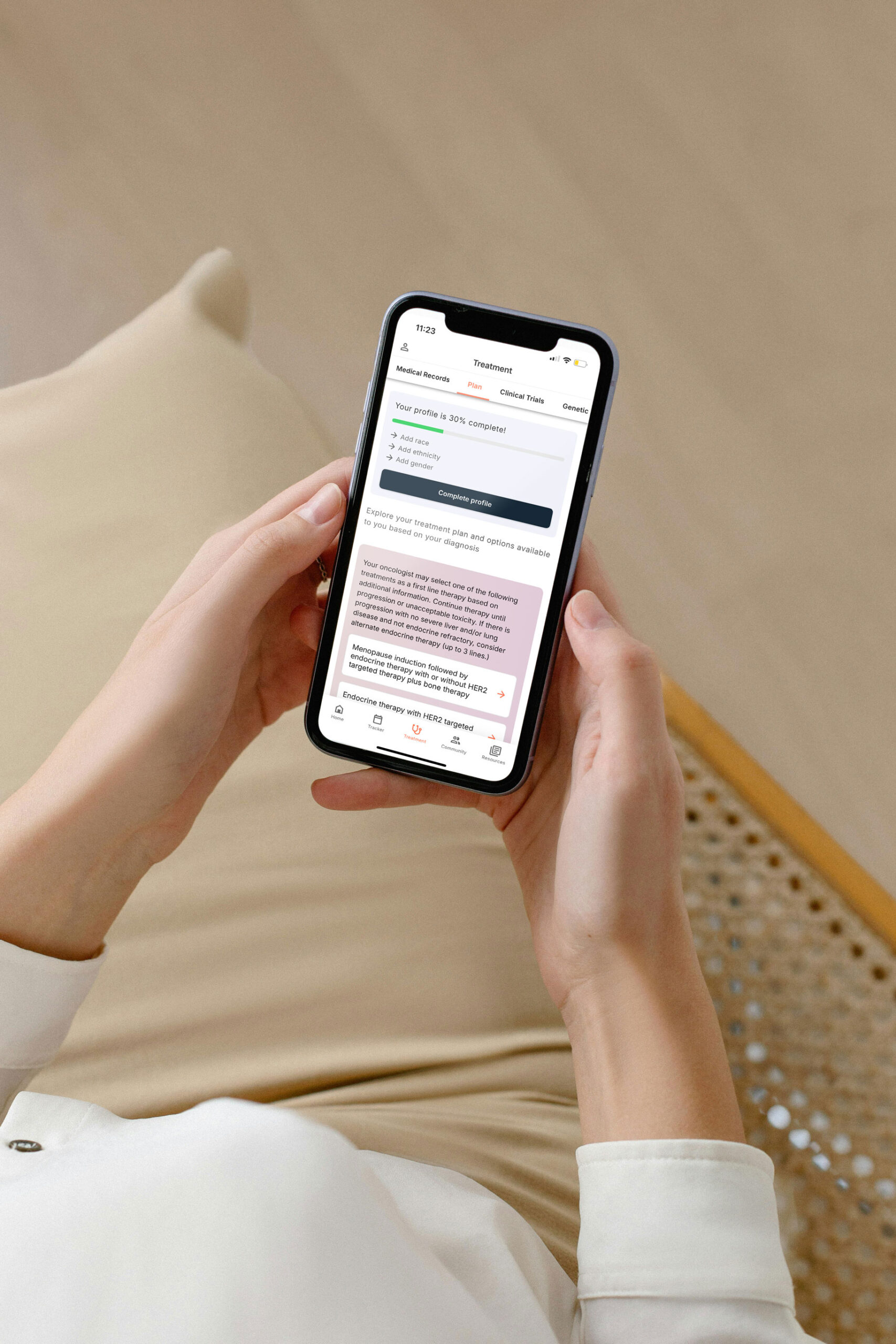
View your personalized treatment plan in the Outcomes4Me app
Use your diagnosis to unlock personalized NCCN Guidelines®-aligned recommendations.
Continue in app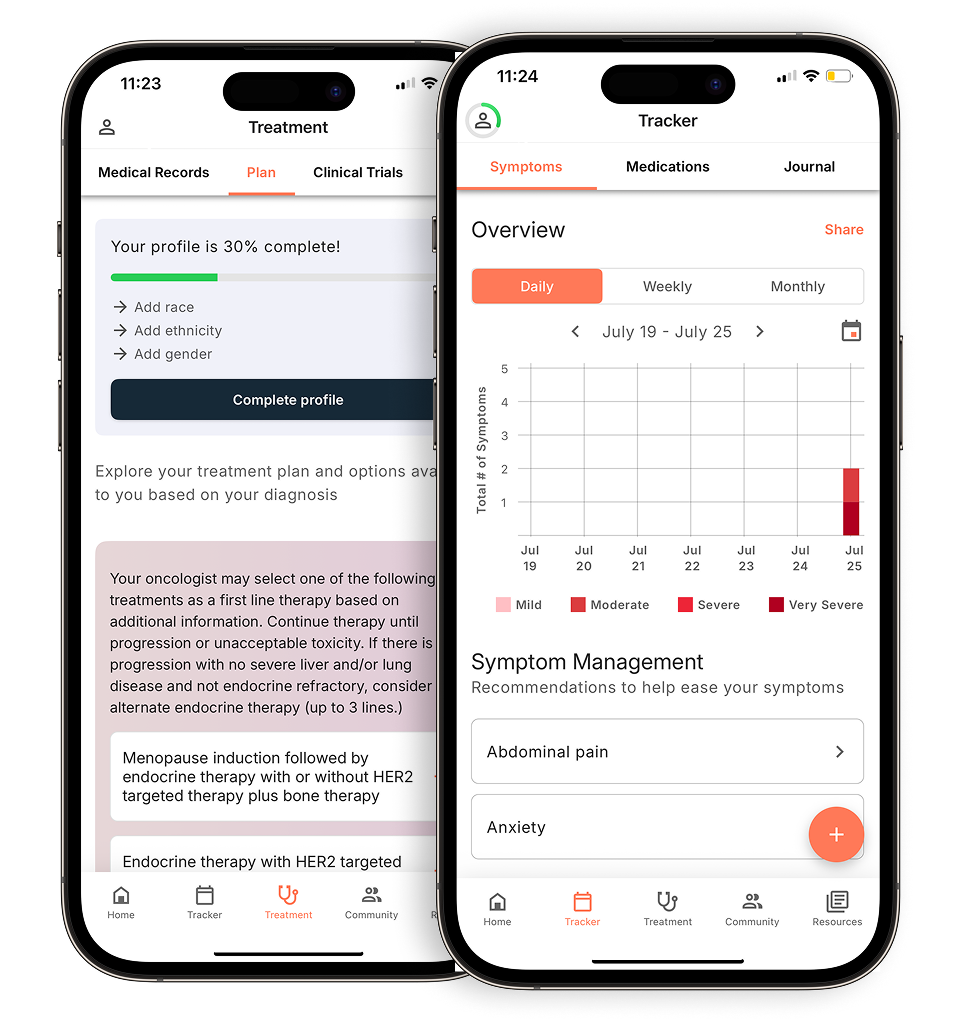
Death from CML itself is now uncommon in treated chronic-phase disease, and when it occurs, it typically follows transformation to blast crisis. This is why quantitative PCR testing matters so much. Molecular monitoring measures BCR-ABL transcripts in your blood and functions as an early-warning system, detecting trouble long before symptoms return.
Prognosis for elderly patients and age-related variables
In chronic phase CML, patients treated appropriately with a TKI can expect a normal life expectancy with ongoing disease management. Drug selection becomes more deliberate when cardiovascular disease, diabetes, or lung conditions are present, since TKI side effect profiles differ. Patients with CML in chronic phase who are treated appropriately can expect a normal life expectancy.
Comparing five-year survival vs. lifetime outlook
Net survival isolates deaths from the cancer alone. Relative survival compares a patient group against demographically matched peers. Neither describes any individual.
CML 5-year and 10-year survival statistics lag behind current reality, because they draw on people diagnosed long before today’s drugs and monitoring existed. Leukemia still carries a terminal association in the public imagination. For treated chronic-phase CML, that association is outdated.
Maximizing longevity while on a TKI
Set the monitoring schedule. Ask your care team when your BCR-ABL PCR tests are due and what response milestone you’re aiming for at each point. Write the dates down. Monitoring is the mechanism that turns treatment into long-term CML survival.
Treat side effects as solvable. Fatigue, nausea, muscle cramps, and edema are common early side effects and frequently improve. Report them rather than enduring them, since quality of life is part of the treatment goal, not a trade you’re obligated to accept.
If you miss a dose, follow your provider’s written instruction; don’t double up on your own. If your molecular markers rise, it’s information, not failure. It triggers a conversation about resistance testing or a different agent.
Ask about treatment-free remission. Patients who sustain a deep response for years may eventually be candidates for stopping therapy under close surveillance.
Cancer care guidance for every step of your journey
Get treatment options, clinical trials, and support tailored to your diagnosis--all in one place.
Get started
See treatment options, manage symptoms, and stay informed—all in the app
View treatment options and trials personalized to your diagnosis—plus track progress in real time.
Continue in appQuick start: organizing your CML management plan
- Keep a daily medication log, paper, phone, or app, so skipped doses are visible rather than forgotten.
- Put quarterly blood work and PCR testing milestones on a shared calendar with alerts set a week ahead.
- Save pharmacy, specialty pharmacy, and insurance contacts in one place. Coverage gaps and prior authorization delays are a leading cause of unplanned treatment interruptions.
Managing common side effects and quality of life
Common side effects of TKIs such as diarrhea, nausea, and skin rash are generally mild, and some might go away over time. When side effects persist, dose modification is usually the answer, not discontinuation. Bring specifics to your provider: what, when, how severe. Tracking symptoms gives you a record you can share directly with your oncologist instead of reconstructing months from memory.
Limitations and considerations. When the outlook changes
In some people with CML on a TKI, treatment may not work well even when the drug is taken as directed, and a different TKI or other treatment approach may need to be considered. Some also lose response to TKI therapy over time. That group needs closer surveillance and often a change in agent.
Long-term TKI therapy carries its own trade-offs. Some cancer therapies, including certain TKIs, may carry cardiovascular risks that warrant baseline cardiovascular assessment and ongoing monitoring during treatment. Financial toxicity is real too, since decades of specialty medication create sustained cost pressure, and lapses in coverage can quietly become lapses in treatment.
Specific resistance mutations, notably T315I, don’t respond to most standard TKIs. Mutation testing identifies these cases so therapy can be redirected rather than repeated without benefit.
When TKIs aren’t the right or only approach
Allogeneic stem cell transplant remains on the table for advanced-phase disease or multi-drug resistance, where it can still offer curative potential. TKI monotherapy alone is generally insufficient in blast phase, which typically requires combination approaches. If you’re missing standard response milestones, ask your care team about clinical trials, since that’s where newer mechanisms reach patients first.
Misconceptions about ‘curing’ vs. ‘controlling’ leukemia
Can CML be cured with a TKI? For most patients, CML is controlled with a TKI rather than cured, suppressed to undetectable levels and held there indefinitely.
That distinction carries emotional challenges. Living in CML long-term remission while still taking a daily pill is different from being told you’re cancer-free, and the ambiguity wears on people. For the majority, therapy is ongoing, and ongoing therapy is precisely what preserves the outcome.
The bottom line. Key takeaways for CML patients
- Adherence is the strongest predictor of reaching a near-normal lifespan. Daily consistency does more for your outcome than any other single factor within your control.
- Modern TKI treatment for CML has narrowed the survival gap between patients and the general population to a degree that would have been unimaginable in the pre-targeted-therapy era.
- Regular PCR monitoring validates that treatment is working and flags resistance early, while options remain plentiful.
- Side effects are negotiable. Dose adjustments and agent switches exist so that living with CML on treatment doesn’t mean tolerating a diminished life.
Frequently asked questions about CML survival
How long can you live with chronic myeloid leukemia? On effective therapy in chronic phase, most patients can expect a lifespan close to normal.
What is the longest someone has lived with CML? Some patients from the earliest TKI era have been taking these drugs for many years, over a decade and a half in some cases, and continue to do well.
How does CML affect daily life? For most, it means one pill daily and periodic lab visits.
Where to look next
Peer-reviewed oncology journals publish long-term follow-up data from TKI trials, and those extended datasets provide the clearest picture of chronic myeloid leukemia survival available. Manufacturer prescribing information details the side effect profile of your specific agent. National cancer agency guidelines and registry reports track updated survival statistics, and your care team can help interpret which figures actually apply to your situation.
Disclaimer: The information provided in this article is for informational purposes only and is not intended to be a substitute for professional medical advice, diagnosis, or treatment. Outcomes4Me is not acting as your caregiver, and any suggestions or guidance offered should not replace the advice of your healthcare provider or qualified medical professional. Always seek the guidance of your physician or other qualified health provider with any questions you may have regarding a medical condition.
Personalized support for real care decisions
Understand your diagnosis, explore clinical trials, and track symptoms--all in one place.
Get started
Compare treatments, prepare for appointments, and track side effects—all in the app
Built for your diagnosis, Outcomes4Me gives you the tools to make confident, informed decisions—right when you need them.
Continue in app