A leukemia diagnosis can feel overwhelming and part of what makes it so disorienting is how the process unfolds. Unlike many cancers, leukemia doesn’t always announce itself with a visible lump or a single dramatic symptom. Instead, it might start with something as routine as a standard blood panel flagging abnormal cell counts.
Leukemia is a cancer of the blood and bone marrow, characterized by the uncontrolled production of abnormal white blood cells. According to the NIH’s StatPearls, confirming a diagnosis typically requires a combination of lab tests, imaging, and bone marrow evaluation, not just one single result.
Understanding how that process works puts you in a stronger position to ask the right questions and advocate for yourself. The first clues often show up in symptoms you might not immediately connect to leukemia.
Initial signs and symptoms of leukemia
Before providers can diagnose leukemia, they need a reason to look for it, and that usually starts with symptoms. The tricky part? Many early signs are easy to dismiss. Fatigue, frequent infections, unexplained bruising, or a low-grade fever can all point to far more common conditions.
Other symptoms that may raise a red flag include:
- Unexplained weight loss
- Swollen lymph nodes
- Bone or joint pain
- Night sweats
- Pale skin or shortness of breath
Many of these signs overlap with everyday illnesses, which is exactly why leukemia often goes undetected until a routine checkup reveals something unexpected in the bloodwork. The symptoms themselves rarely confirm a diagnosis but they open the door to further investigation.
That investigation almost always begins with one foundational test, which we’ll cover next.
The role of blood tests in leukemia diagnosis
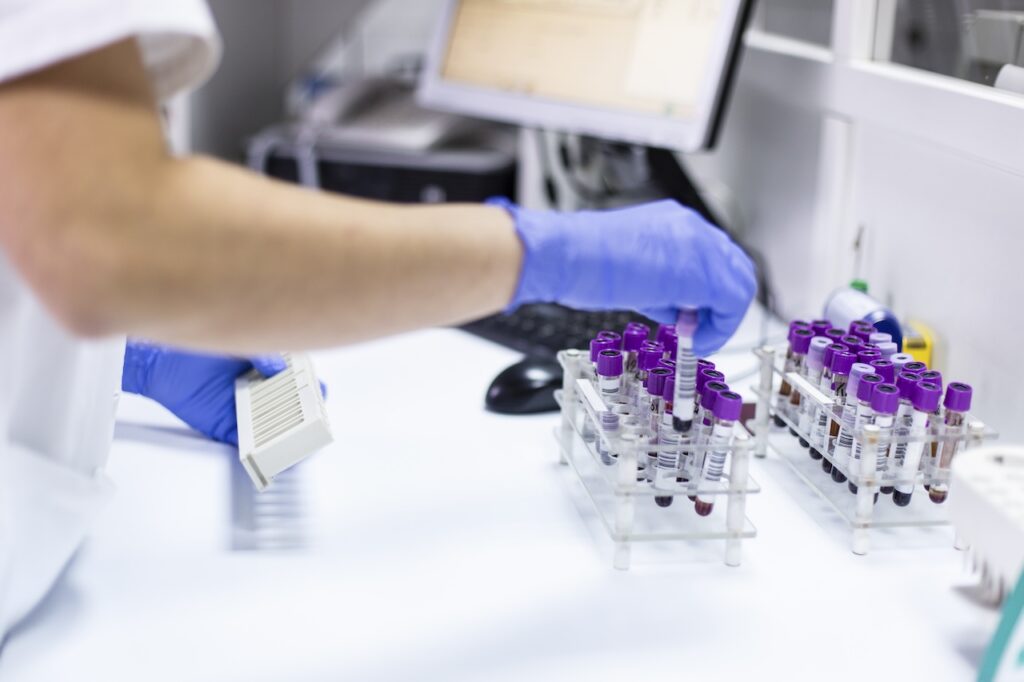
Once symptoms raise a red flag, the first real step toward answers is usually a simple blood draw. A complete blood count (CBC) gives providers a snapshot of what’s happening in your bloodstream, measuring levels of red blood cells, white blood cells, and platelets. When those numbers look abnormal, it signals that something deeper may be going on.
Evidence-based guidance powered by NCCN Guidelines®
Personalized treatment plans shaped by the latest oncology standards—tailored to your diagnosis.
Get started
View your personalized treatment plan in the Outcomes4Me app
Use your diagnosis to unlock personalized NCCN Guidelines®-aligned recommendations.
Continue in app
What the CBC can reveal is striking. Leukemia often shows up as an unusually high white blood cell count, or sometimes a surprisingly low one, alongside low red blood cell or platelet counts. Providers also look at a peripheral blood smear, where a lab technician examines blood cells under a microscope to spot abnormal cells directly. These results can strongly suggest leukemia — though blood work alone rarely confirms it.
Blood tests are the gateway, not the final word. Abnormal results typically prompt more targeted testing. For example, if you’re wondering how blood counts factor into treatment decisions, it’s rarely a single number that drives the call. Context matters enormously.
That’s why abnormal bloodwork usually leads to the next level of investigation, including a bone marrow biopsy, which allows providers to examine leukemia cells at their source and confirm a diagnosis with much greater precision.
Advanced diagnostic techniques
Once a complete blood count raises concerns, providers don’t stop there. Abnormal blood work is a signal but not a conclusion. Confirming leukemia and understanding exactly what type is present requires a deeper look, and that’s where advanced diagnostics come in.
A bone marrow biopsy is often the most definitive next step. A small sample is taken — typically from the hip bone — and examined for leukemia cells. This test can confirm a diagnosis and reveal how far the disease has progressed within the marrow itself.
From there, providers often use flow cytometry, cytogenetic testing, and molecular profiling to classify the specific leukemia subtype. These tests identify chromosomal abnormalities and genetic mutations that directly influence treatment decisions. The right diagnosis isn’t just “leukemia,” it’s the precise subtype, which can change the treatment path.
Understanding how those findings translate into a leukemia classification sets the stage for the next critical question: what stage is it?
Stages of leukemia and their diagnosis
Not all leukemias are staged the same way and that’s actually one of the things that makes this cancer unique. Unlike solid tumors, leukemia doesn’t always follow a neat numerical staging system (Stage 1 through 4). Instead, staging depends heavily on the type of leukemia involved.
Cancer care guidance for every step of your journey
Get treatment options, clinical trials, and support tailored to your diagnosis--all in one place.
Get started
See treatment options, manage symptoms, and stay informed—all in the app
View treatment options and trials personalized to your diagnosis—plus track progress in real time.
Continue in appFor chronic lymphocytic leukemia (CLL), staging relies on blood counts and physical findings. Providers look at lymphocyte levels, red blood cell counts, platelet numbers, and whether lymph nodes or the spleen are enlarged, a process worth understanding in detail if you’ve received a CLL diagnosis. For acute leukemias, the focus shifts less to “stage” and more to subtype classification, which drives treatment decisions directly.
A peripheral blood smear plays a key role here. Under a microscope, this test reveals the size, shape, and maturity of blood cells, helping providers distinguish between leukemia types and assess disease severity. The information gathered through staging isn’t just a label; it’s the foundation for every treatment decision that follows. That said, staging isn’t always straightforward, and diagnostic results don’t always fit neatly into one category, something worth keeping in mind as we look at the real limitations of leukemia diagnosis in the next section.
Limitations and considerations in diagnosing leukemia
Diagnosis is rarely a clean, linear process. Even with powerful tools like flow cytometry, bone marrow biopsies, and genetic testing, results don’t always tell a complete story on the first pass.
A few real-world limitations are worth understanding:
- Ambiguous results: Some leukemia subtypes overlap in their cellular markers, making classification genuinely difficult even for experienced hematologists.
- Sample quality: A bone marrow sample that’s too small or poorly processed can lead to inconclusive findings, requiring a repeat procedure.
- Rare variants: Less common leukemia types may not fit neatly into standard diagnostic categories, requiring additional specialist review.
Not every abnormal result means leukemia and not every leukemia announces itself with dramatic lab values. For some patients, like those managing a watch-and-wait approach, diagnosis may feel more like an ongoing process than a single moment of clarity.
It’s also worth noting that distinguishing between closely related conditions, such as CLL versus similar lymphoid cancers, can require multiple rounds of testing. That complexity is normal. It’s one reason why getting care at a specialized center matters.
These nuances are part of why misconceptions about how leukemia is diagnosed are so common and worth addressing directly.
Future implications: Innovations in leukemia diagnosis
Leukemia diagnosis is evolving fast. While today’s workup still hinges on evaluating white blood cell count, bone marrow biopsies, and cytogenetics, emerging technologies are pushing the boundaries of what’s detectable and how early.
Liquid biopsy is one of the most promising frontiers. This approach analyzes circulating tumor DNA from a simple blood draw, potentially flagging leukemia-related mutations before symptoms appear. Researchers are also refining AI-assisted pathology, training algorithms to detect abnormal cell patterns in blood smears with remarkable precision.
Meanwhile, next-generation sequencing (NGS) is becoming more accessible, allowing oncology teams to map a patient’s full mutational profile faster and at lower cost than before. That level of detail opens the door to more targeted treatment decisions and, in some cases, earlier enrollment in cutting-edge clinical trials designed around specific genetic markers.
These innovations don’t make today’s diagnostic process obsolete; they build on it. Understanding the current framework, with all its complexity and nuance, prepares you to engage more meaningfully with what’s coming next. And with that fuller picture in mind, it’s worth stepping back to consolidate what matters most.
What to consider after receiving your leukemia diagnosis
Getting a leukemia diagnosis isn’t a single moment, it’s a process built on multiple layers of evidence. From that first abnormal complete blood count to bone marrow biopsy, cytogenetics, and molecular testing, each step adds precision. And precision matters, because the right treatment depends on knowing exactly what type and subtype you’re dealing with.
A few things worth remembering:
- No single test confirms leukemia on its own
- White blood cell count abnormalities are a starting point, not a verdict
- Bone marrow biopsy remains the diagnostic gold standard, per the Mayo Clinic
- Molecular and genetic testing is increasingly shaping treatment decisions
The diagnostic landscape is also shifting fast. Innovations such as liquid biopsies and AI-assisted pathology are making earlier, more accurate detection possible, which could change outcomes significantly.
If you or someone you care about is navigating a recent abnormal result, connecting with others who’ve been through it can help. The AML and broader leukemia communities are a reminder that you don’t have to make sense of a complex diagnosis alone. Understanding how leukemia gets diagnosed is the first step toward asking the right questions — and advocating for the care you deserve.
Personalized support for real care decisions
Understand your diagnosis, explore clinical trials, and track symptoms--all in one place.
Get started
Compare treatments, prepare for appointments, and track side effects—all in the app
Built for your diagnosis, Outcomes4Me gives you the tools to make confident, informed decisions—right when you need them.
Continue in app