Why clinical trials start at diagnosis
Clinical trials are a valuable option from the start, not a final fallback after standard options run out. There are many clinical trials for newly diagnosed patients who haven’t been treated yet, but that window is narrow. Tissue from your initial surgery or biopsy, along with genomic results, often determines which studies you can join. Once chemotherapy begins, some doors close permanently.
Practical step. Ask for a referral to a research-active institution as soon as your biopsy is scheduled, not after pathology comes back.
Understanding trial phases and frontline integration
Phase II and III studies usually build on standard chemotherapy rather than replacing it. An “add-on” trial layers an investigational agent onto the regimen you’d receive anyway. A replacement design substitutes something experimental for part of it. In cancer research, placebo-only arms are rare. If a placebo is used, it’s typically alongside standard care, never instead of it.
The role of genetic and biomarker testing
BRCA mutation ovarian cancer clinical trials and many targeted studies screen on molecular status. HRD testing measures homologous recombination deficiency, or how well your tumor repairs its own DNA. Ordering germline and tumor testing at diagnosis rather than weeks after surgery keeps PARP inhibitor clinical trials newly diagnosed patients qualify for, plus immunotherapy options, open.
Evaluating ovarian cancer treatment by stage and subtype
Trial availability shifts noticeably with stage. Early-stage disease may have fewer available studies, in part because recurrence patterns differ from advanced-stage disease, so research concentrates on de-escalating treatment and preventing relapse. Clinical trials for stage 3 and stage 4 ovarian cancer may be more widely available than those for earlier stages, so it’s worth asking your care team what options exist for your specific diagnosis.
Rare subtypes need separate attention. Clear cell and mucinous ovarian cancers may respond differently to platinum chemotherapy, which is why your care team may recommend different treatment approaches or clinical trials based on your cancer subtype.
Residual disease after debulking surgery matters too. Some maintenance protocols require a specific surgical outcome, which is another reason your operative report belongs in the conversation from the start. Ovarian cancer treatment by stage is only half the picture.
Evidence-based guidance powered by NCCN Guidelines®
Personalized treatment plans shaped by the latest oncology standards—tailored to your diagnosis.
Get started
View your personalized treatment plan in the Outcomes4Me app
Use your diagnosis to unlock personalized NCCN Guidelines®-aligned recommendations.
Continue in app
Trials for early-stage (I and II) ovarian cancer
Research here focuses on lowering recurrence risk without adding unnecessary toxicity. Ovarian cancer maintenance therapy trials frequently enroll early-stage patients after adjuvant chemotherapy, and surgical studies examine minimally invasive staging techniques. Consider a patient with Stage 1C disease weighing a personalized vaccine study. The goal is durable prevention.
Advanced-stage (III and IV) research frontiers
Advanced-stage disease offers the broadest research opportunities. Neoadjuvant chemotherapy ovarian cancer trials begin before interval debulking surgery, which is why ovarian cancer trials before surgery deserve attention within days of diagnosis. Heated intraperitoneal chemotherapy (HIPEC) protocols are being studied in newly diagnosed settings, and antibody-drug conjugates are moving steadily from later lines toward frontline testing.
Practical steps. What to do after an ovarian cancer diagnosis
Start with your gynecologic oncologist. Say directly that you want research options evaluated alongside standard treatment, and ask what studies are open at their site and at affiliated centers. Knowing how to find ovarian cancer clinical trials matters, but it’s faster when a trial navigator or a matching platform filters actively recruiting sites against your stage, subtype and biomarkers.
Prepare your documents before the first research consultation:
- Full pathology report, including molecular and biomarker results
- Recent imaging, on disc or through a portal
- Operative notes from any prior surgery
- Current medication list and relevant comorbidity history
Then ask the questions that protect your future options. How does this trial affect my ability to receive standard chemotherapy later? What happens if I progress on study? Who covers scans and drug costs?
Starting the conversation with your care team
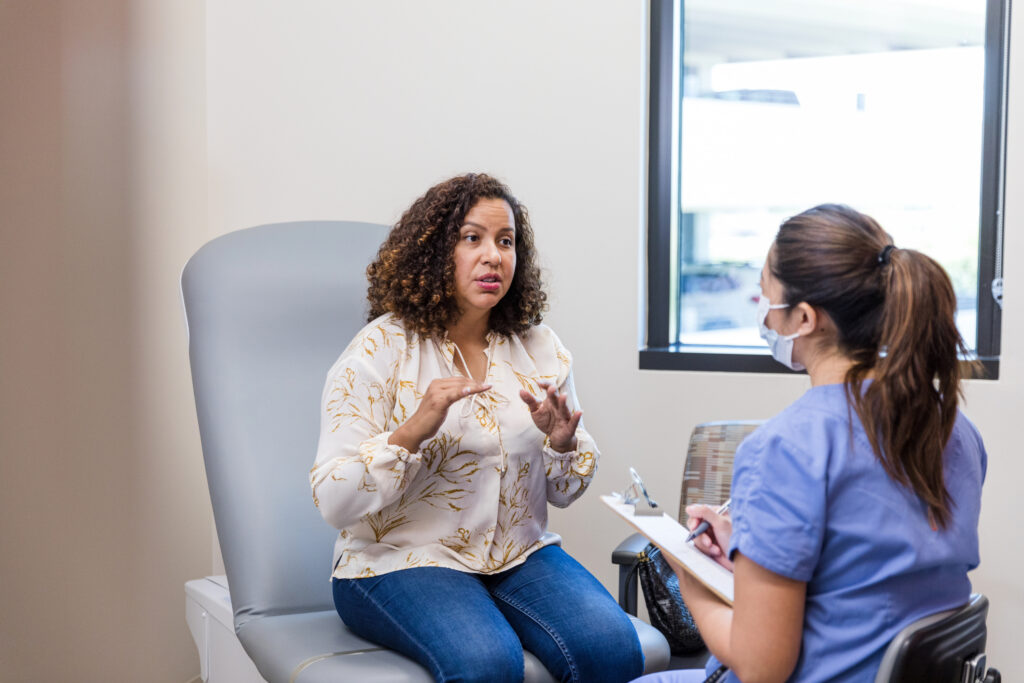
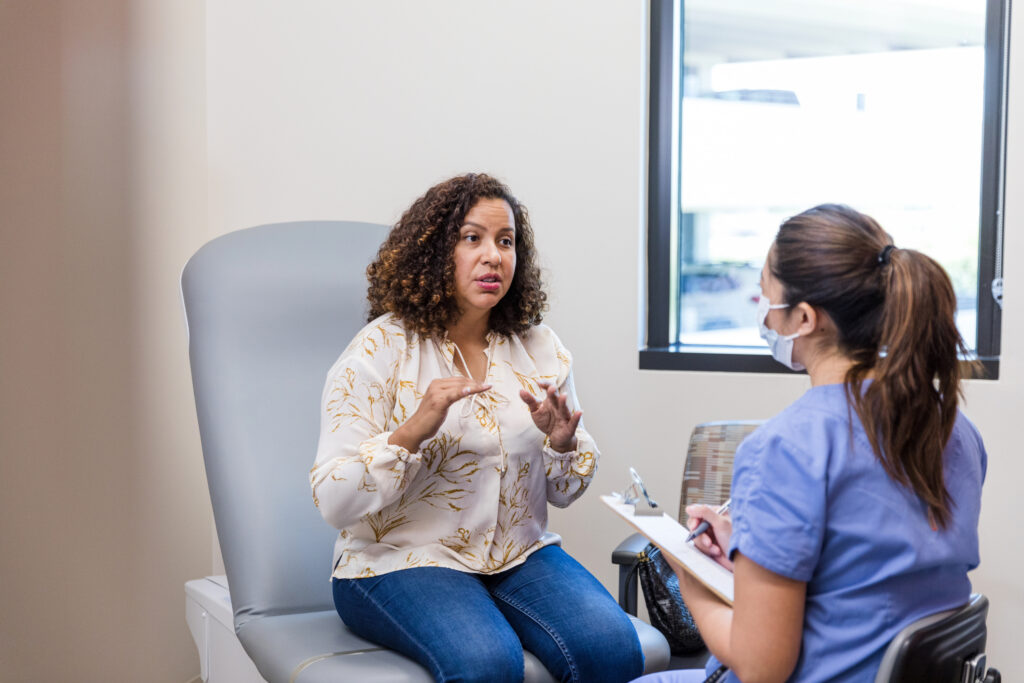
Consider using this phrasing during your initial consultation: “I’d like clinical trials considered part of my treatment plan from the beginning.” If your local hospital doesn’t run studies, that isn’t a dead end. Ask for a referral or arrange a second opinion at an academic center specifically for research eligibility. A second opinion reviews your pathology and imaging independently, which sometimes reveals options nobody mentioned.
Navigating enrollment logistics
Screening, including consent, labs, scans, and eligibility confirmation, takes time, and your care team will weigh that against how urgently treatment must begin. Ask upfront how long screening runs. Trials at distant academic centers raise travel and cost questions worth answering early; many studies offer reimbursement. Randomization can feel like a loss of control, and that reaction is normal.
Cancer care guidance for every step of your journey
Get treatment options, clinical trials, and support tailored to your diagnosis--all in one place.
Get started
See treatment options, manage symptoms, and stay informed—all in the app
View treatment options and trials personalized to your diagnosis—plus track progress in real time.
Continue in appThe connection between ovarian cancer and anxiety
Choosing a trial during an acute crisis is hard precisely because everything feels urgent and nothing feels certain. Trial protocols offer a practical benefit: structure. Trial protocols come with tighter monitoring, more frequent imaging, scheduled labs and a research coordinator who knows your case. For many patients, that cadence converts formless dread into something trackable.
Trial protocols often include supportive care, including social work, nutrition, and palliative services, that addresses the emotional challenges alongside the medical ones.
Managing information overload during diagnosis
- Prioritize peer-reviewed sources and registry listings over forums and anecdotal posts
- Assign one family member to own trial logistics: calls, forms, and scheduling
- Keep a single shared document with trial names, sites, contacts and screening deadlines
- Use a patient health app to organize records and connect with an oncology nurse practitioner
- Bring written questions to every appointment so nothing gets lost
Building a support network for trial participation
Several ovarian cancer advocacy organizations run research education programs and maintain trial matching services staffed by people who do this daily. Peer mentorship helps too. Talking with someone who has been through enrollment demystifies it. When family members raise safety concerns, invite them to the consent conversation rather than relaying it secondhand.
Limitations, considerations, and trade-offs
Participation is not a guarantee of a cure. Investigational agents sometimes fail, and some perform no better than the standard arm. That’s the point of running the study.
Be prepared for a greater time commitment. Extra blood draws, additional scans, longer infusion days, and stricter visit windows are common, and for patients traveling to a research center, that adds up.
Eligibility criteria also exclude people for reasons that feel arbitrary. Prior cancers, kidney or cardiac issues, and certain autoimmune conditions can be disqualifications.
Finally, experimental agents can produce side effects that differ from standard chemotherapy, including immune-related ones. Ask what’s been observed so far, and what’s unknown.
When a trial might not be the right choice
Sometimes standard treatment wins on timing alone. If disease is progressing quickly, waiting through a screening period isn’t reasonable. Distance, cost and caregiving obligations are legitimate reasons to decline, as are your own quality-of-life priorities.
Evaluating long-term outcomes and survival data
Long-term survivorship happens after ovarian cancer, particularly with early-stage disease and favorable biology, though outcomes vary widely by stage and subtype. When reading trial results, “progression-free survival” generally refers to time without disease growth, while “overall survival” generally refers to life span. These are two different ways researchers may track how patients respond to treatment. Participation contributes to the improvement of both datasets.
Key takeaways for newly diagnosed patients
Genetic and biomarker testing is the gateway. Without it, targeted and immunotherapy studies can’t match you.
Understand that first-line ovarian cancer clinical trials generally add to standard care rather than withhold it. The choice is not trial versus standard treatment, but rather trial plus standard care.
And get evaluated by a gynecologic oncologist at a research-active facility. That single referral shapes every option that follows in your personalized care plan.
Where to look next
Government trial registries list actively recruiting studies with locations and eligibility criteria, which helps when you’re weighing participating in ovarian cancer trials near me against travel to a distant center. Manufacturer materials describe investigational agents in detail. Peer-reviewed oncology journals carry the newest data. National advocacy organizations translate all of it into patient-friendly summaries.
Frequently asked questions about ovarian cancer trials
Why is ovarian cancer hard to treat? Ovarian cancer is a heterogeneous disease characterized by complex molecular and genetic changes.
What’s the best treatment? There isn’t a single one. It depends on stage, subtype and genetics.
How do I take part? Referral, screening, then informed consent before anything begins.
Disclaimer: The information provided in this article is for informational purposes only and is not intended to be a substitute for professional medical advice, diagnosis, or treatment. Outcomes4Me is not acting as your caregiver, and any suggestions or guidance offered should not replace the advice of your healthcare provider or qualified medical professional. Always seek the guidance of your physician or other qualified health provider with any questions you may have regarding a medical condition.
Personalized support for real care decisions
Understand your diagnosis, explore clinical trials, and track symptoms--all in one place.
Get started
Compare treatments, prepare for appointments, and track side effects—all in the app
Built for your diagnosis, Outcomes4Me gives you the tools to make confident, informed decisions—right when you need them.
Continue in app