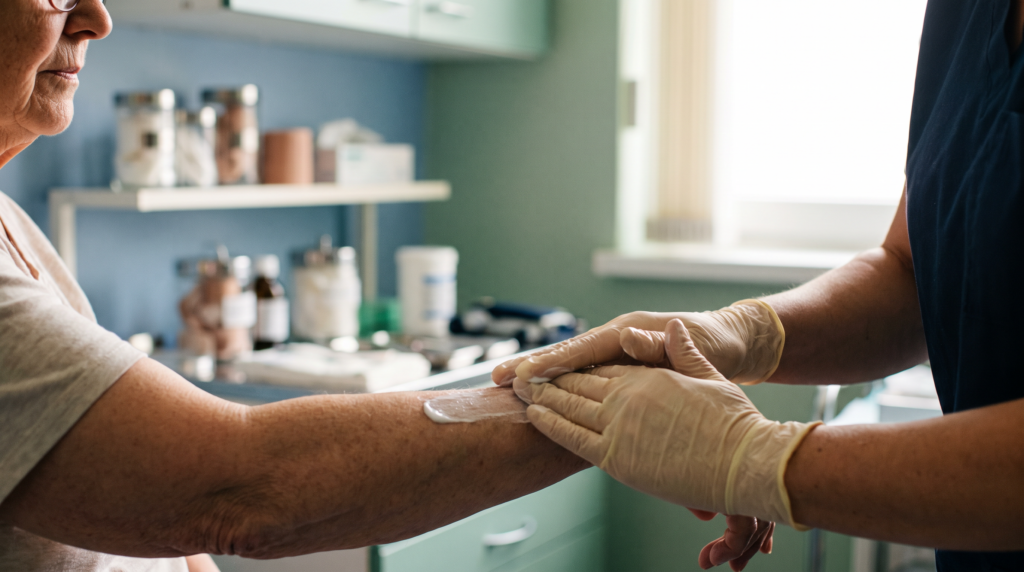
Radiation dermatitis is the most common skin reaction to radiation therapy, and understanding how it progresses is the first step in managing it effectively.
Radiation dermatitis develops because ionizing radiation damages rapidly dividing cells, including the skin cells responsible for barrier repair. The reaction typically follows a predictable timeline. You’ll often notice mild redness, or erythema, within the first one to two weeks of treatment. From there, as doses accumulate, that pinkness can deepen into darker discoloration, dryness, and, in more intense cases, peeling or moist desquamation.
What makes this particularly challenging is that radiation damage is cumulative. Each session compounds on the last, steadily reducing the skin’s ability to regenerate. Reactions tend to peak during treatment and in the weeks immediately following the final session. Thoughtful skin care during radiotherapy is a clinical priority.
The core goal is to support the skin barrier so it can withstand treatment without significant breakdown. When reactions escalate, care teams may need to pause sessions to allow healing, interruptions that can affect treatment efficacy. Keeping skin intact and well-supported reduces that risk. The sections ahead explore exactly how the treatment area’s needs shift at each phase, and what that means for the products you choose.
Understanding the treatment area’s changing needs
Radiation dermatitis moves through distinct phases, and each one calls for a different approach to skincare.
Early phase: Dryness and itching typically appear within the first one to two weeks. Skin feels tight, and mild redness sets in. Starting a moisturizer when you begin radiation therapy can help minimize skin reactions. Look for fragrance-free, gentle formulas without lanolin.
Peak phase: Around weeks three to four, skin may shift from dry desquamation (flaking, peeling) to moist desquamation, where the outer layer breaks down and raw, weeping skin is exposed. Moist desquamation signals a more serious reaction requiring prompt advice from your care team.
Recovery phase: In the two to four weeks after your final session, skin begins rebuilding, but it remains fragile. Sensitivity, discoloration, and dryness can persist well beyond treatment. Talk with your care team before using any new products on healing skin.
Understanding these phases helps you avoid the mistakes that often happen when what works in week one causes problems in week three.
Common failure modes in radiation skincare
Even well-intentioned skincare choices can set back your skin’s recovery, and the most common mistakes often involve products that seem harmless or even beneficial.
Natural products and essential oils are a frequent culprit. Talk with your radiation nurse before using natural or herbal products on treated skin, as some contain ingredients that can irritate already-sensitive skin.
Timing with thick creams matters more than most people expect. Some patients and providers discuss whether applying moisturizer shortly before a session might affect how radiation interacts with the skin’s surface, though you should ask your radiation team whether this is appropriate for your specific treatment plan.
Cleansing technique is equally easy to get wrong. Patting dry with a soft cloth, not rubbing, is the standard guidance, as even gentle scrubbing disrupts the fragile skin barrier. Understanding which products meet the safety criteria, and why they matter, prepares you to make better choices.
A methodology for evaluating safe skincare products
Choosing the right products during radiation treatment comes down to three non-negotiable criteria: fragrance-free, alcohol-free, and metal-free formulations.
These criteria exist because fragrances and alcohol both accelerate drying and irritation on already-compromised skin. Some radiation oncology teams recommend avoiding antiperspirants and other metal-containing products on treated skin during radiation, as a precautionary measure. Ask your care team whether this applies to your treatment.
Your care team will typically reinforce this “Safe List” framework before treatment begins.
Clinically recognized brands like Aquaphor, Aveeno, and unscented Dove have become reference points in oncological skin care because they consistently meet these baseline criteria. That said, always confirm any specific product with your care team, since formulations can change.
Understanding the difference between humectants and occlusives also matters here. Humectants, ingredients like glycerin and hyaluronic acid, are thought to help draw moisture into the skin and may be worth trying as part of your skincare routine during radiation. Moisturizers such as those made by Cetaphil or CeraVe can help minimize skin reactions during radiation therapy when applied regularly starting before treatment begins.
On the avoid side, alpha-hydroxy acids, aluminum compounds, and retinoids are often avoided during radiation because they may irritate or further sensitize skin that’s already under stress. Many care teams recommend checking with your radiation oncologist or dermatologist before using products containing these ingredients.
With this foundation in place, the next step is understanding precisely which products belong in your routine at each stage of treatment.
What to put on skin during radiation treatment
Selecting the right products for your skin during radiation comes down to matching the formulation to your current skin condition and treatment stage.
Moisturizers shift based on where you are in treatment. Early on, lightweight, water-based lotions absorb quickly without blocking pores. As dryness or peeling progresses, your care team may recommend thicker, oil-based creams for deeper hydration.
Cleansers should be mild and fragrance-free, such as non-soap bars or gentle liquid formulas. Avoid anything with exfoliants, as compromised skin can’t tolerate abrasion.
Topical barriers for vulnerable skin. Skin folds in areas like the underarms, groin, and under the breast are more sensitive to radiation damage because increased warmth and moisture from skin rubbing together can worsen irritation. Your healthcare provider can recommend appropriate moisturizers and skin care products for these vulnerable areas.
Understanding which specific products fit each category is where the real decisions begin.
Comparison: common products and their roles
Match the right formulation to the right symptom to make a personalized care plan effective.
| Product | Best timing | Symptom targeted |
|---|---|---|
| Aquaphor | After treatment; avoid 2–4 hours before | Dryness, peeling, early skin breakdown |
| CeraVe (cream/lotion) | Morning and evening routines | Moisture barrier support, mild irritation |
| Calendula gel | Throughout treatment | Redness, early inflammation |
Each category serves a different purpose, and your care team should approve any option you’re considering before you apply it to treated skin. What works well at week one may need adjusting by week four as radiation dermatitis progresses. That shift in your skin’s condition is precisely why knowing how and when to apply these products matters just as much as choosing them.
The daily protocol. How to apply products safely
Consistent daily habits protect your skin just as much as the products you choose, timing, temperature, and friction management all shape how well your skin tolerates radiation.
The 2-hour rule is a widely recommended guideline: avoid applying lotions, creams, or ointments to the treatment area within two hours before each session. Some creams and lotions may leave a coating on your skin that can interfere with your radiation treatment, which is why your doctor or radiation therapist should approve any products you use on treated areas. Your care team will clarify the exact window they prefer, so always confirm that timing with them directly.
Temperature matters more than most people expect. Lukewarm water is the right choice for cleansing treated skin. Hot water strips the skin’s already-compromised moisture barrier, while cold water can trigger uncomfortable sensitivity in inflamed tissue. A gentle, fragrance-free cleanser applied with a soft hand, no washcloths or loofahs, keeps the process low-impact.
Clothing and friction are often overlooked irritants. Loose-fitting, 100% cotton fabrics reduce mechanical rubbing against sensitive skin throughout the day. Synthetic materials trap heat and create friction that can worsen early skin reactions.
Sun protection adds another layer of complexity. Treated skin develops extreme UV sensitivity that can persist for months after treatment ends. A broad-spectrum SPF 30 or higher, approved by your care team, is essential for any exposed treatment area.
Knowing which products to apply and when to apply them works best within a structured routine, which is exactly what a morning and evening protocol can provide.
Step-by-step morning and evening routine
A structured morning and evening routine determines how well your skin tolerates radiation treatment over time.
Each part of the day calls for a different approach. In the morning, before your session, confirm that no lotion, deodorant, or residue remains on the treatment area. Even a thin film of product can interfere with radiation delivery or irritate already-sensitized skin. Gentle rinsing with lukewarm water is typically all that’s needed, your care team will specify exactly what’s acceptable.
After treatment, the priority shifts to soothing. Applying an approved, fragrance-free gel or lotion within the first hour post-session helps calm the inflammatory response before it builds. Start using a gentle, non-irritating moisturizer when you begin radiation therapy and apply it consistently throughout your treatment, as this can help minimize skin reactions.
Overnight is when your skin does its heaviest repair work. A thicker ointment, like pure petrolatum or a barrier-repair cream recommended by your care team, applied at bedtime helps prevent transepidermal water loss while you sleep. This step is often skipped, but it’s one of the most protective habits in a personalized care plan. As discomfort progresses, even the way you handle that sensitivity day-to-day matters, which brings us to practical strategies for managing itching, skin markings, and other common irritants.
Managing discomfort and sensitivity
Itching, skin markings, and hair removal are three of the most overlooked friction points during radiation treatment, and each one has a safe, practical solution.
Cool compresses may help soothe itching in treated skin. Many patients find them comfortable to try, so you might ask your care team whether they could work for you. Scratching, even lightly, damages already-fragile skin and raises infection risk, so resist the urge entirely.
Skin markings require a careful hand at cleansing. Pat gently around them with a soft, damp cloth rather than scrubbing. Your care team uses these markings to precisely target each session, so preserving them matters as much as keeping the skin clean.
Shaving the treatment area requires care. Avoid shaving the treatment area, as blades can irritate sensitized skin. If you must shave, use an electric razor and stop if your skin becomes irritated. Shaving in or near the treatment field may call for an electric razor over blades.
Not every reaction stays manageable at home, though. Knowing when discomfort signals something more serious is just as important as these daily habits.
Example scenarios. When to escalate care
Knowing the difference between expected skin changes and signs that need clinical attention is one of the most important skills you can develop during radiation treatment.
Radiation dermatitis follows a predictable pattern, redness, dryness, and mild peeling are normal. But when symptoms shift beyond that baseline, your care team needs to know. In practice, the clearest signal is a change in character, not just intensity.
Increased pain or heat in the treatment field requires attention. Contact your care team right away if you notice pain, swelling, redness that gets worse, or skin that feels warm to the touch, as these can be signs of a serious skin reaction that needs medical attention.
Blistering or weeping skin is a more urgent signal. Moist desquamation, where the skin breaks down and fluid leaks from the surface, moves outside the range of manageable home care and requires clinical assessment. Attempting to manage open skin without guidance from your care team risks worsening the reaction.
Communication protocols matter here. Don’t wait for symptoms to become severe before reaching out. Contact your care team immediately if the treated area develops drainage, a foul odor, or if you develop a fever, as these can indicate that compromised skin has become infected.
Red flags: when to call your care team
Certain skin changes during radiation treatment require prompt clinical attention, not watchful waiting.
Infection signals are the most urgent. Contact your care team immediately if the treated area develops drainage, a foul odor, or if you develop a fever, as these can indicate that compromised skin has become infected.
Functional disruption matters too. If radiation burn symptoms, intense pain, raw skin, or severe itching, are preventing sleep or interfering with daily activity, that’s a signal to escalate. Discomfort at that level often means your skin reaction has progressed to a grade that warrants prescription-level care rather than over-the-counter management.
Unexpected skin changes outside the treatment field also deserve attention. Sudden shifts in texture, color, or integrity in areas not being irradiated can point to an unrelated condition or an atypical reaction your care team needs to evaluate. When those changes appear, don’t wait for your next scheduled appointment, reach out directly. That kind of proactive communication with your care team leads to better outcomes and a more responsive personalized care plan. Some situations call for prescription interventions that go well beyond what any shelf product can provide.
Medication and prescription interventions
When over-the-counter products are no longer sufficient, your care team may prescribe targeted medications to manage high-grade radiation dermatitis. Your healthcare provider may prescribe a steroid cream to treat severe radiation skin reactions. Silver sulfadiazine cream and specialized wound dressings may help manage open or weeping skin during radiation. Talk with your care team about whether these options are appropriate for your situation.
Limitations and considerations for long-term healing
Skincare during radiation supports comfort and skin integrity, but it can’t override the internal biological effects of treatment, and your care team’s personalized advice always takes priority over general guidelines.
Skin responses differ significantly depending on where radiation is delivered. Breast radiation tends to produce localized dryness and peeling. Head and neck radiation treatment requires particular attention to skin care, as the skin in these areas can break down, peel, and become moist during treatment.
The recall phenomenon is worth understanding. Some patients report that certain medications or chemotherapy agents given after radiation may cause inflammation to return in previously treated skin. It’s worth discussing with your care team whether any new treatments you’re considering could affect your healing skin.
And while consistent skincare routines reduce discomfort and support the skin barrier, they don’t alter radiation’s systemic or cellular effects. The goal is to keep surface tissue as healthy as possible, not to counteract what’s happening at a deeper biological level.
Finally, every patient’s skin, treatment protocol, and overall health profile differs. Generic guidelines offer a useful starting point, but your care team’s personalized guidance will always reflect the nuances of your specific situation. With that foundation in place, it’s also worth understanding how the formulation of any product you apply, not just its ingredients, shapes how your skin responds.
Trade-offs of different product bases
Different product bases have distinct comfort and hydration profiles during radiation treatment.
Gels vs. creams sit at opposite ends of the comfort spectrum. Cool compresses may feel cooling to some patients, though they tend to evaporate quickly and may not provide lasting moisture. Ask your care team whether a gel might work for your skin needs. Some patients find that creams offer a balance between providing hydration and feeling lighter than heavier ointments. Your care team can help you choose what works best for your skin.
Heavy ointments can trap heat against already-sensitized tissue, potentially worsening discomfort. Your care team will often advise stepping down to lighter formulations when redness and warmth are at their height.
Some patients and care providers worry that prolonged moisture may soften skin during radiation treatment. Talking with your care team about how to balance keeping skin hydrated while allowing it to dry properly may be helpful. As treatment progresses, what your skin needs shifts, which is why your personalized care plan should evolve too. That adaptability becomes even more important once radiation ends and your skin enters a new phase of recovery.
Post-radiance: The ‘new normal’ for your skin
Continued care typically extends four to six weeks post-treatment, as skin continues reacting internally even after sessions stop. Your care team may discuss permanent skin changes that can occur after radiation therapy, such as permanent discoloration or changes in skin texture. And because treated skin loses its ability to fully protect against UV damage, lifetime sun protection over treated area is essential.
The next section pulls together the core rules worth keeping front of mind.
Key takeaways: your radiation skincare essentials
Protecting treated skin during radiation comes down to a handful of consistent, evidence-backed habits that your care team will reinforce at every visit.
Care teams typically advise not applying moisturizers within 2 hours before radiation treatment to help protect treated skin. Some creams and lotions may leave a coating on your skin that can interfere with your radiation treatment, which is why your doctor or radiation therapist should approve any products you use on treated areas.
When it comes to ingredients, keep this short list top of mind:
- Fragrance and alcohol, both trigger irritation on sensitized skin
- Metal-containing compounds such as zinc oxide or aluminum, can interact with radiation beams
- Harsh exfoliants or actives, strip the compromised skin barrier further
Commonly approved brands include CeraVe moisturizing cream is fragrance-free and gentle, Aquaphor, and Miaderm, though your care team will confirm which fits your personalized care plan best. Know when to call for help: blistering, open sores, weeping skin, or fever alongside skin changes all warrant immediate medical attention rather than at-home management. Understanding where to find reliable ingredient information prepares you to make better choices before your next appointment.
Disclaimer: The information provided in this article is for informational purposes only and is not intended to be a substitute for professional medical advice, diagnosis, or treatment. Outcomes4Me is not acting as your caregiver, and any suggestions or guidance offered should not replace the advice of your healthcare provider or qualified medical professional. Always seek the guidance of your physician or other qualified health provider with any questions you may have regarding a medical condition.