Funding for the Lung Health Hub is provided by AstraZeneca. All content is developed independently by Outcomes4Me; AstraZeneca has no influence on the content of the site.
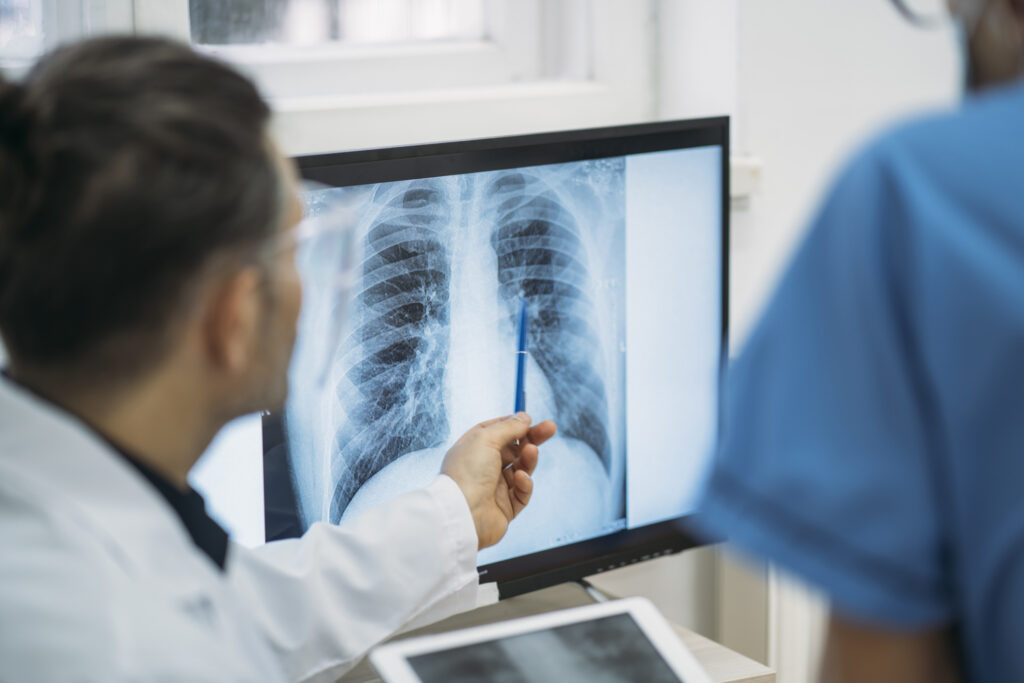
As we discussed in the previous module, lung nodules are small spots that sometimes appear on chest X-rays or CT scans. They usually measure less than an inch across and are often found when imaging is done for another reason. Hearing the word nodule can feel alarming, but most of the time, these spots are not cancerous. The important step is figuring out which nodules are harmless and which ones need closer attention.
Benign lung nodules
Most lung nodules are benign, which means they’re not cancerous. They can appear for many reasons, such as:
- Scars from old infections
- Small clusters of immune cells left after inflammation
- Noncancerous growths
Benign nodules usually share a few features:
- They’re small in size
- Their edges look smooth and round
- They may contain calcium, which makes them look dense on a scan
- They don’t change over time
Suspicious lung nodules
Some nodules show features that raise more concern. These include:
- Larger size (especially over one-third of an inch)
- Uneven or spiky edges
- Growth or change in size on repeat scans
- Higher-risk factors, such as a history of smoking, exposure to certain chemicals, older age, or a family history of lung cancer
When a nodule looks suspicious, doctors may recommend further tests. These can include a PET scan, a biopsy, or surgery to remove the nodule. View our next module for more information on what happens after a nodule is found on a scan.
Personalized support for real care decisions
Understand your diagnosis, explore clinical trials, and track symptoms--all in one place.
Get started

Compare treatments, prepare for appointments, and track side effects—all in the app
Built for your diagnosis, Outcomes4Me gives you the tools to make confident, informed decisions—right when you need them.
Continue in app