
Outcomes4Me Secures $21M in Funding Learn more >>

ADVERTISEMENT

2.2: Important lung cancer biomarkers you should know about

May 21, 2026

an older man using his phone sitting by the window

Funding for the Lung Health Hub is provided by AstraZeneca. All content is developed independently by Outcomes4Me; AstraZeneca has no influence on the content of the site.

There are specific biomarkers that your care team will test for to personalize your treatment plan to your genetic profile. These biomarkers can provide important insights into your cancer’s biology and let your care team know if you’re eligible for targeted therapies.

Some of the most common biomarkers tested in non-small cell lung cancer include EGFR, ALK, KRAS, ROS1, MET, and PD-L1. It’s a good idea to ask your care team which biomarkers will be tested and make sure these are included.

In this module, we’ll explain what each biomarker means, why it matters for treatment, and how testing for them can help your care team choose the best options for you.

Evidence-based guidance powered by NCCN Guidelines®

Personalized treatment plans shaped by the latest oncology standards—tailored to your diagnosis.

Get started

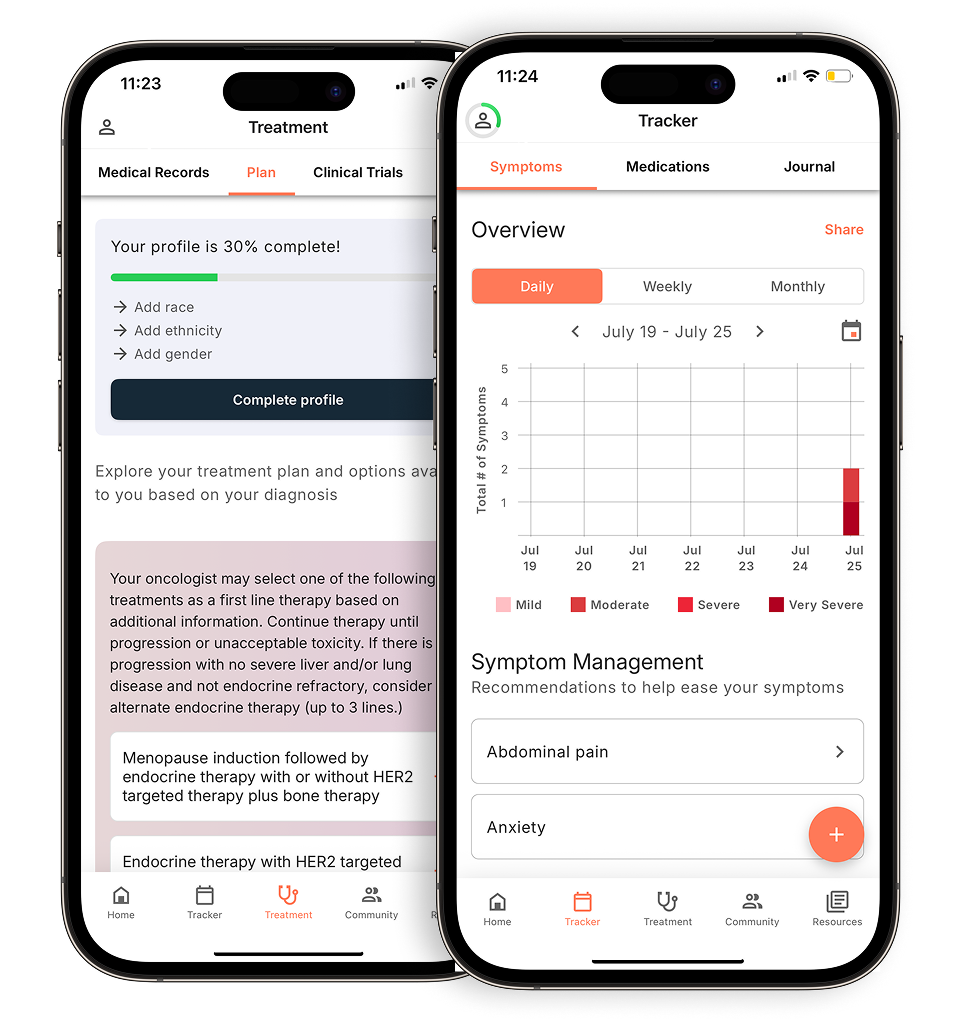
View your personalized treatment plan in the Outcomes4Me app

Use your diagnosis to unlock personalized NCCN Guidelines®-aligned recommendations.

Continue in app
EGFR mutations

EGFR is a gene that helps cells grow and divide. In some people with non-small cell lung cancer, mutations in the EGFR gene act like an “on switch,” causing cancer cells to grow uncontrollably. These mutations are commonly seen in lung cancer. Testing for EGFR mutations is an important part of biomarker testing because there are targeted therapies designed to specifically block EGFR and slow the cancer’s growth.

In this video, Dr. Jessica Lin provides an overview of the different types of EGFR-mutated lung cancer.

Video.js Test

PD-L1 expression

PD-L1 is a protein that regulates communication between tumor cells and immune cells. In the following video, Dr. Jessica Lin and Dr. Martin Dietrich explain how measuring PD-L1 expression has become a key part of lung cancer care, as it helps predict the likelihood that a patient’s cancer will respond to immunotherapy.

Video.js Test

ALK rearrangement

ALK is a gene that can play a significant role in certain lung cancers. With an ALK rearrangement, changes in this gene are what drive the cancer’s growth. Although it’s less common than some other genetic changes (only seen in about 5% of lung cancer cases), ALK-positive lung cancer is important to identify because highly effective targeted therapies are available.

Video.js Test

KRAS mutations

KRAS is a gene that helps regulate cell growth and division. In some cases of lung cancer, mutations in KRAS can cause cells to grow uncontrollably. KRAS mutations are among the most common genetic changes seen in non-small cell lung cancer, especially in patients with a history of smoking. Identifying KRAS mutations is important because they can influence treatment options and help doctors determine the most effective targeted therapies or clinical trials for a patient.

Dr. Lin explains KRAS mutations in more detail, below.

Video.js Test

MET exon 14 skipping

MET is a biomarker that can drive the growth of some non-small cell lung cancers. One important change is called MET exon 14 skipping, where part of the gene is missing, allowing cancer cells to grow and spread more easily. Testing for MET exon 14 skipping helps doctors identify if this genetic change is present in your tumor. Targeted therapies are available that specifically block MET activity to slow or stop the cancer. Knowing your MET status gives your care team important information to personalize your treatment.

Video.js Test

ROS1 fusion

About 1-2% of lung cancers have a ROS1 fusion. It happens when the ROS1 gene fuses, or joins, with another gene, which creates abnormal signals that help cancer cells grow and spread. Testing for this biomarker is crucial because the default treatment, immunotherapy, isn’t effective for ROS1-positive lung cancers. There are targeted treatments designed specifically to block this change and these options often work more effectively and with fewer side effects.

In the video below, Georgetown University’s Dr. Stephen Liu provides more insights on the significance of ROS1-positive lung cancers.

Video.js Test

Personalized support for real care decisions

Understand your diagnosis, explore clinical trials, and track symptoms--all in one place.

Get started

Compare treatments, prepare for appointments, and track side effects—all in the app

Built for your diagnosis, Outcomes4Me gives you the tools to make confident, informed decisions—right when you need them.

Continue in app


ADVERTISEMENT

More Articles