Keep close communication with your care team
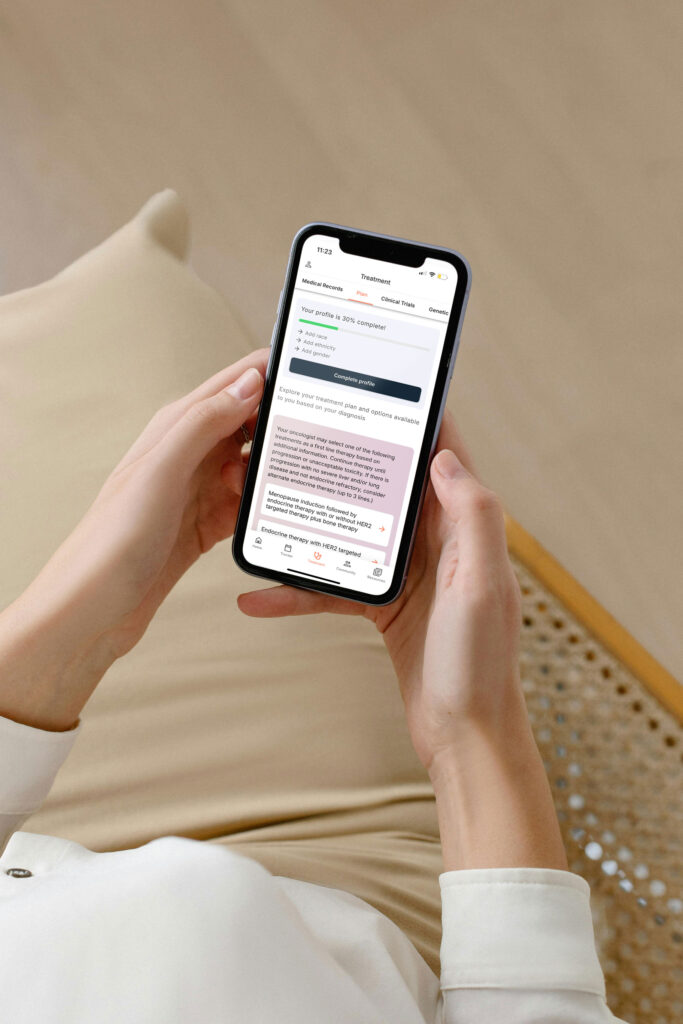
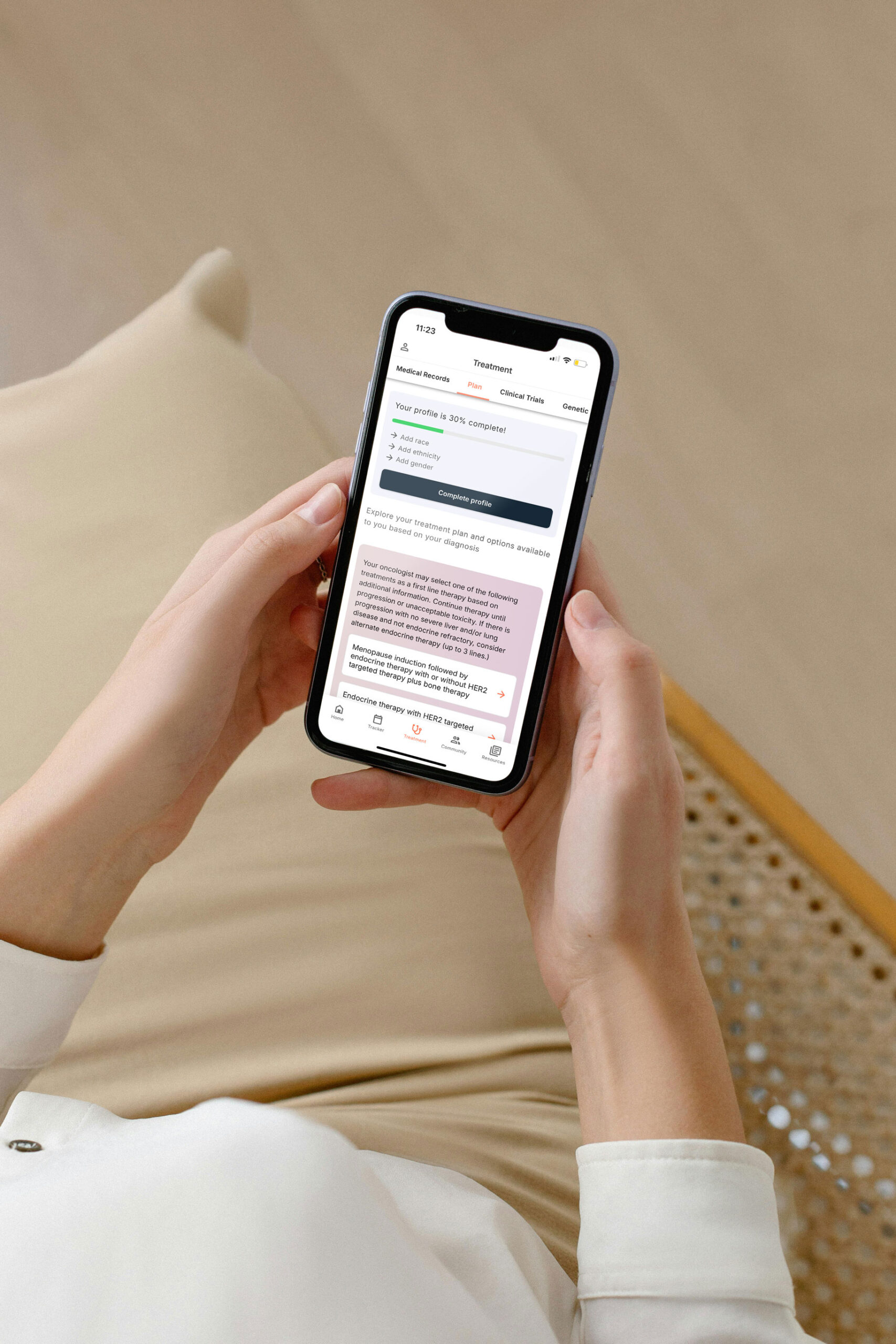
Different cancer treatments have varying side effects. Keeping track of your side effects in a journal or a symptom tracker can be a helpful way to document what you’re feeling in an organized way and spot patterns.
Evidence-based guidance powered by NCCN Guidelines®
Personalized treatment plans shaped by the latest oncology standards—tailored to your diagnosis.
Get started
View your personalized treatment plan in the Outcomes4Me app
Use your diagnosis to unlock personalized NCCN Guidelines®-aligned recommendations.
Continue in app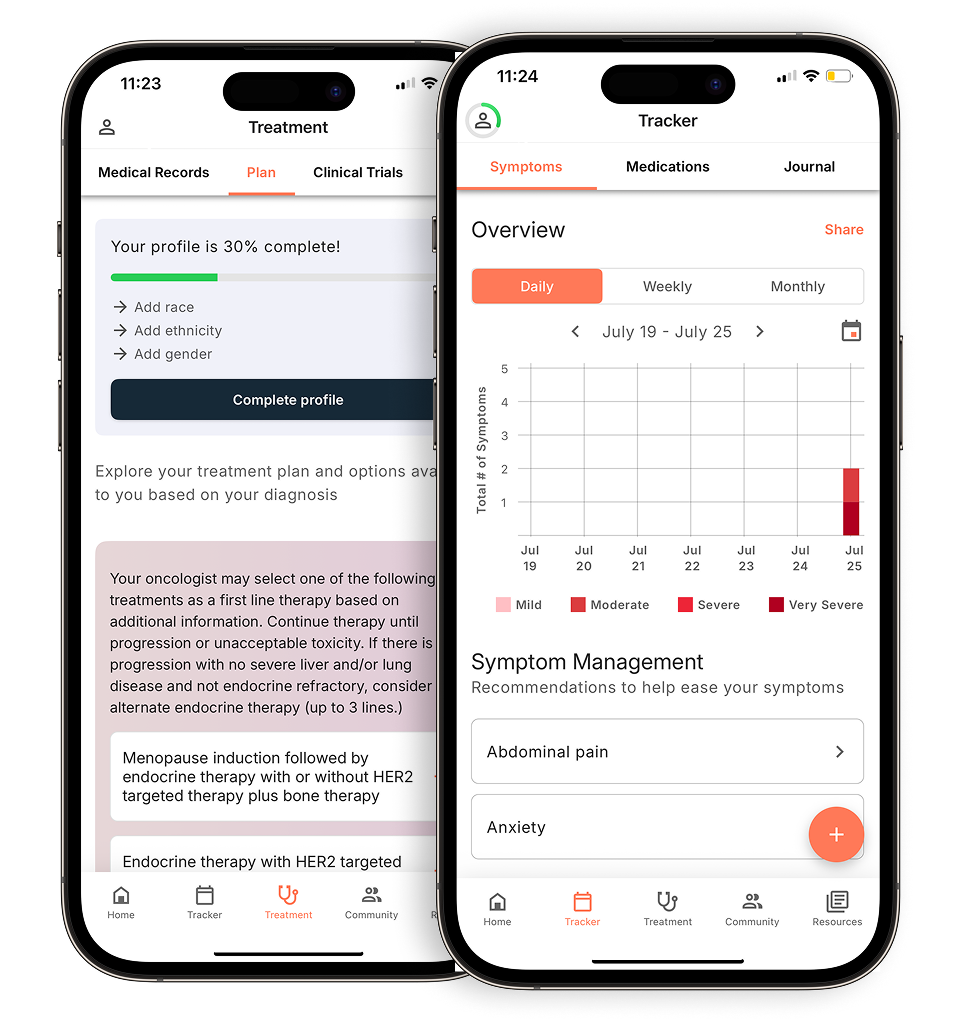
Mass General Brigham’s Dr. Catherine Meador recommends having open communication with your care team. “We have a lot of effective medications to help with the side effects. Nausea and gastrointestinal distress is common [with chemotherapy] and there are ways to mitigate that,” she says.
She emphasizes that all side effects are worth noting. “The worst feeling as a doctor is to know that my patients are at home experiencing these side effects that nobody’s telling me,” she continues. “Mouth sores, rash, and other less common things are things to know about because they’re things we can help treat. It’s important to talk to your treating doctor about ‘What should I be looking for?’”
Ask about supportive resources
Cancer centers have different supportive resources that can help you manage the day-to-day of a diagnosis. Georgetown University’s Dr. Stephen Liu recommends exploring what your cancer center has to offer, whether it be nutrition counseling, transportation assistance, psycho-oncology, and more.
Watch the video for the different services to ask for.
Personalized support for real care decisions
Understand your diagnosis, explore clinical trials, and track symptoms--all in one place.
Get started
Compare treatments, prepare for appointments, and track side effects—all in the app
Built for your diagnosis, Outcomes4Me gives you the tools to make confident, informed decisions—right when you need them.
Continue in app