CT scans for lung nodules and lung cancer
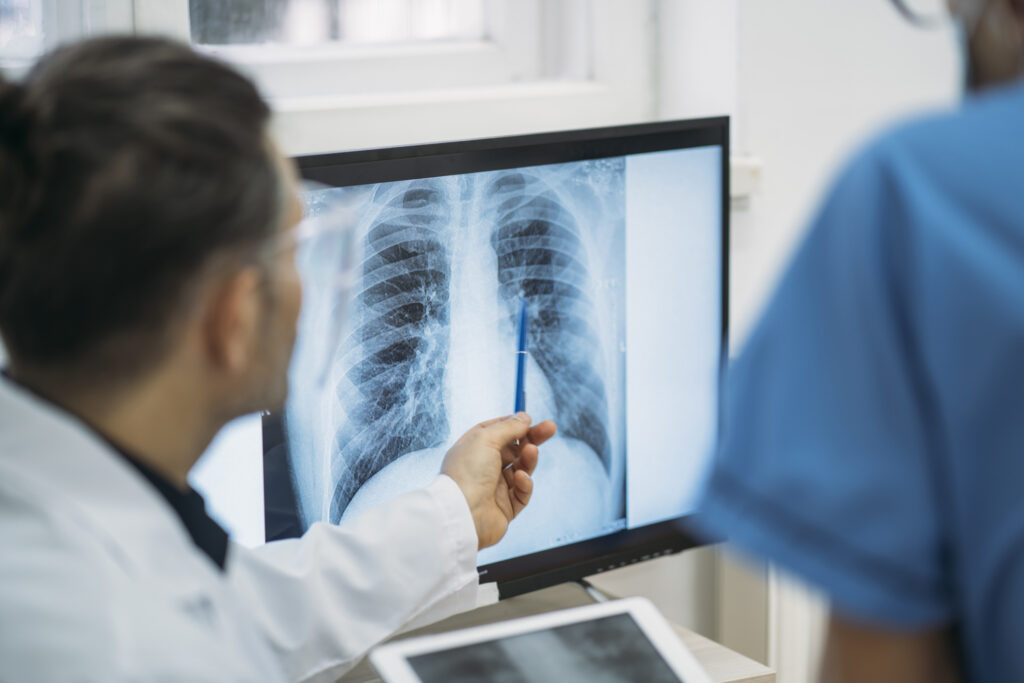
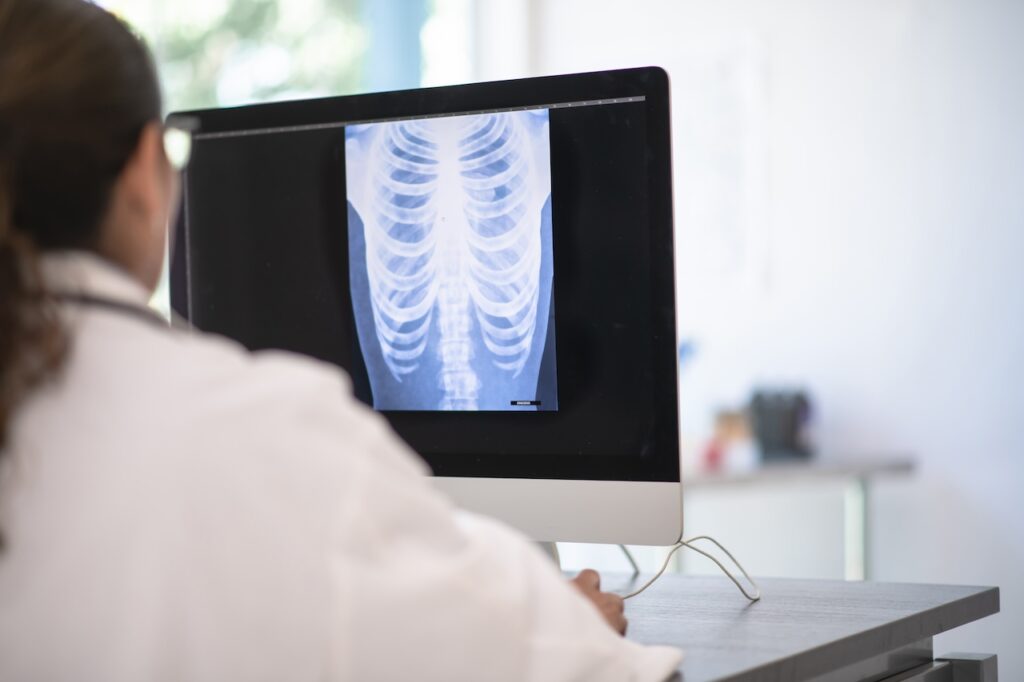
A CT (computed tomography) scan is one of the most common imaging tests used to follow lung nodules. While a CT scan alone can’t confirm if a nodule is cancerous, it allows your care team to track nodules over time. They will look for changes in size, growth rate, or appearance. Smaller nodules are often monitored with repeat CT scans rather than biopsied right away.
Evidence-based guidance powered by NCCN Guidelines®
Personalized treatment plans shaped by the latest oncology standards—tailored to your diagnosis.
Get started
View your personalized treatment plan in the Outcomes4Me app
Use your diagnosis to unlock personalized NCCN Guidelines®-aligned recommendations.
Continue in app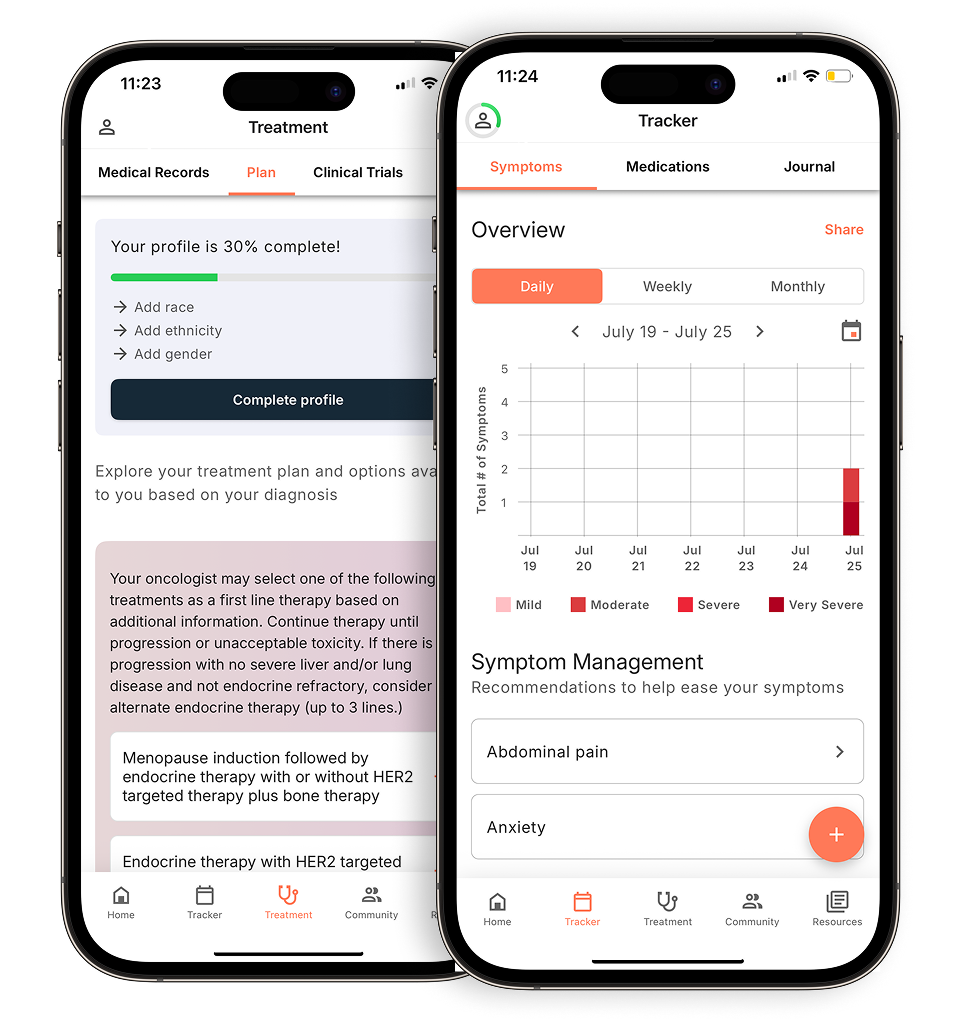
What to expect during a CT scan:
- The scan is painless and usually takes only a few minutes.
- You will lie flat on a table that slides into a large, doughnut-shaped machine.
- You may be asked to hold your breath briefly while the images are taken.
- Sometimes, a contrast dye is used to make certain areas more visible. This may involve a quick injection in your arm.
PET scans for lung nodules and lung cancer
If a nodule is larger, changing over time, or has features that raise concern, your doctor may order a PET (positron emission tomography) scan. According to the University of Central Florida’s Dr. Martin Dietrich, scans of the entire body are “pretty much standard for all lung cancer diagnoses.” A PET scan looks at metabolic activity, and since cancer consumes a lot of energy, “with a PET scan, we’re able to see these hot spots of energy consumption and correlate them with changes that we’re concerned about for cancer spread,” says Dr. Dietrich. PET scans can also help detect whether cancer has spread to other parts of the body.
What to expect during a PET scan:
- You’ll receive a small injection of radioactive sugar, which highlights areas of higher activity.
- After the injection, you’ll rest quietly for about an hour to allow your body to absorb the tracer.
- The scan itself is painless and typically lasts 20–30 minutes.
MRIs for lung cancer staging
An MRI (magnetic resonance imaging) is another imaging tool that may be used in certain situations. Unlike CT scans, MRIs don’t involve radiation, but they’re not as effective at detecting very small lung nodules. Research shows they can reliably identify nodules that are 4 millimeters or larger, but CT scans remain the standard imaging test for evaluating lung nodules.
An MRI is particularly useful in helping determine the stage of cancer and whether it has spread to the brain. Dr. Dietrich shares that “if we were to use a PET scan for the brain, we would see activity in the background of activity, and we would unfortunately miss things. So we need to complement the PET scans with an MRI of the brain to get the full body staging. That gives us the extent of disease spread, and typically a stage of the diagnosis.”
What to expect during an MRI:
- You will lie on a table that slides into a large, tube-like machine.
- The test is painless, but the machine can be loud. Earplugs or headphones are often provided.
- You may be asked to stay very still or hold your breath briefly while images are taken.
- Unlike CT scans, MRIs don’t use radiation, but they do take longer, about 30–60 minutes for the brain.
Imaging tests each serve a unique purpose in evaluating lung nodules. Your care team will decide which scans are most appropriate for your situation, often using them together to get the clearest picture. The goal is always to gather enough information to guide the safest and most effective next steps in your care.
Personalized support for real care decisions
Understand your diagnosis, explore clinical trials, and track symptoms--all in one place.
Get started
Compare treatments, prepare for appointments, and track side effects—all in the app
Built for your diagnosis, Outcomes4Me gives you the tools to make confident, informed decisions—right when you need them.
Continue in app