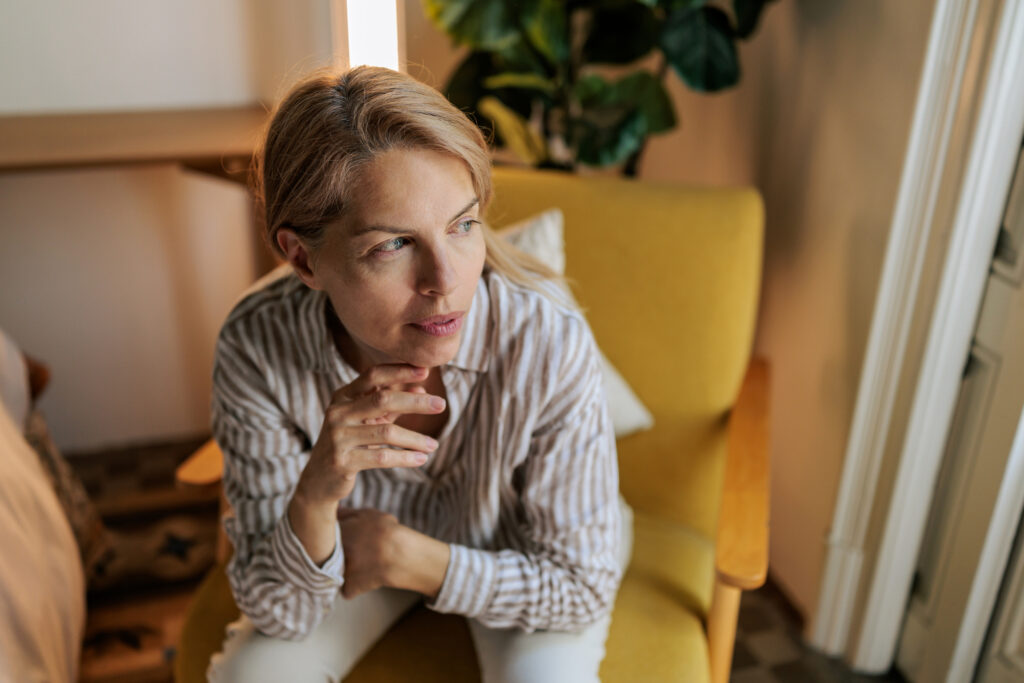
We recently spoke with Ashley about her experience with breast cancer, what helped her through treatment, and how she found support along the way. Now 36, Ashley is approaching a major milestone: four years with no evidence of disease.
In our conversation, Ashley shares what it was like to navigate treatment as a young mother, how connecting with other patients helped her feel less alone, and why having access to understandable, up-to-date cancer research remains important to her.
A diagnosis just days after becoming a mom
Ashley’s breast cancer diagnosis came at a time when she was supposed to be focused on bringing her new baby home and adjusting to life as a mother.
“I was actually diagnosed six days after I had my son,” she says.
Her diagnosis was followed by an intensive course of treatment, including chemotherapy, radiation, two surgeries and two years of abemaciclib (Verzenio). “Verzenio was really tough,” Ashley says. “I did that for two years, and that was really tough.”
She considers completing the treatment without needing a dose reduction one of her biggest accomplishments.
“Honestly, I think one of my biggest accomplishments in my life was completing Verzenio and not having to do dose reducing,” she says. “If I’m going to do this; I’m going to do it full out.”
Today, Ashley says her current treatments are more manageable. She has one more year of anastrozole and Lupron before transitioning to tamoxifen for another five years.
“I am far from done, but thankful that I’m feeling good, strong, and healthy,” she says.
Evidence-based guidance powered by NCCN Guidelines®
Personalized treatment plans shaped by the latest oncology standards—tailored to your diagnosis.
Get started
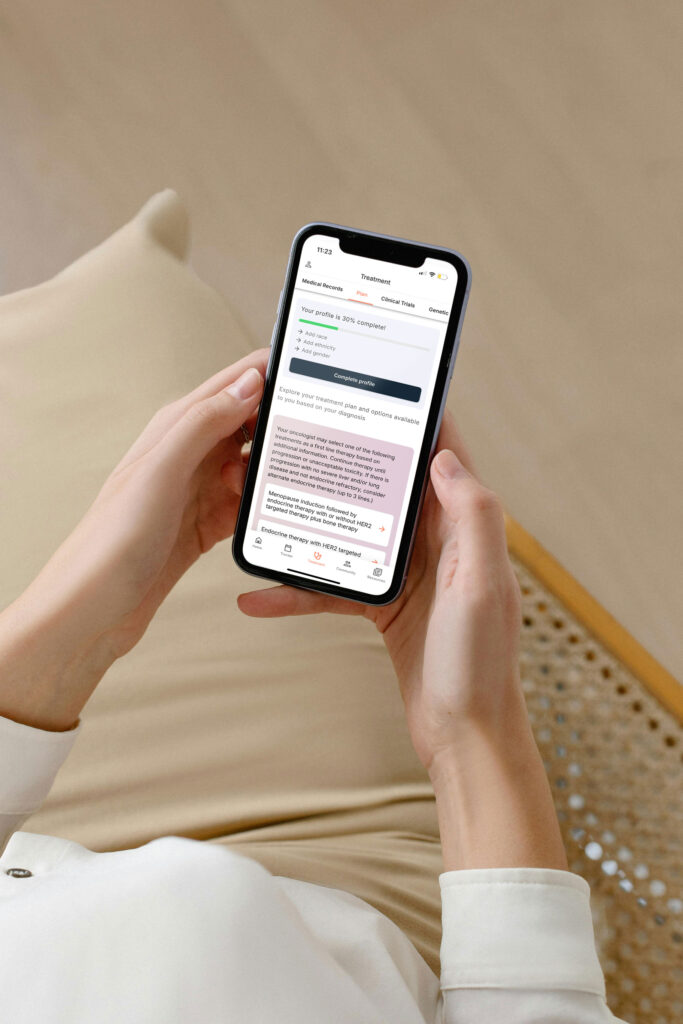
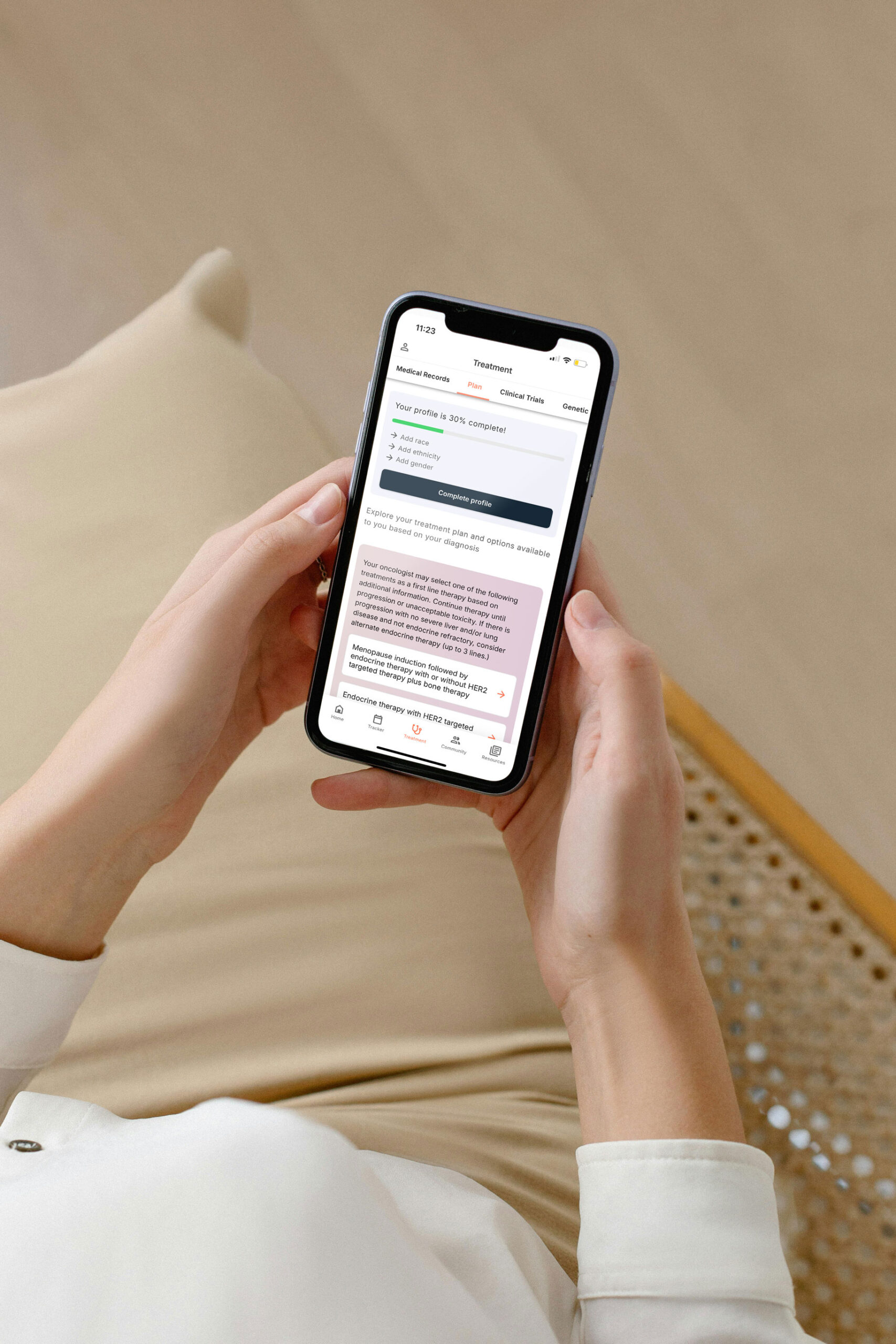
View your personalized treatment plan in the Outcomes4Me app
Use your diagnosis to unlock personalized NCCN Guidelines®-aligned recommendations.
Continue in app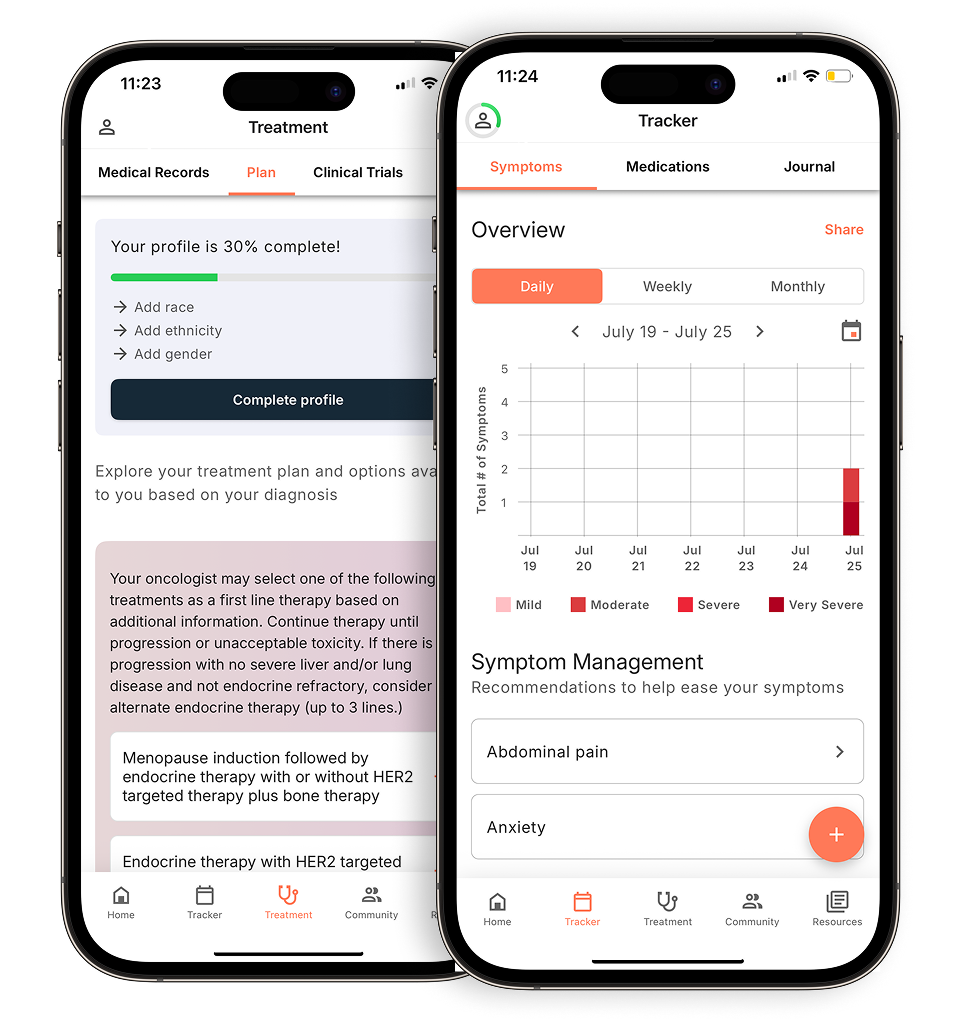
Learning how to live beyond treatment
As Ashley approaches four years with no evidence of disease, she’s also navigating what life looks like after the most intensive parts of treatment are behind her.
“Things are great. Things are amazing, actually,” she says. “It kind of feels too good, to be honest.”
After experiencing an intense and frightening diagnosis, she’s had to work through the fear that can remain even when treatment is going well.
“I’m trying to not have the catastrophic thinking anymore because it was very intense and scary,” Ashley says.
Her son, who was a newborn when she was diagnosed, is now thriving and approaching his fifth birthday.
“I feel good,” she says. “My son is great. He’ll be five in December. He’s thriving.”
For Ashley, survivorship isn’t simply about finishing treatment. It’s also about finding ways to feel informed, connected, and confident as she continues living with the uncertainty that can accompany a cancer diagnosis.
Finding community when breast cancer feels isolating
Ashley first discovered Outcomes4Me through social media and downloaded the app. One of the features she found most helpful was the patient community.
That connection became particularly meaningful because Ashley was diagnosed at a relatively young age. “Especially as a young female getting breast cancer, it can be very isolating,” she says. “A lot of my friends at least have not been diagnosed with anything like this, even my family. It was very lonely.”
Through the community, Ashley found people who were experiencing similar treatments and side effects. “I felt like there were a lot of individuals similar to me and my diagnosis and my age and similar chemos and hormone therapies,” she says.
Even small, practical ideas made a difference. Ashley remembers getting advice about managing hot flashes, including the suggestion to carry a small handheld fan. “I got the idea of buying one of those little handheld fans, because my hot flashes were pretty bad through the app,” she says.
Using research to become a more informed patient
Ashley also values having access to research presented in a way that was easier to understand. “I really like the research perspective when there are articles posted,” she says. “I think that’s really important as a cancer survivor, having access to the research for my own opinions.”
Ashley says she often brings research to major appointments so she can discuss it with her doctors and ask more informed questions. For Ashley, being able to understand new research helps her take a more active role in conversations with her care team.
“I can bring in the research,” she says, noting that, in her experience, doctors don’t always have time to review every new study with patients. She also appreciates that the research she finds through Outcomes4Me is presented with patients in mind.
“Some of the research can be very not patient-friendly at times,” she says. “ I appreciate that it is [patient-friendly] on Outcomes4Me.”
Finding practical support during active treatment
During chemotherapy, Ashley also used Outcomes4Me to help her understand patterns in her symptoms.
“I would say that it’s very helpful during treatment because you can connect your medical files if you want to and track your symptoms,” she says. “I figured out when I was going through chemo, there was a pattern,” she says. “When I felt really bad, I knew day two after chemo was not going to be a good day for me.”
Being able to recognize those patterns gave her a better sense of what to expect and helped her keep track of what she was experiencing during treatment.
What Ashley would tell someone newly diagnosed
Cancer appointments can be packed with information, and patients may not always have enough time to ask every question that comes to mind. “The information at first when you’re diagnosed can be extremely overwhelming,” she says. “Sometimes the doctors don’t have enough time for us,” she says.
Having a resource available on her phone meant she could return to information when she had time and look up questions that came up after an appointment. “I would definitely recommend Outcomes4Me. Having that community support and being able to access research that is very user-friendly for everyone is super important,” Ashley says.
As she continues treatment and looks toward the future, she remains grateful for where she is today. “I am far from done, but thankful that I’m feeling good, strong, and healthy.”
Outcomes4Me is here to help you better understand your diagnosis and treatment options. You deserve clear, trustworthy information at every step.
Personalized support for real care decisions
Understand your diagnosis, explore clinical trials, and track symptoms--all in one place.
Get started
Compare treatments, prepare for appointments, and track side effects—all in the app
Built for your diagnosis, Outcomes4Me gives you the tools to make confident, informed decisions—right when you need them.
Continue in app