
The transition: why life after letrozole is a new chapter
Taking your final dose of letrozole after 5 or 10 years of therapy is a genuine milestone, and it’s okay if what you feel isn’t purely relief.
Completing adjuvant hormone therapy is a significant milestone in breast cancer survivorship, yet it rarely feels simple. Many patients describe a quiet anxiety that sets in alongside the pride. If the medication was working, what happens now that it’s gone? This is sometimes called the “safety net” psychology, the unsettling sense that stopping treatment means stepping away from protection, even when your care team has determined that finishing the course is the right clinical decision for you.
That fear is valid, and you’re not alone in feeling it. Life after letrozole opens a new chapter defined by what clinicians increasingly call personalized survivorship. Personalized survivorship means building a proactive, tailored plan for your health going forward, one that reflects your specific biology, risk profile, and goals.
The washout period. How long does letrozole stay in your system?
Letrozole clears from your bloodstream faster than most people expect, but the story extends beyond simple clearance.
Understanding the letrozole half life helps set realistic expectations for what comes next. A drug’s half-life is the time required for your body to eliminate half of the drug. Letrozole is understood to clear from your body relatively quickly, with a half-life measured in days rather than weeks. Your care team can explain the specific timeline and how it may affect your transition off the medication. Working through the math, letrozole is gradually cleared from your body after you stop taking it, and your care team can discuss the typical timeline for this process during your transition planning.
Quick stat: Letrozole clears from your system within days to weeks of your final dose.
Here’s where an important distinction comes in: drug clearance and hormonal recalibration are separate processes. Once letrozole leaves your bloodstream, it stops actively suppressing aromatase, the enzyme responsible for converting androgens into estrogen. But your endocrine system doesn’t simply flip a switch. After years of suppressed estrogen production, your hypothalamus, pituitary gland, and ovarian tissue (in premenopausal women) need time to re-establish their natural signaling patterns. That recalibration process can take months.
This explains why side effects don’t vanish the moment the drug is gone. Your body has adapted to a prolonged low-estrogen state, and restoring equilibrium is a gradual process. Joint stiffness, hot flashes, and fatigue may persist, and in some cases temporarily intensify, even after blood clearance is complete. Understanding that timeline gives you concrete expectations about what your body is working through and when relief is likely to arrive.
The recovery timeline: when you might feel like yourself again
Understanding the timeline of side effects after stopping letrozole gives you something concrete to hold onto, a realistic view of what your body is working through and when relief is likely to arrive.
Evidence-based guidance powered by NCCN Guidelines®
Personalized treatment plans shaped by the latest oncology standards—tailored to your diagnosis.
Get started
View your personalized treatment plan in the Outcomes4Me app
Use your diagnosis to unlock personalized NCCN Guidelines®-aligned recommendations.
Continue in app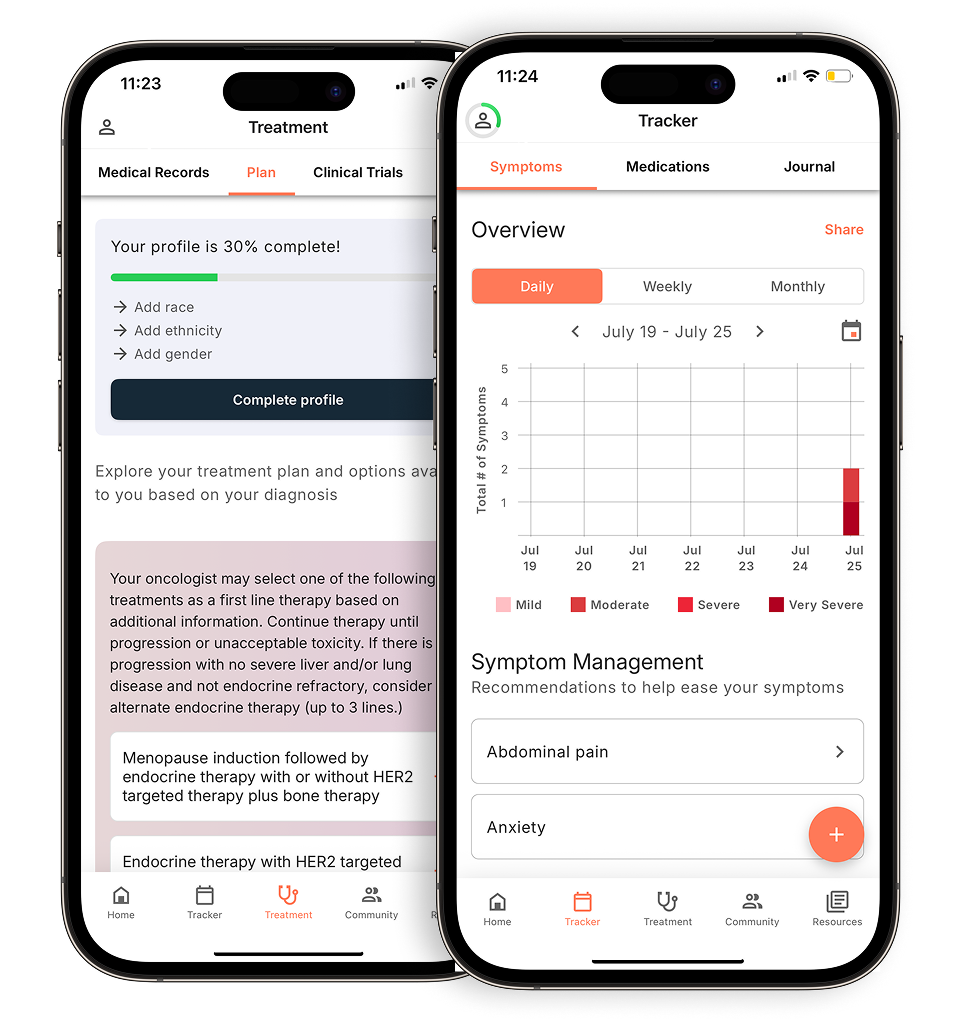
Recovery unfolds in stages. While everyone’s experience differs based on overall health, age, and how long they took letrozole, a common pattern emerges across the board.
Weeks 2–4: Joint and muscle pain begins to lift. This is often the first, and most welcome, shift. Aromatase inhibitor-induced arthralgia, the stiffness and aching in joints that many describe as feeling decades older overnight, may begin to improve within several weeks after stopping letrozole, though the timeline varies among patients. For many, this improvement alone begins to restore a sense of physical freedom they’d almost forgotten.
Month 1: Hot flashes start to taper. As letrozole clears your system and estrogen levels begin their gradual recovery, the hypothalamus, the part of your brain that regulates body temperature, starts to recalibrate. Some patients report that hot flashes and night sweats improve after stopping letrozole, though the timing and degree of improvement varies. It may be worth discussing with your care team what to expect during your transition. Hormonal side effects follow the pace of your body’s own hormonal readjustment, which takes time.
Months 3–6: Cognitive fatigue and brain fog improve. This is often the side effect patients least expect to recover from, and the one that matters most for quality of life. Some patients report that cognitive fatigue and brain fog may gradually improve after stopping letrozole, though the timing and extent of improvement varies. It may be worth tracking your own symptoms and discussing any persistent changes with your care team as hormonal balance is restored.
Long-term: Bone density stabilization requires ongoing attention. Some patients report that bone density changes, such as progression from osteopenia to osteoporosis, occur during aromatase inhibitor therapy and may persist after stopping the medication. For some patients, osteoporosis requires continued management through calcium, vitamin D, weight-bearing exercise, or medication. Your care team should monitor bone density beyond the treatment period itself.
With physical discomfort easing and energy returning, many patients also start to notice changes in how their body responds to food and movement, which is exactly where the next piece of this recovery picture comes in.
Weight loss and metabolism after stopping letrozole
Stopping letrozole removes a significant barrier that’s been working against your metabolism.
Once estrogen levels begin to normalize, many women find their metabolism becomes more responsive to the lifestyle changes they’ve been making all along. Letrozole works by suppressing estrogen production. Some patients report that hormonal changes during treatment may affect metabolism and make weight management more challenging, though experiences vary. As estrogen gradually returns, the hormonal environment that made weight management so frustrating starts to improve.
The recovery timeline discussed in the previous section matters here, too. Metabolic shifts tend to follow the same gradual curve as other side effects, not an overnight transformation.
Cancer care guidance for every step of your journey
Get treatment options, clinical trials, and support tailored to your diagnosis--all in one place.
Get started
See treatment options, manage symptoms, and stay informed—all in the app
View treatment options and trials personalized to your diagnosis—plus track progress in real time.
Continue in appImproved mobility is often the more immediate change. Joint pain and stiffness are among the most commonly reported side effects of letrozole, and for many women they become a real obstacle to staying active. Some women report that weight management may feel more manageable after stopping letrozole, and they note improvements in joint pain that can make physical activity easier. Discuss with your care team whether these changes might affect your own recovery and wellness goals. Less pain means more walking, more strength training, more of the consistent activity that genuinely moves the needle on metabolic health.
Three practical approaches tend to support this transition well:
- Track what you eat and how you move. Logging nutrition and activity, even loosely, builds awareness of patterns that are easy to miss. Personalized health platforms, including the Outcomes4Me app, can help you organize this data alongside your broader health records.
- Prioritize strength training. Muscle tissue is metabolically active. Rebuilding or maintaining it after treatment supports long-term weight management more effectively than cardio alone.
- Work with your care team on a personalized care plan. Metabolic changes post-treatment are real and worth discussing. Your care team can flag thyroid function, vitamin D levels, or other factors that overlap with letrozole’s effects.
Stopping letrozole is a meaningful step, and pairing it with intentional, consistent habits drives lasting results. Alongside the physical changes, many women also navigate a quieter, less discussed transition. The emotional shift of no longer taking a daily pill that felt like protection.
Managing recurrence anxiety and the carry-over effect
Stopping letrozole doesn’t mean losing its protection. The carry-over effect is real. Studies show that most people who take aromatase inhibitors like letrozole after breast cancer surgery remain free of breast cancer for five or more years after treatment, and breast cancer can come back as long as 20 years after treatment, suggesting the need for ongoing monitoring. The drug rewires your hormonal environment in ways that continue working after it clears your system.
The emotional challenges that surface after stopping treatment are just as real as the physical ones. Many people describe a quiet dread, call it “scanxiety,” that replaces the structure of the daily pill. When weight loss after stopping letrozole starts to show, or energy returns, it can paradoxically feel unsettling rather than reassuring. You might catch yourself wondering whether normal recovery symptoms are something more serious.
One practical approach is to stay organized rather than stay anxious. The Outcomes4Me app lets you consolidate your medical records, genetic data, and treatment history in one place, giving you something concrete to reference when worry starts to spiral. That kind of structured visibility helps you bring informed, specific questions to your care team rather than vague concerns.
Knowing when to call your care team matters, too. New or worsening bone pain, unexpected lumps, or symptoms that feel distinctly different from recovery patterns warrant a prompt conversation, not a wait-and-see approach. The next section pulls these threads together into a clear-eyed summary of what recovery actually looks like across the timeline.
Recapping what you need to know
Stopping letrozole marks a meaningful transition. Understanding what your body is actually doing in the weeks and months that follow makes that transition far easier to navigate.
The timeline breaks down in two distinct phases. Letrozole clears from your system within days to weeks, which is why some side effects begin lifting relatively quickly. Hormonal balance, the deeper recalibration your body needs, takes 3 to 6 months to stabilize as estrogen levels gradually rise again. These are two separate processes, and confusing them can lead to unrealistic expectations in either direction.
- Joint pain may begin to improve within several weeks after stopping letrozole, though the timeline varies among patients.
- Energy and metabolism tend to follow as estrogen normalizes and the body’s inflammatory burden decreases.
- Weight loss becomes more achievable once the hormonal headwinds that worked against you are no longer present.
- The protective benefits of letrozole don’t disappear when you take your last pill, suggesting the need for ongoing monitoring.
Throughout recovery, personalized tracking separates recovery clarity from new concerns. After stopping letrozole, some patients report that side effects begin to improve within weeks, though the timeline varies. If you notice symptoms that persist or worsen, discuss them with your care team to determine next steps.
Survivorship is an active phase, a phase that rewards attention, intention, and the right tools.
Taking control of your post-treatment journey
Survivorship after letrozole requires active, informed decisions that matter. Symptoms like joint pain after stopping letrozole, energy shifts, and changes in bone density require a personalized care plan and consistent communication with your care team. With these elements in place, you can move through this transition with clarity rather than uncertainty.
The data and tools you need to thrive are already within reach. Understanding what your body is experiencing, and why, puts you in a fundamentally stronger position than simply hoping side effects fade. That knowledge becomes even more powerful when you pair it with resources designed specifically for people navigating post-treatment life.
The Outcomes4Me app is built for exactly this moment. Whether you’re tracking lingering symptoms, exploring clinical trial eligibility, or integrating genetic results into a broader picture of your health, the app connects you with evidence-based resources and oncology nurse practitioners who understand your specific situation. Your post-treatment support should meet the standard of being evidence-based and oncologist-approved.
You’ve completed a demanding phase of treatment. What comes next requires the same level of intentional care, not because something is wrong, but because you’re worth that investment. Communicate openly with your care team, utilize trusted tools, and know that navigating this transition proactively is one of the most meaningful things you can do for your long-term health.
Disclaimer: The information provided in this article is for informational purposes only and is not intended to be a substitute for professional medical advice, diagnosis, or treatment. Outcomes4Me is not acting as your caregiver, and any suggestions or guidance offered should not replace the advice of your healthcare provider or qualified medical professional. Always seek the guidance of your physician or other qualified health provider with any questions you may have regarding a medical condition.
Personalized support for real care decisions
Understand your diagnosis, explore clinical trials, and track symptoms--all in one place.
Get started
Compare treatments, prepare for appointments, and track side effects—all in the app
Built for your diagnosis, Outcomes4Me gives you the tools to make confident, informed decisions—right when you need them.
Continue in app