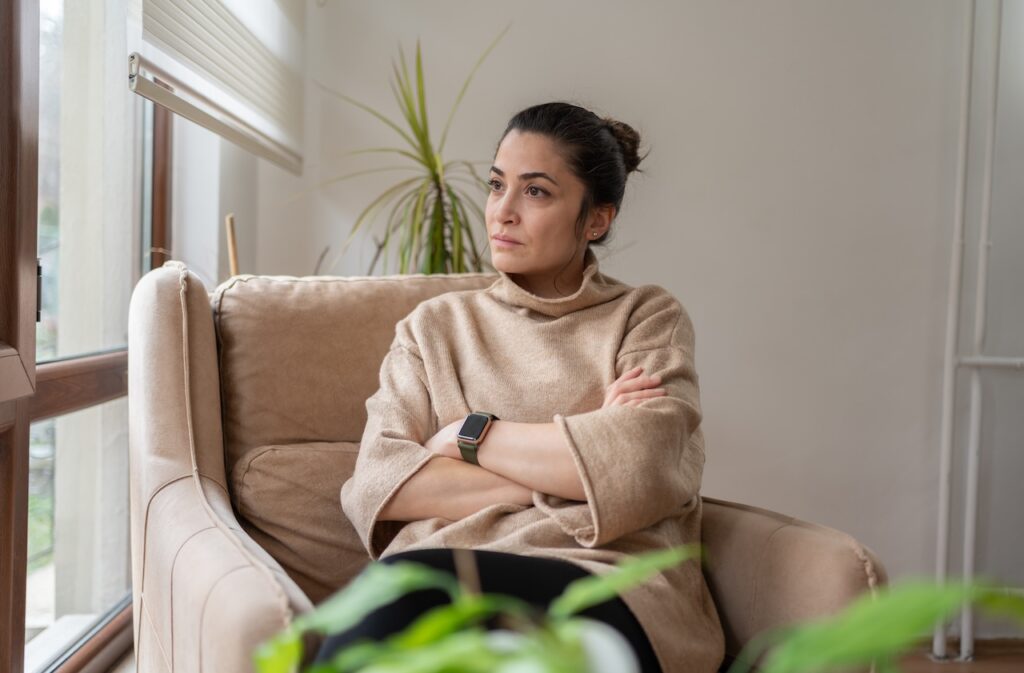
The invisible side effect: why CRF isn’t just “being tired”
Cancer-related fatigue isn’t exhaustion that a good night’s sleep will fix and if you’ve felt that distinction viscerally, you’re not imagining it. It’s the sensation of moving through wet cement: heavy, relentless, and completely disconnected from how much rest you’ve had. You sleep eight hours and wake up just as depleted. You push through a normal afternoon and feel like you’ve run a marathon.
“Cancer-related fatigue is a sense of physical, emotional, and cognitive exhaustion that is not completely relieved by sleep or rest and may occur after little or no activity.” That last part matters. Unlike typical tiredness, which responds to sleep, CRF operates by different rules entirely.
What makes it especially difficult is its invisibility. You may look well to the people around you while feeling profoundly unwell on the inside. That gap, between how you appear and how you actually feel, can quietly erode your quality of life, your relationships, and your sense of self. Research shows that “almost all patients receiving cancer treatment report symptoms of cancer-related fatigue (CRF), which can persist during and after treatment.” Making it one of the most common and most under-reported side effects in oncology.
It’s also worth naming this directly: CRF is a clinical condition, not a personal failing. It isn’t a sign that you’re not trying hard enough or recovering slowly. Understanding why it persists, at a biological level, is the first step toward addressing it effectively. The reasons are more complex than most patients are told.
The biology of exhaustion: why fatigue persists post-treatment
Effective cancer-related fatigue management starts with understanding why the body stays exhausted long after the last treatment session ends, and the answer runs deeper than most people expect.
Chemotherapy and radiation don’t just target tumors; they trigger a prolonged inflammatory response that can persist for years. When treatment ends, the immune system doesn’t simply reset. Researchers have found that persistent immune dysregulation, including elevated levels of inflammatory substances circulating in the body, may contribute to fatigue and sleep disturbances seen in post-treatment conditions, though more research is needed to understand how these mechanisms specifically apply to cancer-related fatigue. Research published in PMC on cancer-related fatigue mechanisms confirms that treatment-induced inflammation alters the neuroendocrine system, contributing to persistent lethargy even years after remission.
Endocrine therapies add another layer of disruption. Tamoxifen and aromatase inhibitors, cornerstones of hormone receptor-positive cancer treatment, suppress estrogen, a hormone that plays a significant role in regulating sleep quality and energy metabolism. Many patients on these therapies report waking with profound fatigue and hair loss even months into their maintenance phase, a pattern that’s clinically well recognized. Hot flashes, night sweats, and disrupted sleep compound the problem, creating a feedback loop where poor rest deepens daytime exhaustion.
There’s also a cognitive dimension worth naming. “Cancer-related fatigue can affect both your physical energy and mental function, including concentration and mood, meaning treating fatigue may help improve multiple aspects of how you feel during and after treatment.” Mental fog and slower processing speed increase the cognitive effort required for everyday tasks, which translates directly into physical depletion. The brain, working harder to perform routine functions, draws on energy reserves the body can barely spare.
Evidence-based guidance powered by NCCN Guidelines®
Personalized treatment plans shaped by the latest oncology standards—tailored to your diagnosis.
Get started
View your personalized treatment plan in the Outcomes4Me app
Use your diagnosis to unlock personalized NCCN Guidelines®-aligned recommendations.
Continue in app
At the cellular level, chemotherapy damages mitochondria, the structures responsible for producing energy inside cells. This impairs the body’s fundamental capacity to generate and sustain energy, meaning that even when inflammation settles and sleep improves somewhat, the raw biological machinery for vitality is still compromised. That’s a foundational reason why rest alone rarely resolves CRF, and it’s also why how you move through recovery matters enormously.
The exercise paradox: rebuilding energy through movement
Rest feels like the logical answer to fatigue after cancer treatment, but for many patients, too much rest quietly makes things worse.
When you reduce activity, your muscles weaken, your cardiovascular fitness drops, and everyday tasks demand more effort. That extra effort feeds exhaustion, which leads to more rest, a cycle known as deconditioning. Breaking it feels counterintuitive, but the evidence is clear: research indicates that cancer-related fatigue is a frequent and serious symptom affecting breast cancer survivors after treatment, with physical activity among the factors that may influence fatigue levels, though more consistent research is needed to establish the most effective interventions.
Movement, not marathon training, is the gold-standard treatment for CRF. Activities like walking, swimming, and gentle cycling improve mitochondrial function, reduce inflammation, and restore the kind of deep sleep that CRF typically disrupts. “Managing cancer-related fatigue may involve identifying and treating underlying causes, seeking support from specialists, and exploring coping strategies that work best for you over time.”
Of course, starting is the hard part. Spoon Theory, a framework that treats daily energy as a limited supply of “spoons,” offers a practical way to pace yourself without burning out. The idea is to allocate movement deliberately, treating a short walk the same way you’d budget any finite resource.
Three safe-start principles to keep in mind:
- Start smaller than you think you need to. A five-minute walk around the block counts. Consistency matters far more than intensity at this stage.
- Time activity after rest, not before it. Schedule movement when your energy is naturally higher, often mid-morning, rather than pushing through a low point.
- Track how you feel 24 hours later. A slight energy dip is normal; significant exhaustion the next day signals you’ve exceeded your current threshold.
Managing fatigue well is rarely about one fix in isolation. The next section looks at how to build a more personalized recovery plan, one that factors in your clinical profile, symptoms, and daily patterns.
Personalized management: beyond one-size-fits-all advice
Understanding why fatigue persists after cancer treatment is only half the equation, the other half is building a recovery plan that reflects your specific biology, treatment history, and lifestyle.
No two patients experience cancer-related fatigue the same way, which is precisely why generic advice often falls short. Factors like hormone receptor status, the type of systemic therapy you received, and even individual genetic variations in inflammatory response all shape how fatigue presents and how long it lingers. Integrating this clinical data into your care plan, rather than treating fatigue as a blanket side effect, gives both you and your care team a far more useful starting point.
Cancer care guidance for every step of your journey
Get treatment options, clinical trials, and support tailored to your diagnosis--all in one place.
Get started
See treatment options, manage symptoms, and stay informed—all in the app
View treatment options and trials personalized to your diagnosis—plus track progress in real time.
Continue in appNCCN guidelines provide a structured roadmap for exactly this kind of targeted management. They recommend screening for fatigue at every clinical visit and addressing underlying contributors, such as anemia, thyroid dysfunction, sleep disturbance, and mood disorders, before escalating to other interventions. Platforms like Outcomes4Me are uniquely positioned to support this process: as the only direct-to-patient platform that integrates with NCCN treatment guidelines, it helps translate those clinical recommendations into language you can actually act on.
Tracking your symptoms consistently is one of the most practical steps you can take. Digital tools that log fatigue levels, sleep quality, activity, and nutrition patterns over time can surface trends that a single clinic visit simply can’t capture. If you notice fatigue spikes after specific activities or at particular times of day, that data becomes a genuine asset in conversations with your provider.
Nutrition also plays a more significant role in energy recovery than many patients expect. Research points to anti-inflammatory dietary patterns, particularly the Mediterranean diet, which emphasizes whole grains, lean proteins, healthy fats, and abundant vegetables, as supportive of reduced systemic inflammation and improved fatigue outcomes. Small, consistent dietary shifts tend to be more sustainable than dramatic overhauls, especially during recovery.
Personalized care doesn’t end with diet and symptom tracking, though. Emerging research continues to test new interventions for cancer-related fatigue, and clinical trials are increasingly focused on exactly this kind of targeted symptom management.
The role of clinical trials in fatigue recovery
Clinical trials for cancer-related fatigue (CRF) are an underused, and often misunderstood, option for patients seeking more personalized cancer care for fatigue that doesn’t respond to standard approaches.
Clinical trials aren’t just for treating cancer itself, many are designed specifically to test better ways to manage symptoms like CRF. “According to the National Cancer Institute, various approaches may help manage cancer-related fatigue, including mind-body practices such as yoga and acupuncture, cognitive behavioral therapy and talk therapy for managing stress and emotional factors, and relaxation techniques, though additional research is ongoing to identify the most effective treatments.”
A common misconception is that trial participants are “guinea pigs.” In practice, participants in symptom-management trials typically receive either a promising new intervention or the current best-available treatment, neither option leaves you worse off. Eligibility criteria are specific, which actually works in your favor: trials are matched to patients whose clinical profiles share defined characteristics, making the intervention more likely to be relevant to your situation.
To find trials suited to your profile, talk with your oncologist or care team about CRF-focused studies. You can also search ClinicalTrials.gov using filters like “cancer-related fatigue,” “breast cancer survivor,” and treatment status. Specifying your prior treatments, current medications, and symptom timeline will help narrow results meaningfully.
Understanding what trials can, and can’t, offer is one more piece of building a complete recovery picture, which brings us to the key takeaways every breast cancer patient managing fatigue should keep in mind.
The bottom line: what you need to know
Managing fatigue after cancer treatment requires a shift from passive waiting to active, personalized intervention, and the evidence behind that approach is now clear.
Cancer-related fatigue is a biological condition, not a sign of weakness or insufficient rest. Persistent inflammation, disrupted cytokine signaling, and hormonal changes driven by endocrine therapies are the primary culprits. Rest alone won’t fix a physiological problem, which is why so many patients feel frustrated when sleep doesn’t restore their energy.
Here’s a quick summary of what the research consistently supports:
- Exercise is a key evidence-based intervention. “Exercise, including aerobic activity like brisk walking, swimming, or cycling, is recommended as part of cancer-related fatigue management, though individual responses may vary.“
- Endocrine therapies and cognitive effects, commonly called “chemobrain,” are significant contributors that deserve a direct conversation with your oncology team, not silent management.
- Personalized tracking matters. NCCN guidelines recommend structured fatigue screening so that your care plan reflects your actual symptoms, not a generalized profile.
- Clinical trials for cancer fatigue management remain an underused but potentially valuable pathway for patients whose symptoms haven’t responded to standard approaches.
On the other hand, no single strategy works for everyone. What moves the needle for one patient, cognitive behavioral therapy, acupuncture, or an adjusted treatment schedule, may not work for another. That variability is exactly why personalized tools and proactive self-advocacy are so important.
With the right strategy, energy levels can and do improve. The next step is knowing how to put these insights into action.
Taking control of your recovery
Managing fatigue in cancer survivors is not a passive process, it’s one of the most actionable steps you can take toward reclaiming your quality of life. The evidence is clear: patients who actively track symptoms, communicate openly with their care team, and explore personalized interventions experience meaningfully better outcomes than those who wait for fatigue to resolve on its own.
A practical first step is bringing a Fatigue Diary to your next oncology appointment. Logging your energy levels, sleep patterns, mood, and activity each day gives your provider concrete data to work with, shifting the conversation from “I feel tired” to “here’s exactly when, how much, and what seems to help.” That specificity matters. It opens doors to targeted interventions, whether that’s a referral to a physical therapist, a sleep study, or a conversation about treatment-related side effects others have navigated.
That’s exactly where Outcomes4Me can help. The platform integrates with your medical records to provide personalized treatment paths grounded in evidence-based clinical guidelines, bridging the gap between what the research recommends and what you can realistically apply day to day. From identifying clinical trial eligibility to helping you understand your options, Outcomes4Me puts you in the driver’s seat of your own care.
Here’s what’s worth holding onto: energy levels can and do improve. With the right strategy, guided by your care team and supported by tools built around your specific situation, fatigue doesn’t have to define your recovery. You deserve more than waiting it out. Download the Outcomes4Me app to start building a clearer, more informed path forward.
Personalized support for real care decisions
Understand your diagnosis, explore clinical trials, and track symptoms--all in one place.
Get started
Compare treatments, prepare for appointments, and track side effects—all in the app
Built for your diagnosis, Outcomes4Me gives you the tools to make confident, informed decisions—right when you need them.
Continue in app