Recognizing the signs that breast cancer treatment isn’t working is one of the most difficult things a patient can face, and the fear that surrounds it is completely valid.
It’s worth clarifying something important up front: when oncologists use the term “treatment failure,” they’re describing a biological process: cancer cells developing resistance to a specific therapy. Resistance can happen with any treatment, in any patient, regardless of how carefully you’ve followed your care plan. Only a medical professional can confirm whether progression has occurred, because many side effects and physical changes can closely mimic signs of spreading, making that distinction critical and something only your care team can make with confidence.
What this phase requires is a strong, honest partnership with your oncologist. Open communication about what you’re experiencing, physically and emotionally, gives your care team the clearest possible picture. That conversation is where new options begin to take shape, whether that means adjusting your current regimen, exploring personalized treatment approaches like precision oncology, or evaluating clinical trials.
The sections ahead walk through the specific physical and emotional signals worth discussing with your provider, starting with the physical red flags that are most important to recognize early.
Physical red flags: recognizing signs of progression
Knowing what to watch for can make all the difference. The emotional weight of uncertainty can make it hard to separate treatment side effects from something more serious, but certain physical changes deserve closer attention. According to Living Beyond Breat Cancer, distant recurrence most commonly affects the bones, liver, lungs, and brain, and each of those sites tends to announce itself in recognizable ways.
Bone-related changes are often the first to appear. New, persistent pain in the back, hips, or ribs, pain that doesn’t improve with rest or over-the-counter relief, is worth reporting to your care team promptly. This is different from the general achiness many patients feel during treatment.
Respiratory symptoms like a chronic cough or unexplained shortness of breath that lingers for more than a week or two can indicate that cancer has reached the lungs. These symptoms are easy to dismiss as a side effect or seasonal illness, but their persistence is the key signal.
Neurological shifts including frequent headaches, sudden vision changes, or new confusion, may suggest involvement of the brain and should never be attributed to fatigue alone.
Skin changes near the chest wall or collarbone, such as thickening, a dimpled orange-peel texture, or new lumps, can also indicate local progression.
Evidence-based guidance powered by NCCN Guidelines®
Personalized treatment plans shaped by the latest oncology standards—tailored to your diagnosis.
Get started
View your personalized treatment plan in the Outcomes4Me app
Use your diagnosis to unlock personalized NCCN Guidelines®-aligned recommendations.
Continue in app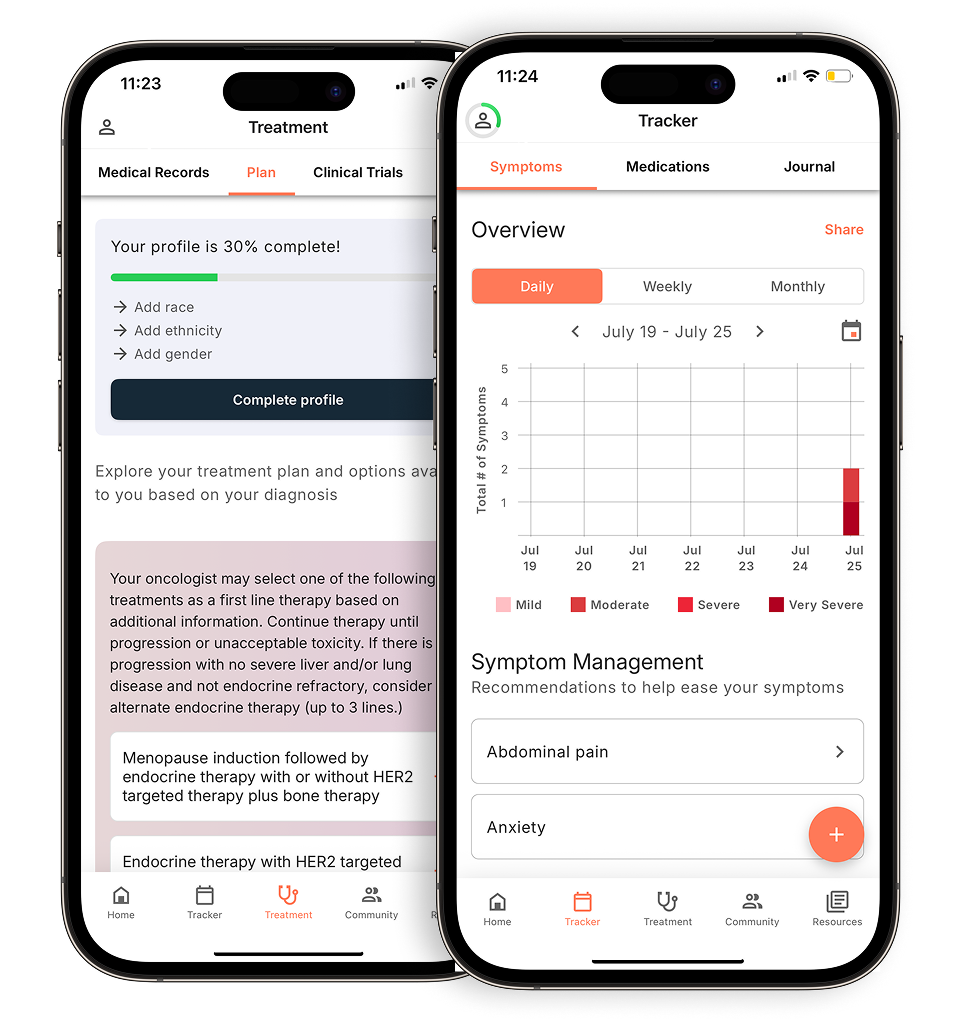
Call your provider if: you notice any of these symptoms lasting more than one to two weeks, worsening over time, or appearing suddenly. Don’t wait for your next scheduled appointment.
The gold standard: how doctors confirm treatment resistance
Confirming that treatment has stopped working requires a structured diagnostic process that gives your care team a complete, evidence-based picture.
Imaging is always the starting point. CT scans, PET scans, and MRI are the primary tools providers use to detect tumor growth or the spread of disease to new sites. These scans reveal changes in tumor size, metabolic activity, and the involvement of lymph nodes or organs, information that bloodwork alone simply can’t provide. When your team suspects progression, imaging is typically the first step ordered.
Tumor markers have a role, but they have real limits. Blood tests that measure tumor markers, substances released by cancer cells, can help your doctor detect changes in your cancer during treatment. However, rising tumor markers are not definitive on their own, so your doctor may use tumor markers along with imaging tests like CT scans or MRI to monitor whether your cancer treatment is working. Marker levels can fluctuate for reasons unrelated to progression, so providers treat them as one piece of a larger puzzle, not a standalone answer.
A new biopsy is often the most important step of all. When providers are evaluating failed breast cancer treatment options, a repeat biopsy of the tumor tissue can reveal whether the cancer’s biological profile has shifted. Hormone receptor status and HER2 status can change over time, meaning the subtype driving growth today may be different from the one identified at diagnosis. Understanding what has changed at the molecular level is what allows your team to select a more targeted next line of therapy.
It’s worth knowing that some patients experience delays in tissue testing that can slow down this process, something worth proactively discussing with your provider. Understanding why resistance develops at the cellular level is what the next section explores.
Why it happens: the science of drug resistance
Treatment resistance isn’t a personal failure, it’s a biological process driven by the same adaptive intelligence that makes cancer so difficult to treat in the first place.
Cancer care guidance for every step of your journey
Get treatment options, clinical trials, and support tailored to your diagnosis--all in one place.
Get started
See treatment options, manage symptoms, and stay informed—all in the app
View treatment options and trials personalized to your diagnosis—plus track progress in real time.
Continue in appCancer cells evolve. Sometimes a breast cancer treatment may stop working and the cancer may start growing. Your doctor will monitor your treatment response and discuss other options with you if this happens. The surviving cells then multiply, producing a tumor population that no longer responds to the original treatment. This is why what worked at diagnosis may stop working months or years later, and it’s one reason many patients ask, how do I know if my breast cancer is spreading, even while actively receiving treatment.
Subtype shifting adds another layer of complexity. A tumor that initially tested as hormone receptor-positive, for example, can lose or gain receptor expression over time. This means the biological profile that guided your original treatment plan may no longer match the tumor you have today. Re-biopsy at progression is increasingly recommended for exactly this reason.
Dosage changes also affect outcomes. When side effects lead to dose reductions or treatment delays, both common and often necessary, the therapeutic pressure on cancer cells can decrease. In practice, this can create windows where resistant cells gain a foothold. That’s not a reason to push through dangerous side effects, but it is a reason to stay in close communication with your oncology team about any modifications to your regimen.
Next steps: navigating your personalized treatment path
When you notice early physical signs of breast cancer treatment failure, the instinct is often to wait and see, but taking a few focused steps now can meaningfully shape what happens next.
The most effective thing you can do is shift from passive observation to active documentation. Start a symptom diary before your next oncology appointment. Note the date, location, duration, and intensity of any new pain, swelling, or fatigue. Patterns that seem minor in isolation often reveal a clearer picture when reviewed alongside your imaging and lab results.
At that appointment, ask your care team specifically about next-generation sequencing (NGS). Genomic profiling for breast cancer can reveal mutations that open the door to targeted therapies, opening doors that standard chemotherapy can’t. If your current provider hasn’t raised this option, it’s a reasonable and well-supported question to ask directly.
Seeking a second opinion at an NCI-Designated Cancer Center is another concrete step, not a sign of distrust in your oncologist. These centers specialize in complex or resistant cases and often have access to emerging therapies and clinical trials that smaller practices don’t.
Finally, tools like Outcomes4Me can help you bring these threads together. By integrating your genetic results and medical records in one place, you’re better equipped to have informed conversations with your care team, and to identify trial matches tied to your specific tumor profile. The takeaways in the next section distill exactly what to act on first.
What you need to know: key takeaways
Recognizing the signs of breast cancer treatment failure early, and knowing how to act on them, can meaningfully shape what comes next.
New or unexplained localized pain, lumps, or swelling are signals worth reporting to your oncologist promptly. That said, these findings require clinical confirmation before drawing any conclusions. Imaging scans and biopsies remain the only definitive ways to determine whether a treatment has stopped working, and they’re also the starting point for identifying what to do next.
Treatment resistance, as covered earlier in this article, is a biological shift rather than a setback in your control. It’s often addressable. Genomic profiling for breast cancer plays a central role here: by analyzing the molecular makeup of a tumor, it can reveal mutations that open the door to targeted therapies that weren’t previously an option. This is how oncology teams identify the most precise next steps for each individual patient.
Clinical trials are another valid, proactive path forward, not a last resort. When matched to your specific genetic data, they can connect you with treatments designed for your tumor’s biology.
Here’s a quick summary of what matters most:
- Report new symptoms promptly – don’t wait for your next scheduled appointment
- Imaging and biopsy confirm resistance – clinical data, not symptoms alone, drives treatment decisions
- Genomic profiling identifies new targets – resistance often reveals actionable mutations
- Clinical trials are a real option – matched to your profile, they expand your choices
- Tools like Outcomes4Me help you manage your clinical data and find personalized trial matches
Personalized access to evidence-based resources puts you in control of navigating your condition, and that’s exactly where the next section picks up.
Regaining control with Outcomes4Me
Outcomes4Me is the only direct-to-patient digital platform that integrates with National Comprehensive Cancer Network® (NCCN®) treatment guidelines. That matters because NCCN guidelines represent the gold standard in oncology care, but they’re written for clinicians, not patients. Outcomes4Me uses AI to translate that clinical evidence into personalized, plain-language guidance you can actually act on.
If treatment stops working, clinical trials are often one of the most meaningful paths forward. Matching with the right trial, though, can feel overwhelming without the right support. Outcomes4Me’s patented AI algorithm identifies clinical trials you may be eligible for based on your specific diagnosis, treatment history, and biomarkers.
Personalized support for real care decisions
Understand your diagnosis, explore clinical trials, and track symptoms--all in one place.
Get started
Compare treatments, prepare for appointments, and track side effects—all in the app
Built for your diagnosis, Outcomes4Me gives you the tools to make confident, informed decisions—right when you need them.
Continue in app