
Understanding maintenance therapy
Finishing chemotherapy doesn’t always mean treatment ends. Maintenance therapy is the phase that follows, a shift from attacking visible disease to keeping it suppressed over the long term.
PARP inhibitor maintenance ovarian cancer therapy actively works to suppress cancer cells that survived platinum-based chemotherapy and blocks their ability to rebuild.
The goal isn’t to shrink a primary tumor, surgery and chemotherapy handle that. The goal is progression-free survival, measuring how long before the cancer starts to grow again.
Identifying who benefits most from PARP inhibitors
PARP enzymes repair single-strand DNA breaks. Blocking them forces cancer cells to rely on a backup repair system called homologous recombination. When that backup is broken, cancer cells accumulate fatal damage.
Homologous recombination deficiency (HRD) is a characteristic that some patients with ovarian cancer have, and it is used to identify who may benefit from PARP inhibitor maintenance therapy. BRCA1 and BRCA2 mutations are a cause of HRD, which is why BRCA mutation PARP inhibitor ovarian cancer response rates are strongest. Platinum-sensitive ovarian cancers may respond to PARP inhibitors because they often involve the same DNA repair defects, such as homologous recombination deficiency, that PARP inhibitors are designed to target.
The Eligibility criteria: testing and timing
Genetic testing may be recommended as part of the diagnostic workup for ovarian cancer to help guide treatment decisions. Germline testing uses blood or saliva to look for inherited mutations; somatic testing examines tumor tissue for mutations the cancer acquired, plus broader HRD scoring.
Maintenance therapy begins after you have responded to platinum-based chemotherapy, once you are eligible to start treatment. Patients whose disease progressed during platinum chemotherapy aren’t considered platinum-sensitive, and the biological rationale for PARP maintenance after platinum chemotherapy for ovarian cancer doesn’t hold in that setting.
How maintenance therapy is given
Here’s where treatment changes character. Chemotherapy means infusion chairs and clinic days. PARP inhibitor maintenance is given orally, tablets or capsules taken at home, every day, without an IV line.
Evidence-based guidance powered by NCCN Guidelines®
Personalized treatment plans shaped by the latest oncology standards—tailored to your diagnosis.
Get started
View your personalized treatment plan in the Outcomes4Me app
Use your diagnosis to unlock personalized NCCN Guidelines®-aligned recommendations.
Continue in app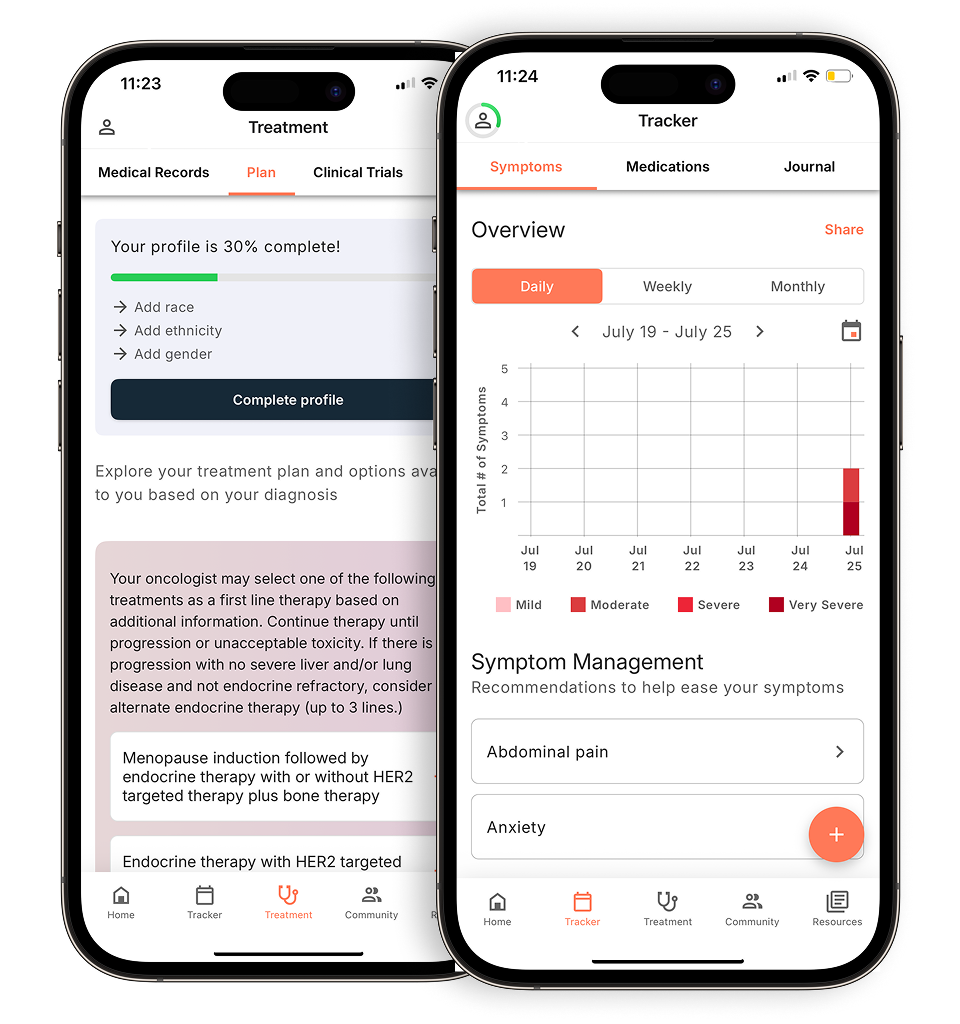
A quick start checklist:
- Confirm whether your drug requires food restrictions or can be taken with meals
- Set a fixed daily time and a phone alarm
- Use a weekly pill organizer and refill it on the same day each week
- Keep a running list of side effects to bring to appointments
- Schedule refills a week before you run out
Duration of PARP inhibitor maintenance varies, with some regimens running a defined span while others continue as long as the disease stays controlled and side effects remain manageable.
Managing your dosing schedule
If you miss a dose, don’t double up, take the next scheduled dose and note the miss for your care team. Consistency matters more than any single tablet.
Anchor the dose to something you already do daily: brushing your teeth, morning coffee, bedtime. Regular blood work confirms that your current dose is safe, and those results often drive whether the dose stays the same or changes.
Long-term monitoring and adjustments
Dose interruptions and reductions are routine, not failure. Many patients settle at a lower dose than they started on and stay there productively for months or years.
Expect frequent visits early, often monthly, with PARP inhibitor maintenance monitoring blood tests checking hemoglobin, platelets, and white cells. Visits typically space out once counts stabilize. Imaging and tumor markers guide whether continuing makes sense.
What the research shows about survival and efficacy
for ovarian cancer consistently shows that maintenance delays recurrence. The size of that delay depends heavily on biomarker status, which is the core argument for precision medicine over uniform treatment.
Patients with BRCA mutations generally see the longest delay with PARP inhibitor maintenance. HRD-positive patients without BRCA mutations see meaningful benefit from PARP inhibitor maintenance. Benefit narrows in HRD-negative disease with PARP inhibitor maintenance.
Does this extend life? Progression-free survival gains from PARP inhibitor maintenance are well established. Overall survival data continue to mature, and your oncologist can explain what current evidence means for your specific situation.
Cancer care guidance for every step of your journey
Get treatment options, clinical trials, and support tailored to your diagnosis--all in one place.
Get started
See treatment options, manage symptoms, and stay informed—all in the app
View treatment options and trials personalized to your diagnosis—plus track progress in real time.
Continue in appFirst-line vs. recurrent maintenance
PARP inhibitor maintenance after first-line chemotherapy applies to newly diagnosed advanced disease, including many patients with stage 3 ovarian cancer, after surgery and platinum chemotherapy produce a complete or partial response.
In the recurrent setting, maintenance follows a second round of platinum chemotherapy in platinum-sensitive relapse. Benefit appears in both settings, but the magnitude of benefit from PARP inhibitor maintenance is typically larger first-line compared to the recurrent setting. HRD-positive ovarian cancer PARP maintenance sits between BRCA-mutated and HRD-negative outcomes.
Limitations and Considerations. When This Isn’t the Right Approach
PARP resistance develops over time. Tumors can restore homologous recombination function or alter drug handling, causing PARP inhibitor resistance. This is expected biology, not a personal failure.
Pre-existing bone marrow conditions are a serious concern, since these drugs suppress blood counts. A history of myelodysplastic syndrome generally rules out PARP inhibitor treatment.
The trade-off is real. Daily fatigue and nausea over months in exchange for delayed recurrence. For some patients, that math works. For others, it doesn’t.
Cost matters too. Long-term oral ovarian cancer therapy carries ongoing out-of-pocket exposure, and coverage varies widely by plan.
Potential side effects
Fatigue, nausea, and anemia are top side effects of PARP inhibitors. Most are manageable with anti-nausea medication, dose adjustment, or timing changes, taking the dose at night, for instance.
Rare but serious risks of PARP inhibitors include myelodysplastic syndrome and acute myeloid leukemia. This is why ongoing blood monitoring continues throughout treatment.
Contact your care team promptly for persistent breathlessness, unexplained bruising or bleeding, fever, or fatigue severe enough to disrupt daily function. These often warrant a pause.
Factors that may limit eligibility
- HRD-negative status. PARP inhibitor maintenance therapy works best in patients whose tumors have homologous recombination deficiency, as identified through biomarker testing, so your care team may weigh observation or other options more heavily. PARP inhibitor maintenance without brca mutation is still possible, eligibility isn’t limited to BRCA carriers.
- Prior PARP exposure. Having already received one of these drugs changes what’s appropriate at a later relapse.
- Organ function. Your doctor will likely want to check your kidney and liver function before you start PARP inhibitor maintenance, since these medications are processed by your body through these organs.
- Unresolved low blood counts after chemotherapy may delay the start.
Common questions about PARP inhibitor maintenance
What’s the best maintenance drug? There isn’t a single answer. Olaparib maintenance ovarian cancer, niraparib maintenance ovarian cancer, and rucaparib maintenance ovarian cancer each have distinct approved indications, dosing patterns, and side effect profiles. The right choice reflects your biomarker status, prior treatment, and blood counts.
What does it cost? Highly variable. Manufacturer patient assistance programs, foundation grants, and specialty pharmacy coordinators can substantially reduce out-of-pocket costs. Ask your care team for a financial navigator early.
Cure or control? In advanced disease, maintenance aims to control, delaying recurrence, not eliminating the possibility of it.
Key Takeaways: Navigating Maintenance in 2026
Ovarian cancer maintenance therapy with PARP inhibitors have become a cornerstone for patients with BRCA mutations or HRD-positive disease who achieved a complete or partial response to platinum chemotherapy. Who benefits from parp inhibitor maintenance comes down to genetic profiling, not a uniform protocol.
PARP inhibitor maintenance is given orally and daily, paired with your doctor may adjust your niraparib dose during maintenance treatment based on how well you tolerate it and how your body responds.
This meaningfully delays recurrence for many patients and can improve ovarian cancer prognosis conversations.
Report side effects early rather than enduring them. Dose adjustments exist precisely so you can stay on treatment longer.
Disclaimer: The information provided in this article is for informational purposes only and is not intended to be a substitute for professional medical advice, diagnosis, or treatment. Outcomes4Me is not acting as your caregiver, and any suggestions or guidance offered should not replace the advice of your healthcare provider or qualified medical professional. Always seek the guidance of your physician or other qualified health provider with any questions you may have regarding a medical condition.
Personalized support for real care decisions
Understand your diagnosis, explore clinical trials, and track symptoms--all in one place.
Get started
Compare treatments, prepare for appointments, and track side effects—all in the app
Built for your diagnosis, Outcomes4Me gives you the tools to make confident, informed decisions—right when you need them.
Continue in app