
PARP inhibitors in ovarian cancer have fundamentally changed what “successful treatment” means by shifting the goal from simply achieving remission to keeping patients cancer-free for as long as possible.
For decades, the standard approach to ovarian cancer leaned heavily on two pillars: surgery to remove as much tumor as possible, and platinum-based chemotherapy to target remaining cancer cells. That combination worked, often well enough to achieve remission. But remission, as many patients come to understand, isn’t the same as staying cancer-free. Ovarian cancer has a well-documented tendency to return, and without a strategy to maintain that response, the window of disease-free time could be frustratingly short.
That’s where the concept of maintenance therapy reshaped the entire treatment model. Rather than ending care after chemotherapy, oncologists can now offer a targeted follow-on phase designed to extend the time before the disease progresses. PARP inhibitors work by exploiting specific vulnerabilities in tumor cells, particularly in patients whose tumors carry BRCA1/2 mutations or show signs of homologous recombination deficiency (HRD). PARP inhibitors represent a significant advancement in how advanced ovarian cancer is managed after first-line treatment.
The measure of success has evolved, too. Progression-free survival (PFS) is used as a primary endpoint in clinical trials of PARP inhibitors for ovarian cancer, such as the ARIEL3 trial of rucaparib maintenance treatment. Understanding your tumor’s biology, including whether genetic testing reveals actionable mutations, is where informed decision-making begins. The sections ahead break down the specific drugs driving this shift and what the trial data actually shows.
Decoding the data: olaparib, niraparib, and rucaparib
Three FDA-approved PARP inhibitors dominate the ovarian cancer landscape today, and while they share a mechanism, their trial profiles, approved indications, and side-effect patterns differ in clinically meaningful ways.
Olaparib (Lynparza) set the benchmark. The SOLO1 trial demonstrated that olaparib delivered a significant improvement in progression-free survival for patients with BRCA-mutated advanced ovarian cancer following first-line platinum-based chemotherapy. That data helped establish PARP inhibitor maintenance as a standard of care, not just an emerging option. Its side-effect profile typically includes fatigue, nausea, and anemia, manageable for most patients but worth tracking closely with your care team. Niraparib (Zejula) broadened the picture. The PRIMA trial showed benefit across a wider patient population, including those without a confirmed BRCA mutation, making niraparib a relevant option regardless of BRCA status. This expanded reach is largely why homologous recombination deficiency testing has become so central to treatment planning, helping identify which patients beyond BRCA-mutated groups are most likely to respond. Niraparib carries a distinct side-effect profile that can include thrombocytopenia (low platelet counts) in addition to the fatigue and nausea common across this drug class.
Evidence-based guidance powered by NCCN Guidelines®
Personalized treatment plans shaped by the latest oncology standards—tailored to your diagnosis.
Get started
View your personalized treatment plan in the Outcomes4Me app
Use your diagnosis to unlock personalized NCCN Guidelines®-aligned recommendations.
Continue in app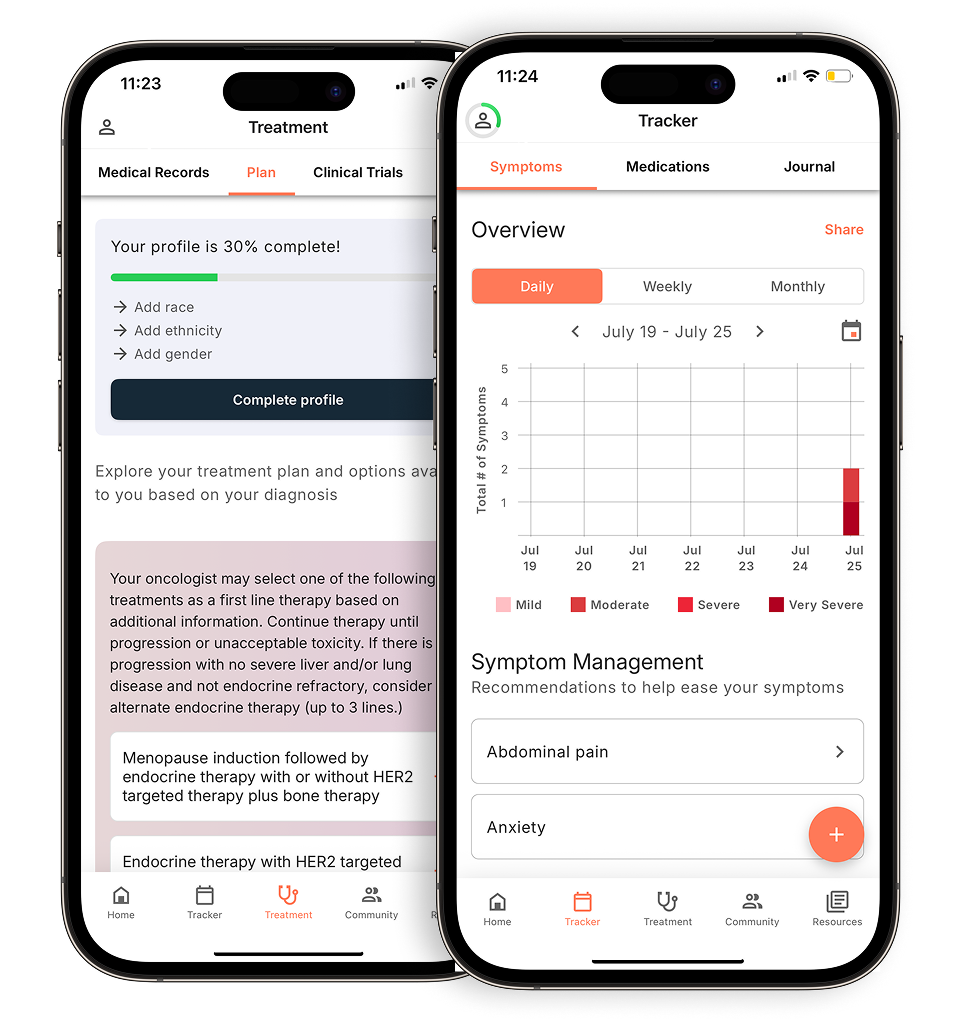
Rucaparib (Rubraca) has shown particular relevance in the recurrent setting. The ARIEL3 trial supported rucaparib’s use as maintenance therapy after response to platinum-based chemotherapy in recurrent ovarian cancer, with benefit observed across multiple biomarker subgroups.
No single drug fits every patient because the right choice depends on mutation status, prior treatment history, and individual tolerance. Understanding what each trial actually measured is a smart starting point for that conversation. That’s why genetic testing and biomarker testing, including HRD testing, matter for guiding ovarian cancer treatment decisions, as both are recommended to help your care team determine the most effective personalized treatment strategy for your situation.
The importance of HRD testing
BRCA mutations are only one piece of the genetic puzzle, and focusing on them alone means some patients who could benefit from PARP inhibitors may be overlooked.
Homologous recombination deficiency (HRD) describes a broader breakdown in a tumor’s ability to repair damaged DNA. Think of it as a “scar” left behind when that repair pathway has failed, regardless of whether a BRCA mutation caused it. HRD testing has expanded eligibility for PARP inhibitors beyond BRCA mutations alone, meaning patients who test BRCA-negative may still qualify for maintenance therapy if their tumor carries HRD-positive markers.
This distinction matters clinically. Trials supporting olaparib and niraparib have consistently shown meaningful progression-free survival benefit in HRD-positive patients, even those without a germline BRCA mutation. Biomarker-defined subgroups are now central to interpreting benefit-risk profiles across PARP inhibitor trials.
Timing is equally critical. Testing should happen early, ideally at or near initial diagnosis, so results are available when the care team begins planning the maintenance phase after first-line chemotherapy. Waiting until recurrence can narrow options significantly. If you’re wondering what testing looks like after an initial clear scan, connecting with your oncology team early is key.
Outcomes4Me helps patients store and track their genetic markers, including HRD status, so that information is organized and accessible when treatment decisions need to be made. As research continues to refine which patients benefit most, that data becomes increasingly important. Understanding HRD is also foundational to grasping how resistance to PARP inhibitors develops and what combination strategies researchers are developing to address it.
Addressing resistance and the future of combination therapy
Even when PARP inhibitors work well initially, resistance remains one of the most pressing challenges in treating HRD-positive ovarian cancer. Understanding why tumors stop responding, and what can be done about it, is now a central focus of the field.
Cancer care guidance for every step of your journey
Get treatment options, clinical trials, and support tailored to your diagnosis--all in one place.
Get started
See treatment options, manage symptoms, and stay informed—all in the app
View treatment options and trials personalized to your diagnosis—plus track progress in real time.
Continue in appResistance doesn’t mean the end of options. Research is actively working to decode the mechanisms behind treatment resistance, including how cancer cells repair DNA through alternative pathways that effectively sidestep PARP inhibitor activity. Clinical evidence suggests that tumors can restore the very DNA repair functions that PARP inhibitors are designed to block, a finding that’s reshaping how researchers approach next-line treatment.
One of the most promising strategies is combining PARP inhibitors with immunotherapy agents or anti-angiogenic drugs, such as bevacizumab. The rationale is that targeting multiple biological pathways simultaneously makes it harder for cancer cells to escape treatment. For patients who want to understand how their genetic profile factors into these decisions, knowing whether you carry a BRCA mutation is often a useful starting point for those conversations with your care team.
Clinical trials are currently the primary route to accessing these next-generation combinations, and enrolling in one may open doors that standard-of-care treatment can’t. Staying informed about resistance patterns also helps patients have more productive conversations with their providers about when to pivot and what to consider next. As research continues to evolve, so do the strategies available, which makes understanding how your body tolerates current treatment just as important as the treatment itself.
Managing side effects and quality of life
Living with PARP inhibitors means balancing real clinical benefits against side effects that can affect your day-to-day life, and knowing what to expect makes that balance easier to manage.
The most common side effects of PARP inhibitors are fatigue, nausea, and anemia, each of which can range from mild to significant depending on the individual. Regular monitoring is essential to catch these issues early and adjust treatment before they escalate. Anemia from PARP inhibitor use can develop gradually and may require blood transfusions or dose modifications if left unaddressed.
Dose adjustments are a routine part of treatment, not a sign that the drug is failing. In practice, many patients reduce their dose at some point during therapy, and data consistently shows that adjusted doses of PARP inhibitors can still deliver strong efficacy. Understanding this upfront can reduce unnecessary anxiety when your provider recommends a change. Research into how ovarian cancer cells develop resistance to PARP inhibitors is ongoing, with scientists exploring different strategies to help overcome or bypass this resistance, and staying on therapy at a tolerable dose is generally preferable to stopping altogether.
Proactive communication with your care team is one of the most effective tools you have. Use your patient portal’s secure messaging to report new or worsening symptoms between appointments, don’t wait for your next scheduled visit. Staying informed and engaged with your care is what allows personalized treatment to work the way it’s designed to.
The bottom line: what you need to know
PARP inhibitors have fundamentally changed what’s possible in ovarian cancer care, but only for patients who understand the tools available to them. Here’s what matters most as you take stock of everything covered in this article.
Genetic testing isn’t optional. Without BRCA and HRD testing, neither you nor your care team can determine whether PARP inhibitors are appropriate for your situation. Understanding BRCA mutations, what testing involves, how results are interpreted with a genetic counselor, and what treatment options may become available, can help guide treatment decisions for ovarian cancer. As advances in genetic testing enable more personalized treatment plans, patients who’ve been tested are the ones positioned to benefit.
Maintenance therapy is the strategy. Niraparib in ovarian cancer is approved specifically as maintenance therapy designed to suppress recurrence after a successful chemotherapy response, not as a standalone cure. The goal is to extend progression-free survival for as long as possible while preserving quality of life.
Resistance doesn’t mean the end of options. Clinical trials are actively investigating combination strategies for patients who’ve developed resistance, and enrolling in one may offer access to therapies not yet available through standard care.
Personalization is where outcomes improve. Matching your specific biomarker profile to current guidelines and active trial data is complex, but it’s exactly the kind of work that the right tools can help you do.
You are the most important person in your treatment team, and that means you don’t have to wait for your provider to bring every option to the table. Ask about genetic testing before your next appointment. If you’ve been diagnosed with advanced ovarian cancer and haven’t had BRCA or HRD testing yet, that conversation needs to happen now.
Watch our discussion with Dr. Beth Karlan for more expert insights into the latest ovarian cancer research.
Disclaimer: The information provided in this article is for informational purposes only and is not intended to be a substitute for professional medical advice, diagnosis, or treatment. Outcomes4Me is not acting as your caregiver, and any suggestions or guidance offered should not replace the advice of your healthcare provider or qualified medical professional. Always seek the guidance of your physician or other qualified health provider with any questions you may have regarding a medical condition.
Personalized support for real care decisions
Understand your diagnosis, explore clinical trials, and track symptoms--all in one place.
Get started
Compare treatments, prepare for appointments, and track side effects—all in the app
Built for your diagnosis, Outcomes4Me gives you the tools to make confident, informed decisions—right when you need them.
Continue in app