With an ovarian cancer diagnosis, you may quickly be faced with important treatment decisions. One question your care team may consider is: Should you have surgery first, or start with chemotherapy?
There isn’t one answer that’s right for everyone.
New findings from an analysis of patients in the GOG-262 clinical trial highlight why treatment decisions for ovarian cancer need to be personalized. The study found that, after accounting for important differences between patients and their cancers, survival was similar for people who had surgery first and those who started with chemotherapy.
One of the most important messages from the research is that the biology and characteristics of a patient’s cancer and the patient’s overall health should help guide the treatment approach.
Surgery first or chemotherapy first?
There are two main ways treatment may begin for people with advanced ovarian cancer.
Some patients have primary debulking surgery (PDS) first. The goal of surgery is to remove as much visible cancer as possible, followed by chemotherapy.
Others begin with neoadjuvant chemotherapy (NAC). This means receiving chemotherapy first, before having surgery. Chemotherapy may help shrink or control the cancer before an operation, followed by surgery and additional treatment as needed.
Both approaches can be appropriate. The question is: Which approach makes the most sense for you?
The two groups of patients were different from the start
In the study, researchers looked at 192 patients treated at centers where both treatment approaches were available.
Evidence-based guidance powered by NCCN Guidelines®
Personalized treatment plans shaped by the latest oncology standards—tailored to your diagnosis.
Get started
View your personalized treatment plan in the Outcomes4Me app
Use your diagnosis to unlock personalized NCCN Guidelines®-aligned recommendations.
Continue in app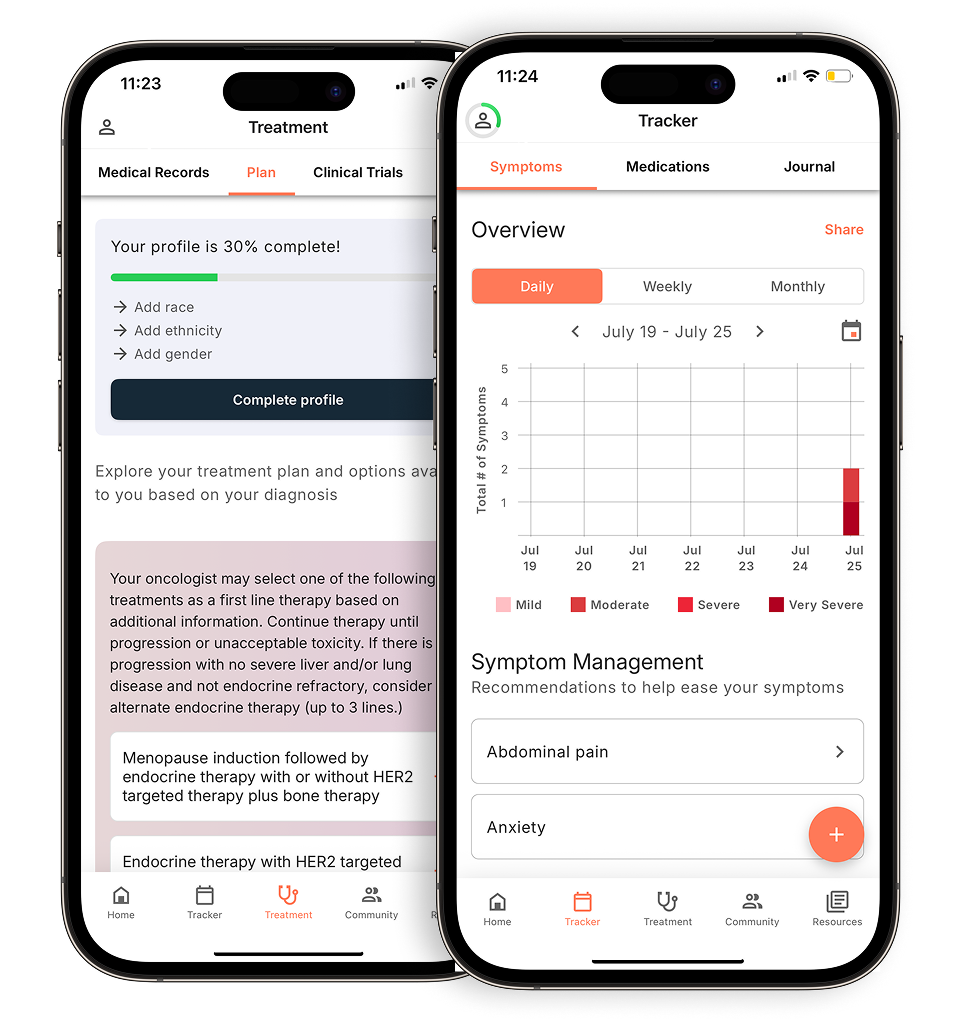
- 62% had surgery first
- 38% started with chemotherapy
At first glance, patients who had surgery first appeared to have somewhat longer survival: 47.8 months compared with 41.9 months for those who received chemotherapy first.
One of the authors of the study, Dr. John K. Chan, points out that looking only at those numbers doesn’t tell the whole story. Patients who started with chemotherapy often had factors that were already associated with a more challenging prognosis, including older age, primary peritoneal cancers, and more advanced disease.
When researchers accounted for these differences, the apparent survival advantage for surgery first was no longer seen.
Why this adjustment matters
This may sound like a technical detail, but it’s one of the most important findings of the study. Patients receiving chemotherapy first were more likely to be older, have stage IV cancer, and have primary peritoneal cancer. All of these factors can independently influence patient outcomes.
As Dr. Chan explained, this suggests that the poorer outcomes were not necessarily caused by starting with chemotherapy. Instead, they may reflect the fact that patients receiving chemotherapy first often had a heavier disease burden from the beginning.
This is an important reminder that when evaluating cancer treatments, who receives a treatment matters just as much as the treatment itself.
Your age, overall health, and tumor characteristics can influence the treatment plan
Age was one of the strongest factors associated with receiving chemotherapy before surgery in this study. More than half of patients ages 70 to 79 received chemotherapy first, compared with fewer than 30% of patients under age 60, but age alone doesn’t tell the whole story.
Older adults can vary widely in their overall health, independence, and ability to tolerate treatment. Dr. Chan emphasized that factors such as functional status and a person’s ability to manage everyday activities may sometimes provide more useful information than age alone.
This is especially important because older adults have historically been underrepresented in many clinical trials.
The study also showed that the type and location of a patient’s cancer influenced which treatment approach they received. A cancer that appears more localized and can potentially be removed may call for a different strategy than cancer that is widespread or difficult to remove safely.
Why there is still debate about surgery first versus chemotherapy first
Despite years of research, there is still no universal agreement about which patients should receive chemotherapy before surgery and which should go directly to surgery.
Treatment practices can vary between countries and cancer centers. Differences in how previous clinical trials were conducted, and questions about how well some findings apply to patients treated have contributed to ongoing debate.
Another challenge is that patients with ovarian cancer are not all the same, making it difficult to create a single set of rules that works for everyone.
What does a personalized approach look like?
The decision about whether to have surgery or chemotherapy first should consider multiple factors, including:
- How far the cancer has spread
- Whether the cancer can be safely and effectively removed with surgery
- The type and location of the cancer
- Your age and overall health
- Your ability to tolerate major surgery
- Your physical functioning and other medical conditions
As research continues, even more information may become part of this decision.
Ongoing prospective clinical trials may help researchers better understand the role of newer treatments and factors such as molecular tumor profiling, BRCA status, and homologous recombination deficiency (HRD).
What this means for patients
It can be helpful to ask why that approach is being recommended for you.
Some helpful questions you might ask include:
- Why are you recommending surgery first or chemotherapy first for me?
- How extensive is my cancer?
- Do you believe my cancer can be removed with surgery right now?
- How does my overall health affect my treatment options?
- Are there characteristics of my cancer that are influencing this recommendation?
- Would getting a second opinion from a gynecologic oncologist be helpful?
Understanding the reasons behind your treatment plan can help you have a more informed conversation with your care team.
Disclaimer: The information provided in this article is for informational purposes only and is not intended to be a substitute for professional medical advice, diagnosis, or treatment. Outcomes4Me is not acting as your caregiver, and any suggestions or guidance offered should not replace the advice of your healthcare provider or qualified medical professional. Always seek the guidance of your physician or other qualified health provider with any questions you may have regarding a medical condition.
Personalized support for real care decisions
Understand your diagnosis, explore clinical trials, and track symptoms--all in one place.
Get started
Compare treatments, prepare for appointments, and track side effects—all in the app
Built for your diagnosis, Outcomes4Me gives you the tools to make confident, informed decisions—right when you need them.
Continue in app