The roadmap: Navigating the ovarian cancer treatment timeline
Understanding what to expect during ovarian cancer treatment starts with recognizing that there’s a predictable structure to your care — even when the diagnosis itself feels anything but predictable.
Most ovarian cancer treatment follows a clear sequence: surgery, chemotherapy, and in many cases, maintenance therapy.
For most patients, treatment begins with debulking surgery, which is a procedure designed to remove as much tumor as possible. The goal is to leave behind the smallest amount of disease, which significantly improves how well chemotherapy works afterward. According to the American Cancer Society, the extent of tumor removal is one of the strongest factors influencing treatment outcomes.
After surgery, your body needs time to heal before it can handle chemotherapy. Chemotherapy is then delivered in cycles, most commonly on a 3-4 week schedule, which gives your body time to recover between rounds. If you’re currently in active treatment, you’re not alone and understanding that rhythm can make each cycle feel more manageable.
Once active treatment wraps up, many patients move into maintenance therapy. PARP inhibitors, for example, are increasingly used to help delay recurrence, particularly in patients with BRCA mutations. It’s also worth knowing that clinical trials for ovarian cancer may be available at any stage (not just as a last resort) and can open doors to emerging therapies worth discussing with your care team.
The sections ahead take a closer look at what each phase of this timeline actually looks and feels like, starting with the surgical experience itself.
The surgical experience: What happens during and after debulking
Debulking surgery is the foundation of ovarian cancer treatment and knowing what to expect in the days that follow can make recovery feel far less overwhelming.
Your hospital stay will likely last between three and seven days, depending on how extensive the surgery is, according to the Mayo Clinic. More complex procedures that involve removing portions of surrounding tissue or organs typically sit at the longer end of that range. Either way, the care team’s priority during that window is managing your comfort and getting you stable enough to transition home safely.
Pain management is something you shouldn’t wait on. In practice, patients who communicate their discomfort early — before pain becomes severe — tend to recover more comfortably. Don’t feel like you’re being a burden by asking; your providers expect it, and staying ahead of pain is a clinical goal, not a personal preference.
Here’s what’s typically on the agenda during your hospital stay:
Evidence-based guidance powered by NCCN Guidelines®
Personalized treatment plans shaped by the latest oncology standards—tailored to your diagnosis.
Get started
View your personalized treatment plan in the Outcomes4Me app
Use your diagnosis to unlock personalized NCCN Guidelines®-aligned recommendations.
Continue in app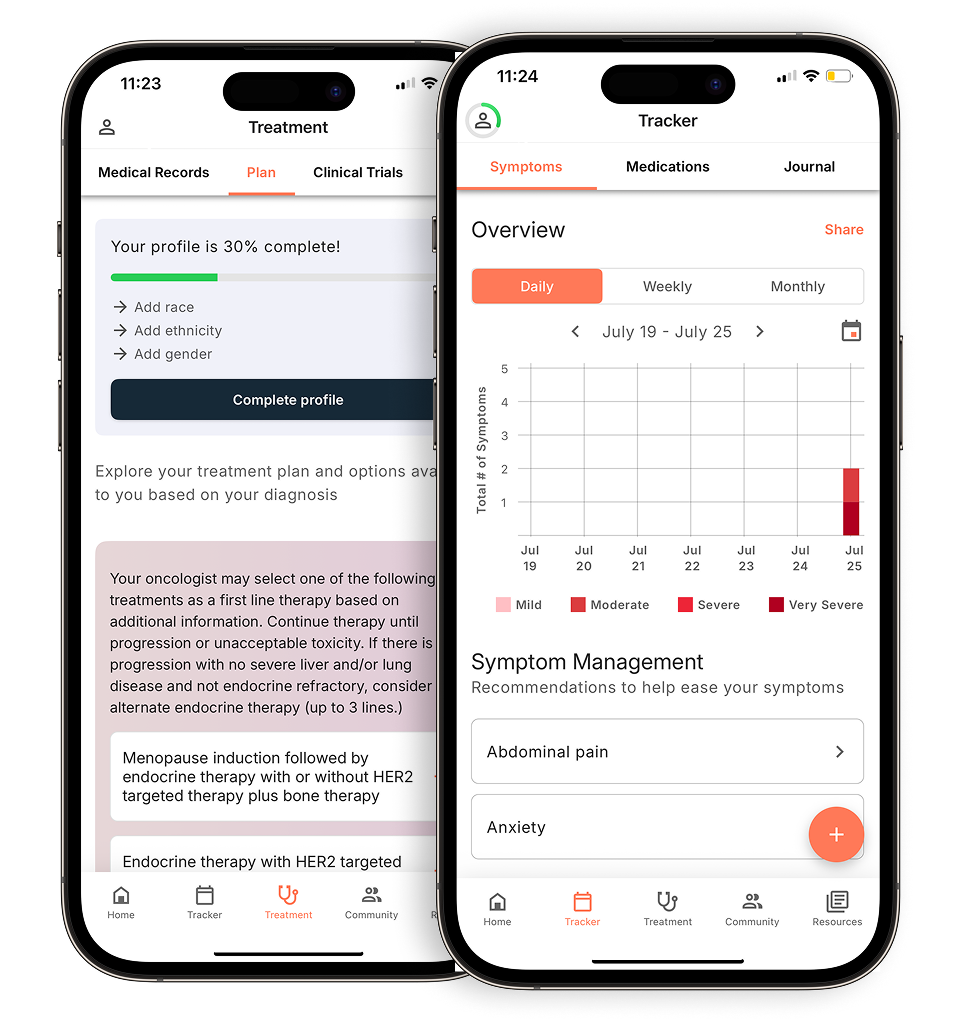
- Early movement: Walking the hallways, even short distances, is actively encouraged within the first day or two to reduce the risk of blood clots.
- Monitoring: Your care team will track vitals, wound healing, and your ability to eat and move independently before discharge.
- Pathology results: Tissue removed during surgery is sent to a lab, and the resulting report becomes the blueprint for your personalized chemotherapy plan, including decisions around drug combinations and dosing.
Pro-tip: Ask your provider when you can expect the pathology results before you leave the hospital. Understanding the timeline helps you prepare emotionally and logistically for the next phase of care.
That pathology report carries real weight. It informs your oncologist’s decisions about ovarian cancer chemotherapy side effects you may encounter, which drugs are most appropriate, and whether targeted therapies might be an option for you.
With the surgical phase behind you, the focus shifts to what treatment actually looks like day to day, starting with your first infusion appointment.
Infusion day: The reality of chemotherapy cycles
Chemotherapy day follows a predictable structure and knowing that structure in advance can make the experience far less daunting than the unknown.
Your infusion day begins well before the first drug enters your IV. Blood work comes first, so your care team can confirm your white blood cell counts are at a safe level to proceed. If counts are too low, treatment may be delayed by a week. This is a normal, protective measure, not a setback.
Once blood work clears, you’ll receive pre-medications: anti-nausea drugs and steroids delivered through your IV before the actual chemotherapy begins. These help your body tolerate the treatment and reduce the risk of an allergic reaction. The full session (pre-meds plus chemo)vtypically runs three to six hours, so comfort matters. A warm blanket, headphones, snacks, and something to watch or read can make a real difference, especially in those early cycles when you’re still settling into the routine.
Hydration is one of the most practical tools available. Aim for two to three liters of water the day before and the day of each infusion to support kidney function and help flush the drugs through your system. Many patients who are still recovering from ovarian cancer surgery find this easier said than done, but small, steady sips throughout the day count.
It’s worth noting that taxane-based chemotherapy drugs, which are commonly used in ovarian cancer treatment, often cause hair loss starting two to three weeks after the first cycle. Knowing this timeline helps you prepare, practically and emotionally. Connecting with others who are navigating similar chemo side effects can also provide a grounded, real-world perspective that clinical guides don’t always capture.
Cancer care guidance for every step of your journey
Get treatment options, clinical trials, and support tailored to your diagnosis--all in one place.
Get started
See treatment options, manage symptoms, and stay informed—all in the app
View treatment options and trials personalized to your diagnosis—plus track progress in real time.
Continue in appManaging the ‘invisible’ side effects: Fatigue and chemo brain
Some of the hardest parts of the ovarian cancer treatment timeline aren’t visible on a scan; they show up in how you feel, think, and function every day.
Cancer-related fatigue is fundamentally different from ordinary tiredness. It’s a heavy, whole-body exhaustion that doesn’t improve much with rest and typically peaks around three to five days after each infusion before gradually lifting. Unlike the tiredness you might feel after a long day, this fatigue can make even routine tasks feel impossible. What helps, counterintuitively, is gentle movement; research shows that even 10 minutes of light walking can meaningfully reduce cancer-related fatigue. Pacing yourself and scheduling rest before you feel depleted tends to be far more effective than pushing through.
“Chemo brain” is a real, recognized side effect that includes trouble finding words mid-sentence, difficulty multitasking, and gaps in short-term memory. It can feel disorienting, especially if cognitive sharpness is central to your work or daily identity. Strategies like keeping written notes, using phone reminders, and reducing cognitive load during high-fatigue windows can help you adapt. It’s worth discussing openly with your care team, because it’s often underreported.
One symptom that should never wait for your next scheduled appointment is peripheral neuropathy, which is tingling, numbness, or pain in the hands or feet. Reporting it promptly gives your oncologist the chance to adjust your regimen before the symptom becomes more difficult to manage.
Palliative care is not end-of-life care. It’s expert symptom management, and it’s available to you now. A palliative care specialist works alongside your oncologist to address fatigue, pain, neuropathy, and cognitive symptoms with dedicated focus. Asking for a referral early is a sign of informed, proactive self-advocacy. These specialists often have tools and techniques that a busy oncology team simply doesn’t have bandwidth to provide.
Managing these side effects well is its own clinical skill and it connects directly to how you’ll respond to everything coming next in your treatment, including options that may be more personalized than you’d expect.
The power of personalization: genetics and targeted therapies
Knowing your biomarker status directly determines which therapies you qualify for. Genetic testing looks at inherited mutations, while somatic (tumor) testing reveals homologous recombination deficiency (HRD) status, a marker that shows whether your cancer has a specific DNA-repair weakness. Patients with these markers may qualify for PARP inhibitors, a class of targeted therapy that has fundamentally changed maintenance treatment, according to the Ovarian Cancer Research Alliance.
Unlike standard chemotherapy infusions, PARP inhibitors are typically oral pills taken at home. This shifts the maintenance phase considerably; fewer clinic visits, more flexibility, but also a new set of responsibilities around adherence and side effect monitoring. Some patients stay on maintenance therapy for two to three years or longer, making it a sustained part of daily life rather than a short-term intervention.
Clinical trials have also shifted in how they fit into the treatment picture. They’re not reserved as a last resort. They’re increasingly the fastest route to cutting-edge personalized medicine, and asking about them at diagnosis rather than recurrence is now considered best practice.
Keeping your genetic results organized matters more than most patients realize. Accurate, accessible records make second opinions smoother and improve your chances of matching with trials that require specific pathology criteria. As the next section will outline, having this data in one place is central to advocating effectively for yourself throughout care.
What you need to know: Key takeaways for your treatment
Navigating ovarian cancer therapies is complex, but understanding your options clearly is one of the most powerful things you can do. As Outcomes4Me’s mission reflects, empowered patients who understand their treatment options often report lower levels of anxiety. That empowerment starts with having the right information in the right place.
Treatment is a long-term commitment, not a single event. Pacing your energy across surgery, chemotherapy, and maintenance therapy matters as much as any clinical decision. Accept help with daily chores, rest when you need to, and communicate early. Don’t wait until side effects like nausea or neuropathy become severe before telling your care team. Early reporting gives your nurses room to adjust and intervene.
Your data is your strongest advocate. Tracking CA-125 levels, genetic markers, and pathology results in one secure place means you’re always prepared for the next conversation with your provider. If you carry a BRCA1, BRCA2, or HRD mutation, knowing how PARP inhibitors fit into your care can open doors to targeted maintenance options that a standard summary might not highlight.
Clinical trials aren’t a last resort. Ask your provider about trials matched to your specific pathology at your very first treatment planning appointment, and revisit that conversation as your care evolves. According to OCRA, treatment decisions depend heavily on stage, cell type, and individual health factors, which is exactly why personalized tools matter.
Download the Outcomes4Me app to connect with other people living with ovarian cancer. You don’t have to make sense of this alone. we’re here to help you navigate every step with clarity and confidence.
Personalized support for real care decisions
Understand your diagnosis, explore clinical trials, and track symptoms--all in one place.
Get started
Compare treatments, prepare for appointments, and track side effects—all in the app
Built for your diagnosis, Outcomes4Me gives you the tools to make confident, informed decisions—right when you need them.
Continue in app