
Navigating your first treatment decisions after a multiple myeloma diagnosis
A multiple myeloma diagnosis changes everything, and the weeks that follow can feel overwhelming, even when you’re surrounded by a capable medical team. You’re absorbing a life-altering reality while being asked to make complex, time-sensitive decisions about your care. That tension is real, and it’s okay to feel it.
What you decide in these early weeks matters more than many patients realize. The treatment path chosen at diagnosis — particularly whether you pursue intensive therapy, which drug combinations to use, and how aggressively to target remission — can shape your long-term outcomes in meaningful ways. There are many treatment options available for multiple myeloma, with new ones emerging every year to help manage the disease, making informed decision-making both more empowering and more complex than ever before.
This article walks you through the core decisions you’ll likely face, starting with how your care team determines which treatment approach fits your specific situation. You’ll find clear explanations of what factors influence eligibility for intensive therapy, what frontline regimens typically look like, and how newer options — including innovative approaches like CAR T-cell therapy being studied for patients with high-risk smoldering multiple myeloma, an early form of the disease that can progress to active multiple myeloma — are reshaping what’s possible.
Taking an active role in these conversations with your care team isn’t just encouraged, it’s one of the most consequential steps you can take. The goal is to help you move forward with clarity. The first step is understanding what shapes your eligibility for the most intensive treatment options available.
Step 1: Determining your ‘fitness’ for intensive therapy
One of the first, and most consequential, decisions your care team will make is whether you’re a candidate for a stem cell transplant (SCT), which directly shapes how your chemotherapy for multiple myeloma is sequenced and structured.
Transplant eligibility isn’t solely about age, it’s a composite picture of your overall health.
According to the National Comprehensive Cancer Network (NCCN) Guidelines, patients generally under 70 years old with good organ function are considered for autologous stem cell transplants. However, age is only one factor. Your care team will also evaluate:
- Fitness level: Performance status, how well you manage daily activities, signals whether your body can tolerate intensive treatment.
- Kidney function: Impaired kidneys affect how certain drugs are processed and can shift which therapies are safe to use.
- Heart and lung health: Organ reserve matters when assessing recovery capacity after high-dose therapy.
These assessments translate into two distinct treatment pathways. Transplant-eligible patients typically receive induction therapy first, followed by high-dose chemotherapy and stem cell rescue. Patients ineligible for transplant, whether due to age, comorbidities, or reduced organ function, follow an equally structured but less intensive regimen, often with continuous therapy rather than a transplant endpoint. Neither pathway is inferior; they’re designed to match treatment intensity to what your body can safely support.
Evidence-based guidance powered by NCCN Guidelines®
Personalized treatment plans shaped by the latest oncology standards—tailored to your diagnosis.
Get started
View your personalized treatment plan in the Outcomes4Me app
Use your diagnosis to unlock personalized NCCN Guidelines®-aligned recommendations.
Continue in app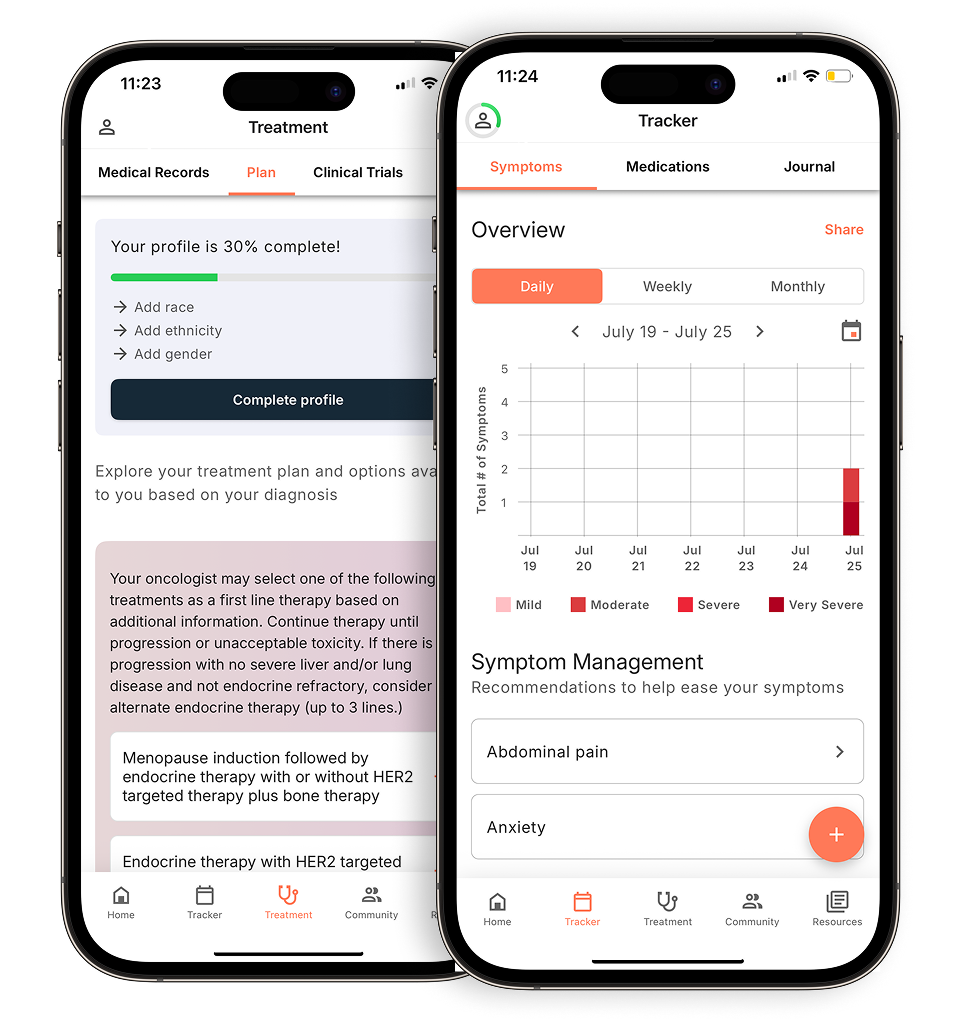
It’s worth noting that eligibility isn’t always a hard boundary. Some patients initially deemed ineligible become candidates after their overall health improves during early treatment. If you’re uncertain where you stand, sharing your questions with others who’ve navigated this same decision can help you go into those conversations with your provider better prepared.
Understanding your eligibility status sets the foundation for everything that follows, including the induction therapy your team will likely recommend as the first active phase of treatment.
Step 2: Understanding induction therapy (the first 3–6 months)
Induction therapy is the foundation of initial multiple myeloma treatment, the phase designed to reduce the tumor burden in your body as quickly and effectively as possible.
Induction therapy isn’t a single drug; it’s a precisely combined regimen aimed at attacking myeloma cells through multiple mechanisms at once. As the Mayo Clinic notes, these regimens typically combine proteasome inhibitors, immunomodulatory drugs, and steroids, a strategy that’s proven more effective than any single agent alone. For patients whose multiple myeloma symptoms prompted a diagnosis, starting this phase promptly can make a meaningful difference in outcomes.
Triplet versus quad therapy. For years, three-drug combinations, known as triplet regimens, were the standard of care for newly diagnosed patients. Today, four-drug combinations (quad therapy) are increasingly used, particularly for transplant-eligible patients. The International Myeloma Foundation outlines how quad regimens now represent a leading approach in frontline treatment, reflecting the field’s push toward deeper, more durable responses from the start.
The goal is MRD negativity. Depth of response matters enormously in multiple myeloma. The benchmark that oncologists are increasingly targeting is Minimal Residual Disease (MRD) negativity, meaning no detectable myeloma cells remain using highly sensitive testing. Reaching MRD negativity during or after induction is associated with longer remissions, though it’s not yet a universal treatment endpoint for every patient. Your care team will monitor your response closely throughout this phase.
Understanding what induction therapy is working toward naturally leads to a deeper question: what does your personal definition of success look like? That’s where defining your treatment goals becomes essential.
Step 3: Setting your treatment goals
Clarifying what you want from multiple myeloma treatment is one of the most empowering steps you can take early in your care.
Your goals shape every decision that follows, from which drug regimen your team recommends to how aggressively they pursue remission. Yet many patients don’t realize they have a voice in defining those goals. In practice, treatment objectives fall into a few broad categories:
- Deep, sustained remission, reducing disease to undetectable levels, often the aim for transplant-eligible patients working through induction therapy
- Symptom management and quality of life, prioritizing day-to-day comfort, especially relevant for patients managing other health conditions
- Bridging therapy to transplant, using induction therapy to reduce tumor burden before a stem cell procedure, as covered in the previous section
- Long-term disease control, keeping myeloma stable over years, even if complete remission isn’t the primary target
No single goal is the “right” one. What matters is that your goal reflects your values, your lifestyle, and what you’re willing to tolerate in terms of treatment intensity and side effects.
Cancer care guidance for every step of your journey
Get treatment options, clinical trials, and support tailored to your diagnosis--all in one place.
Get started
See treatment options, manage symptoms, and stay informed—all in the app
View treatment options and trials personalized to your diagnosis—plus track progress in real time.
Continue in appOpen dialogue with your care team facilitates alignment. According to HealthTree patient advocacy resources, becoming an informed and educated patient through strategies such as consulting with a myeloma specialist, getting the right diagnostic tests, and connecting with experienced patients can help reduce anxiety after a multiple myeloma diagnosis. Bring your priorities to appointments in writing if it helps, specifics like work commitments, caregiving responsibilities, or concerns about certain side effects give your oncologist the context to tailor recommendations.
It’s also worth acknowledging that goals can shift. What feels like the right approach today may evolve as treatment progresses, your response data comes in, or your circumstances change. Building this kind of honest, ongoing conversation with your providers, rather than a one-time discussion, creates a foundation for better decision-making at every stage.
Once you’ve started thinking through your goals, the natural next step is knowing exactly what to ask your oncology team to bring those goals to life.
Step 4: Questions to ask your oncology team
Asking the right questions is one of the most practical tools you have when navigating early treatment decisions for multiple myeloma. Knowing what to ask, and when, transforms appointments from passive check-ins into productive conversations that directly shape your care.
Before your next visit, it helps to understand that multiple myeloma is a complex blood cancer, and the phrase “what is multiple myeloma” can mean something different depending on your specific subtype, stage, and genetic markers. That context matters when you’re evaluating options with your care team.
The questions you bring to your appointments are as important as the answers you receive.
Start with treatment options. Ask your oncologist which regimen they’re recommending and why it fits your specific situation. Ask whether you’re eligible for a stem cell transplant, and if so, when that decision needs to be made. It’s also worth asking how your treatment plan might change if you respond well, or if you don’t.
Side effects and long-term management deserve equal attention. Common questions to raise include: What side effects should I expect, and how will they be managed? Will this treatment affect my daily routine, my ability to work, or my energy levels? Are there steps I can take now to protect my bone health during treatment? And importantly, what does maintenance therapy look like after induction?
Finally, ask about who is guiding your care. Ask directly: Is there a myeloma specialist involved in my case, or should I request a referral?
These conversations set the foundation for what’s ahead, and seeking a second opinion from a dedicated specialist is a natural next step worth exploring.
Step 5: The role of second opinions and specialists
Seeking a second opinion after a multiple myeloma diagnosis isn’t a sign of distrust, it’s one of the most informed steps you can take for your health. Multiple myeloma is a complex, heterogeneous disease, and treatment decisions made early can have lasting consequences. Getting a second opinion from a myeloma specialist can meaningfully change your treatment plan, and potentially your outcomes.
Second opinions matter because not every oncologist has deep, day-to-day experience with multiple myeloma. A general hematologist-oncologist may be excellent, but myeloma is a niche enough disease that specialists at dedicated cancer centers often have access to a wider range of clinical trials, novel drug combinations, and up-to-date protocols. Starting treatment quickly after a multiple myeloma diagnosis is important to help you achieve your best outcome. Working with your care team to determine a treatment plan designed for your specific diagnosis can help you understand what options are available.
Myeloma specialists, typically found at academic medical centers or NCI-designated cancer centers, can offer tailored treatment plans based on your specific cytogenetic risk profile, organ function, and eligibility for stem cell transplant. They’re also more likely to flag whether enrollment in a clinical trial might be appropriate for your situation. Dana-Farber Cancer Institute notes that treatment is highly individualized, reinforcing why expertise in this specific disease matters so much at the outset.
Advocating for your own care can feel uncomfortable, but it’s entirely appropriate. You can ask your current oncologist for a referral, or contact a myeloma center directly. Many offer remote or telehealth second opinion consultations, removing geographic barriers. Even if your final care is delivered locally, having a specialist review your plan gives you greater confidence in the path forward.
As you internalize these steps, from staging and goal-setting to asking the right questions and consulting specialists, the next section brings it all together with the key takeaways every newly diagnosed patient should carry forward.
Key takeaways for newly diagnosed patients
The decisions you make early in your multiple myeloma diagnosis can meaningfully shape your treatment path, and being informed is your strongest asset heading into those conversations.
The previous sections of this article have walked you through the clinical landscape, from induction therapy to second opinions. Here’s what to carry forward:
- Understand your transplant eligibility early. Whether you’re a candidate for autologous stem cell transplant affects how your entire treatment plan is structured. Understanding what to expect from transplant, from hospitalization to recovery, helps you prepare practically and emotionally.
- Know your induction therapy goals. Induction isn’t just about reducing disease burden; it’s about achieving the deepest possible response ahead of potential consolidation. Ask your oncology team what “treatment success” looks like for your specific case.
- Come prepared with questions. Targeted, specific questions help you get the most from every oncology appointment. Focus on your cytogenetic profile, measurable residual disease targets, and what triggers a change in your current regimen.
- Consider a second opinion from a myeloma specialist. As noted by patient advocates and clinical experts alike, myeloma is complex enough that subspecialty input, ideally from a high-volume center, can make a real difference in treatment planning.
Disclaimer: The information provided in this article is for informational purposes only and is not intended to be a substitute for professional medical advice, diagnosis, or treatment. Outcomes4Me is not acting as your caregiver, and any suggestions or guidance offered should not replace the advice of your healthcare provider or qualified medical professional. Always seek the guidance of your physician or other qualified health provider with any questions you may have regarding a medical condition.
Personalized support for real care decisions
Understand your diagnosis, explore clinical trials, and track symptoms--all in one place.
Get started
Compare treatments, prepare for appointments, and track side effects—all in the app
Built for your diagnosis, Outcomes4Me gives you the tools to make confident, informed decisions—right when you need them.
Continue in app