Most people diagnosed with renal cell (kidney) cancer understandably focus entirely on getting through treatment. Data reveals there’s something that gets overlooked: heart disease can quietly become the bigger threat.
Research from the Massey Cancer Center found that younger kidney cancer survivors face significant cardiovascular risk, challenging the assumption that age is the deciding factor. Prioritizing heart health after renal cell (kidney) cancer is now central to a medical discipline called cardio-oncology, a field dedicated to understanding exactly how cancer and cardiovascular disease intersect.
How renal cell (kidney) cancer can influence heart health
The connection between renal cell (kidney) cancer and cardiovascular risk is biological. Renal cell (kidney) cancer survivors face a 2.7-fold increased risk of cardiovascular disease within the first six months of diagnosis, dropping to a still-elevated 1.77-fold risk after one year. That opening window is critical, and it often goes unmonitored.
Part of what makes this connection so persistent is the overlap in risk factors. Hypertension, obesity, and type 2 diabetes are leading contributors to both renal cell (kidney) cancer and heart disease. When you have a nephrectomy (surgical removal of the kidney), the cardiovascular burden compounds further. When one kidney is removed or partially removed, the remaining kidney compensates under increased load, which can destabilize blood pressure regulation and place additional strain on the heart over time.
Evidence-based guidance powered by NCCN Guidelines®
Personalized treatment plans shaped by the latest oncology standards—tailored to your diagnosis.
Get started
View your personalized treatment plan in the Outcomes4Me app
Use your diagnosis to unlock personalized NCCN Guidelines®-aligned recommendations.
Continue in app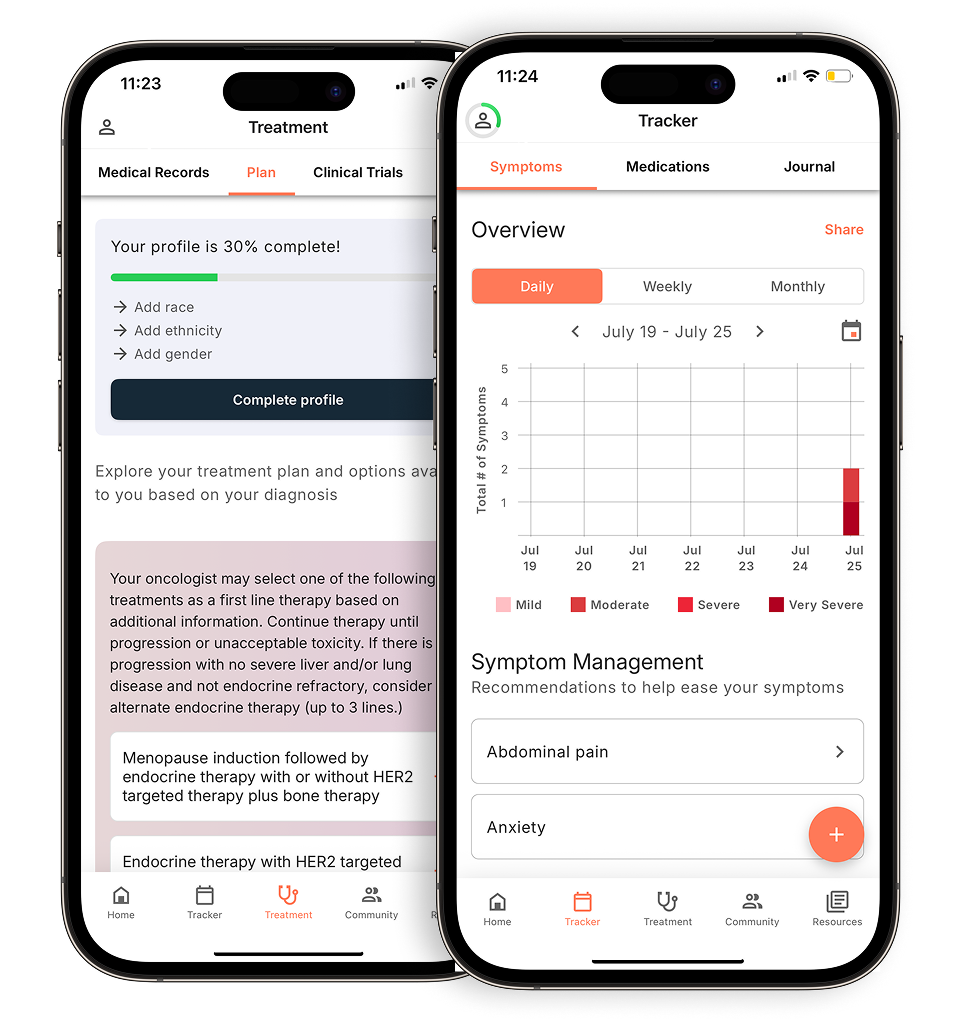
What happens when the treatments designed to fight the cancer also stress the heart?
Modern renal cell (kidney) cancer treatments and the heart
The drugs that treat renal cell (kidney) cancer can strain the heart. Understanding this tradeoff is central to cardio-oncology for renal cell (kidney) cancer patients and survivors. It starts with knowing what these treatments actually do to your cardiovascular system.
Tyrosine kinase inhibitors (TKIs), immune checkpoint inhibitors (ICIs), and vascular endothelial growth factor (VEGF) inhibitors have all played a role in transforming renal cell (kidney) cancer outcomes, but they each come with cardiovascular risks.
TKIs and VEGF inhibitors can raise blood pressure, increase the risk of blood clots, and, in some cases, weaken the heart muscle, making it harder for the heart to pump effectively. ICIs, while often highly effective, can trigger inflammation in the heart muscle or surrounding tissues, a rare but serious side effect known as myocarditis. Since these treatments can affect the heart in different ways, careful cardiovascular monitoring before, during, and after treatment is an important part of care. By understanding these potential risks early, patients and their healthcare teams can take steps to protect heart health while still benefiting from the most effective renal cell (kidney) cancer therapies available.
What’s particularly striking is how these side effects are also affecting younger patients, suggesting that age alone may not be a reliable predictor of cardiovascular risk during renal cell (kidney) cancer treatment, and that all patients, regardless of age, may benefit from proactive heart monitoring and individualized risk assessment.
The cardio-oncology checklist: Questions for your team
Baseline monitoring can help you understand your cardiovascular health status before treatment begins. Bring these questions to your oncology team:
- Should I get a baseline EKG or echocardiogram before starting treatment?
- What’s my personal cardiovascular risk profile going into treatment?
- Can you refer me to a cardio-oncologist?
- Should I be monitoring my blood pressure at home, and what numbers should concern me?
- How will we track any changes in my heart function throughout treatment?
- What symptoms should prompt me to call your office immediately?
Proactive communication with your care team is one of the most powerful tools you have. The lifestyle habits that support your heart during treatment and what you can actively do every day are equally important.
Habits for a heart-healthy recovery
The DASH diet (Dietary Approaches to Stop Hypertension) is especially well-suited for people with renal cell (kidney) cancer because it directly manages blood pressure spikes. Here are some key principles of this approach:
- Limit sodium and fatty foods
- Prioritize whole foods like fruits, vegetables, legumes, and whole grains
- Cut processed meats and packaged snacks
Exercise as medicine
Exercise oncology is a growing field showing that structured, moderate movement can reduce both fatigue and the cardiovascular strain associated with cancer treatment. Even 30-minute walks five days a week can meaningfully improve heart function over time.
- Start with a low-impact activity like walking
- Aim for 150 minutes of moderate exercise weekly
- Always clear new routines with your care team first
The questions you ask your care team, the habits you build between appointments, and the checkups you prioritize all add up. Heart health isn’t a secondary concern for kidney cancer survivors; it’s a core pillar of long-term survival.
Get expert insights on navigating a renal cell (kidney) cancer diagnosis and watch our full webinar discussion with Dana-Farber Cancer Institute’s Dr. Toni Choueiri.
Personalized support for real care decisions
Understand your diagnosis, explore clinical trials, and track symptoms--all in one place.
Get started
Compare treatments, prepare for appointments, and track side effects—all in the app
Built for your diagnosis, Outcomes4Me gives you the tools to make confident, informed decisions—right when you need them.
Continue in app