
Understanding the role of aromatase inhibitors in cancer care
If you’re weighing whether you should take aromatase inhibitors, understanding exactly what these medications do, and why the evidence behind them matters, is the right place to start.
Aromatase inhibitors (AIs) are a class of hormone therapy prescribed to women with hormone receptor-positive breast cancer, including both premenopausal and postmenopausal patients. They work by blocking the enzyme aromatase, which the body uses to produce estrogen. By lowering estrogen levels, AIs starve hormone-sensitive tumors of the signal they need to grow and spread. The three primary AIs your care team may recommend are anastrozole, letrozole, and exemestane, each with a comparable evidence base but slightly different side effect profiles.
The standard treatment duration has historically been five years, but clinical research increasingly supports extending therapy to ten years for patients at higher recurrence risk. That shift reflects a growing body of survival data showing that longer AI duration can meaningfully reduce late relapse, particularly in the years beyond the initial five-year mark.
The goal is to reduce recurrence risk and improve long-term survival. The real-world picture is complex. Adherence rates, side effect burden, and individual risk factors all shape how much benefit a patient actually receives. Survival data reveals what stopping early actually costs.
Survival and recurrence: what the clinical numbers reveal
Aromatase inhibitors reduce the 10-year risk of breast cancer recurrence by approximately 40% compared to no hormone therapy, a benchmark that anchors most conversations about whether to continue or modify this treatment.
That headline figure benefits from some unpacking. The absolute risk reduction tells a more nuanced story. Extended letrozole therapy after initial aromatase inhibitor treatment resulted in a statistically significant 29% reduction in the risk of breast cancer recurrence or opposite breast cancer, though it did not improve overall survival. When weighing 5 years versus 10 years of aromatase inhibitor therapy, these incremental gains matter and compound over time, particularly for higher-risk disease.
Recurrence versus mortality: The impact on recurrence is meaningful, but in premenopausal patients at low or intermediate risk of recurrence, the benefit of aromatase inhibitors plus ovarian suppression on freedom from distant recurrence is more modest compared to high-risk patients. This distinction matters when you’re discussing risk tolerance with your care team. Reducing recurrence doesn’t always translate directly into equivalent mortality benefit. Worth raising this caveat openly with your provider.
Patients who complete the full five-year course consistently show stronger long-term outcomes than those who stop early, according to available data. The next section examines that outcome gap in depth.
The impact of early discontinuation on long-term outcomes
Studies show that continuing aromatase inhibitor therapy beyond the standard five-year course can reduce the risk of breast cancer recurrence, suggesting that completing the recommended treatment course may be important for recurrence prevention.
Aromatase inhibitor-associated joint pain is a common side effect that leads some patients to stop taking their medication early, driven by concerns about quality of life and musculoskeletal symptoms. Some research suggests that patients who discontinue therapy before 12 months may have different recurrence patterns than those who continue into the two- to three-year range. Your care team can discuss how treatment duration may affect your individual outlook.
For patients who decline endocrine therapy entirely, recurrence rates can be substantially higher, particularly in hormone receptor-positive tumors where estrogen fuels cancer cell growth. In practice, this translates to a meaningful difference in long-term survival outcomes for a population that already benefits significantly from treatment.
Evidence-based guidance powered by NCCN Guidelines®
Personalized treatment plans shaped by the latest oncology standards—tailored to your diagnosis.
Get started
View your personalized treatment plan in the Outcomes4Me app
Use your diagnosis to unlock personalized NCCN Guidelines®-aligned recommendations.
Continue in app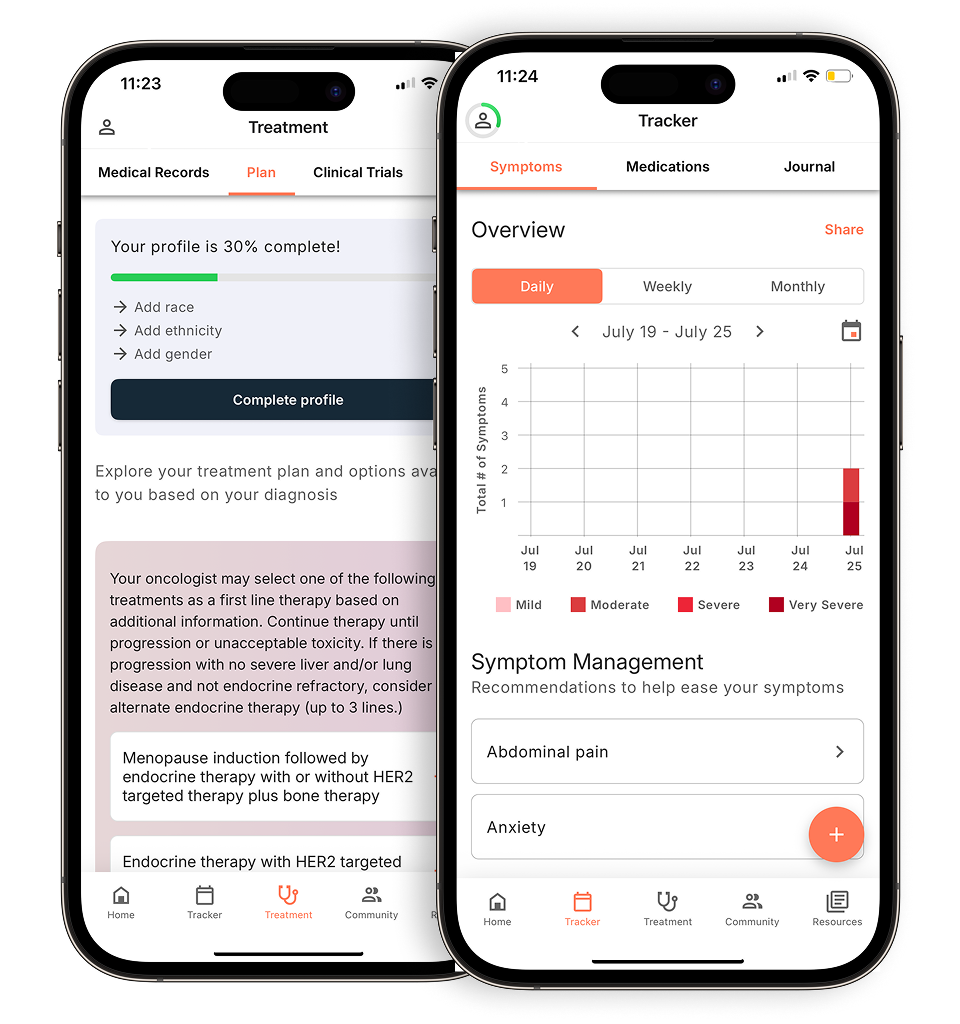
Before making any decision about stopping aromatase inhibitor therapy, it’s important to discuss your individual risk factors with your care team, including your age, lymph node status at diagnosis, existing health conditions, and how well you tolerated the first five years of treatment. Side effects remain a powerful driver of early discontinuation. The tension between long-term protection and daily quality of life deserves close examination.
Common reasons for declining or stopping hormone therapy
Musculoskeletal pain is a significant reason some patients consider stopping aromatase inhibitors early, with about one in five women experiencing pain severe enough to prompt consideration of switching medications or discontinuing therapy.
Aromatase inhibitor-associated musculoskeletal syndrome (AIMSS) affects a significant portion of patients and is frequently cited as a driver of early discontinuation. The discomfort, stiffness, joint aching, and reduced grip strength can interfere with daily routines in ways that feel impossible to push through, particularly over a five- to ten-year course of treatment.
Beyond joint pain, the quality-of-life trade-off is genuinely complex. Aromatase inhibitor therapy can cause side effects that may affect your quality of life, including hot flashes, sleep disruption, and changes in bone density. Cardiovascular considerations add another layer, especially for patients managing other chronic conditions alongside their personalized care plan.
These emotional challenges are real. Balancing long-term protection against daily discomfort is a deeply personal calculation, and one that doesn’t always favor staying on therapy. What’s clear from the data is that stopping early significantly narrows the survival advantage that aromatase inhibitors provide. The following section explores the physical side effects in more depth, including why joint and bone symptoms affect a significant portion of patients and what options exist for managing them.
Musculoskeletal and physical side effects
Aromatase inhibitor-related joint and muscle pain, known as arthralgia and myalgia, affects roughly half of patients taking these drugs, though the pain is severe enough to consider stopping treatment in about one in five of those women. Joint pain commonly concentrates in the hands, wrists, knees, and hips, often feeling worse in the morning. For many patients, this can interfere with daily tasks and, over time, erode the motivation to continue treatment.
Estrogen depletion drives a second, less visible risk: accelerated bone loss. Because aromatase inhibitors suppress estrogen so effectively that they can reduce bone mineral density and raise the likelihood of osteoporosis and fracture over a multi-year course, your care team will typically monitor bone health through periodic DEXA scans and may recommend calcium, vitamin D, or bisphosphonate therapy alongside aromatase inhibitor therapy.
When side effects feel unmanageable, some patients have reported that switching from one aromatase inhibitor to another, such as from anastrozole to exemestane, may improve tolerability and allow them to continue therapy. Exercise, particularly low-impact strength training, has shown benefit in reducing arthralgia severity. These physical challenges are real, but they don’t always mean stopping treatment is the only option. The emotional weight of managing ongoing side effects shapes decisions just as powerfully as the body’s physical response.
Psychological and social considerations
A history of depression or limited social support significantly raises the risk of early discontinuation of aromatase inhibitors. Research consistently shows that patients managing emotional challenges alongside treatment are more likely to weigh daily side effects as unacceptable. The tension between fear of recurrence and the burden of daily medication is real, and your care team should factor both into any personalized care plan. Some patients, under provider supervision, opt for a structured “drug holiday,” a temporary pause to reassess quality of life before deciding whether to continue. The next section will help you evaluate where you fall on this spectrum.
How to evaluate your individual risk versus benefit profile
Deciding whether to continue or decline aromatase inhibitor therapy requires a structured process that weighs tumor biology, stage, and your lived experience of side effects against measurable survival data.
Cancer care guidance for every step of your journey
Get treatment options, clinical trials, and support tailored to your diagnosis--all in one place.
Get started
See treatment options, manage symptoms, and stay informed—all in the app
View treatment options and trials personalized to your diagnosis—plus track progress in real time.
Continue in appTumor stage and grading are the starting point. For early-stage, low-grade disease, the absolute survival benefit of AI therapy can be modest. For higher-stage or high-grade tumors, the research shows that early discontinuation of adjuvant endocrine therapy is associated with worse disease-free and overall survival outcomes, particularly in Stage 3 and higher disease.
Quality of life is a legitimate clinical variable, not a secondary concern. When you meet with your care team, bring concrete language. Rate your joint pain, sleep disruption, and emotional challenges on a 1–10 scale so the conversation moves beyond vague discomfort into data your oncologist can act on. A personalized care plan can then account for dose adjustments, switching AI agents, or adding supportive therapies before outright discontinuation is considered.
Genomic risk scores add another layer of precision to this calculus. Tools like Oncotype DX help quantify recurrence risk in hormone receptor-positive disease, translating tumor biology into a recurrence score your care team can use to frame whether endocrine therapy delivers meaningful protection for you specifically. The next section examines your individual risk profile in clinical detail.
Assessing your clinical risk factors
Your stage at diagnosis fundamentally changes the math on aromatase inhibitor therapy, and so does your tumor’s genomic profile.
For Stage 1 disease, the absolute recurrence reduction from an AI may be modest. Stage 3 disease shifts that calculation significantly, where the survival benefit becomes harder to set aside. A low recurrence score on genomic testing can place some patients in a genuine gray area, where the marginal benefit of five to ten years of AI therapy warrants a frank, individualized conversation rather than a default recommendation.
Collaborating with your provider on alternatives
Refusing or stopping aromatase inhibitors doesn’t have to mean forgoing all protection. The conversation with your care team can shift toward finding what’s workable for you.
If you can’t tolerate aromatase inhibitors, Tamoxifen remains a well-established alternative for hormone receptor-positive breast cancer, though its risk-benefit profile differs. For patients who decide to forgo endocrine therapy, standard surveillance typically includes annual physical exams, mammography, and patient education about recurrence symptoms, rather than more frequent imaging or routine tumor marker monitoring. That monitoring structure matters, because population-level statistics don’t always translate cleanly to individual outcomes.
Limitations, considerations, and trade-offs
Survival data from aromatase inhibitor trials reflects population averages, and population averages can obscure what’s actually true for you as an individual.
Clinical trial results are derived from large, controlled cohorts with strict enrollment criteria, consistent follow-up schedules, and monitored adherence. Real-world patients face competing health conditions, insurance gaps, and daily side effect burdens that trials rarely account for. What looks like a clear benefit in a published hazard ratio may translate differently when adherence drops, as it does for a significant share of patients in practice.
Recurrence versus mortality: Aromatase inhibitors demonstrably reduce recurrence risk, but [the impact of aromatase inhibitors on breast cancer-specific mortality varies across subgroups, particularly among women with low-risk, early-stage disease. For some patients, the absolute mortality benefit is modest, which shifts the risk-benefit calculation meaningfully.
And that calculation must include cardiovascular health. Estrogen plays a protective role in bone density and arterial function. Long-term aromatase inhibitor use is associated with accelerated bone loss and a higher risk of fracture, and aromatase inhibitors can cause high cholesterol as a side effect, a real trade-off for women who already carry cardiovascular risk factors. These are reasons to demand a nuanced conversation with your care team. Some common assumptions about what stopping treatment actually means deserve a closer look.
Common misconceptions about AI therapy
Stopping aromatase inhibitors early doesn’t trigger immediate recurrence, but this fear keeps many patients from having an honest conversation with their care team.
Recurrence risk is influenced by tumor biology, staging, and individual factors. Your care team can discuss how these elements apply to your specific situation. The data shows that risk reduction from aromatase inhibitors accumulates over time. When deciding whether to stop aromatase inhibitors after five years of treatment, it’s important to carefully weigh the benefits and risks with your doctor rather than making an abrupt decision, taking into account your individual cancer characteristics, age, overall health, and how well you tolerated the initial therapy.
The “5 versus 10 years” debate is another area where nuance matters. Extended therapy isn’t a fixed standard, it’s a recommendation that continues to evolve as trial data matures. What’s right for one patient profile may not apply to yours, which is why treatment duration should be revisited regularly with your care team rather than treated as a settled question.
And not all side effects are permanent. Joint pain, bone density loss, and mood changes associated with aromatase inhibitors are often reversible after stopping, though the timeline varies. Understanding which effects are temporary helps you weigh trade-offs more clearly and sets up an important question. For whom does the toxicity of treatment actually outweigh the statistical benefit?
When AI therapy might not be the only path
For some patients, the toxicity of aromatase inhibitors genuinely outweighs the statistical benefit, and recognizing that profile matters.
Age and comorbidities shift the calculus meaningfully. Severe osteoporosis can make the bone density loss associated with aromatase inhibitors a serious safety concern that your care team must weigh against modest absolute survival gains. Older patients with limited life expectancy or significant competing health risks may find the risk-benefit balance tips differently than population-level data suggests.
Evidence and further reading: Additional peer-reviewed resources including data on extended therapy and discontinuation analysis are worth bringing to your next appointment. These figures and the nuances covered throughout this article deserve discussion with your care team as you head into the key takeaways ahead.
Key takeaways: survival data and AI therapy
Aromatase inhibitors reduce recurrence risk, but the absolute survival gain ranges from 2.9% to 3.9% depending on treatment duration and individual risk, telling a more nuanced story.
As covered throughout this article, the data doesn’t point in a single direction. Aromatase inhibitor-associated joint pain is a common side effect that leads some patients to stop taking their medication early, driven by concerns about quality of life and musculoskeletal symptoms. That reality is clinically significant, not a personal failing.
The core takeaways worth holding on to:
- Recurrence risk reduction is meaningful but not uniform across all tumor profiles
- Absolute gains are modest for lower-risk patients, more substantial for higher-stage disease
- Early discontinuation carries documented consequences, particularly for higher-risk cases
- Alternatives exist from different AI formulations to lifestyle interventions, that may improve tolerability
Decisions to decline or modify therapy should rest on a balanced view of tumor stage, side effect tolerance, and what alternative options your care team can offer. The goal is a personalized care plan that you can actually sustain.
Disclaimer: The information provided in this article is for informational purposes only and is not intended to be a substitute for professional medical advice, diagnosis, or treatment. Outcomes4Me is not acting as your caregiver, and any suggestions or guidance offered should not replace the advice of your healthcare provider or qualified medical professional. Always seek the guidance of your physician or other qualified health provider with any questions you may have regarding a medical condition.
Personalized support for real care decisions
Understand your diagnosis, explore clinical trials, and track symptoms--all in one place.
Get started
Compare treatments, prepare for appointments, and track side effects—all in the app
Built for your diagnosis, Outcomes4Me gives you the tools to make confident, informed decisions—right when you need them.
Continue in app