
The 2026 World Conference on Lung Cancer (WCLC) highlighted several important advances in the treatment of small cell lung cancer (SCLC), offering new possibilities for people facing this aggressive disease. Among the many studies presented, five findings stood out for their potential to change how SCLC is treated and managed. From new treatment combinations and targeted therapies to a less invasive way of delivering immunotherapy and a new approach to monitoring the brain, the following findings reflect the continued progress in SCLC research.
1) Encouraging new treatment combo for advanced SCLC
Early results from a clinical trial suggest that a new combination of two investigational drugs, pumitamig and elfetabart drozuntecan (elfe-D), may help people with advanced SCLC. In the study, about 7 in 10 people saw their tumors shrink, while 93% had their cancer shrink or remain stable. The treatment showed responses in people at different stages of treatment, including those who had already received other therapies. Some people who had previously received immunotherapy or newer targeted treatments also responded, which may be important for people whose cancer has returned or stopped responding to treatment.
These early results are encouraging because SCLC can be difficult to treat when it comes back, but the study is still in its early stages. Researchers need to follow patients for longer and study more people to understand how long the benefits last and whether this combination could become a future treatment option.
Evidence-based guidance powered by NCCN Guidelines®
Personalized treatment plans shaped by the latest oncology standards—tailored to your diagnosis.
Get started
View your personalized treatment plan in the Outcomes4Me app
Use your diagnosis to unlock personalized NCCN Guidelines®-aligned recommendations.
Continue in app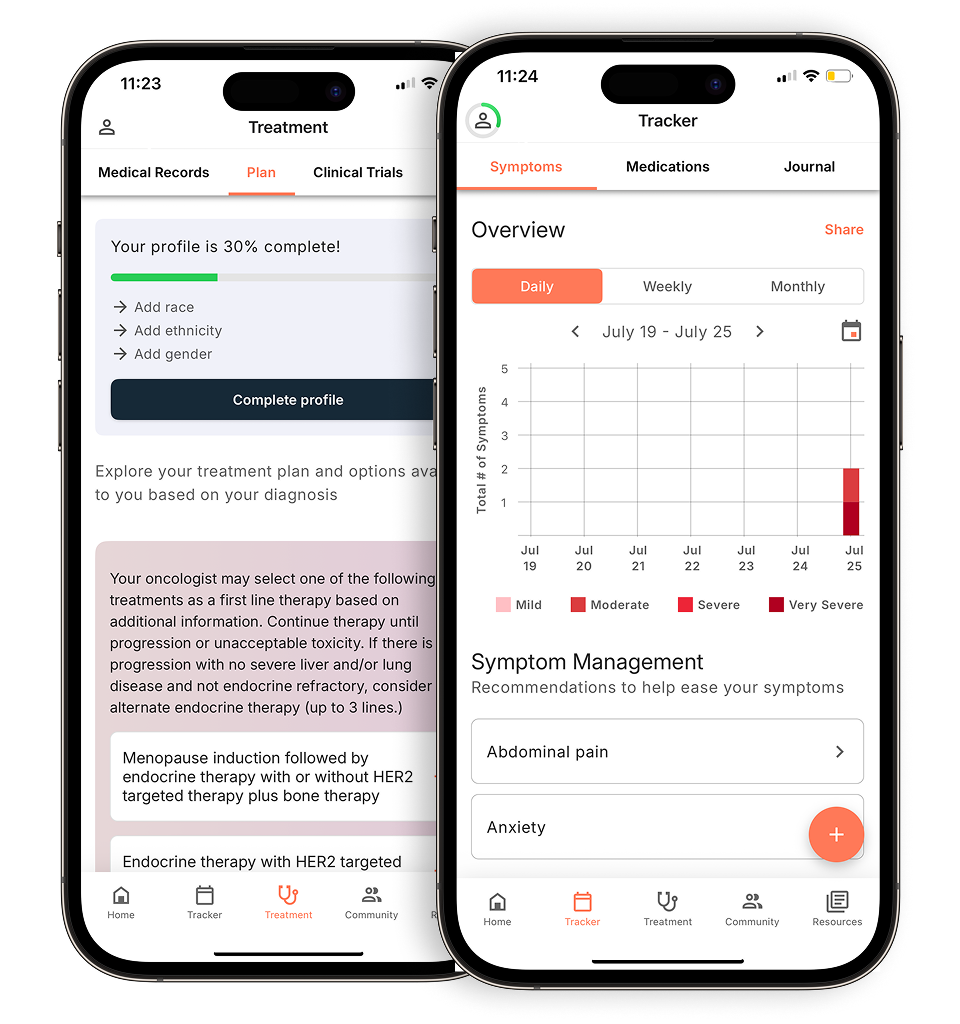
2) Researchers are exploring a more convenient way of delivering tarlatamab
Early research suggests that tarlatamab given as an injection under the skin may offer a more convenient way to treat extensive-stage small cell lung cancer (ES-SCLC) after the cancer has returned or grown despite earlier treatment. In the study, about 30% of patients saw their tumors shrink after receiving the treatment every two weeks. Most side effects were mild, and although some patients experienced cytokine release syndrome (CRS), a reaction that can happen when the immune system is activated, no severe cases were reported. The injection also resulted in similar drug levels in the body compared with the established IV version of tarlatamab.
Because an injection under the skin may be easier and more convenient than receiving treatment through an IV, this approach could make treatment simpler for some patients. These are early findings from a small study, so researchers need to determine how well the treatment works and whether it could become an alternative way to receive tarlatamab.
3) Preserving brain function with regular MRIs instead of prophylactic cranial irradiation?
A large clinical trial found that people with SCLC who had regular brain MRI scans instead of preventive brain radiation had better preservation of their thinking and memory. Preventive brain radiation, called prophylactic cranial irradiation (PCI), can lower the risk of cancer spreading to the brain but may also affect brain function. In the study, patients who received MRI monitoring every few months were able to have any brain metastases detected early and treated if they developed. So far, there doesn’t appear to be a difference in overall survival between people who received regular MRI scans and those who also received PCI.
These findings suggest that for some people with SCLC, close MRI monitoring may be an alternative to preventive brain radiation while helping reduce the risk of cognitive side effects. The researchers are continuing to follow patients to see whether there is any difference in overall survival over the longer term.
4) Investigational drug outperforms standard treatment for relapsed SCLC patients
A phase III clinical trial found that the investigational treatment tambotatug pelitecan (tam-peli) helped people with SCLC live longer after their cancer returned following platinum-based chemotherapy. People who received tam-peli lived an average of 13.3 months, compared with 9.4 months for those who received the standard treatment topotecan. Tam-peli also helped control the cancer for longer. The treatment showed benefits even in people whose cancer had spread to the brain, an important finding because brain metastases are common and difficult to treat in SCLC. While side effects were common with both treatments, serious side effects were less frequent with tam-peli than with topotecan in this study.
These results are encouraging because they could lead to a new treatment option for people whose SCLC has returned after initial treatment, although researchers will continue to evaluate the treatment’s safety and longer-term benefits.
5) This antibody-drug conjugate reduced the risk of death for relapsed SCLC by 54%
A phase III clinical trial found that the investigational treatment risvutatug rezetecan (Ris-Rez) helped people with relapsed SCLC live longer than the commonly used treatment topotecan. People who received Ris-Rez lived an average of 18.5 months compared with 10.3 months with topotecan, reducing the risk of death by 54% during the study. Ris-Rez also kept the cancer from growing for longer, with a median of 7.2 months before progression compared with 3 months with topotecan, and tumors shrank in about 6 in 10 patients compared with about 1 in 10. Severe treatment-related side effects were also less common with Ris-Rez than with topotecan, although blood-related side effects such as low blood cell counts were still common.
These results are especially important because SCLC often returns after initial treatment and has limited treatment options once it comes back. Ris-Rez is still investigational, but these results suggest it could become an important new treatment option for people with relapsed SCLC if supported by further research and regulatory review.
Disclaimer: The information provided in this article is for informational purposes only and is not intended to be a substitute for professional medical advice, diagnosis, or treatment. Outcomes4Me is not acting as your caregiver, and any suggestions or guidance offered should not replace the advice of your healthcare provider or qualified medical professional. Always seek the guidance of your physician or other qualified health provider with any questions you may have regarding a medical condition.
Personalized support for real care decisions
Understand your diagnosis, explore clinical trials, and track symptoms--all in one place.
Get started
Compare treatments, prepare for appointments, and track side effects—all in the app
Built for your diagnosis, Outcomes4Me gives you the tools to make confident, informed decisions—right when you need them.
Continue in app