Recent breakthroughs in lung cancer treatment are redefining survival and represent a shift in how oncology works. Experts highlight early detection and prevention, along with interception of cancer before it becomes life-threatening, as defining movements reshaping cancer care in 2026.
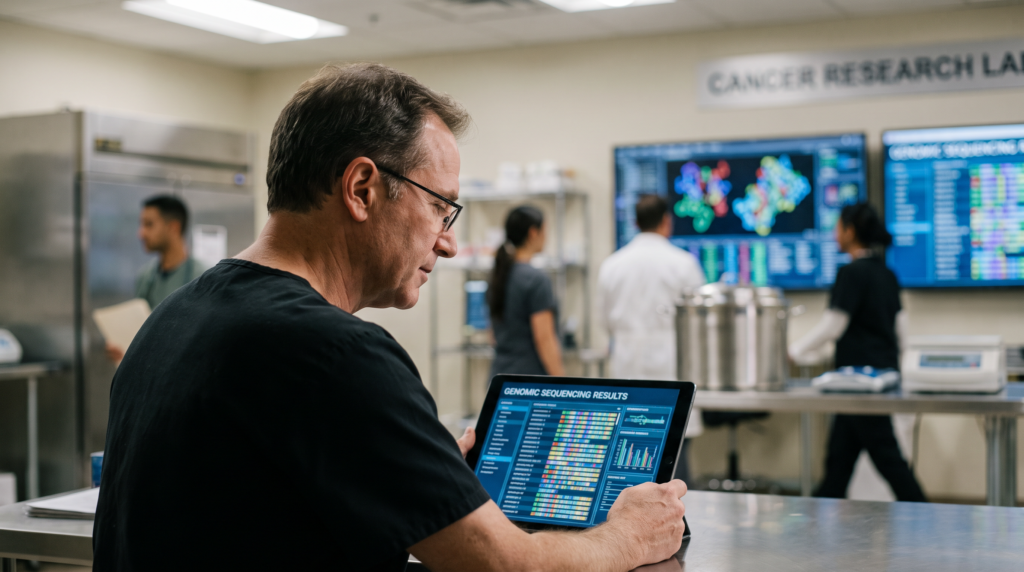
Genetic sequencing is the foundation to this new era of care. Without knowing a tumor’s molecular profile, its driver mutations, resistance pathways, and genomic vulnerabilities, a personalized care plan isn’t possible. Solutions to challenges like osimertinib resistance depend entirely on sequencing data that reveals why a previously effective therapy stopped working. The 2026 ASCO lung cancer readouts confirm that data-driven personalization is today’s standard of care. One of the most promising expressions of this shift is the rise of therapeutic mRNA vaccines, which take that molecular data and turn it into a custom-built weapon against cancer.
mRNA vaccines: teaching the immune system to fight back
Personalized mRNA vaccines are emerging as one of the most promising advancements in lung cancer treatment. Personalized mRNA vaccines are custom-built from a patient’s own tumor DNA to train the immune system to recognize and destroy cancer cells.
When a tumor forms, it develops unique mutations called neoantigens. Personalized cancer vaccines are being developed to target the unique mutations in each patient’s individual tumor, training the immune system to recognize and destroy cancer cells based on that tumor’s distinct genetic makeup. Since these vaccines are custom-built using a patient’s tumor DNA, each dose is as individual as the person receiving it. These are therapeutic vaccines. Unlike flu shots or vaccines designed to stop a disease before it starts, mRNA-4157 is a therapeutic vaccine given to patients already diagnosed with lung cancer, most often after surgery, to reduce the risk of recurrence.
Even after a successful resection, microscopic cancer cells can linger, setting the stage for relapse. Therapeutic vaccines are designed to close that gap, priming the immune system to eliminate residual disease before it takes hold again. Phase III trial data for mRNA-4157 is anticipated to become available around 2026, though timelines for clinical trials can shift.
Evidence-based guidance powered by NCCN Guidelines®
Personalized treatment plans shaped by the latest oncology standards—tailored to your diagnosis.
Get started
View your personalized treatment plan in the Outcomes4Me app
Use your diagnosis to unlock personalized NCCN Guidelines®-aligned recommendations.
Continue in app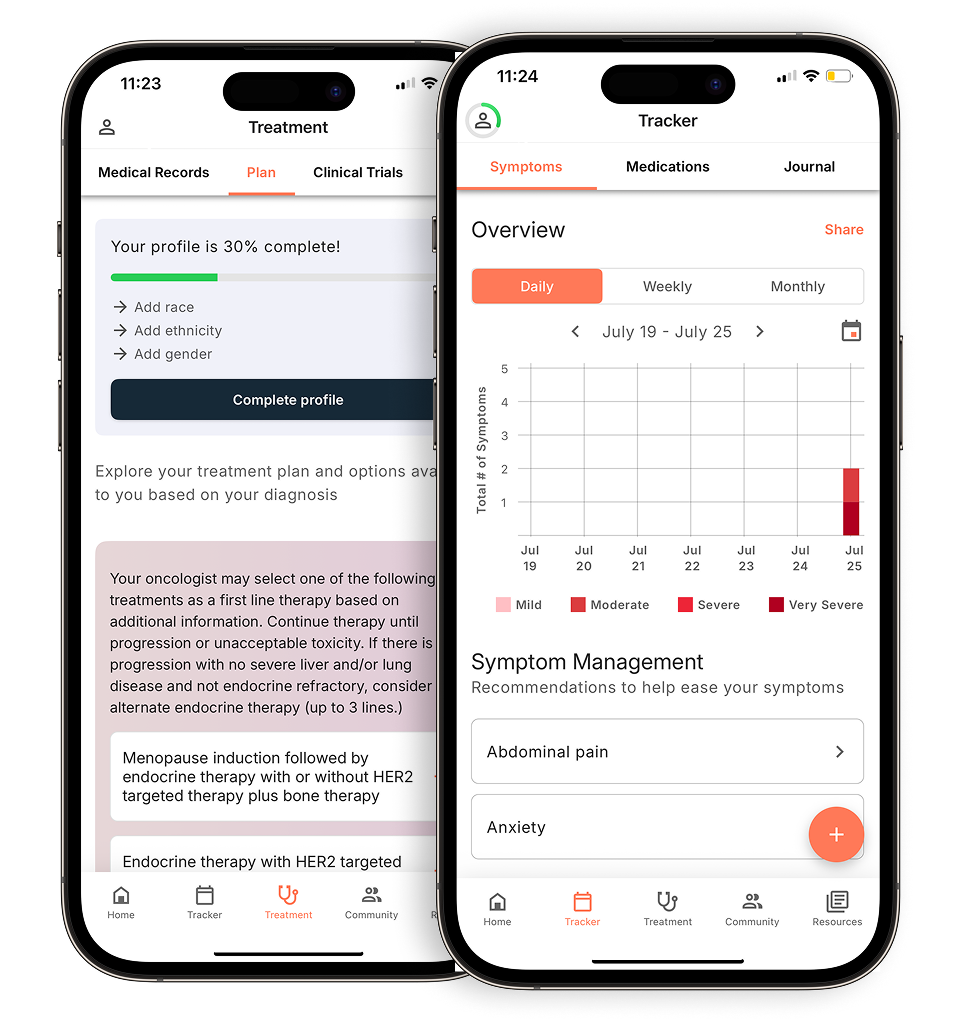
As personalized vaccines reshape how we think about post-treatment care, another class of therapies is taking precision even further, delivering high-potency treatment directly to cancer cells while largely sparing healthy tissue.
The rise of antibody-drug conjugates
Antibody-drug conjugates (ADCs) deliver chemotherapy payloads directly to tumor cells while leaving healthy tissue largely intact, redefining what precision medicine lung cancer clinical trials can achieve.
ADCs consist of a targeting antibody, a chemical linker, and a high-potency chemotherapy agent called a payload. The antibody locks onto a protein expressed on cancer cells, and only then does it release the drug. This targeted delivery mechanism makes ADCs a chemo-sparing alternative to conventional systemic chemotherapy. ADCs like trastuzumab deruxtecan and Dato-DXd represent a precision medicine approach designed to deliver cancer-fighting agents in a targeted way. Your oncology team can discuss whether this type of therapy may be appropriate for your specific lung cancer.
Reduced systemic toxicity is where patients notice the difference most. ADCs are targeted therapies that link chemotherapy to cancer-fighting antibodies, allowing them to work more precisely than traditional chemotherapy alone. That shift in quality of life matters, and it’s one reason oncologists are increasingly incorporating ADCs into personalized care plans earlier in the treatment sequence. TROP2 is a protein that researchers have observed in many non-small cell lung cancer tumors, which is why it is being studied as a potential treatment target.
As ADCs continue to mature, the conversation is shifting toward which patients respond best, and why some tumors eventually find ways around them. That question of resistance and what comes next brings us to one of the most urgent challenges in lung cancer care right now.
Overcoming resistance: fourth-generation EGFR inhibitors
Resistance to osimertinib (Tagrisso) is one of the most pressing challenges in precision medicine lung cancer treatment today, and 2026 research is finally closing in on a solution. Osimertinib is the current standard third-generation EGFR inhibitor. Some patients treated with osimertinib may develop resistance over time, which is why your care team may discuss strategies to monitor your response and plan for next steps if your treatment becomes less effective. When that happens, the tumor has evolved, and the treatment strategy needs to evolve with it.
Cancer care guidance for every step of your journey
Get treatment options, clinical trials, and support tailored to your diagnosis--all in one place.
Get started
See treatment options, manage symptoms, and stay informed—all in the app
View treatment options and trials personalized to your diagnosis—plus track progress in real time.
Continue in appOsimertinib resistance can develop through multiple genetic mechanisms, including secondary EGFR mutations like C797S, as researchers work to better understand and overcome drug resistance in lung cancer treatment. This mutation alters the binding site that Osimertinib relies on, essentially making the drug invisible to the cancer cell. According to data highlighted at ASCO 2026, new fourth-generation drugs are being designed specifically for patients who have developed this mutation, a significant step towards keeping EGFR-mutant lung cancer manageable as a long-term condition.
What’s encouraging is how quickly the field is responding. Researchers are investigating next-generation TKIs that target C797S mutations in clinical trials. These experimental approaches may offer options for patients whose earlier treatments have stopped working, though your care team can discuss whether such trials might be appropriate for your situation. If your cancer has progressed on osimertinib, asking your care team about re-biopsy, or a liquid biopsy to detect circulating tumor DNA, is a critical next step. Understanding why your cancer progressed shapes the entire path forward. Knowing how mutation testing informs treatment is something patients across cancer types are increasingly using to advocate for themselves. Searching how to find lung cancer clinical trials by genetic mutation is a practical starting point, and tools like the Outcomes4Me app can help you connect with oncology nurse practitioners who can guide that conversation.
AI and liquid biopsies. The future of early detection
AI-powered liquid biopsies are fundamentally changing when, and how precisely, lung cancer is caught, monitored, and intercepted before it can advance.
A simple blood draw can now reveal what a CT scan might miss for months through analysis of circulating tumor DNA (ctDNA). By analyzing circulating tumor DNA shed by cancer cells into the bloodstream, AI algorithms detect genetic signals of disease activity with remarkable sensitivity. According to research from MSKCC and AACR 2026, AI-powered liquid biopsies can detect cancer recurrence months before it appears on traditional CT scans, a window that can be the difference between curative and palliative intent.
For patients with advanced lung cancer receiving immunotherapy, liquid biopsy, which detects genetic material from tumors in the bloodstream, can provide information about treatment response that imaging tests alone may not capture, and may help predict which patients will develop immune-related side effects.
What you need to know: navigating 2026 breakthroughs
The 2026 precision medicine landscape offers more targeted options than ever before, but only if your care team has the right information to act on them.
Comprehensive genetic sequencing is the baseline standard of care. If you haven’t had it recently, that’s the place to start. Mutation profiles shift over time, and treatment decisions in 2026 depend on knowing exactly what’s driving your cancer today, whether that’s an EGFR mutation, an ALK rearrangement, or a RET-positive lung cancer alteration requiring a selective inhibitor.
mRNA vaccines are moving into phase III trials for post-surgical lung cancer patients, signaling a meaningful shift from treatment to prevention of recurrence. At the same time, ADCs are reshaping what chemotherapy looks like in practice. Designed to deliver treatment precisely to tumor cells while limiting damage to healthy tissue, ADCs offer a chemo-sparing approach.
Fourth-generation EGFR inhibitors are now addressing osimertinib resistance directly. As covered earlier in this article, patients who’ve exhausted third-generation options now have a viable next step. The path to survival in 2026 is defined by how quickly a patient can match their genetic profile to the right clinical trial.
Personalized support for real care decisions
Understand your diagnosis, explore clinical trials, and track symptoms--all in one place.
Get started
Compare treatments, prepare for appointments, and track side effects—all in the app
Built for your diagnosis, Outcomes4Me gives you the tools to make confident, informed decisions—right when you need them.
Continue in app