A search for “Which plant kills cancer cells?” frequently highlights soursop. Social media, wellness blogs, and viral content sometimes describe it as a “miracle cure.” These assertions resonate emotionally, particularly among patients and families facing cancer diagnoses.
Scientific evidence, however, presents a contrasting narrative. Clinical searches for soursop cancer do yield legitimate peer-reviewed studies, and laboratory research has confirmed that compounds in graviola can kill cancer cells in vitro (in test tubes or petri dishes). However, the complexities involved in transitioning from laboratory results to validated human treatments are frequently overlooked.
The fundamental issue is this: promising laboratory findings have not been duplicated in human clinical trials. Soursop shouldn’t be considered a substitute for evidence-based medical treatment, and using it as such involves significant risks.
What is soursop (Graviola)?
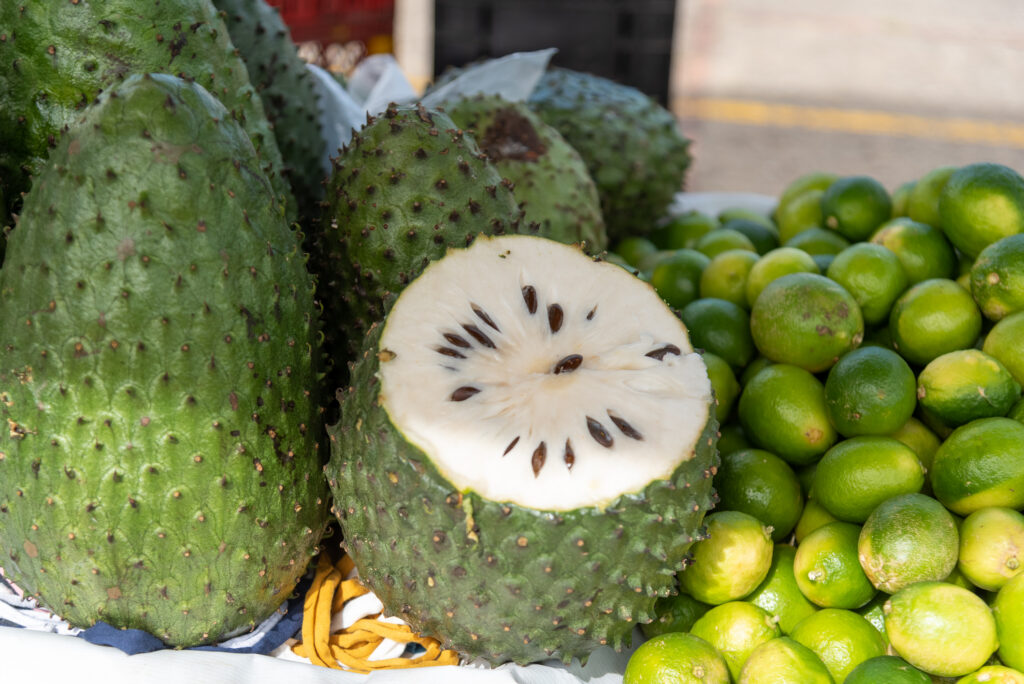
Scientifically referred to as Annona muricata, this tropical fruit is known by several names, including soursop, graviola, and guanabana. It’s distinguished by its spiky green exterior and soft, fibrous white pulp. It’s a nutrient-dense fruit that’s a source of antioxidants, vitamins, and minerals. Historically, the leaves, bark, and roots have been used in folk medicine for their therapeutic properties. Today, no completed soursop clinical trials in humans for cancer exist, a critical distinction that’s essential to highlight.
Evidence-based guidance powered by NCCN Guidelines®
Personalized treatment plans shaped by the latest oncology standards—tailored to your diagnosis.
Get started
View your personalized treatment plan in the Outcomes4Me app
Use your diagnosis to unlock personalized NCCN Guidelines®-aligned recommendations.
Continue in app
Is there a plant compound in soursop that kills cancer cells?
With soursop, the primary cancer-fighting focus is on a specific category of compounds known as annonaceous acetogenins (AGEs), which are bioactive molecules present in the leaves, bark, seeds, and fruit of the Annona muricata plant.
AGEs are central to most soursop cancer research. These compounds seem to inhibit Complex I of the mitochondrial respiratory chain, thereby halting a cancer cell’s ATP (energy source) production. Without its primary energy source, a cell can’t survive.
Limitations of soursop cancer research are important to recognize. Killing cells in a laboratory environment isn’t uniquely challenging. Substances like bleach and extreme heat also kill cells. The true scientific challenge lies in selectively targeting cancer cells without affecting healthy tissue, and doing so at doses that are safe for human consumption.
In vitro studies, which are tests conducted in petri dishes, demonstrate genuine cytotoxic activity from AGEs. However, a petri dish doesn’t reflect the reality of what happens in a complex human body.
The ‘in vitro’ trap: Why animal studies aren’t enough
The laboratory results discussed previously are compelling, but a significant gap exists between the lab and human application.
Animal models have shown promise. One dated study indicated that acetogenin compounds achieved a 59.8% tumor inhibition rate in pancreatic cancer mouse models. Although this figure is striking, mouse physiology differs considerably from human physiology. Variations in metabolic rates, enzyme activity, and cellular absorption mean that a dosage effective in rodents may be ineffective or toxic in humans.
This issue is known as the “translation problem,” and it remains one of the most persistent challenges in oncology research.
There are currently no research or clinical trials in humans to validate the in vitro and animal data. The data to date predominantly focus on cell-line and rodent studies, not randomized controlled trials involving human participants.
The absence of human data is the core issue. Without clinical trials, there is no established safe dosage, confirmed delivery mechanism, or evidence of efficacy in human biology. This gap also raises safety concerns that warrant serious consideration.
Safety warnings: Why experts advise caution
The evidence gaps discussed earlier are not the sole reasons to hesitate before incorporating soursop into a cancer treatment plan. Soursop safety for cancer patients is a significant, underexplored concern, and the risks extend beyond a mere lack of knowledge.
Neurotoxicity: A documented risk
The annonacin compounds in soursop that exhibit anti-tumor activity in laboratory settings may also be toxic to humans. Research has associated high consumption of soursop and related Annona fruits with an atypical form of Parkinson’s-like syndrome, including symptoms such as tremors and movement disorders.
FDA warning letters
Regulators have noticed the unsubstantiated marketing claims. In 2017, the FDA issued a warning letter to Amazing Sour Sop, Inc. for making unapproved disease claims, including cancer treatment benefits, without scientific evidence to support them.
Drug interactions
Soursop may also interact with blood pressure and diabetes medications. For patients already managing complex treatment protocols, introducing unverified supplements introduces unpredictable variables into care.
These risks underscore the importance of carefully considering whether soursop might fit into a treatment plan, in consultation with an oncology team.
The role of soursop in complementary therapy
Complementary therapy, which means using something alongside proven medical treatment, isn’t the same as alternative therapy, which means using it instead of that treatment. Soursop is rich in nutrients, fiber, and minerals, but no superfood, can substitute for a targeted clinical treatment plan. Chemotherapy, immunotherapy, and radiation are tailored to an individual’s specific cancer biology. A fruit, no matter how nutrient-rich, isn’t.
For those interested in soursop, here is how to approach the conversation with a healthcare team:
- Disclose any supplements being taken or considered
- Inquire specifically about drug interactions with current treatment
- Seek evidence-based guidance rather than relying on online claims
Soursop can be a part of your balanced diet, but not as a cancer treatment. Informed patients make better decisions. Keep the medical team informed, remain inquisitive, and allow scientific evidence to guide decisions.
To learn more about evidence-based integrative therapies, check out our full webinar discussion with City of Hope’s Krisstina Gowin.
Personalized support for real care decisions
Understand your diagnosis, explore clinical trials, and track symptoms--all in one place.
Get started
Compare treatments, prepare for appointments, and track side effects—all in the app
Built for your diagnosis, Outcomes4Me gives you the tools to make confident, informed decisions—right when you need them.
Continue in app