Cancer-related fatigue (CRF) is a persistent, overwhelming exhaustion that doesn’t improve with rest and bears no relationship to how much activity you’ve recently done.
Unlike the fatigue you feel after a long day at work, CRF can settle in deeply during chemotherapy and stay there, making even simple tasks feel out of reach. It’s one of the most commonly reported, and undertreated, side effects of cancer treatment. And it creates a frustrating paradox. You feel too tired to move, yet exercise can help reduce cancer-related fatigue, and moving your body may help you feel better.
When the body rests completely for extended periods, muscles begin to weaken and cardiovascular efficiency declines, a cycle that actually deepens exhaustion over time. This means that absolute inactivity, while it feels like the logical response, can trap you in a loop of worsening fatigue. Incorporating chemo fatigue exercise, even gentle movement, interrupts that cycle.
Exercise as a clinical intervention. Research supports physical activity as one of the most effective non-medical strategies for managing CRF. Exercise is a clinically recognized approach to managing fatigue. Low-impact exercise during chemo, such as walking or gentle stretching, can help stabilize energy without overtaxing a system already under significant stress.
That said, “listen to your body” takes on a different meaning during active treatment. Your body’s signals are distorted by chemotherapy, and instinct alone isn’t always a reliable guide. Understanding how movement affects your physiology helps you make real, informed decisions.
How it works
Exercise during chemotherapy triggers measurable physiological changes that directly counteract some of the most debilitating treatment side effects.
Light aerobic exercises like walking or riding a bike can increase your energy level and improve your ability to do everyday tasks like climbing stairs or preparing a meal. Resistance training helps counteract sarcopenia, the muscle loss that many chemotherapy drugs accelerate. Managing fatigue through movement can help reduce inflammation in your body, which may contribute to better energy levels during cancer treatment. Light exercise can help manage cancer-related fatigue by improving your sleep and reducing stress and anxiety. Knowing what is happening inside your body makes choosing the right intensity straightforward.
Evaluating intensity. How to gauge your capacity each day
Knowing whether it’s safe to exercise during chemo comes down to one practical question. Can you hold a conversation while you move?
That’s the core of the Talk Test. If you can speak in short sentences without gasping, you’re likely working at a moderate, productive intensity. If speech becomes impossible, ease back. For a more structured read, the Borg Rating of Perceived Exertion (RPE) scale, typically rated zero to 10, can help. Many oncology patients and their care teams find the RPE scale helpful for gauging exercise intensity, with a range of three to five representing noticeable effort without strain. Ask your care team whether this range might work for you. These two tools remove the guesswork when fatigue during chemotherapy leaves you wondering what to do.
The distinction between productive fatigue and exhaustion matters enormously here. Feeling pleasantly tired after a short walk is a normal physiological response. If exercise makes you feel more fatigued, that’s a sign you may have pushed your body too hard during treatment. Listen to your body and rest when you need to.
What most guides miss about chemo cycles
Your energy capacity during chemotherapy follows a predictable pattern that should directly shape when and how much you move.
Evidence-based guidance powered by NCCN Guidelines®
Personalized treatment plans shaped by the latest oncology standards—tailored to your diagnosis.
Get started
View your personalized treatment plan in the Outcomes4Me app
Use your diagnosis to unlock personalized NCCN Guidelines®-aligned recommendations.
Continue in app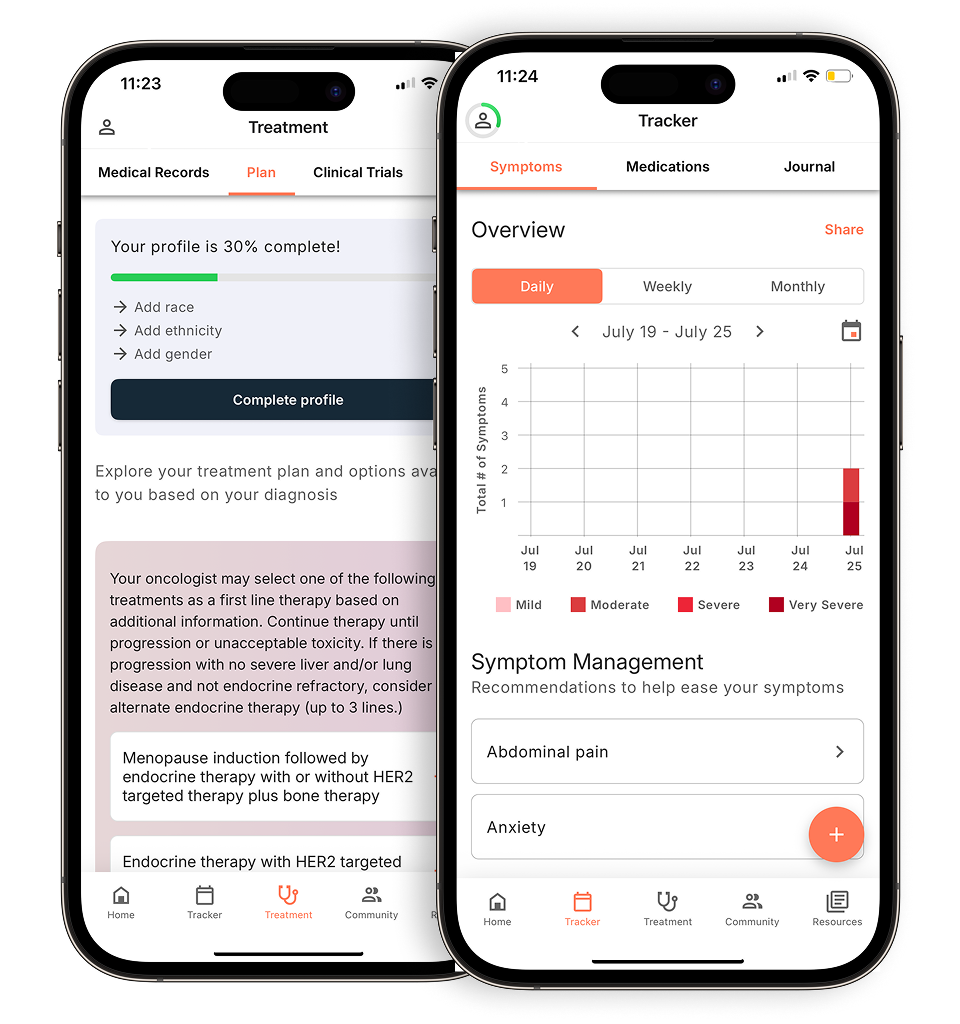
Many patients find that chemotherapy cycles follow a pattern, with energy levels often dipping noticeably in the days right after infusion. Your care team can help you understand what to expect during your own treatment schedule. During that window, even gentle exercise during chemo, a short walk, light stretching, may feel monumental. But as your body recovers toward the end of the cycle, capacity meaningfully rebounds. Timing movement to align with those peaks, rather than fighting through the valleys, is a distinction most general wellness advice simply doesn’t make.
This is why oncology teams in recent years are increasingly adopting prehabilitation models, which involve building baseline fitness before treatment begins, so patients have more physiological reserve to draw from throughout the cycle. Understanding how much exercise during chemo is appropriate at each phase requires a clinical conversation with your care team. And knowing where your limits actually sit requires recognizing the warning signs, which is exactly what the 48-hour rule helps clarify.
Identifying the signs of over-exertion
If exercise makes you feel more fatigued, that’s a sign you may have pushed your body too hard during treatment. Listen to your body and rest when you need to.
So, can you work out during chemotherapy? Yes, but the 48-hour rule is your most reliable guardrail. Some physical warning signs to discuss with your care team include increased joint pain, dizziness, and changes in how you’re feeling. Your doctor or nurse can help you understand what symptoms warrant scaling back your activity. Light exercise like walking can help manage cancer fatigue by increasing your energy and strength, but it’s important to avoid overworking your body, which can make fatigue worse. Consistent, shorter bouts of movement beat sporadic, intense efforts every time. Of course, how much is appropriate also shifts depending on your specific treatment type, something worth exploring with your care team.
Safe movement protocols. Guidelines for different energy levels
Match your effort level to your actual symptoms that day, your exercise approach should depend on one honest daily assessment, not a fixed prescription.
Think of it as a Green-Yellow-Red system. On Green days, when energy is relatively stable and you feel close to baseline, moderate exercise during chemotherapy is appropriate: 20 to 30 minutes of walking or gentle resistance work aligns with current oncology guidelines. Yellow days involve when you’re experiencing fatigue, consider scaling back your movement with shorter exercise sessions, such as a 10-minute walk or gentle stretches, and listen to your body to determine when you need to rest. Red days involve when you’re experiencing significant fatigue, fever, or dizziness, listen to your body and rest when you need to rather than pushing yourself to exercise.
Two factors cut across all three levels. Hydration and thermal regulation. Some patients report that chemotherapy may affect how their body manages heat, and your care team can help you understand whether this is a concern for your individual treatment and activity level. Staying well hydrated before and during movement isn’t optional, it directly supports cardiovascular stability while on medication.
High-impact movements. Low-impact exercise avoids stress on the joints, while high-impact movements like jumping and running can put stress on joints that may already be compromised. This is why low-intensity exercise is often recommended for cancer patients during treatment. Swap these for low-impact equivalents: cycling, swimming, or resistance band work seated or supported. These modifications preserve joint health without sacrificing the physiological benefits of staying active. For some patients, fatigue doesn’t resolve when treatment ends, which is worth understanding before assuming otherwise.
Is it normal to experience fatigue for 5 years after chemotherapy?
Cancer-related fatigue can persist for years after treatment ends. For some patients, it does, making long-term movement habits as important as anything you do during active treatment.
Cancer care guidance for every step of your journey
Get treatment options, clinical trials, and support tailored to your diagnosis--all in one place.
Get started
See treatment options, manage symptoms, and stay informed—all in the app
View treatment options and trials personalized to your diagnosis—plus track progress in real time.
Continue in appThis isn’t unusual. Clinicians refer to these as late effects, lasting physiological changes that continue well after your final infusion. The question shifts from “should I rest or exercise during chemo” to how consistent, low-intensity activity like short walks during chemo and beyond can prevent chronic fatigue from taking hold. When exhaustion persists beyond a year post-treatment, or arrives alongside new symptoms like cognitive changes or unexplained pain, that warrants a fresh evaluation with your care team, not simply more rest. What feels like lingering fatigue may signal a late-onset side effect worth investigating. And on days when even that conversation feels like too much energy to spend, there are smaller, more manageable strategies worth knowing.
How can I manage chemo fatigue on bad days?
On the worst days, the most important question is what movement is even possible right now, in this moment, with the energy you actually have.
Think of it as an Energy Bank. Your available energy is limited, so every movement choice is a withdrawal. Yoga is a low-intensity movement practice that may help improve mood and reduce fatigue during chemotherapy, while also supporting mobility and balance.
Pacing yourself. Pacing yourself by alternating between periods of activity and rest can help you budget your limited energy so you can accomplish tasks without running out of energy before the end of the day. These are legitimate strategies that maintain neuromuscular activation on days when anything more would trigger the 48-hour recovery spiral covered earlier. How you spend limited energy on bad days sets up how quickly you recover for the next.
Common patterns in successful patient programs
When it comes to chemotherapy fatigue relief exercise, what separates programs that work from those that don’t often comes down to structure and accountability, not effort alone.
A formal, structured home-based exercise program can increase strength training frequency compared to general exercise recommendations alone in people undergoing pancreatic cancer treatment. In practice, “having an exercise buddy or someone who checks in with you can help you stay motivated and stick to your fitness routine during cancer treatment.” Consistency matters far more than intensity, showing up for a 10-minute walk three times a week builds more durable recovery gains than sporadic, higher-effort sessions.
How to stay active during chemo increasingly involves wearable technology, particularly for tracking heart rate variability (HRV). Some patients and clinicians track heart rate variability as one way to monitor how their nervous system may be responding to exercise and recovery between sessions. You might ask your care team whether monitoring HRV could be useful for your individual situation. “Some patients and coaches use HRV as one sign that their body may need more recovery time rather than another workout. Ask your care team whether monitoring HRV might be helpful for you.” That data point gives both patients and their care team an objective basis for adjusting activity, removing the guesswork. Of course, knowing when to move and when to stop entirely is its own skill, and recognizing the specific medical situations where exercise must pause is exactly what the next section addresses.
When inactivity is necessary. Safety checklists and contraindications
Recognizing the specific medical signals that mean movement must stop entirely, rather than slow down, is how you protect yourself during chemotherapy.
A fever above 100.4°F, severe anemia, acute bone pain, unusual shortness of breath, or chest discomfort are clear clinical red lights that require you to contact your care team before resuming any activity. These aren’t judgment calls you make alone. For patients managing advanced metastatic disease, a one-size-fits-all exercise approach may have limitations. Changes in your condition, lab values, or symptoms mean it’s worth checking in with your care team regularly about what feels safe for you right now. That’s a conversation your care team needs to lead, not a blog post. The next section explores a related tension worth naming directly. Exercise is a powerful management tool, but it comes with trade-offs that matter.
Strategic considerations: limitations and trade-offs
Exercise is a powerful management tool for chemo fatigue, but it isn’t a cure, and treating it like one can lead to real setbacks.
Activities like walking during chemo fatigue can meaningfully reduce exhaustion, improve mood, and preserve muscle mass. “Exercise may help manage cancer-related fatigue, but it’s not expected to address all of the factors that contribute to it. Talk with your care team about what realistic goals might look like for you.” Expecting otherwise sets up a frustrating cycle where patients push harder when symptoms persist, compounding the very problem they’re trying to solve.
There’s also a real trade-off between physical activity and everything else demanding your energy, work obligations, family responsibilities, rest. On days when those demands are high, a short walk genuinely may be the wrong call. Rest isn’t failure, it’s sometimes the higher-value use of limited reserves.
And the “no pain, no gain” mindset has no place here. Discomfort during active cancer treatment isn’t a signal to push through, it’s clinical information your care team needs. If you’re unsure whether your current routine is appropriate, or if fatigue is worsening despite modest activity, that’s exactly when a referral to a certified Cancer Exercise Specialist or oncology physical therapist adds real value. They can build a personalized care plan that accounts for your specific treatment, current labs, and functional capacity, details that general fitness guidance simply can’t capture.
Key takeaways: what you need to know
The best exercise during chemotherapy is consistent and informed by your current labs, your treatment cycle, and how your body responds in the 48 hours after activity.
Everything covered in this article points toward a few core principles worth holding onto:
- Exercise beats rest for fatigue. Clinical evidence consistently shows that structured movement reduces cancer-related fatigue more effectively than inactivity, even when exhaustion makes the couch feel like the only option.
- Avoid the boom-and-bust cycle. Modest, repeatable activity builds more sustainable energy over time than doing too much on a good day and crashing for days afterward.
- Use the 48-hour rule. If fatigue significantly worsens within two days of a session, that’s your signal to scale back, not push through.
- Safety comes first, always. Blood counts, bone health, and immune status all affect what’s appropriate. Your care team determines those boundaries, not general wellness guidelines.
And if navigating this feels overwhelming, you don’t have to figure it out alone. Talk with your care team about building a personalized plan based on your current treatment stage.
Disclaimer: The information provided in this article is for informational purposes only and is not intended to be a substitute for professional medical advice, diagnosis, or treatment. Outcomes4Me is not acting as your caregiver, and any suggestions or guidance offered should not replace the advice of your healthcare provider or qualified medical professional. Always seek the guidance of your physician or other qualified health provider with any questions you may have regarding a medical condition.
Personalized support for real care decisions
Understand your diagnosis, explore clinical trials, and track symptoms--all in one place.
Get started
Compare treatments, prepare for appointments, and track side effects—all in the app
Built for your diagnosis, Outcomes4Me gives you the tools to make confident, informed decisions—right when you need them.
Continue in app