
It’s a feeling many people share: “I knew I had breast cancer before I was diagnosed.” This deep, personal intuition about your own body is powerful. Still, the moment your life pivots from “before” to “after” a diagnosis can feel surreal and overwhelming. It’s a deeply personal experience, yet one shared by millions. Finding comfort in knowing you aren’t the first to feel a lump by accident or get that unexpected call is completely normal. Here, we’ll explore the different ways a diagnosis can unfold, offering clarity on the signs and symptoms that mark the beginning of the path forward.
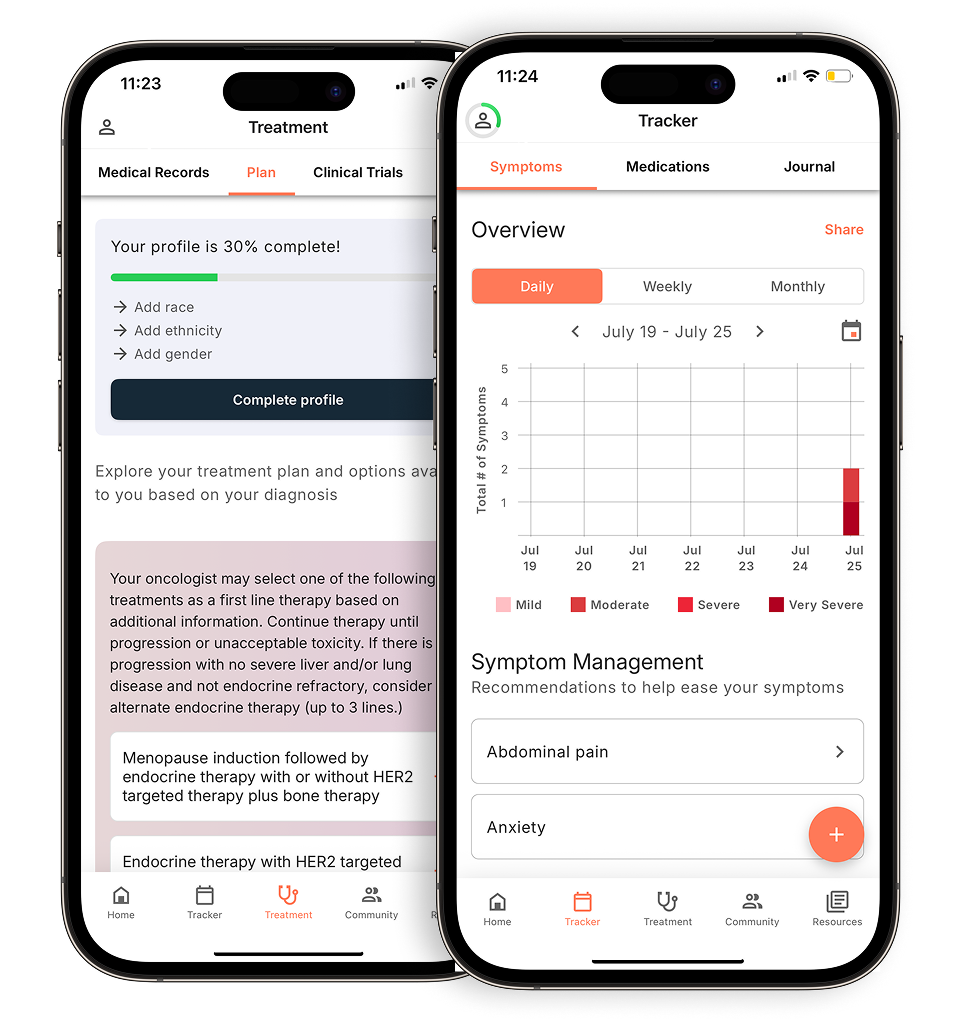
View your personalized treatment plan in the Outcomes4Me app
Use your diagnosis to unlock personalized NCCN Guidelines®-aligned recommendations.
Key Takeaways
- Combine self-awareness with routine screenings: Pay attention to any changes in your breasts, like new lumps or skin dimpling, and stay on top of your recommended mammograms. This two-part approach gives you the best chance of finding potential issues early.
- Your personal health story helps guide your care: Factors like your age, family history, and breast density are important parts of your health profile. Sharing this information with your doctor allows you to create a screening plan that’s tailored to you.
- You are an active partner in your treatment: After a diagnosis, focus on clear communication with your healthcare team, learn about your options, and lean on your support system. Taking these steps helps you make informed decisions and feel more in control of your journey.
How is breast cancer usually discovered?
There’s no single story for how breast cancer is discovered. For some, it’s a surprise finding, while for others, it’s the result of a routine check-up. Understanding the different ways it can be found can help you feel more prepared and aware of what to look for. The path to diagnosis often begins in one of four common ways: noticing a change yourself, a routine screening, an unexpected finding during another medical exam, or a discovery by your doctor during a check-up.
Each journey is unique, but they all share a common thread: paying attention to your body and following up with medical professionals. Whether it’s a lump you find accidentally or an abnormality spotted on a mammogram, the first step is recognizing that something is different. From there, your healthcare team can guide you through the next steps. Knowing the common symptoms of breast cancer is helpful, but remember that screenings can often find cancer long before any symptoms appear.
Discovering a change on your own
It’s very common for someone to discover a lump or another change in their breast on their own. Sometimes it happens by accident while showering or getting dressed. This is what happened to Annie Miyazaki-Grant, who found a lump that led to her diagnosis. Being familiar with how your breasts normally look and feel is the best way to notice if something changes. While most breast lumps are not cancerous, it’s always important to have any new lump, thickening, or other change checked by a doctor. You are the expert on your own body, and trusting your instincts to seek a professional opinion is a crucial first step.
When a mammogram shows something unexpected
Routine screenings are one of the most powerful tools for finding breast cancer early, often before a lump can even be felt. Many people, like Sandra Race and Elaine Spangler, receive their diagnosis after a yearly mammogram shows an area of concern. While going for a mammogram can feel stressful, these regular check-ups are designed to spot subtle changes that could signal cancer in its earliest stages. Following recommended screening guidelines gives you the best chance of finding cancer when it is smaller and easier to treat. You can read more about different breast cancer patient stories to see how varied the experience can be.
Understanding the limitations of mammograms
While mammograms are one of our best tools for early detection, it’s helpful to know they aren’t foolproof. There are times when a mammogram might come back clear, even if you can feel a lump or have noticed another change. This is where trusting your instincts becomes so important. If you feel that something isn’t right, you have every right to advocate for your health and ask for more investigation. This is also true if your doctor treats a suspected infection but your symptoms don’t improve; it’s always okay to request further diagnostic tests. None of this is to say you should skip your appointments, as most cancers are still found through regular check-ups and screenings. Think of it as a partnership: routine screenings provide a crucial look inside, while your own self-awareness acts as a constant monitor.
An unexpected finding during another health check
Sometimes, the first sign of breast cancer appears when you’re being checked for something else entirely. It might be a biopsy for an unrelated issue or an imaging scan for another part of your body that happens to show something in the breast area. For example, one woman’s journey began after a biopsy found “atypical cells,” which prompted her doctor to recommend more frequent mammograms and ultrasounds. This careful monitoring eventually led to her diagnosis. These incidental findings highlight how interconnected our health is and why it’s important to follow up on any unusual results with your doctor.
What happens when your doctor finds something?
Your doctor or nurse may find a lump or notice a change during a clinical breast exam as part of your regular wellness visit. Healthcare professionals are trained to feel for changes that you might not notice on your own. If they find a lump, swelling, or any other area of concern in your breast, chest, or armpit, they will recommend further testing to figure out what’s going on. This is why regular check-ups are so important. A professional evaluation is the only way to know for sure what a change means, and finding it early can make a significant difference in your treatment path.
What are the signs of breast cancer?
Knowing what to look for is one of the most powerful things you can do for your health. Breast cancer signs are different for everyone, and some people have no signs at all. That’s why it’s so important to get familiar with your own body and understand what’s normal for you. Noticing a change doesn’t automatically mean it’s cancer, but it does mean it’s time to have a conversation with your doctor. Think of it as being your own best health advocate. By paying attention to these potential signs, you’re taking a proactive step in managing your well-being.
Understanding lumps or thickening in the breast or underarm
This is often the most talked-about sign of breast cancer. You might feel a new lump or a distinct area of thickness in your breast, near your collarbone, or in your armpit area. It can feel hard and immovable, like a small stone, or it might be softer and more rounded. It’s important to remember that many lumps are benign (not cancerous), but any new or unusual lump should always be checked by a healthcare provider. The goal of a breast self-exam is not to diagnose yourself, but simply to get to know your body so you can spot changes early.
What percentage of breast lumps are cancerous?
Finding a lump can be really scary, and it’s natural for your mind to jump to the worst-case scenario. But it’s helpful to know that the vast majority of breast lumps are not cancerous. In fact, studies show that about 80% of lumps that are biopsied turn out to be benign. This means that while it’s absolutely essential to get any new lump checked by a doctor, the odds are in your favor that it’s something harmless. There are many types of benign breast conditions, such as cysts or fibroadenomas, that can cause lumps. The key takeaway is to stay calm but be proactive. A medical professional is the only one who can determine the cause of a lump, so making that appointment is always the right next step.
Noticing changes in your breast’s size or shape
Sometimes, a sign of breast cancer isn’t a lump but a visible change in the overall size or shape of your breast. One breast might suddenly seem larger, lower, or shaped differently than the other. While it’s common for breasts to be slightly different sizes, a new or more pronounced change is worth noting. This can happen with or without a distinct lump being present. If you notice any unexplained swelling or shrinking of all or part of a breast, it’s a good reason to schedule a check-up with your doctor to get it looked at.
What to know about nipple changes or discharge
Your nipples can also offer clues. Be aware of a nipple that has recently turned inward (inverted) or has changed its position or shape. Any discharge from the nipple—especially if it’s clear or bloody and comes out without squeezing—should be evaluated. While some nipple discharge can be normal, particularly if you are breastfeeding, any spontaneous or unusual fluid is something to discuss with your healthcare team. These nipple changes are important signals that shouldn’t be ignored.
Watching for skin changes like dimpling or redness
The skin on your breast can also show signs of a potential issue. Look for any dimpling or puckering, which might make the skin look similar to an orange peel. You should also pay attention to any unexplained redness, scaliness, or swelling on the skin of the breast, nipple, or areola (the darker area around the nipple). These skin changes can sometimes be mistaken for a rash or infection, but if they don’t go away, it’s essential to have them examined by a professional to understand the cause.
Is breast or nipple pain a sign?
While most breast cancers do not cause pain, persistent pain or tenderness in one specific area of the breast or nipple can be a symptom for some people. This is different from the general soreness you might feel with your menstrual cycle. If you experience a sharp or dull pain that is new, doesn’t go away, and is located in one spot, it’s a good idea to bring it up with your doctor. They can help you figure out what’s causing the breast pain and determine if any further steps are needed.
Recognizing the signs of inflammatory breast cancer (IBC)
Inflammatory breast cancer (IBC) is a less common but aggressive form of the disease, and its signs can look very different from other types of breast cancer. Instead of a distinct lump, IBC symptoms often involve changes to the skin of the breast and can appear very suddenly—sometimes within days or weeks. One of the most common signs is swelling or redness that affects a large part of the breast. The skin might also feel warm or tender to the touch. It can sometimes be mistaken for a skin infection, like mastitis, but if it doesn’t get better with antibiotics, it’s important to investigate further. Understanding these unique symptoms of IBC is key to getting a prompt and accurate diagnosis.
Another tell-tale sign of IBC is a change in the skin’s texture, often described as looking like the peel of an orange. This is called “peau d’orange,” and it happens when the skin becomes thick and dimpled. You might also notice other skin changes, like a rash or what looks like small bruises or insect bites. Because these symptoms can develop so quickly and don’t always include a lump, it’s crucial to pay close attention to any rapid changes in your breast’s appearance or feel and to speak with a doctor right away if you notice anything unusual.
Other potential symptoms to be aware of
While a lump is the most widely known sign of breast cancer, it’s definitely not the only one. Being aware of the full range of potential symptoms can help you feel more confident in knowing when to reach out to your doctor. Finding breast cancer early is one of the most important factors in successful treatment, so it’s helpful to know how your breasts normally look and feel. This allows you to become the first line of defense in noticing when something is different. Think of it as a partnership with your healthcare team—you bring the expertise on your own body, and they bring the medical expertise to figure out what any changes might mean.
General, non-breast symptoms
Sometimes, the first clues that something is wrong aren’t in the breast at all. Your overall health can also provide important information. For example, experiencing extreme tiredness that doesn’t get better with rest or noticing unexplained weight loss when you haven’t changed your diet or exercise routine can be signals from your body. While these general symptoms can be caused by many different health conditions, they shouldn’t be ignored. If you feel that something is “off” with your body, it’s always worth bringing it up with your doctor to get to the bottom of it.
“Red flag” symptoms that need immediate attention
Certain symptoms should be considered “red flags” that require a prompt medical evaluation. This is especially true for the signs associated with inflammatory breast cancer, such as sudden swelling, redness, or warmth in the breast. If you notice these changes, particularly if they appear quickly, it’s important to see a doctor right away. Because IBC can be aggressive, a fast and accurate diagnosis makes a significant difference. Don’t delay making an appointment or dismiss it as a minor issue. Trust your instincts—if a change feels urgent to you, it’s urgent enough to get checked out.
How do age and family history affect your risk?
Understanding the factors that can influence your risk for breast cancer is an important part of managing your health. While some things are out of your control, like your age and family history, being aware of them helps you and your doctor make the best decisions about screening and prevention. It’s about being informed, not afraid. Let’s walk through some of the most common factors.
The connection between age and breast cancer risk
Age is one of the most significant factors in breast cancer risk. Simply put, as we get older, our risk increases. Most breast cancers are diagnosed in women over the age of 50. This is because the cells in our bodies have had more time to go through changes, some of which can lead to cancer. It’s a natural part of the aging process, but it’s why regular screenings, like mammograms, become even more important as you age. Think of it as a standard part of your health routine, just like any other check-up.
How family history and genetics can play a part
Your family’s health history can offer important clues about your own risk. Having a first-degree relative—like a mother, sister, or daughter—who has had breast cancer can increase your risk. The connection is even stronger if that relative was diagnosed before menopause or under the age of 50. This doesn’t mean you will definitely get breast cancer, but it is valuable information to share with your doctor. They can help you understand what your family history means for you and create a personalized screening plan. Knowing your family health history is a powerful tool for proactive health management.
The role of genetic mutations like BRCA1 and BRCA2
Beyond a general family history, specific inherited gene mutations can significantly affect your risk. The most well-known of these are BRCA1 and BRCA2. Think of these genes as your body’s natural tumor suppressors; they help repair DNA damage and keep cells growing normally. When you inherit a harmful mutation in one of these genes, that repair process doesn’t work as well, which increases your risk for developing breast, ovarian, and other cancers. If you have a strong family history, your doctor may suggest genetic testing to see if you carry a mutation. This knowledge is a key part of proactive health management, as it allows you and your team to create a personalized screening plan. It’s a step that can provide clarity and direction, and some experts even recommend revisiting genetic testing over time as our understanding of these mutations grows.
Understanding breast density
You may have heard your doctor or a radiologist mention “breast density” after a mammogram. Dense breast tissue, which has more fibrous and glandular tissue compared to fatty tissue, is quite common. It can also make it a bit harder to spot abnormalities on a mammogram. Research shows that having dense breasts is a risk factor for developing breast cancer. When combined with a family history of the disease, it’s especially important to stay on top of your screening schedule. You can learn more about breast density and talk to your doctor about what it means for your personal screening needs.
The role of lifestyle and environmental factors
While we often focus on genetics and age, other personal factors play a role, too. Your own health history, including a previous breast cancer diagnosis or certain non-cancerous breast conditions, is an important piece of the puzzle. Lifestyle choices related to diet, exercise, and alcohol consumption can also influence your overall risk. It’s helpful to remember that risk is complex, and no single factor tells the whole story. Focusing on what you can control, like maintaining a healthy lifestyle and having open conversations with your healthcare team, empowers you to be your own best advocate.
Screening guidelines for different risk levels
When it comes to breast cancer screening, there isn’t a single schedule that fits everyone. Your personal health story—including your age, family history, and other factors—helps determine the right approach for you. Think of screening guidelines as a starting point for a conversation with your doctor. Together, you can create a plan that feels right and gives you the best chance of staying on top of your health. Understanding whether you fall into an average-risk or high-risk category is the first step in tailoring that plan to your specific needs and ensuring you get the care that’s right for you.
Screening for average-risk individuals
If you don’t have a personal history of breast cancer, a strong family history, or a known genetic mutation, you are likely considered to be at average risk. For women in this group, most experts agree that regular screening is key. The U.S. Preventive Services Task Force recommends a mammogram every two years for women between the ages of 40 and 74. Other organizations suggest starting yearly mammograms at age 40. The best path forward is a decision you make with your doctor, who can help you weigh the benefits of screening annually versus every other year based on your individual health profile and preferences.
Screening for high-risk individuals
If you have a higher-than-average risk—due to factors like a strong family history, a known genetic mutation like BRCA1 or BRCA2, or a lifetime risk calculated to be over 20%—your screening plan will look different. For women at high risk, guidelines often recommend more frequent and detailed imaging. This typically includes an annual mammogram plus a yearly breast MRI, sometimes starting at a younger age, such as 35. This more intensive approach is designed to find any potential changes as early as possible. Creating a personalized screening plan with your healthcare team is essential to make sure you’re getting the right tests at the right time.
What are the common emotions after a diagnosis?
Hearing the words “you have breast cancer” can feel like the world stops spinning. There’s no right or wrong way to feel, and the emotions that come up can be intense and sometimes contradictory. It’s a deeply personal experience, but many people share similar feelings as they begin to process the news. Understanding these common emotional responses can help you feel less alone and give you permission to feel whatever you need to feel. It’s all part of the journey, and it’s okay to not be okay.
Coping with initial shock and disbelief
That initial moment after a diagnosis can feel completely surreal. Many people describe a sense of shock or numbness, as if they’re watching a movie about someone else’s life. You might find yourself thinking, “This can’t be happening to me.” This feeling of disbelief is a normal and protective response. Your mind is trying to process overwhelming information that could change your life. As one woman shared in her breast cancer journey, this initial shock can feel shattering as you grapple with what this means for your health and your future. Give yourself grace and time to let the reality of the situation sink in.
Working through fear and anxiety about the future
Once the initial shock begins to fade, fear and anxiety often move in. It’s completely natural to feel scared when facing so much uncertainty. Questions about treatment, side effects, work, family, and the future can feel all-consuming. This anxiety can be heightened by the unknown, creating a constant sense of unease about what’s to come. You might worry about every new ache or pain, wondering if it’s related to the cancer. This is a heavy burden to carry, but remember that these feelings are a valid response to a life-altering diagnosis. Acknowledging your fears is the first step toward managing them.
Allowing yourself to feel sadness or grief
It’s also common to feel a profound sense of sadness or grief. You might be grieving the life you had before your diagnosis or mourning the loss of a sense of normalcy and control. This can manifest as anger, frustration, or feeling powerless. According to Cancer Australia, these feelings are a key part of managing emotional changes that come with a breast cancer diagnosis. You’re not just dealing with a medical condition; you’re handling a major life event that impacts every part of your world. Allowing yourself to feel this sadness is an important part of the emotional process. It doesn’t mean you’re weak; it means you’re human.
Finding hope and moments of strength
Amidst all the difficult emotions, it is possible to find moments of hope and strength. This doesn’t mean you have to be positive all the time—that’s an unrealistic expectation. Instead, hope can be a quiet, resilient force that coexists with fear and sadness. It might show up as a kind word from a friend, a piece of good news from your doctor, or simply the determination to get through one more day. Many people discover a strength they never knew they had. These moments of resilience can become powerful anchors, reminding you that even on the darkest days, there is still light and a path forward.
The emotional and mental side of treatment
As you move from diagnosis into the treatment phase, the emotional landscape often shifts. The initial shock might give way to the day-to-day reality of managing appointments, side effects, and the constant cycle of waiting for results. This period can bring its own unique set of challenges, including the intense anxiety that builds before scans, a feeling many people call “scanxiety.” It can start to feel like being a patient is your new full-time job, which can be disorienting. Taking an active role by tracking your symptoms and understanding your treatment plan can help you regain a sense of control. Remember, this is a marathon, not a sprint, and it’s important to acknowledge the mental and emotional energy it requires to keep going.
What should you do after a diagnosis?
Hearing the words “you have breast cancer” can feel like the world stops. It’s completely normal to feel a rush of emotions, from shock and fear to confusion. Take a moment to breathe. There’s no right or wrong way to feel. As you begin to process the news, remember that you are not alone and there are concrete steps you can take to move forward. Thinking about what comes next can help you feel more in control. This often starts with understanding your diagnosis, talking with your care team, and leaning on your support system.
The path ahead will have its challenges, but it’s one you don’t have to walk by yourself. Focusing on one step at a time can make the process feel more manageable. From gathering information to prioritizing your own well-being, each action you take is a way of caring for yourself. Below are a few key areas to focus on as you begin to find your footing after a diagnosis. These steps can help you organize your thoughts, prepare for conversations with your doctors, and build a foundation of support for the journey ahead.
How to talk with your healthcare team
Your relationship with your healthcare team is one of the most important you’ll have during this time. Open and honest communication is key. Before each appointment, try to jot down any questions or concerns that come to mind. No question is too small or silly. It can also be incredibly helpful to bring a trusted friend or family member with you. This person can be a second set of ears, take notes, and offer support. Having someone there can make it easier to process complex information and ensure you don’t forget to ask something important. Your team is there to help you, so don’t hesitate to reach out whenever you need clarity.
Learn about your treatment options
Understanding the path ahead starts with learning about your specific diagnosis and the available treatment options. This knowledge can be empowering and help you feel more involved in your own care. For early-stage breast cancer, treatment may include surgery, radiation therapy, chemotherapy, or other medications. Your oncology team will recommend a plan based on the type and stage of your cancer, your overall health, and your personal preferences. Don’t be afraid to ask why a certain treatment is being recommended and what other options might exist. Reputable sources like the National Cancer Institute provide comprehensive, evidence-based information to help you get started.
Understanding your specific type of breast cancer
It’s important to know that “breast cancer” is not a single disease, but a term for many different types. The specifics of your diagnosis are crucial for creating an effective treatment plan tailored just for you. This detailed information comes from your pathology report, which you’ll receive after a biopsy. The report details the cancer’s key characteristics, like its hormone receptor status (ER/PR) and HER2 status, which tell your doctors which therapies are most likely to work. Taking the time to understand your pathology report helps you become a more active partner in your care. With these details, you can use tools like the Outcomes4Me app to see personalized treatment options aligned with expert guidelines, helping you feel more prepared for conversations with your oncology team.
Building your personal support system
You don’t have to go through this alone. Building a strong support system is essential for your emotional well-being. This network can include your partner, family, friends, and other people who have been through a similar experience. Sometimes, talking to someone who truly understands what you’re going through can make all the difference. Organizations like Living Beyond Breast Cancer offer a wealth of resources, from online communities to support helplines, connecting you with others who can share practical advice and emotional support. Your support system is there to lift you up, so let them know what you need, whether it’s a ride to an appointment or just someone to listen.
Prioritizing self-care and finding what helps you cope
Taking care of your body and mind is a critical part of your treatment plan. Self-care isn’t selfish; it’s a necessity. This can look different for everyone. For some, it might mean gentle movement like walking or yoga, which studies show can help reduce side effects like fatigue. For others, it might be journaling, meditation, or spending quiet time in nature. It’s about finding what helps you feel centered and strong. Listening to your body and giving it what it needs—whether that’s rest or activity—will help you manage the physical and emotional challenges of treatment.
How to be your own best advocate
Being an active participant in your healthcare is one of the most powerful things you can do. This means doing your own research, asking questions, and making sure your voice is heard. You know your body and your priorities better than anyone. If something doesn’t feel right or you want to explore a second opinion, you have every right to do so. Being your own best advocate means partnering with your healthcare team to make informed decisions that align with your personal goals and values. Having reliable, evidence-based information at your fingertips can give you the confidence to speak up and ensure you receive the best possible care.
Trusting your intuition when something feels wrong
You are the foremost expert on your own body. Many people who have gone through a cancer diagnosis say they had a gut feeling that something was off, even before they had a clear answer. This intuition isn’t about self-diagnosing; it’s about self-awareness. It’s that quiet but persistent inner voice telling you to pay attention. Honoring that feeling is a powerful act of self-advocacy. If something feels different or you have a sense that all is not well, trust that instinct. It’s a crucial signal that it’s time to seek a professional opinion and start a conversation with your doctor, giving you the best chance to get the care you need.
Advocating for more tests if you have concerns
If your intuition is telling you something is wrong, it’s important to listen—even if initial tests come back normal. You have the right to ask for more information and further testing. If you suspect an issue despite a clear mammogram, you can push for further diagnostics like an ultrasound or an MRI. Similarly, if a doctor treats you for a suspected infection and your symptoms don’t improve after a couple of weeks, it’s reasonable to ask for a diagnostic mammogram or biopsy before continuing with that treatment. Remember, while most breast changes are not cancerous, it’s always important to have any new lump or symptom checked out. Your concerns are valid, and advocating for your health is a critical part of the process.
Related Articles
- What Happens After My Breast Cancer Diagnosis? | Outcomes4Me Community
- How do you cope with emotions after a double mastectomy for breast cancer? | Outcomes4Me Community
- What to Expect After Breast Cancer Diagnosis | Outcomes4Me Community
- How do you cope with overwhelming emotions after a cancer diagnosis? | Outcomes4Me Community
- How do I cope with my new breast cancer diagnosis? | Outcomes4Me Community
View your personalized treatment plan in the Outcomes4Me app
Use your diagnosis to unlock personalized NCCN Guidelines®-aligned recommendations.
Frequently Asked Questions
Are all breast lumps cancerous? It’s completely understandable to feel a wave of worry if you find a lump, but the good news is that most breast lumps are not cancerous. Many lumps turn out to be benign conditions like cysts, which are fluid-filled sacs, or fibroadenomas, which are solid, noncancerous tumors. However, there is no way to know for sure just by feeling it. The most important thing you can do is to have any new or unusual lump checked by your doctor right away.
What’s the difference between a screening and a diagnostic mammogram? Think of a screening mammogram as a routine check-up for your breasts when you have no symptoms or known issues. It’s a standard set of X-rays designed to find any potential signs of cancer early. If that screening shows an area of concern, or if you have a symptom like a lump, your doctor will order a diagnostic mammogram. This is a more in-depth exam where the technician takes additional, more detailed images of the specific area to get a clearer picture of what’s going on.
If I don’t have a family history of breast cancer, does that mean I’m not at risk? This is a very common misconception. While a strong family history does increase your risk, the majority of people diagnosed with breast cancer have no known family history of the disease. Factors like getting older are actually more significant risk factors for the general population. That’s why it’s so important for everyone to stay on top of their recommended screenings and be familiar with their own bodies, regardless of what their family tree looks like.
I feel completely overwhelmed by my diagnosis. What is the single most important first step? Feeling overwhelmed is a completely normal and valid response. When everything feels like too much, focus on one small, manageable step: schedule your next appointment with your care team. Before you go, write down every question that pops into your head, and ask a trusted friend or family member to go with you. This creates a starting point for gathering information and building the support you need, helping you feel a little more in control.
How can I best support a friend or loved one who was just diagnosed? One of the most helpful things you can do is offer specific, practical help instead of a general “let me know if you need anything.” You could offer to drive them to an appointment, cook a meal, or help with childcare. Just as important is offering emotional support by simply listening without judgment or the need to offer advice. Asking a direct question like, “What would feel most supportive to you right now?” allows them to tell you exactly what they need.