Most people learn early that checking for a lump is the defining act of breast cancer awareness. And while that message has saved lives, it has also created a dangerous blind spot. Some people diagnosed with breast cancer may have signs other than a lump, which is why it’s important to talk with your doctor about any changes you notice in your breast.
Breast cancer signs that aren’t a lump account for approximately 17% of all diagnoses. That’s a significant share of patients who could easily dismiss what they’re seeing or feeling because it doesn’t match the one symptom they’ve been told to look for. Changes like nipple discharge, persistent skin irritation, or unexplained breast warmth rarely trigger the same alarm as a distinct mass. Patients wait. Sometimes, providers do too.
This dismissal has real consequences. When symptoms fall outside the expected pattern, they’re more likely to be attributed to hormonal fluctuation, infection, or benign skin conditions. For subtypes like inflammatory breast cancer, which typically doesn’t form a lump at all, that delayed recognition can directly affect outcomes.
No two breast cancers present the same way, which is precisely why a personalized care plan matters from the moment something feels off. The sections ahead break down the specific non-lump changes worth knowing, starting with one of the most commonly overlooked: skin texture.
Skin and texture changes: recognizing peau d’orange
Inflammatory breast cancer symptoms without a lump are among the most frequently missed, and the skin is often where the earliest clues appear. Unlike most breast cancers, inflammatory breast cancer (IBC) tends to announce itself through visible and tactile changes to the skin rather than a detectable mass.
Peau d’orange, French for “orange peel,” describes a dimpled, pitted texture that forms when cancer cells block the lymph vessels beneath the breast skin. As lymph fluid builds up and can’t drain properly, the skin swells and tightens around the hair follicles, creating that characteristic uneven surface. Skin dimpling or thickening may be associated with inflammatory breast cancer and is thought to relate to changes in lymph vessels, so it’s important to report any such changes to your doctor promptly.
Distinguishing this from ordinary irritation matters. Some skin redness may fade within days or respond to basic care, though the timeline and response can vary from person to person. If you notice skin changes that persist or don’t improve, talk with your doctor about what may be causing them. With IBC, some patients may experience persistent warmth, swelling, or redness that can spread across a significant portion of the breast. If you notice these changes, it’s important to discuss them with your care team. That last point is critical because IBC can mimic mastitis, a common breast infection, and is frequently misdiagnosed. If redness and swelling don’t clear up after treatment, your care team needs to investigate further, including a skin punch biopsy.
Evidence-based guidance powered by NCCN Guidelines®
Personalized treatment plans shaped by the latest oncology standards—tailored to your diagnosis.
Get started
View your personalized treatment plan in the Outcomes4Me app
Use your diagnosis to unlock personalized NCCN Guidelines®-aligned recommendations.
Continue in app
These skin-level changes can seem subtle at first, but knowing what to look for keeps you an active participant in your own care. The same principle applies to another area that often gets overlooked: the nipple.
Nipple changes and unusual discharge
Nipple changes are among the most telling and most overlooked signals that something may be wrong, even when a mammogram returns a clear result.
Nipple retraction, where the nipple turns inward, is a possible symptom of breast cancer that should be evaluated by a healthcare professional. This inward pull can develop gradually, which is why it’s easy to dismiss as a normal variation. But any new inversion, particularly in one breast, deserves attention from your care team.
Spontaneous nipple discharge is another warning sign worth knowing. Discharge that occurs on its own without squeezing is more concerning than discharge that only appears with pressure. Clear or bloody discharge falls into the higher-risk category and should always be evaluated promptly. Discharge from a single duct, rather than multiple, increases concern.
Paget’s disease of the breast presents as persistent crusting, scaling, or redness around the nipple, symptoms that can easily be mistaken for eczema or a skin irritation. What makes it particularly easy to miss is that it can exist with or without an underlying tumor. Reporting these focal changes to your care team matters, even when imaging looks normal.
And it’s worth remembering that nipple changes don’t always appear alone. In some cases, they’re accompanied by subtle indicators elsewhere, including axillary lymph node swelling, that together form a clearer clinical picture. Those less visible warning signs are worth exploring in detail.
Axillary swelling and focal pain: the ‘hidden’ indicators
Symptoms that appear outside the breast itself, in the armpit or near the collarbone, can be among the earliest and most overlooked signals of breast cancer. Swelling or lumps in the lymph nodes under the arm or around the collarbone can appear before the primary breast tumor is large enough to be felt. That timing matters enormously. Axillary lymph node swelling can be a sign of breast cancer spread. If you notice swollen lymph nodes or lumps in your armpit, talk with your care team about your concerns. Swelling in or around the collarbone area can be a sign of regional breast cancer recurrence, meaning cancer has returned in lymph nodes near the original tumor site.
Cancer care guidance for every step of your journey
Get treatment options, clinical trials, and support tailored to your diagnosis--all in one place.
Get started
See treatment options, manage symptoms, and stay informed—all in the app
View treatment options and trials personalized to your diagnosis—plus track progress in real time.
Continue in appPain is a more nuanced signal. Most breast discomfort is cyclical and hormonal, coming and going with your menstrual cycle and rarely pointing to cancer. Focal pain in the breast is worth mentioning to your care team, as it may warrant further evaluation depending on your individual situation. This distinction is especially relevant when considering triple-negative breast cancer early warning signs. Breast pain or nipple pain can be a symptom of triple-negative breast cancer, even without a palpable lump. Understanding what falls outside a “normal” symptom pattern is the first step toward knowing when to push for more thorough diagnostic evaluation.
Why aggressive subtypes require personalized diagnostics
Breast skin changes and cancer risk are deeply connected, and nowhere is that link more consequential than with Inflammatory Breast Cancer (IBC), one of the most aggressive subtypes clinicians encounter. IBC is often diagnosed through clinical symptoms and skin biopsies precisely because it frequently does not form a distinct lump, making it nearly invisible on a standard mammogram.
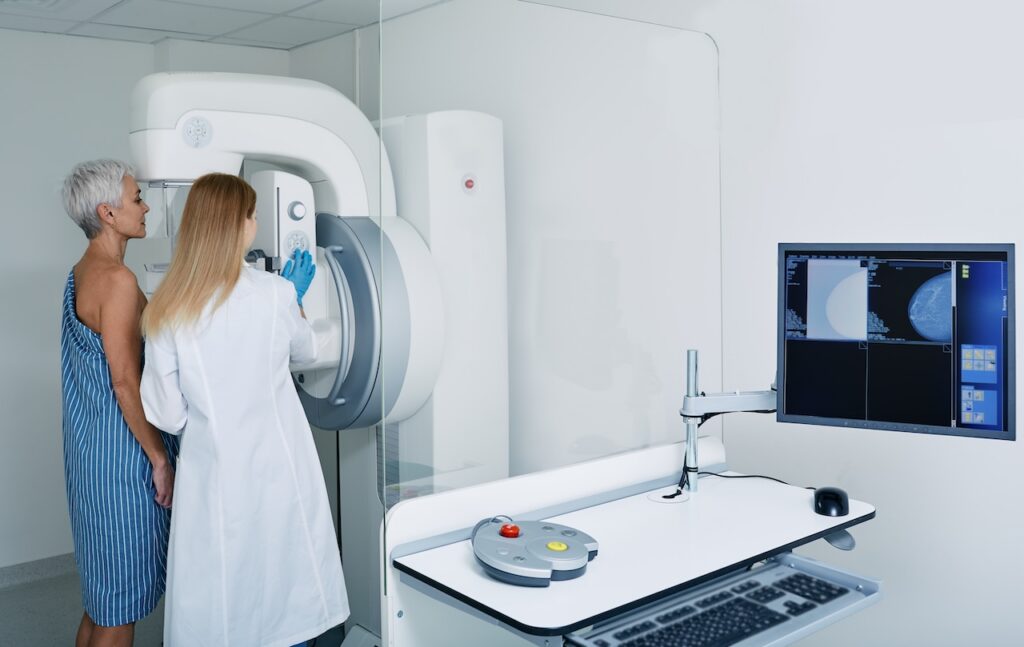
Persistent visual symptoms, such as redness, warmth, rapid swelling, or skin thickening, that don’t resolve after a normal mammogram result are a clinical signal to push further. In practice, requesting an ultrasound or MRI is a reasonable next step your care team can arrange, since these imaging modalities detect tissue changes that mammography routinely misses in dense or inflamed breast tissue. Don’t accept a normal mammogram as the final word if visible symptoms remain.
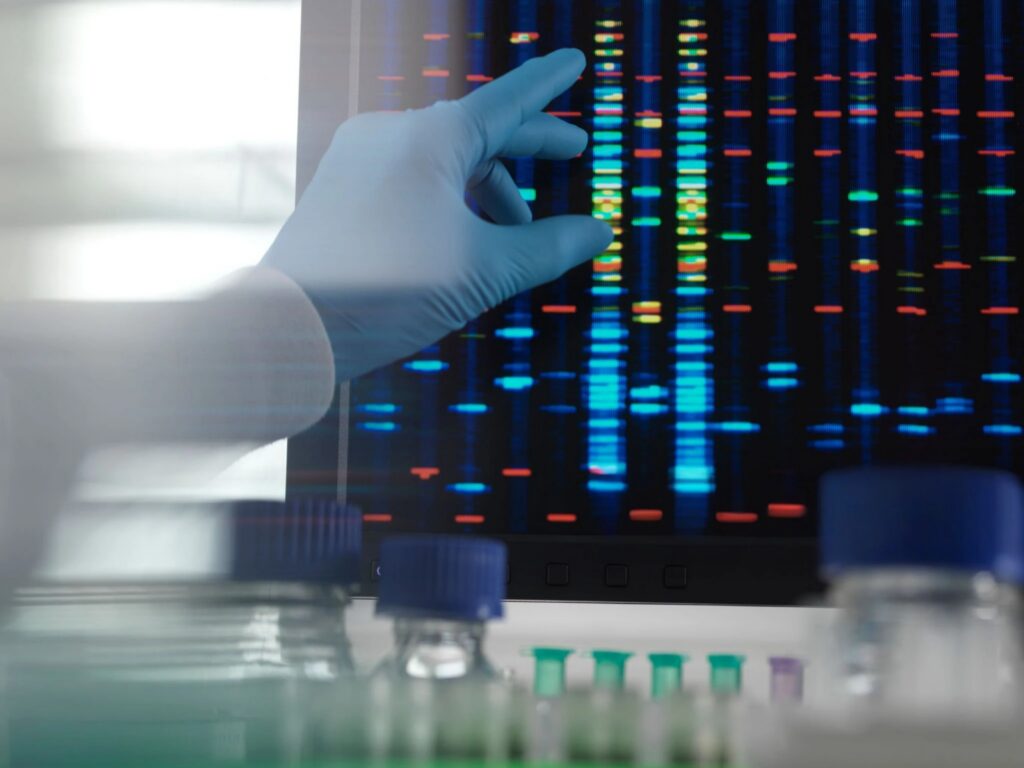
For patients with aggressive symptom presentations, genetic testing adds another critical layer. Variants in genes such as BRCA1, BRCA2, and PALB2 can increase breast cancer risk, and BRCA1 mutations in particular are associated with triple-negative breast cancer, which can be aggressive and challenging to treat. Genetic testing variants BRCA1, BRCA2, and PALB2 directly inform a personalized care plan, including screening frequency, imaging choices, and preventive options.
What you need to know: a summary of non-lump signs
Recognizing the full spectrum of breast cancer symptoms, not just lumps, can be the difference between an early-stage diagnosis and a late-stage one. Some breast cancer patients may present with non-lump symptoms, which is why it’s important to talk with your healthcare team about any breast changes you notice, not just lumps.
The warning signs that fall outside conventional awareness deserve the same urgency as a detectable mass. Here’s what to watch for:
- Skin dimpling or peau d’orange texture – a rough, orange-peel appearance on the breast surface is a hallmark sign of Inflammatory Breast Cancer (IBC) and warrants immediate evaluation, not a wait-and-see approach.
- Nipple changes – any nipple that suddenly turns inward or produces spontaneous, non-milk discharge are signs of breast cancer that should be reported to your doctor as soon as possible. These nipple changes can reflect ductal involvement even when no mass is felt.
- Axillary or collarbone swelling – as covered earlier, lymph node enlargement in these areas may signal breast cancer even when the breast itself feels completely normal.
- Persistent redness or warmth – if these symptoms don’t resolve after a full course of antibiotics, IBC must be ruled out. This distinction matters because IBC is often misdiagnosed as a simple infection, delaying treatment in ways that affect outcomes.
- Focal, persistent breast pain – one-sided pain localized to a specific spot should be investigated through ultrasound or MRI, not dismissed as hormonal or musculoskeletal.
And because IBC can escalate rapidly, patients experiencing any of these signs should also ask their care team about clinical trials for inflammatory breast cancer, as access to emerging therapies may be especially relevant when standard diagnostic pathways haven’t yet produced clear answers.
Taken together, these five indicators form a critical checklist. Noticing any of them and acting on that observation is the foundation of the personalized care plan your care team can build with you.
Taking control: from symptoms to personalized treatment
Being your own advocate starts the moment you notice something different, a change in skin texture, unexpected swelling, or warmth that wasn’t there before. Documenting these subtle shifts, even before you have a diagnosis, is one of the most powerful things you can do for your health. Write down what you observe, when it started, and how it’s evolving. That record becomes critical information your care team can act on.
And the value of that documentation extends further than your next appointment. When symptom patterns are paired with genetic and biomarker data, they can open doors to clinical trial eligibility that might otherwise go unnoticed. Triple-negative breast cancer is a complex type that may benefit from emerging treatment approaches, including immunotherapy, targeted antibody-drug conjugates, and other personalized options being studied to improve outcomes. Tracking what you’re experiencing puts that possibility within reach.
That’s exactly where Outcomes4Me fits in. The Outcomes4Me app is built to serve as the bridge between recognizing a symptom and accessing oncologist-approved treatment paths, evidence-based and designed to put you in control of navigating your condition. From understanding what your symptoms may signal to connecting with a personalized care plan grounded in the latest clinical evidence, the app translates complex oncology information into something you can act on.
Don’t wait for a lump to appear before you pay attention. If you’ve noticed changes that concern you, seek evaluation now and ask your care team about building a personalized care plan that reflects your full symptom picture. The Outcomes4Me app can help you prepare for those conversations, identify clinical trial matches, and stay informed every step of the way.
Disclaimer: The information provided in this article is for informational purposes only and is not intended to be a substitute for professional medical advice, diagnosis, or treatment. Outcomes4Me is not acting as your caregiver, and any suggestions or guidance offered should not replace the advice of your healthcare provider or qualified medical professional. Always seek the guidance of your physician or other qualified health provider with any questions you may have regarding a medical condition.
Personalized support for real care decisions
Understand your diagnosis, explore clinical trials, and track symptoms--all in one place.
Get started
Compare treatments, prepare for appointments, and track side effects—all in the app
Built for your diagnosis, Outcomes4Me gives you the tools to make confident, informed decisions—right when you need them.
Continue in app